Toy Poodle vs Miniature Poodle NZ: Which Small Poodle Fits?
Toy Poodle vs Miniature Poodle NZ: compare size, handling, exercise, grooming and apartment fit before choosing.
The quick answer: choose the Toy Poodle if you want the smallest poodle companion and can manage careful handling. Choose the Miniature Poodle if you want a sturdier, more athletic small dog with the same clever, low-shedding coat type. Both need grooming, training and daily engagement in NZ homes.
Quick comparison
| Factor | Toy Poodle | Miniature Poodle |
|---|---|---|
| Best fit | Careful adults, apartments, gentle homes | Active small-dog homes, families with older children |
| Build | Very small and delicate | Small but sturdier |
| Activity | Busy brain, shorter legs | More athletic and resilient |
| Coat | Low-shedding curls, regular clipping | Low-shedding curls, regular clipping |
| Watch-outs | Rough handling, stairs, cold weather | Boredom, barking, coat neglect |
Toy Poodle: tiny but not ornamental
The Toy Poodle profile suits owners who want a bright, tiny companion for an apartment, townhouse or quieter household. Toy Poodles can learn quickly, enjoy training games and fit easily into small spaces.
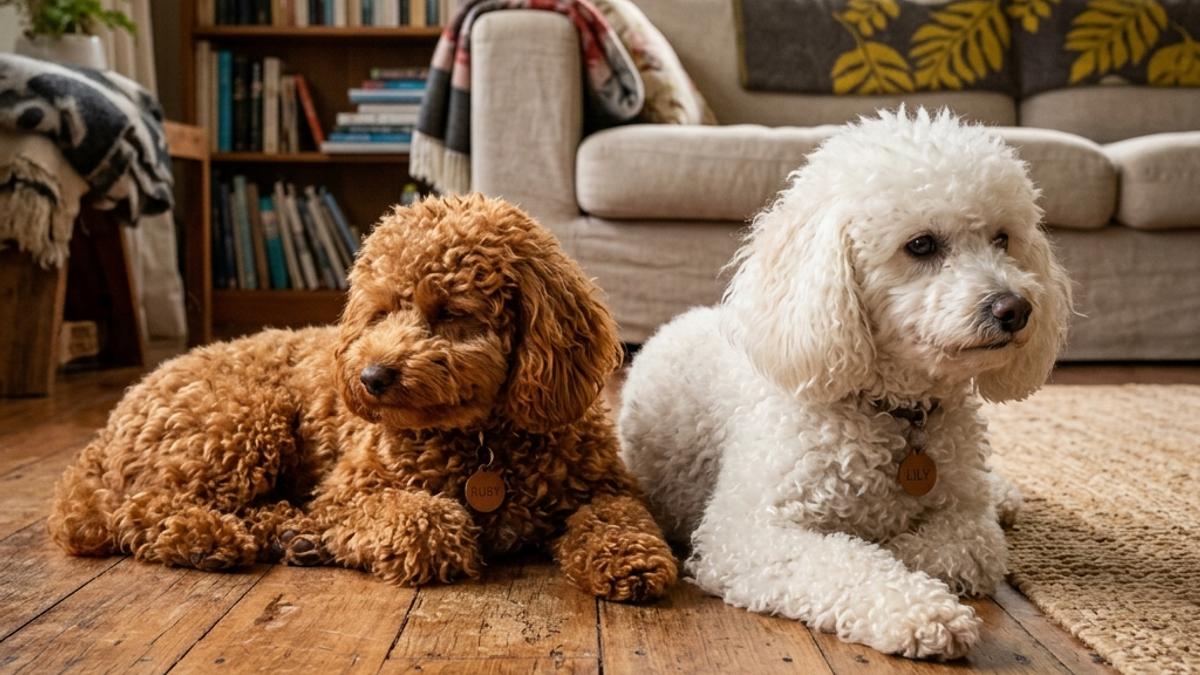
Their size is the main caution. They are not ideal for rough-and-tumble play with small children, crowded dog parks or homes where a tiny dog may be stepped on. In South Island cold snaps or damp winter mornings, warmth and sensible walking routines matter.
Miniature Poodle: still small, more robust
The Miniature Poodle profile is usually the better fit if you want a small dog that can handle longer walks, more training games and a slightly busier family rhythm. Miniatures are still compact, but often feel less fragile than Toys.
They suit owners who enjoy teaching tricks, using puzzle feeders and keeping a smart dog occupied. A bored Miniature Poodle can become noisy or demanding, especially around neighbours in apartments.
NZ grooming reality
Both coats shed less around the house, but low shedding is not low maintenance or allergy-proof. Budget for regular clipping, brushing, drying after wet grass, and keeping mats out through Auckland humidity or winter rain.
Health differences worth knowing
Both sizes share the same poodle health profile, but a couple of things track with size.
Patellar luxation (slipping kneecap) is more common in small- and miniature-breed dogs, and signs usually show before a dog's first birthday — a brief "skipping" hop on a back leg that resolves after a few steps. It is the condition most worth asking a Toy Poodle breeder about; ask whether a vet has examined the parents' knees, not just whether they "seem fine".
Progressive retinal atrophy (PRA) affects poodles as an inherited retinal degeneration with a later onset than in some breeds — typically noticed at around three to five years. Night blindness usually comes first and progresses to total blindness over months to years. DNA tests exist for many breeds and lines, so ask to see the parents' test results.
Dental crowding is the everyday one. A Toy Poodle's jaw carries the same number of teeth in far less space, so daily home dental care and regular vet dental checks matter more at the smaller size.
*General information only — your own NZ vet is the right person to advise on screening for your dog.*
Which should you choose?
Choose Toy if size and close companionship matter most. Choose Miniature if you want the poodle brain in a sturdier small-dog package. If you have young children, the Miniature is usually the more forgiving choice.
Related reading
References
- American Kennel Club, Toy Poodle, checked 2026-06-13: https://www.akc.org/dog-breeds/poodle-toy/
- American Kennel Club, Miniature Poodle, checked 2026-06-13: https://www.akc.org/dog-breeds/poodle-miniature/
- Merck Veterinary Manual, Patellar Luxation in Dogs and Cats (small- and miniature-breed predisposition; signs before 1 year), checked 2026-08-25: https://www.merckvetmanual.com/musculoskeletal-system/arthropathies-and-related-disorders-in-small-animals/patellar-luxation-in-dogs-and-cats
- Merck Veterinary Manual, The Ocular Fundus in Animals (progressive retinal atrophy in poodles: autosomal recessive, onset 3–5 years, DNA testing), checked 2026-08-25: https://www.merckvetmanual.com/eye-diseases-and-disorders/ophthalmology/the-ocular-fundus-in-animals
Free PetMall tools
Related guides
petmall.co.nz
Shop at PetMall
The products below are practical support items for your pet. PetMall ships across New Zealand.
- Dog ToysA small rotation of chew, fetch, and puzzle toys usually works better than buying a large variety at once.
- Dog FoodStart with food that matches your dog's life stage and activity level — and change brands slowly over 7–10 days.
- Dog TreatsTraining rewards and everyday treats — small, soft pieces work best for consistent reinforcement.
- Dog GroomingA gentle brush and the right shampoo make maintenance easier — especially for dogs that get muddy on walks.
- Leads & HarnessesComfort matters: padded contact points and adjustable fit help reduce rubbing on longer walks or tramping weekends.
- Flea & Worm TreatmentFor NZ conditions, look for protection that fits your routine (monthly vs longer-lasting) and your dog's weight range.