Rhodesian Ridgeback vs Boxer NZ: Two Athletic Short-Coated Dogs Compared
Rhodesian Ridgeback or Boxer in New Zealand? Both are athletic, loyal, and short-coated. Compare size, energy, family suitability, heat tolerance, and NZ costs before you decide.
Rhodesian Ridgebacks and Boxers share a similar appeal: athletic, muscular, short-coated dogs with loyal temperaments and strong family bonds. Both attract owners who want an active companion with presence. But they are meaningfully different — in size, drive, historical purpose, and the specific management needs that come from those differences.
At a glance
| Rhodesian Ridgeback | Boxer | |
|---|---|---|
| Weight | M: 36–41 kg / F: 29–34 kg | M: 29–36 kg / F: 23–29 kg |
| Lifespan | 10–12 years | 10–12 years |
| NZ price (registered breeder) | $2,500–$4,500 | $1,500–$3,500 |
| Friendliness | ★★★★ | ★★★★ |
| Trainability | ★★★★ | ★★★★ |
| Energy | ★★★ | ★★★★ |
| Grooming needs | ★★★ | ★★ |
| Apartment life | ★ | ★★ |
| With kids | ★★★★★ | ★★★★★ |
| With other pets | ★★★★ | ★★★★ |
The defining physical difference: size and face shape
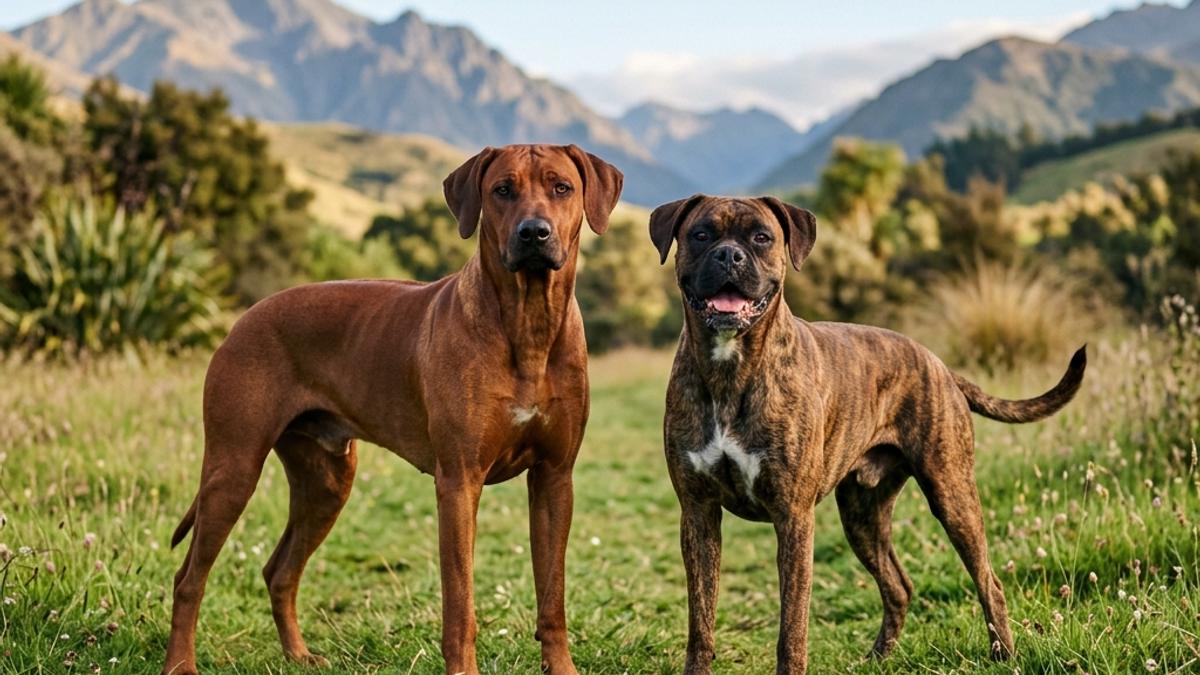
Rhodesian Ridgeback: Named for the distinctive ridge of reversed-growing hair along the spine — a characteristic trait unique to the breed. Larger than the Boxer at 36–41 kg for males. A lean, muscular sighthound-hound hybrid build with a deep chest and long legs. Bred in southern Africa as a hunting companion capable of tracking and holding large game.
Boxer: Brachycephalic (flat-faced) — this is the most practically significant physical difference. The shortened muzzle affects the Boxer's ability to thermoregulate in heat, its anaesthetic risk, and its tendency toward respiratory noise. Not all Boxers have severe brachycephalic issues; individuals and breeding lines vary.
Energy and exercise
The energy score difference (Ridgeback 3/5 vs Boxer 4/5) reflects a meaningful behavioural distinction.
Rhodesian Ridgeback (energy 3/5): Despite their large size and athletic build, adult Ridgebacks are not constantly high-energy. They can be relatively calm indoors — "a big dog that can lounge" is a common description. They need daily exercise (a solid 45–60 minute walk or run) but don't typically have the "always on" intensity of a Border Collie or German Shepherd. Ridgeback puppies and adolescents are a different matter — they have significant energy that needs managing until about age 2–3.
Boxer (energy 4/5): More continuously energetic, particularly during the first 3 years. Boxers maintain a puppy-like playfulness well into adulthood. Daily exercise is non-negotiable — without it, Boxers become boisterous and destructive indoors. For active NZ owners who want a dog that matches their energy, this is a positive; for those who want a calmer companion, it requires more management.
Heat management in NZ
Boxer: The flat face significantly reduces heat tolerance. Exercising a Boxer in Auckland summer heat or any NZ midday sun requires careful timing — early morning or evening only. Watch for laboured breathing during exertion. White Boxers (and white markings) are also susceptible to sunburn on exposed skin. South Island winters may require a coat for their short, single-layer fur.
Rhodesian Ridgeback: Bred in southern Africa — historically more adapted to warm conditions. Better heat tolerance than the Boxer. Short coat handles NZ summers more comfortably. However, lighter-coloured Ridgebacks or those with pink noses benefit from sun protection.
Prey drive and recall
Ridgeback: High prey drive — bred to track and hold large game. Recall can be unreliable off-lead if there's something to chase. A securely fenced section (1.8 m minimum) is not optional. DOC reserves and beaches with wildlife (seals, shorebirds) require strict lead management. The Ridgeback's independent hunting instinct means they may not immediately respond even to a trained recall when something interesting is in range.
Boxer: Lower prey drive — bred as a working and companion dog, not a hunting dog. More reliably responsive to recall training in most conditions. Still requires a secure fence and consistent training, but does not share the Ridgeback's specific hound-hunting drive.
Training
Both score 4/5 on trainability and respond well to reward-based training. Both are intelligent dogs that need mental engagement alongside physical exercise.
Ridgeback: Can be stubborn and independent — more likely to think for themselves in training situations. Early and consistent training is important; a Ridgeback that has learned it can make its own decisions is harder to manage. Training classes and consistent boundaries from day one pay dividends.
Boxer: Generally described as more eager to please and easier to engage in training — their playfulness works in your favour. However, their boisterous energy can make early training sessions chaotic; keeping sessions short (10–15 minutes) and high-energy is more effective than long formal sessions.
NZ cost comparison
The Ridgeback's higher price ($2,500–$4,500 vs Boxer's $1,500–$3,500 from registered breeders) reflects both rarity in NZ and breed-specific demand. Both breeds appear in SPCA rehoming from time to time — Boxers more frequently than Ridgebacks.
Ongoing costs are similar: food cost for two large dogs eating 400–600g of quality dry food daily, regular vet costs, and council registration.
Which is right for you?
Choose a Rhodesian Ridgeback if:
- You want a larger dog with a distinctive coat feature (the ridge)
- You prefer a dog that can be calmer indoors as an adult
- You live in a warm NZ climate and want better heat tolerance
- You're experienced with independent dogs and can provide consistent recall training
Choose a Boxer if:
- You want a more energetic, playful, continuously interactive dog
- You prefer a slightly smaller, more affordable breed
- You're prepared to manage heat carefully (avoid midday summer exercise)
- You want a breed with a generally more eager-to-please training response
Neither is ideal if:
- You live in an apartment — both score poorly for apartment life (1/5 and 2/5)
- Your section is not securely fenced
- You're away for most of the day (both breeds need company and stimulation)
NZ legalities
Neither breed has specific legal restrictions in New Zealand under the Dog Control Act 1996. Both must be council-registered and microchipped. No breed-specific legislation targets either breed in NZ.
Related guides
- Best family dog breeds NZ
- Best guard and watch dogs NZ
- Best dogs for active Kiwis NZ
- How often to bathe a dog NZ
- Find a breed tool
- Compare breeds tool
---
References
- MPI New Zealand, Code of Welfare: Dogs — minimum standards including daily exercise sufficient to maintain health and wellbeing, and housing sited to shelter dogs from cold, wet and windy weather with shade on hot days, checked 2026-07-28: https://www.mpi.govt.nz/animals/animal-welfare/codes/all-animal-welfare-codes/code-of-welfare-dogs
- Dog Control Act 1996 — New Zealand's statutory framework for dog registration, control and owner obligations, checked 2026-07-28: https://www.legislation.govt.nz/act/public/1996/0013/latest/whole.html
---
*Profile scores sourced from PetMall breed profiles. NZ price ranges are indicative; confirm with current registered breeders. Brachycephalic health concerns vary by individual and breeding line — discuss with your vet before purchasing a Boxer. Not a substitute for veterinary advice.*
Free PetMall tools
Related guides
petmall.co.nz
Shop at PetMall
The products below are practical support items for your pet. PetMall ships across New Zealand.
- Dog FoodStart with food that matches your dog's life stage and activity level — and change brands slowly over 7–10 days.
- Dog TreatsTraining rewards and everyday treats — small, soft pieces work best for consistent reinforcement.
- Dog ToysA small rotation of chew, fetch, and puzzle toys usually works better than buying a large variety at once.
- Dog GroomingA gentle brush and the right shampoo make maintenance easier — especially for dogs that get muddy on walks.
- Leads & HarnessesComfort matters: padded contact points and adjustable fit help reduce rubbing on longer walks or tramping weekends.
- Flea & Worm TreatmentFor NZ conditions, look for protection that fits your routine (monthly vs longer-lasting) and your dog's weight range.