Dog Training Tools NZ: Treats, Clickers, Training Pads & More
Dog training tools NZ guide: choose treats, clickers, pads, long lines, pouches and crates for reward-based Kiwi training routines.
The best dog training tools NZ owners can buy are simple: high-value treats, a marker such as a clicker, a secure lead or long line, a treat pouch, and optional pads or crate gear for specific situations. Tools support training; they do not train the dog by themselves.
Most new owners buy too much hardware and not enough tiny rewards. For everyday Kiwi training, the magic is timing, consistency and short sessions. A $10 clicker used well beats a drawer full of gadgets used once.
Quick Match Table
| Tool | Best for | Use it when |
|---|---|---|
| Soft training treats | Reward-based training | You need fast, repeatable rewards |
| Clicker or marker word | Clear communication | Teaching new behaviours or timing tricky moments |
| Treat pouch | Walks and puppy class | You need rewards handy without plastic bags |
| Training pads | Puppy transition or apartment logistics | Short-term toileting setup, not a forever toilet |
| Long line | Recall practice | Open, safe spaces away from roads and wildlife |
| Crate | Rest, transport and house management | Introduced gradually and positively |
Treats: Small, Soft and Worth Working For
Training treats should be tiny. A pea-sized piece is enough for most dogs because you will use many repetitions. Soft treats are easier than crunchy biscuits because the dog can swallow quickly and keep learning.
Use higher-value food for hard environments. Your kitchen may only need kibble. A windy Wellington footpath, puppy class, a council park or the vet car park may need something better. Keep richer treats for short sessions, and remember they still count as food. If your dog is on a special diet, ask your vet what reward options are suitable.
The most useful treat test is simple: does your dog choose you over the distraction? If not, move farther away, make the task easier, or use a better reward.
Clickers and Marker Words
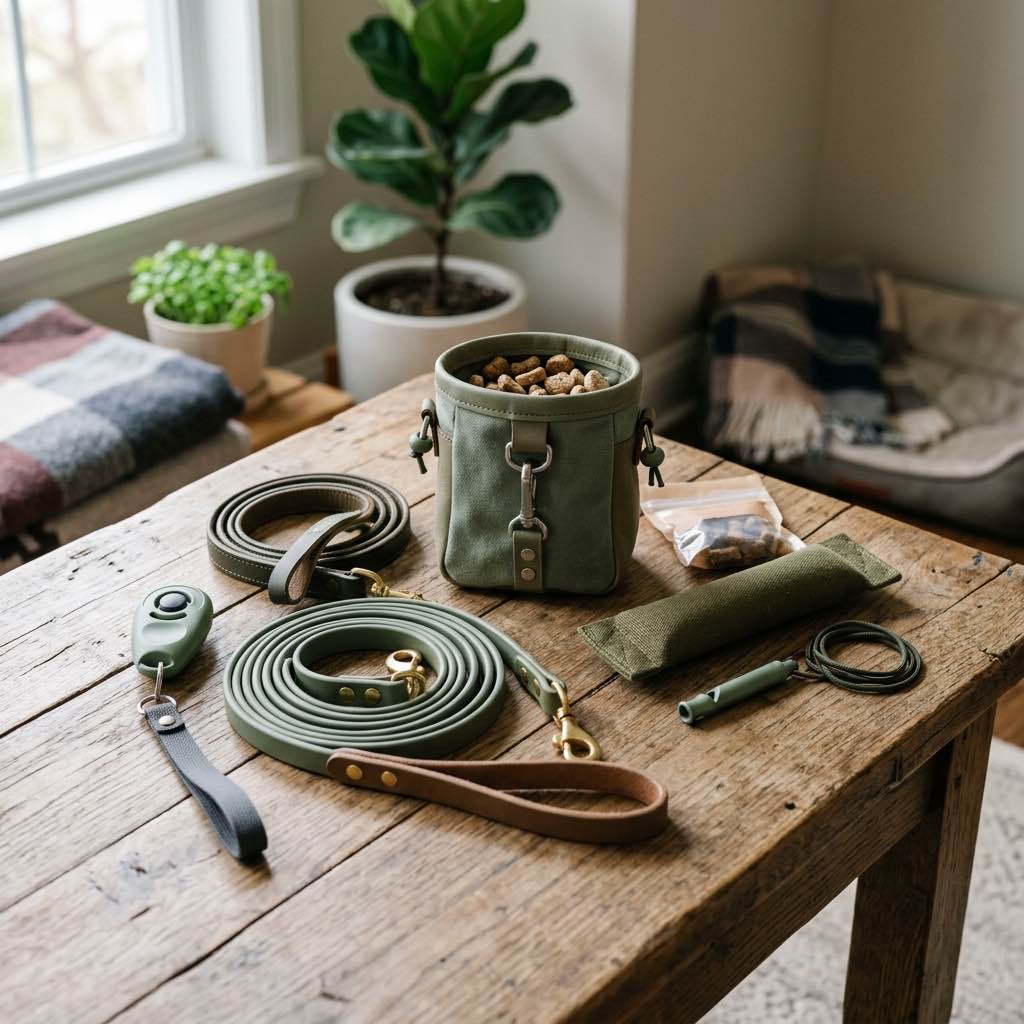
A clicker is a small tool that marks the exact moment your dog did the right thing. It is not magic; it is a timing aid. You can also use a short marker word such as "yes". The rule is the same: mark once, then reward.
Clickers are useful for teaching sit, hand target, loose-lead check-ins, crate entry, calm mat work and recall foundations. They are less useful if the whole family clicks randomly or if the reward never arrives. Keep it clean: click means treat is coming.
SPCA New Zealand supports low-stress, force-free training methods and equipment that use reward-based learning without causing distress or pain. That should be the standard for any tool you buy.
Treat Pouches
A treat pouch sounds boring until you train without one. It keeps rewards accessible, which keeps timing sharp. Look for a pouch you can open one-handed, clean easily, and close securely when your dog noses at it.
For walks, carry two reward types if you can: everyday rewards and a higher-value option for hard moments such as passing dogs, scooters, school gates or ducks at the park. Add poo bags and a small clip for keys, and the pouch becomes a useful walking kit rather than a gimmick.
Training Pads
Pads can help in apartments, storms, illness recovery plans set by a vet, or the first days with a young puppy. They are a bridge, not the whole toilet-training plan. If your goal is outdoor toileting, move the routine towards the real toilet area as soon as practical.
Common mistake: giving the puppy the whole lounge and one pad in the corner. A new puppy needs supervision, small spaces and frequent trips outside. Pads work best when paired with a clear routine and praise for the right place.
For rental homes, use a tray or waterproof layer under pads. Do not let moisture sit against carpet, timber or a crate base.
Long Lines
A long line is one of the best tools for recall practice because it gives freedom with a safety backup. Use it in quiet open areas where the dog will not tangle people, bikes, stock or other dogs. Wear gloves if your dog is strong.
Long lines are not ideal for busy beaches or playground edges. Auckland Council's dog access guidance reminds owners to keep dogs under control and carry a leash. That means your training setup still needs to suit the actual public place.
Practise easy recalls first: call once, move cheerfully away, reward generously, then release the dog back to sniffing. Coming back should not always mean the fun ends.
Crates and Rest Tools
Crates can help with safe transport, quiet rest, puppy management and visiting a bach or motel, but they must be introduced slowly. SPCA's crate training advice is clear that the crate should be associated with pleasant things and training should move in small steps.
A crate should allow the dog to stand, turn around, stretch and lie down naturally. Add soft bedding, keep it out of direct sun, and never use it as punishment. If the dog panics, soils, drools heavily or tries to escape, stop and get professional help.
What Not to Buy First
Do not start with aversive gadgets, complicated correction tools or anything that promises instant obedience. If a product relies on fear, pain or startling the dog, it is not a good foundation for a household pet.
Also avoid buying every tool before the dog arrives. Start with treats, pouch, lead, safe rest area and a plan. Add clicker, pads, long line or crate gear when you know what problem you are solving.
NZ Routine Tips
For winter training, keep sessions short and reward often. Wet lawns and dark mornings make puppies less enthusiastic, so set up a covered toilet route if you can. For summer, train early and use shaded footpaths. For council parks, know whether dogs must be on-leash and keep a lead with you even when practising off-leash skills.
For puppy school, label your gear and bring quiet treats that will not crumble through your pockets. For multi-dog homes, train one dog at a time at first; otherwise the fastest dog learns everything and the shy one watches.
Key takeaways
- Good dog training tools NZ owners actually use are simple and reward-based.
- Treats should be tiny, soft and matched to the distraction level.
- A clicker or marker word improves timing only if a reward follows.
- Training pads are usually a short-term bridge, not the whole toilet plan.
- Long lines are for safe open spaces, not busy footpaths or wildlife areas.
- Crates must be introduced gradually and never used as punishment.
Related reading
- Dog Training in NZ: From Puppy Classes to Advanced
- New Puppy Checklist NZ: Everything You Need
- Dog Enrichment NZ: Mental Stimulation Ideas for Every Breed & Lifestyle
- Dog Registration NZ: Council Renewal Checklist
---
Reference sources
- SPCA New Zealand, Dog behaviour and training, checked 2026-06-04: https://www.spca.nz/advice-and-welfare/article/dog-behaviour-and-training
- SPCA New Zealand, Training methods and devices, checked 2026-06-04: https://www.spca.nz/advice-and-welfare/article/training-methods-and-devices
- SPCA New Zealand, How to crate train your dog, checked 2026-06-04: https://www.spca.nz/advice-and-welfare/article/how-to-crate-train-your-dog
- Auckland Council, Rules for dogs in public places, checked 2026-06-04: https://new.aucklandcouncil.govt.nz/en/dogs-animals/guide-for-dog-owners/rules-dogs-public-places.html
- MPI, Code of Welfare: Dogs, checked 2026-06-04: https://www.mpi.govt.nz/animals/animal-welfare/codes/all-animal-welfare-codes/code-of-welfare-dogs
Related guides
petmall.co.nz
Shop at PetMall
The products below are practical support items for your pet. PetMall ships across New Zealand.
- Dog TreatsTraining rewards and everyday treats — small, soft pieces work best for consistent reinforcement.
- Dog FoodStart with food that matches your dog's life stage and activity level — and change brands slowly over 7–10 days.
- Dog ToysA small rotation of chew, fetch, and puzzle toys usually works better than buying a large variety at once.
- Dog GroomingA gentle brush and the right shampoo make maintenance easier — especially for dogs that get muddy on walks.
- Leads & HarnessesComfort matters: padded contact points and adjustable fit help reduce rubbing on longer walks or tramping weekends.
- Flea & Worm TreatmentFor NZ conditions, look for protection that fits your routine (monthly vs longer-lasting) and your dog's weight range.