Dog Enrichment NZ: Mental Stimulation Ideas for Every Breed & Lifestyle
A bored dog is a destructive dog. This NZ guide covers sniff walks, puzzle feeders, DIY enrichment, and breed-specific activities.
Kia ora, fellow Kiwi dog lovers! As pet parents in Aotearoa, we all want our furry whānau members to live their happiest, healthiest lives. While regular exercise and a balanced diet are crucial, there's another often-overlooked ingredient for a truly thriving dog: mental stimulation, or "enrichment."
Think about it: our dogs, regardless of breed, are descended from animals that spent their days hunting, foraging, exploring, and solving problems. Modern domestic life, while comfortable, can sometimes fall short in providing these natural outlets. That's where enrichment comes in – it's about giving your dog opportunities to use their brains, engage their senses, and express their natural behaviours in a safe and constructive way.
This comprehensive guide from wiki.petmall.co.nz will delve into why mental stimulation matters, offer practical, NZ-specific ideas for every dog and lifestyle, and help you unlock a more fulfilled life for your beloved canine companion.
Why Mental Stimulation Matters
Just like us, dogs can get bored. And a bored dog is often a mischievous dog! Mental stimulation isn't just a "nice to have"; it's a fundamental component of your dog's overall well-being. Here's why it's so important for our Kiwi companions:
- Prevents Boredom and Destructive Behaviours: Many common "bad behaviours" – excessive barking, chewing furniture, digging up the garden, or even pacing – are often a dog's way of trying to entertain themselves when under-stimulated. Providing appropriate mental challenges can redirect this energy into positive outlets, saving your favourite gumboots or the petunias.
- Reduces Stress and Anxiety: Engaging your dog's mind can be incredibly calming and confidence-boosting. When a dog is focused on solving a puzzle or sniffing out a treat, it can help reduce general anxiety and provide a sense of accomplishment. This is particularly beneficial for dogs who might be home alone for periods or are prone to separation anxiety.
- Enhances Cognitive Function: Regular mental exercise helps keep your dog's brain sharp, much like crosswords do for humans. This is especially important for senior dogs, helping to maintain their cognitive abilities as they age.
- Strengthens Your Bond: Working on puzzles together, teaching new tricks, or going on a "sniffari" (more on that soon!) are wonderful ways to deepen the connection between you and your dog. It builds trust and makes your interactions more meaningful.
- Improves Physical Health (Indirectly): While not a substitute for physical exercise, mental stimulation can tire a dog out just as much as a good run. A mentally satisfied dog is often a more relaxed dog, leading to better sleep and overall health. For dogs with physical limitations due to age, injury, or breed, mental enrichment becomes even more vital as a primary outlet for their energy.
Sniff Work: The Easiest Enrichment You're Not Doing
Did you know your dog's sense of smell is estimated to be 10,000 to 100,000 times more acute than yours? Their world is a rich tapestry of scents, and allowing them to use their incredible noses is one of the most natural, easiest, and most rewarding forms of enrichment you can offer. It's like sending them on an exciting, mentally challenging adventure without even leaving your backyard or local park.
Why Sniff Work is Gold: Sniffing is naturally calming and self-reinforcing for dogs. It engages a huge part of their brain and can be incredibly tiring. It's also fantastic for dogs of all ages, sizes, and energy levels, including seniors, puppies, and those recovering from injuries.
How to Start Your Sniffari Adventures:
- Scatter Feeding (The Beginner's Sniff): Instead of putting your dog's dinner in a bowl, scatter their kibble across your lawn, a designated area of your house, or even a towel spread on the floor. Watch them use their nose to find every last piece. Start with an easy scatter, then gradually increase the difficulty by hiding kibble in taller grass or under small obstacles.
- Hide-and-Seek with Treats or Toys:
- Level 1 (Easy): Let your dog watch you hide a high-value treat or their favourite toy in an obvious spot in the room. Then give them a cue like "Find it!" or "Where's the treat?"
- Level 2 (Medium): Have your dog wait in another room (or get a family member to hold them) while you hide the treat or toy in a slightly harder spot, like under a cushion or behind a door.
- Level 3 (Advanced): Hide multiple treats in different rooms, making it a longer, more engaging search. You can even hide your dog's entire meal this way!
- Snuffle Mats: These fantastic fabric mats have dozens of nooks and crannies where you can hide kibble or small treats. Your dog has to use their nose and paws to "snuffle" them out. They're readily available at PetMall and other pet stores, ranging from around \$25 to \$60.
- Scent Walks (The "Sniffari"): Next time you take your dog for a walk around your neighbourhood, a local reserve, or even a West Coast beach, let them lead their nose. Instead of rushing them along, allow them to stop, sniff, and investigate interesting smells for as long as they like (within reason and safety, of course). This isn't just a potty break; it's a rich sensory experience for them. Be mindful of local council leash laws and always clean up after your dog.
Puzzle Feeders & Slow Bowls
Mealtime is often one of the most exciting parts of a dog's day. Why not make it last longer and engage their brains at the same time? Puzzle feeders and slow bowls turn a quick chow-down into a stimulating mental challenge, mimicking the natural foraging behaviours dogs would perform in the wild.
Benefits of Puzzle Feeding:
- Slows Down Eating: Great for dogs who inhale their food, reducing the risk of bloat (especially important for deep-cheasted breeds) and improving digestion.
- Mental Stimulation: Forces your dog to think and problem-solve to get their food, which is mentally tiring and satisfying.
- Reduces Boredom: Turns a routine activity into an engaging game.
- Prevents Resource Guarding: When food isn't just "given" but "earned," it can sometimes help reduce tendencies towards resource guarding by lowering the perceived value of the food being taken away.
Types of Puzzle Feeders & Slow Bowls:
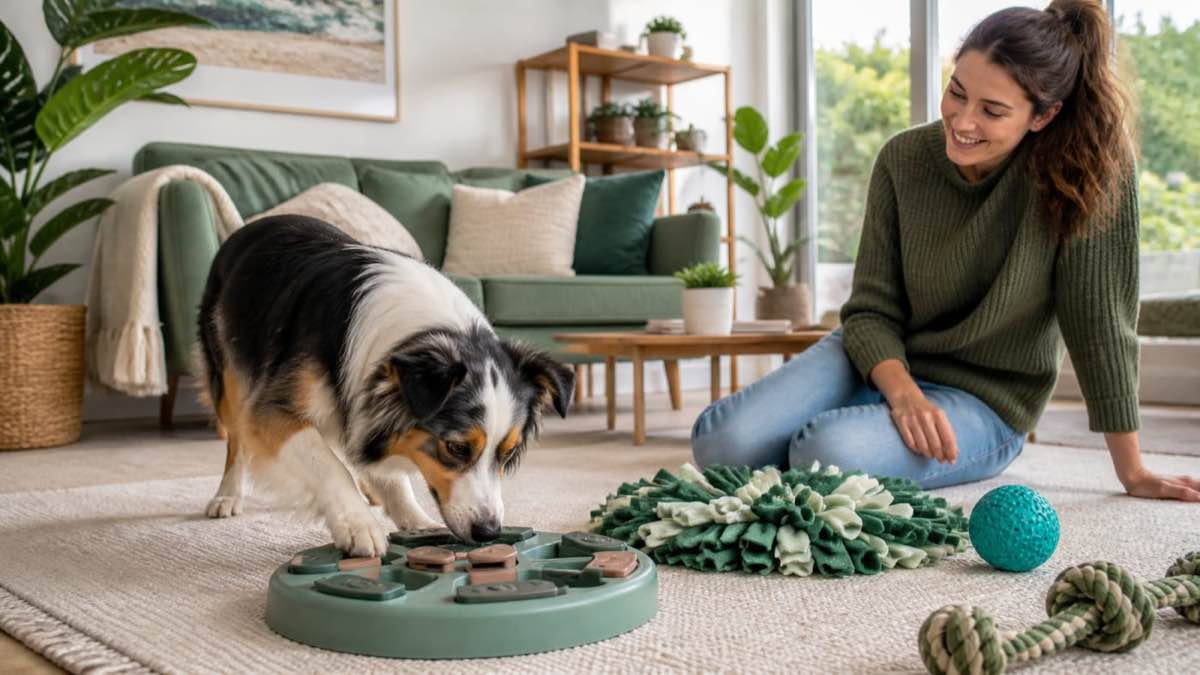
- Slow Feeder Bowls: These bowls have ridges, mazes, or obstacles built into them that force your dog to eat around them, significantly slowing down their meal.
- *Cost:* Expect to pay \$15-\$40 for a good quality slow feeder bowl.
- *Suitability:* Great for all dogs, especially fast eaters.
- Treat-Dispensing Toys (e.g., Kongs, Wobblers): These are perhaps the most popular type of puzzle feeder. You stuff them with kibble, treats, peanut butter, or even frozen wet food, and your dog has to lick, chew, or bat them around to get the goodies out.
- *Cost:* Kongs range from \$15-\$40 depending on size and durability. Wobblers are typically \$30-\$60.
- *Suitability:* Excellent for all dogs. Kongs are particularly good for chewers or for keeping dogs occupied while you're out. You can even freeze them for a longer-lasting challenge, perfect for a hot summer's day in Aotearoa.
- Puzzle Boards/Games: These often involve sliding panels, lifting pieces, or rotating compartments that hide treats. They come in various difficulty levels.
- *Cost:* Basic puzzle boards start around \$30, with more complex ones reaching \$80-\$120.
- *Suitability:* Best for supervised play, as some parts can be chewed or damaged. Great for introducing problem-solving.
- Lick Mats: These textured silicone mats are designed to be smeared with soft, spreadable treats like peanut butter (xylitol-free!), plain yoghurt, or wet dog food. The act of licking is incredibly calming and stress-reducing for dogs.
- *Cost:* Around \$10-\$25.
- *Suitability:* Excellent for anxious dogs, puppies, or as a distraction during grooming or vet visits. You can freeze them for a longer-lasting activity.
Choosing the Right Puzzle: Start with easier puzzles and gradually increase the difficulty. Some dogs pick up puzzles quickly, while others need more encouragement. Always supervise your dog, especially when introducing a new puzzle, to ensure they don't get frustrated or chew on parts they shouldn't. You can find a fantastic range of these at PetMall.
DIY Enrichment with Household Items
You don't need to break the bank to provide excellent mental stimulation for your dog. Many everyday household items can be repurposed into engaging enrichment tools. Just remember to always supervise your dog with DIY toys to ensure they don't ingest anything harmful, and make sure the items are clean and safe.
Here are some cost-effective, creative ideas:
- The Towel Game:
- *How:* Lay a towel flat, sprinkle some kibble or small treats over it, then roll it up tightly. You can even tie a knot in the middle for an extra challenge.
- *Benefits:* Encourages sniffing, pawing, and problem-solving.
- *Safety:* Ensure your dog doesn't try to eat the towel.
- Cardboard Box "Treasure Hunt":
- *How:* Get a few clean cardboard boxes (cereal boxes, delivery boxes). Place treats inside, then add some crumpled newspaper, toilet paper rolls, or other safe, shreddable materials. Let your dog "dig" and forage for the treats.
- *Benefits:* Satisfies natural digging and shredding instincts, fantastic for scent work.
- *Safety:* Remove any tape, staples, or plastic from the boxes. Supervise to ensure they don't eat large pieces of cardboard.
- Muffin Tin Game:
- *How:* Place a treat in each cup of a muffin tin. Cover each treat with a tennis ball (or other appropriately sized, safe toy). Your dog has to lift or push the balls aside to get to the treats.
- *Benefits:* Develops paw dexterity and problem-solving.
- *Safety:* Ensure the balls are too large to be a choking hazard.
- Plastic Bottle Puzzle:
- *How:* Take a clean, empty plastic water bottle (remove the cap and any labels). Put a few pieces of kibble or small treats inside. Your dog will have to bat and roll the bottle to get the treats out. For a more advanced version, you can puncture small holes in the bottle sides and thread a dowel or sturdy stick through, suspending it between two chairs so the dog has to spin it.
- *Benefits:* Encourages manipulation and problem-solving.
- *Safety:* Ensure the bottle isn't chewed into small, ingestible pieces.
- "Find the Human" Hide-and-Seek:
- *How:* Have your dog stay in one room while you go hide somewhere in the house. Call their name and reward them with praise and a treat when they find you.
- *Benefits:* Strengthens recall, encourages scent work, and is a great bonding activity.
- *Safety:* Ensure your hiding spots are safe and easily accessible for your dog.
Remember, the key to DIY enrichment is safety and supervision. Always ensure the items you use are non-toxic, not easily ingested in large pieces, and won't cause injury.
Breed-Specific Ideas
While all dogs benefit from mental stimulation, understanding your dog's breed (or breed mix) can help you tailor enrichment activities to their innate drives and historical purpose. Here's how to play to your dog's strengths:
- Herding Breeds (e.g., Border Collies, German Shepherds, [Huntaways](/dogs/breeds/huntaway)): These intelligent dogs have a strong instinct to gather and control.
- Ideas: Herding balls (large, sturdy balls they can push around), "find it" games where they have to 'herd' toys into a designated spot, advanced obedience training, agility (local clubs often run beginner classes), or teaching them to gather specific items.
- Scent Hounds (e.g., Beagles, Basset Hounds, Foxhounds): Their noses are their superpower! They live to track scents.
- Ideas: Advanced nose work classes (often called 'scent work' or 'K9 Nose Work' in NZ), long line walks in safe, varied environments (like a local bush track or a quiet beach) where they can follow interesting smells, "tracking" games where you lay a scent trail for them to follow.
- Terriers (e.g., Jack Russell Terriers, Staffordshire Bull Terriers, Fox Terriers): Bred to hunt vermin, terriers often have high prey drives, love to dig, and are incredibly tenacious.
- Ideas: Digging boxes (a sandpit or large container filled with sand/soil where you hide toys or treats), flirt poles (a pole with a lure on a string, mimicking prey), robust chew toys that stand up to strong jaws, or even teaching them to 'search and destroy' safe, shreddable items.
- Retrievers (e.g., Labradors, Golden Retrievers, Flat-Coated Retrievers): These dogs love to carry things in their mouths and bring them back to you.
- Ideas: Varied fetch games (different textures, shapes, and locations), teaching them to retrieve specific named items, water retrieves (if safe and accessible, like a calm lake or estuary, always checking for water quality and currents), or even carrying a lightweight backpack on walks.
- Working Breeds (e.g., Siberian Huskies, Alaskan Malamutes, Bernese Mountain Dogs): Bred for stamina and purpose, they thrive on having a "job."
- Ideas: Canicross (jogging with your dog attached via a special harness), dog trekking/hiking, pulling games (with appropriate equipment and training), or long, adventurous walks that cover varied terrain.
- Brachycephalic Breeds (e.g., Pugs, Bulldogs, French Bulldogs), Seniors, and Small Breeds: These dogs may have physical limitations, but their brains are just as active!
- Ideas: Focus on lower-impact activities like advanced sniff work (snuffle mats, hide-and-seek), easier puzzle feeders, gentle training sessions for new tricks, or even interactive play that doesn't require much running, such as "find the treat under the cup."
Remember, these are general guidelines. Every dog is an individual, so observe your dog's preferences and adjust activities accordingly. Your vet can also offer advice on suitable activities for your dog's specific health needs.
Enrichment for Apartment Dogs
Living in an apartment in Auckland, Wellington, or Christchurch doesn't mean your dog can't be well-exercised and mentally stimulated. In fact, for apartment dwellers, mental enrichment becomes even more critical to compensate for potentially less outdoor space. It's about quality of engagement, not just quantity of square footage.
Here's how to ensure your apartment dog thrives:
- Daily Sniffaris: Your daily walks are prime opportunities for enrichment. Instead of rushing through, turn them into "sniffaris." Let your dog explore every lamppost, bush, and patch of grass. The smells of the city or local park are a rich source of information for them, and this mental exercise is incredibly tiring.
- Indoor Obstacle Courses: Use household items to create a fun, safe course. Weave through chair legs, crawl under blankets draped over furniture, jump over low cushions, or walk across different textures (e.g., a rug, a mat). This builds confidence and body awareness.
- Regular Training Sessions: Short, frequent training sessions (5-10 minutes, 2-3 times a day) are fantastic for mental stimulation. Teach new tricks, refine existing commands, or work on impulse control games like "leave it." This uses their brain and strengthens your bond.
- Vertical Space Exploration: If safe, teach your dog to use dog-friendly steps or ramps to access higher vantage points, like a window perch. Watching the world go by can be a form of enrichment, as long as it doesn't lead to excessive barking or anxiety.
- Interactive Play: Engage in structured play sessions indoors. Tug-of-war (with rules), fetch down a hallway, or hide-and-seek are great ways to burn energy and engage their minds.
- Sound Enrichment: Experiment with dog-specific music or audiobooks designed to calm dogs. Some dogs enjoy the background noise, while others might prefer silence. Monitor their reaction.
- Puzzle Feeders & Chew Toys: These are apartment dog essentials. They provide long-lasting engagement, especially when you can't actively play. A frozen Kong can keep a dog happy for a good chunk of time while you're busy or out of the house.
- "Work for Food" Throughout the Day: Instead of two big meals, break their daily food allowance into smaller portions that you use for training, puzzle feeders, or scatter feeding throughout the day. This keeps their mind engaged more frequently.
Remember to still ensure your apartment dog gets adequate physical exercise – whether it's brisk walks, trips to a local dog-friendly beach or park, or even canine sports. Mental stimulation complements physical activity, creating a well-rounded and happy dog.
Dog Parks, Playgroups & Doggy Daycare NZ
Socialisation and structured play are vital for many dogs, and NZ offers several options for this. However, it's important to approach these activities thoughtfully, considering your dog's personality and safety.
Dog Parks in Aotearoa
Dog parks can be a fantastic way for your dog to burn energy, socialise, and explore. However, they're not suitable for every dog, and responsible use is key.
- Benefits: Off-leash exercise (where permitted), social interaction with other dogs and people, exposure to different sights and sounds.
- Considerations:
- Not for Every Dog: If your dog is fearful, overly reactive, or prone to resource guarding, a dog park might be too overwhelming or even dangerous.
- Supervision is Crucial: Always actively supervise your dog. Don't get distracted by your phone. Be ready to intervene if play gets too rough or if your dog is uncomfortable.
- Know Your Dog's Play Style: Understand how your dog interacts with others. Are they a polite greeter or a rough-and-tumble player?
- Health and Safety: Ensure your dog is up-to-date on all vaccinations and parasite prevention. Leave puppies under 4 months at home until fully vaccinated.
- Local Council Rules: Always check your local council's website (e.g., Auckland Council, Wellington City Council, Christchurch City Council) for specific rules regarding off-leash areas, restricted breeds, and times. Fines can apply for non-compliance.
- Clean Up: Always carry and use doggy doo bags. Kiwis take pride in our beautiful outdoor spaces!
Playgroups
Supervised playgroups offer a more controlled environment than a typical dog park. These are often run by professional dog walkers or trainers.
- Benefits: Smaller groups, often with dogs matched by temperament and size, professional supervision, and a safer environment for socialisation.
- Considerations: Cost (typically \$30-\$60 per session), availability in your area, and ensuring the supervisor is qualified and experienced in dog behaviour.
Doggy Daycare NZ
For busy Kiwis, doggy daycare can be a lifesaver, providing structured socialisation, exercise, and mental stimulation while you're at work or away.
- Benefits:
- Supervised Socialisation: Dogs learn appropriate play from experienced staff.
- Mental & Physical Exercise: Daycares offer varied activities, from indoor play to outdoor runs, keeping dogs engaged.
- Prevents Boredom & Destructive Behaviour: A tired and stimulated dog is less likely to be destructive at home.
- Peace of Mind: Knowing your dog is safe and happy while you're out.
- What to Look For in an NZ Doggy Daycare:
- Qualified Staff: Look for staff with certifications in dog behaviour, first aid, and animal care.
- Cleanliness & Safety: The facility should be spotless, with secure fencing, appropriate flooring, and clear safety protocols.
- Appropriate Dog-to-Staff Ratio: A lower ratio means more individual attention and better supervision.
- Structured Play: Good daycares don't just "let dogs loose." They manage play sessions, offer rest times, and provide different activity zones.
- Temperament Testing: Reputable daycares will conduct a trial day or temperament test to ensure your dog is a good fit and comfortable in the environment.
- Emergency Plan: What happens if a dog gets sick or injured?
- References & Reviews: Ask for references or check online reviews.
- Cost: Doggy daycare in NZ typically ranges from \$35-\$60 for a full day, with half-day options and package deals often available.
Your vet or local SPCA branch can often provide recommendations for reputable daycare facilities in your area.
Here's a quick comparison of common enrichment activities:
| Enrichment Type | Description | Key Benefits | Cost Range (NZD) | Best For |
|---|---|---|---|---|
| Sniff Work | Hiding treats/kibble, snuffle mats, scent walks. | Calming, mentally tiring, natural behaviour, suitable for all ages/abilities. | \$0 - \$60 | All dogs, especially seniors, puppies, and those with physical limitations. |
| Puzzle Feeders | Treat-dispensing toys, slow bowls, puzzle boards, lick mats. | Slows eating, problem-solving, reduces boredom, calming (lick mats). | \$10 - \$120 | Fast eaters, dogs needing occupation while alone, mental challenge for mealtime. |
| DIY Enrichment | Towel games, cardboard box hunts, muffin tin puzzles. | Cost-effective, encourages creativity, uses household items. | \$0 - \$10 | Owners on a budget, stimulating natural foraging/shredding instincts. |
| Breed-Specific Activities | Tailored activities based on innate drives (e.g., herding balls, flirt poles). | Fulfils natural instincts, high engagement, deep satisfaction. | \$20 - \$100+ | Dogs with strong breed-specific drives, providing appropriate outlets for energy. |
| Structured Training | Learning new tricks, obedience, advanced commands. | Mental stimulation, strengthens bond, builds confidence, impulse control. | \$0 - \$200+ (classes) | All dogs, especially puppies and adolescent dogs, building communication and good behaviour. |
| Doggy Daycare/Playgroups | Supervised socialisation and play with other dogs. | Social skills, high energy burn, prevents boredom, expert supervision. | \$30 - \$60 (per day) | Social dogs, high-energy dogs, owners who work long hours, safe socialisation. |
Signs Your Dog Needs More Stimulation
Your dog can't tell you in words that they're bored, but their behaviour often speaks volumes. Recognising these signs is the first step to providing them with the enrichment they need:
- Destructive Chewing: Chewing on furniture, shoes, or inappropriate items is a classic sign of boredom or anxiety. They're trying to entertain themselves or relieve stress.
- Excessive Barking or Whining: If your dog is barking at every little noise, whining excessively, or just generally being vocal for no apparent reason, they might be seeking attention or expressing their pent-up energy.
- Digging (Inappropriate Places): Digging up your garden, carpets, or even the couch can be a sign that your dog isn't getting enough mental or physical outlets for their natural digging instincts.
- Pacing or Restlessness: A dog that constantly paces, can't settle, or seems agitated might be under-stimulated and struggling to relax.
- Attention-Seeking Behaviours: Nudging you constantly, pawing, bringing you toys repeatedly (beyond typical play), or even nipping can be desperate pleas for engagement.
- Lethargy or Depression: While sometimes a medical issue (always consult your vet first!), a lack of interest in toys, play, or interaction can sometimes be a sign of chronic boredom or under-stimulation.
- Anxiety or Fear: Some dogs react to under-stimulation by becoming more anxious, fearful, or even developing separation anxiety. Enrichment can build confidence and reduce stress.
- "General Naughtiness": If your dog seems to be constantly getting into trouble, pushing boundaries, or ignoring commands they usually know, it might be their way of saying, "I'm bored, entertain me!"
If you're noticing several of these signs, it's a strong indicator that your dog could benefit from increased mental stimulation and enrichment activities. If concerns about your dog's behaviour persist or seem severe, always consult your vet or a certified professional dog behaviourist who can provide tailored advice and support.
Creating a mentally stimulating environment for your dog is one of the greatest gifts you can give them. It fosters a happier, healthier, and more harmonious life for both of you. So go on, try some new activities, explore the wonderful world of sniff work, and watch your Kiwi canine thrive!
Sources
- SPCA New Zealand, Food Enrichment and Scent Games Tips for Dogs, checked 2026-07-21: https://www.spca.nz/advice-and-welfare/article/food-enrichment-for-dogs-tips-for-making-food-fun
- SPCA New Zealand, Exercise and Enrichment Guidelines for Dogs, checked 2026-07-21: https://www.spca.nz/advice-and-welfare/article/exercise-and-enrichment-for-dogs
- RSPCA, Creating a Stimulating and Suitable Environment for Your Dog, checked 2026-07-21: https://www.rspca.org.uk/adviceandwelfare/pets/dogs/environment
Shop Related Products at PetMall
Looking for the products mentioned in this guide? PetMall ships across New Zealand with fast delivery.
Free PetMall tools
Related guides
petmall.co.nz
Shop at PetMall
The products below are practical support items for your pet. PetMall ships across New Zealand.
- Dog ToysA small rotation of chew, fetch, and puzzle toys usually works better than buying a large variety at once.
- Dog FoodStart with food that matches your dog's life stage and activity level — and change brands slowly over 7–10 days.
- Dog TreatsTraining rewards and everyday treats — small, soft pieces work best for consistent reinforcement.
- Dog GroomingA gentle brush and the right shampoo make maintenance easier — especially for dogs that get muddy on walks.
- Leads & HarnessesComfort matters: padded contact points and adjustable fit help reduce rubbing on longer walks or tramping weekends.
- Flea & Worm TreatmentFor NZ conditions, look for protection that fits your routine (monthly vs longer-lasting) and your dog's weight range.