How to Stop a Puppy Biting NZ: Positive Steps That Actually Help
Stop puppy biting NZ guide: kind bite-inhibition steps, toy redirection, calm time-outs, kids safety and when to get professional help.
To stop puppy biting NZ families need two things: fewer chances to practise biting people, and more rewards for biting the right things. Keep toys between teeth and skin, pause play the moment teeth hurt, reward calm choices, and make sure your puppy gets enough sleep. Puppy biting is normal, but it should improve with consistent handling.
Why puppies bite
Puppies bite because mouths are how they explore, play, teethe and test the world. That does not make the biting fun for your hands, ankles or kids' clothes, but it does mean the answer is training and management, not punishment.
Most puppies are not trying to be "dominant" or difficult. They are tired, excited, frustrated, teething, under-stimulated, over-stimulated, or learning how hard is too hard. Your job is to teach two lessons:
- Teeth on toys make play continue.
- Teeth on skin or clothing make the fun pause.
SPCA New Zealand supports low-stress, force-free training methods focused on positive reinforcement. That is exactly the right frame for puppy mouthing: show the puppy what to do instead, reward that choice, and quietly remove the reward of attention when teeth land on people.
The 10-second rule
When your puppy bites too hard, freeze for a second, calmly say a marker such as "ouch" or "too much", then remove attention for 10-20 seconds. Stand up, fold your arms, step behind a baby gate, or turn away. Keep it boring.
Then return with a toy and resume play. If teeth touch skin again, repeat. This is not a punishment scene; it is information. Your puppy learns that hard biting makes the game stop, while softer play and toy biting keeps the game alive.
Avoid big reactions. Squealing, flapping hands, pushing the puppy away or running across the room can accidentally turn you into the best toy in the house. In a small Auckland apartment or townhouse, a baby gate can be gold because you can step away without creating a chase game.
Redirect before the bite lands
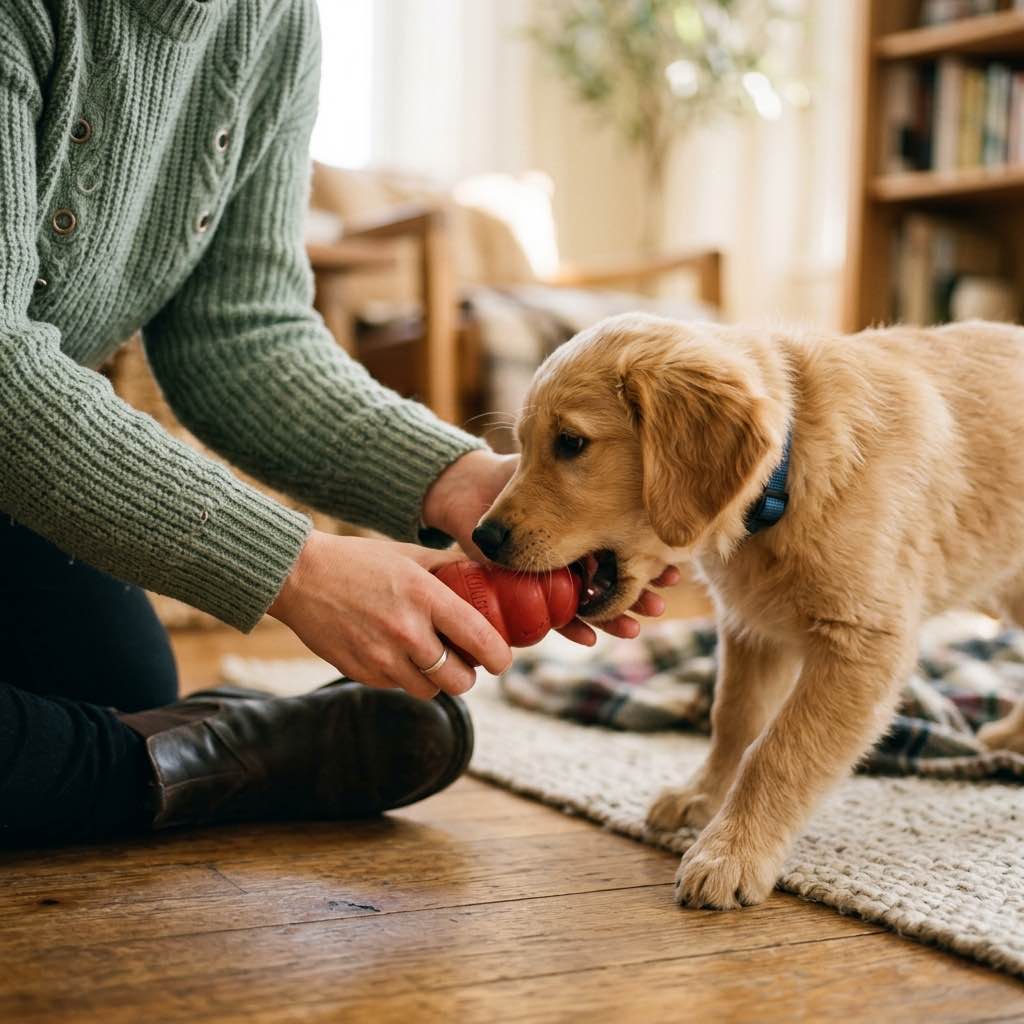
Redirection works best before your puppy is already latched onto you. Watch for the pre-bite signs: zooming, grabbing sleeves, stalking ankles, pupils wide, barking at your hands, or suddenly forgetting every cue they know.
Offer a toy with movement. A long rope toy, soft tug, puppy-safe chew or stuffed food toy keeps teeth away from fingers. Praise when your puppy takes the toy. If they spit the toy out and go back to hands, pause play again.
For ankle biting, drag a tug toy along the floor as you walk calmly. Do not kick, squeal or speed up. Herding breeds and chasey terriers can find fast-moving feet irresistible, so make the legal target more interesting than your socks.
Build a puppy biting station
Keep a small basket of legal mouth targets in the rooms where biting happens most. For many Kiwi homes that means the lounge, kitchen doorway and home-office corner. Include a few textures:
| Item type | Good for | Watch-outs |
|---|---|---|
| Soft tug or rope | Interactive play without fingers near teeth | Put away if the puppy shreds and swallows strands |
| Puppy rubber chew | Teething and quiet chewing | Choose puppy-safe softness, not rock-hard adult chews |
| Stuffed food toy | Calm settling after play | Supervise and clean well |
| Plush toy | Carrying and comfort | Remove damaged toys before stuffing comes out |
| Snuffle mat or scatter feeding | Nose work and decompression | Use on a non-slip surface |
As NZ retail examples, Bunnings listed dog toys from about NZD $2.48 for a simple rope/ball toy to NZD $20.99 for a three-pack of balls, checked on 4 June 2026. You do not need a huge toy haul; two or three safe options rotated daily is usually better than a floor covered in ignored toys.
Manage tiredness
Overtired puppies bite. A lot. If your puppy has been awake for a long stretch, has had visitors, or has just done a busy outing, the "training problem" may actually be a nap problem.
Create a predictable rest routine: toilet break, calm chew, crate or pen, lights lower, human energy boring. In a South Island winter, a warm draught-free rest spot matters. In humid northern weather, use washable bedding and keep the space fresh.
Puppies also bite more when the day has been too exciting. If the kids come home from school and everyone piles onto the puppy, expect teeth. Set the rule before the chaos starts: shoes off, bags away, puppy gets a toy greeting, and adults supervise.
Children and puppy biting
Children need coaching as much as puppies do. Do not expect a child to "just ignore it" while sharp puppy teeth are on their hands. Set up the room so adults can help quickly.
Good family rules:
- No wrestling with hands.
- No waving fingers in the puppy's face.
- No chasing games in narrow hallways.
- Use long toys for tug.
- Stop play before the puppy gets frantic.
- If teeth touch skin, the adult calmly pauses the game.
For toddlers and preschoolers, use physical management: baby gates, pens and supervised zones. A tired puppy and an excited child is a risky mix, even when both are lovely.
What not to do
Do not tap the nose, hold the mouth shut, pin the puppy, alpha roll, yell, or use the crate as a punishment box. These methods can make puppies scared, more excited, or more defensive. They also miss the main lesson: what should the puppy bite instead?
Do not give a treat after your puppy bites you. That can accidentally teach "bite human, get snack". Instead, reward the behaviours you want before biting starts: looking at you, taking a toy, sitting, settling, or chewing their own item.
Do not let rough play escalate and then blame the puppy for being rough. If you use your hands like toys, your puppy will treat them like toys.
When to get help
Get help early if biting is getting worse rather than better, if the puppy repeatedly breaks skin, if they guard food or toys, if they stiffen and snap when touched, or if adults in the home are becoming afraid of normal handling. That does not mean your puppy is "bad". It means the plan needs a skilled human.
For NZ owners, start with your vet, a force-free puppy school, or a qualified reward-based trainer. If there may be pain, illness or fear underneath the behaviour, your vet is the right first call. This guide is general training information, not a substitute for individual veterinary advice.
A simple daily plan
Use this for one week:
- Morning: toilet, breakfast, five minutes of toy play, then rest.
- Midday: short training session using sit, hand touch or name response.
- Afternoon: supervised play with a tug or chew, not hands.
- Evening: calm family rules, no wrestling when the puppy is tired.
- Every day: reward the puppy when they choose a toy on their own.
- Every bite: pause attention briefly, then restart with a toy if they are calm enough.
Consistency beats intensity. Ten calm repetitions a day will teach more than one big dramatic reaction after everyone is already frustrated.
Key takeaways
- Puppy biting is normal, but hard biting should steadily reduce with training.
- Use toys, gates, pens and naps to prevent repeated practice on hands and ankles.
- Pause play for 10-20 seconds when teeth hurt, then restart with a toy.
- Reward calm behaviour and toy choices before biting starts.
- Avoid physical punishment, yelling and hand-wrestling.
- Get qualified help if biting breaks skin, escalates, or feels unsafe.
Related reading
---
Reference sources
- SPCA New Zealand: Training Methods and Devices, checked 2026-06-04. https://www.spca.nz/advocacy/position-statements/article/training-methods-and-devices
- Animates NZ: How to train your puppy, checked 2026-06-04. https://www.animates.co.nz/articles/puppy-training-basics
- Animates NZ: Settling in your puppy, checked 2026-06-04. https://www.animates.co.nz/articles/settling-in-your-puppy
- Battersea Dogs & Cats Home: How to stop a puppy mouthing or biting, checked 2026-06-04. https://www.battersea.org.uk/pet-advice/dog-advice/how-stop-my-puppy-mouthing
- PetMD: How To Stop a Puppy From Biting, checked 2026-06-04. https://www.petmd.com/dog/training/puppy-biting
- ASPCA: Mouthing, Nipping and Biting in Puppies, checked 2026-06-04. https://www.aspca.org/pet-care/dog-care/common-dog-behavior-issues/mouthing-nipping-and-biting-puppies
- Bunnings New Zealand: Dog Toys, price examples checked 2026-06-04. https://www.bunnings.co.nz/products/pet-supplies/dogs/dog-toys
Free PetMall tools
Related guides
petmall.co.nz
Shop at PetMall
The products below are practical support items for your pet. PetMall ships across New Zealand.
- Dog FoodStart with food that matches your dog's life stage and activity level — and change brands slowly over 7–10 days.
- Dog TreatsTraining rewards and everyday treats — small, soft pieces work best for consistent reinforcement.
- Dog ToysA small rotation of chew, fetch, and puzzle toys usually works better than buying a large variety at once.
- Dog GroomingA gentle brush and the right shampoo make maintenance easier — especially for dogs that get muddy on walks.
- Leads & HarnessesComfort matters: padded contact points and adjustable fit help reduce rubbing on longer walks or tramping weekends.
- Flea & Worm TreatmentFor NZ conditions, look for protection that fits your routine (monthly vs longer-lasting) and your dog's weight range.