Dog Crate Types NZ: Wire, Plastic, Soft-Sided & Heavy Duty — Which Should You Buy?
Choosing a dog crate in NZ? Compare wire mesh, plastic airline, soft fabric and heavy-duty crates — which type suits puppies, travel, anxious dogs and different breeds.
Dog crates come in four main types: wire mesh, plastic airline, soft-sided fabric, and heavy-duty metal. Each has a different use case — and choosing the wrong type for your dog's situation can mean a crate that's either useless or unsafe. Here's what each type does and when to use it.
Why crate type matters
Beyond just size (see our dog crate size guide NZ for sizing), the construction of the crate determines:
- Escape resistance — how well it contains a determined dog
- Ventilation — how much airflow the dog gets
- Portability — whether you can move it easily
- Durability — whether it will survive a dog that chews or pushes
- Comfort — whether the dog feels safe and enclosed or exposed
The right type depends on your dog's temperament, how the crate is being used (training, travel, sleep), and whether your dog is a relaxed crate-user or an anxious one.
The four main types
1. Wire mesh crates
Wire crates are the most versatile and widely used type for home use in NZ. The mesh panels provide maximum airflow and give the dog a 360-degree view of the environment.
Best features:
- Excellent ventilation — important in NZ's warm summers
- Collapsible for storage and transport (fold flat)
- Usually include a removable plastic tray liner for easy cleaning
- Adjustable dividers allow the same crate to grow with a puppy (block off the back section while the puppy is small)
- Available in sizes for all breeds
Limitations:
- Some anxious dogs feel "exposed" with so much visibility — dogs that seek dens may prefer a covered crate or a solid-sided type
- Not escape-proof for very determined dogs — latches can be nudged open by smart dogs (add carabiners or clip locks to secure latches)
- Heavy compared to soft-sided; bulky to carry
When to choose a wire crate:
- Home training for puppies (pair with the adjustable divider as pup grows)
- Dogs that tolerate being in view of activity — social dogs, non-anxious dogs
- Households where airflow is a priority (warm regions, Auckland/Northland)
- Long-term home crates for medium to large breeds
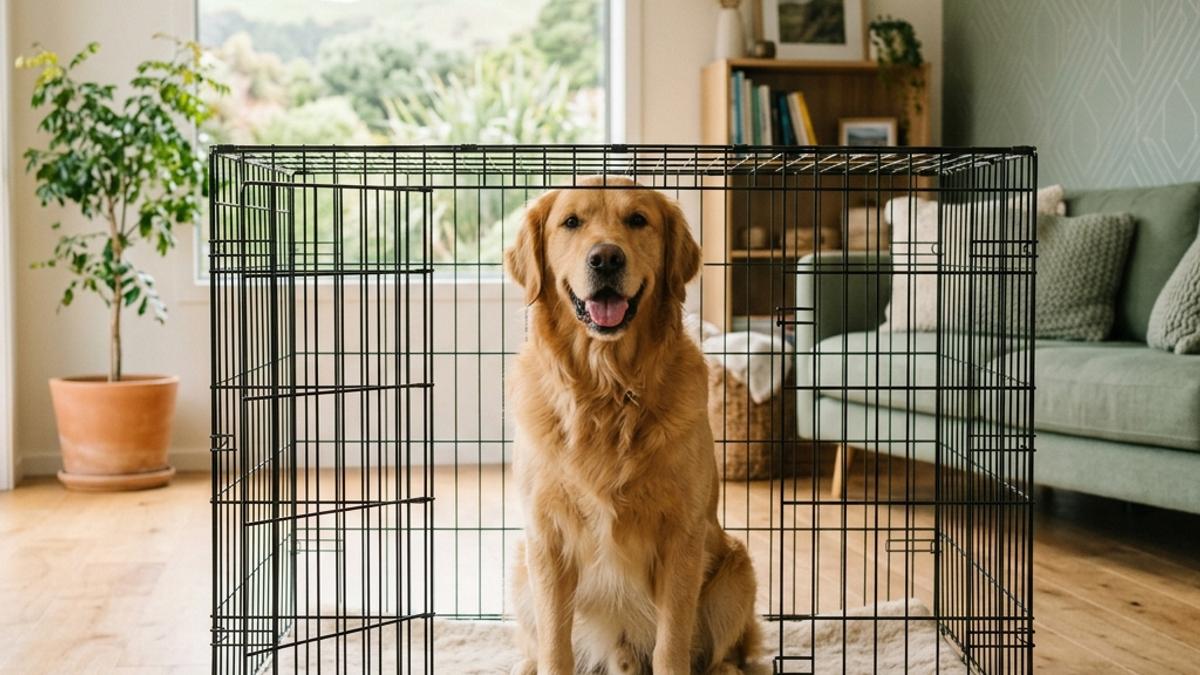
NZ breed note: Large breeds common in NZ (Labrador, Golden Retriever, German Shepherd) typically suit double-door wire crates in XL or XXL sizes. See our crate training puppy guide for training approach.
2. Plastic airline (travel) crates
Plastic crates have a solid hard-plastic shell with metal mesh door and ventilation grilles. They were originally designed for airline travel and are the type required by most NZ airlines and international carriers for in-hold pet transport.
Best features:
- Solid walls create a darker, more den-like environment — many anxious or nervous dogs find this calmer
- Approved by airlines operating in NZ (check airline-specific requirements — some have size restrictions on pet hold space)
- Durable hard shell protects the dog if dropped or bumped
- Easy to hose out and sanitise
Limitations:
- Less ventilation than wire crates — not ideal in hot conditions without airflow
- Most are not collapsible — take up storage space when not in use
- Generally heavier than soft-sided; less easy to carry than wire fold-flats
When to choose a plastic crate:
- Air travel with your dog in NZ or internationally (verify current airline specs before purchase)
- Dogs that feel more secure in a den-like enclosure (anxious dogs, dogs that hide under beds)
- Puppies that shred bedding less likely to destroy the solid-wall interior
- Vets sometimes recommend for post-surgery rest where the dog needs to be contained but calm
NZ travel note: Check each airline's current pet transport policy — Jetstar, Air New Zealand, and international carriers all have different specifications for crate dimensions, ventilation requirements, and weight limits. The airline's requirement is the determining factor for crate type.
3. Soft-sided fabric crates
Soft crates are made from a fabric frame (usually polyester or Oxford cloth) with mesh panels and a foldable or zip-door. They're lightweight and portable but have significant limitations for many dogs.
Best features:
- Extremely lightweight — 1–3 kg depending on size
- Compact when folded — fits in a bag or car boot easily
- Reasonable for calm dogs at events, visits, or travel by car
- Generally cheaper than other crate types
Limitations:
- Not escape-proof — a determined or anxious dog can rip through fabric in minutes; they're not suitable for dogs that haven't been fully crate-trained
- Fabric and mesh sides can be chewed through
- Do not use with a dog that has not been properly crate-trained and is comfortable and calm in the crate
- Difficult to fully sanitise after accidents
When to choose a soft-sided crate:
- Calm, fully crate-trained dogs that simply need a portable resting space
- Day trips, dog shows, or events where a familiar resting space is useful
- Car travel for dogs that need a contained but calm rest area (secure it so it doesn't shift)
- NOT for puppies; NOT for anxious dogs; NOT as a first crate
4. Heavy-duty metal crates (escape-proof)
Heavy-duty crates are built from welded steel or aluminium with reinforced latches, often multiple lock points, and heavy-gauge mesh or solid metal panels. They're designed specifically for dogs that have escaped or destroyed other crate types.
Best features:
- Escape-resistant against even very strong, determined dogs
- Multiple secure latch points that can't be nudged open
- Built for dogs that pace, push, chew, or have destroyed lighter crates
- Some are weld-free or designed to be difficult to disassemble from inside
Limitations:
- Heavy — difficult to move
- More expensive ($300–$700+ NZD for quality heavy-duty crates)
- Not collapsible; bulky
- Appearance is more industrial than home crates — not everyone wants one in their living room
When to choose a heavy-duty crate:
- Escape artists that have previously broken out of wire or plastic crates
- Powerful chewer breeds (Staffordshire Bull Terrier, Rottweiler, Husky, Malinois)
- Separation-anxious dogs with a history of destructive crate behaviour — note: escape behaviour driven by severe separation anxiety may need to be addressed through behaviour training rather than stronger containment alone. A vet can advise.
- Long-distance road transport for large, powerful breeds
Choosing the right type: quick decision guide
| Situation | Best crate type |
|---|---|
| Puppy training at home | Wire (with divider panel) |
| Anxious/nervous dog at home | Plastic (den-like, calmer) |
| Air travel in NZ or overseas | Plastic (airline-approved) |
| Calm dog at events or outings | Soft-sided |
| Dog that escapes other crates | Heavy-duty metal |
| Hot NZ climate/warm region | Wire (maximum airflow) |
| Post-surgery rest and recovery | Plastic (quieter, contained) |
| Large breed permanent home crate | Wire (XL/XXL with divider) |
Sizing reminder
Get the size right before buying any type — a crate should be just large enough for your dog to stand, turn around, and lie down comfortably. Too large (especially for puppies) and the dog will toilet in the far end. See our dog crate size guide NZ for breed-specific sizing recommendations.
Crate training basics
A crate should be a positive, voluntary space for your dog — not a punishment. Introduce it gradually with treats and positive association. See our crate training puppy NZ guide for a step-by-step introduction method that works for both puppies and adult dogs.
NZ buying tips
- Wire crates: Bunnings, Animates, Petstock, and online retailers all stock common sizes. Buy double-door models for more flexibility.
- Airline crates: Must meet the specific airline's current IATA-standard sizing; verify before purchasing
- Heavy-duty: Specialist pet suppliers or online (Zinger, Gunner, Impact, and local NZ distributors)
- Budget $60–$200 for wire or plastic crates in NZ for medium/large breeds; $300+ for heavy-duty options
Quick takeaways
- Wire: Most versatile home crate; maximum airflow; use for puppy training and daily home use
- Plastic: Better for travel, anxious dogs, and air transport; den-like but less ventilation
- Soft-sided: Only for calm, fully crate-trained dogs at events or in cars; not for puppies or anxious dogs
- Heavy-duty: For escape artists and powerful chewer breeds only; expensive but effective
- Size correctly first — then choose type based on use case and your dog's temperament
See also
- Dog crate size guide NZ
- Crate training a puppy NZ
- Dog beds guide NZ
- New puppy checklist NZ
- Dog carriers and travel guide NZ
---
References
- American Kennel Club, Step-by-Step Crate Training (never use the crate for punishment; introduce gradually with rewards), checked 2026-08-06: https://www.akc.org/expert-advice/training/crate-training-step-by-step/
- MPI New Zealand, Code of Welfare for Dogs (confinement and shelter requirements), checked 2026-06-05: https://www.mpi.govt.nz/animals/animal-welfare/codes/all-animal-welfare-codes/code-of-welfare-dogs/
---
*This guide provides general product information for NZ dog owners. For advice specific to your dog's behaviour or health, consult a registered New Zealand vet or certified dog trainer.*
Related guides
petmall.co.nz
Shop at PetMall
The products below are practical support items for your pet. PetMall ships across New Zealand.
- Dog FoodStart with food that matches your dog's life stage and activity level — and change brands slowly over 7–10 days.
- Dog TreatsTraining rewards and everyday treats — small, soft pieces work best for consistent reinforcement.
- Dog ToysA small rotation of chew, fetch, and puzzle toys usually works better than buying a large variety at once.
- Dog GroomingA gentle brush and the right shampoo make maintenance easier — especially for dogs that get muddy on walks.
- Leads & HarnessesComfort matters: padded contact points and adjustable fit help reduce rubbing on longer walks or tramping weekends.
- Flea & Worm TreatmentFor NZ conditions, look for protection that fits your routine (monthly vs longer-lasting) and your dog's weight range.