Crate Training a Puppy NZ: A Kind Step-by-Step Plan
Crate training a puppy NZ guide: choose the right crate, build positive associations, handle nights, apartments, travel and common setbacks.
Crate training a puppy NZ should feel like teaching your puppy to love a bedroom, not trapping them in a cage. Start with the door open, feed treats and meals near or inside the crate, build short calm sessions, and never use the crate as punishment. If your puppy panics, go slower or use a pen instead.
Is crate training right for your puppy?
Crate training is optional. It suits many Kiwi homes because it gives a puppy a predictable sleep space, helps with supervision while house rules are still new, and can make travel, vet visits and temporary confinement less stressful. But it is not a magic fix for every puppy.
Use a crate when you can introduce it gradually and keep it positive. Use a puppy pen, gated room or puppy-proofed laundry instead if your puppy is frightened, if you need them contained for longer than they can comfortably manage, or if your home layout makes a crate impractical.
The goal is a puppy who chooses the crate because good things happen there: food, rest, chews and calm. If the crate becomes the place where they are shoved when they are "naughty", you have taught the wrong lesson.
Choose the right crate size
A crate should be large enough for your puppy to stand, turn around, lie down and stretch comfortably. Too small is unfair. Too large can make toilet training harder because some puppies sleep at one end and toilet at the other.
For growing puppies, a wire crate with a divider can be practical. You can start with a smaller sleeping area, then expand it as your puppy grows. A soft crate is useful for travel and settled adult dogs, but it is usually not the first choice for a young puppy who chews or paws at fabric.
As real NZ retail examples, Bunnings NZ listed dog kennel, crate and pen products from about NZD $72 for a canvas play pen through to around NZD $197 for a large plastic dog home, checked on 4 June 2026. Mitre 10 listed a 91 x 58 x 63 cm dog crate at NZD $179, checked the same day. Prices change, so measure first and buy for fit rather than buying the largest option.
Where to put the crate in a Kiwi home
Put the crate where your puppy can rest but still feel included. In many Auckland apartments or townhouses, that means the living area by day and beside your bed for the first nights. In a busy family home, choose a quiet corner where children can be taught not to poke fingers through the bars or climb into the puppy's space.
Cold matters too. A South Island winter laundry can be too chilly for a small puppy unless it is warm, dry and draught-free. In humid North Island homes, washable bedding and airflow help keep the area fresh. Avoid direct sun through ranch sliders, especially on summer afternoons.
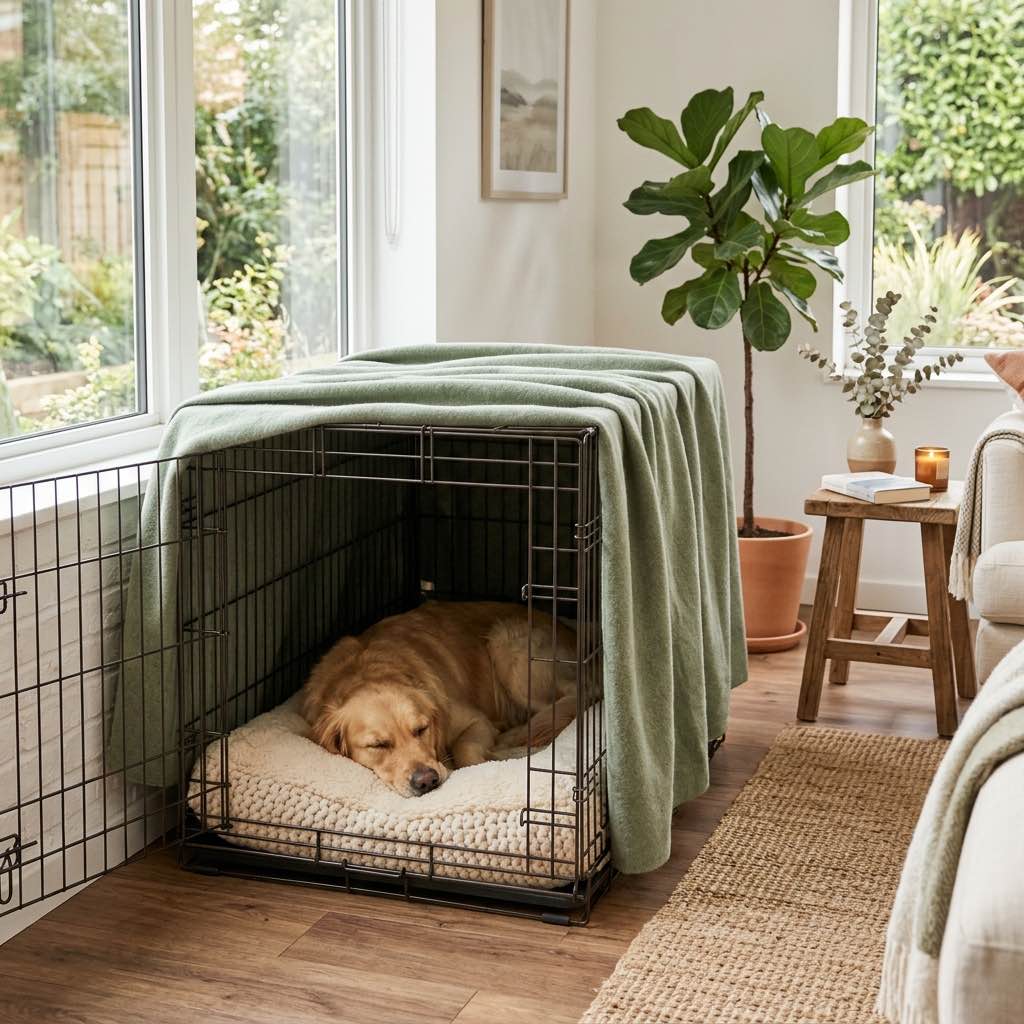
The crate should not be isolated as a "time out" zone. A puppy who feels cut off from the household may bark, cry or scratch because they are scared, not because they are stubborn.
The first three days
Start with the door open. Put a treat just inside the crate, then a little deeper, and let your puppy move in and out freely. Praise calmly when they investigate. Do not push them in.
Feed meals near the crate. If your puppy is relaxed, move the bowl just inside the doorway, then further inside over several meals. This is one of the simplest ways to create a positive association because food happens every day.
Add a safe chew or stuffed food toy only when you can supervise. Remove anything that your puppy tries to shred or swallow. If bedding becomes a chew project, use a safer mat or leave bedding out briefly while you build the habit.
Keep early sessions tiny. Door open, treat, in and out. Then door closed for one second, open, reward. Then five seconds. Then ten. You are teaching "the door closing predicts calm rewards", not "the door closing means I am abandoned".
Building duration without drama
Once your puppy happily enters the crate, begin short settled sessions while you are still home. Ask them in with a cue such as "crate" or "bed", give a treat, close the door briefly, then sit nearby. Release them before they get worried.
Gradually add normal household movement: stand up, sit down, walk to the kitchen, return, reward calm behaviour. If your puppy starts whining hard, pawing, drooling, biting the bars or refusing food, you probably moved too fast. Drop back to an easier step.
Avoid the classic mistake of only crating when you leave the house. If crate time always predicts everyone disappearing, the puppy may learn to worry as soon as the door shuts. Mix in relaxed crate moments while you are cooking dinner, answering emails, or watching TV.
Nights and toilet breaks
For the first few nights, keep the crate close enough that your puppy can hear and smell you. Many puppies settle faster beside the bed than alone at the far end of the house. You can move the crate gradually later if you prefer another location.
Take your puppy out for a quiet toilet trip before bed. If they wake and fuss overnight, keep the trip boring: out, toilet chance, gentle praise, back to bed. Do not turn 2am into playtime.
Young puppies may need overnight toilet breaks. That is normal. A crate can help because many puppies are reluctant to toilet in their sleeping space, but it does not give them adult bladder control. If accidents happen, adjust the schedule and clean calmly.
How long can a puppy be crated?
There is no single perfect number, because age, temperament, toilet training, sleep needs and daytime routine all matter. The humane rule is simple: crate for sleep and short safe pauses, not for warehousing a puppy through the day.
For daytime absences, a pen or puppy-proofed room is often kinder than a closed crate, especially if you will be out for several hours. Set up water, a toilet option if needed, a bed and safe enrichment. Crate training should support your puppy's life, not replace supervision, exercise, toilet breaks and human contact.
Travel, ferries and vet visits
A crate-trained puppy often travels more calmly because the crate already smells familiar. This is useful for car trips, vet visits, boarding, bach weekends and Cook Strait travel.
Interislander says pets travelling in a vehicle must be inside the vehicle or in a crate, not tethered outside or on the deck of a ute, and animals in crates or kennels must be able to stand, turn around and lie down naturally. Air New Zealand also has carrier and terminal rules for pets, including that pets from major NZ airports must be in their carrier before arriving at the terminal and remain there inside the terminal.
Always check the current transport provider rules before you travel. A crate that is fine for home training may not meet airline, ferry or kennel requirements.
Common crate training setbacks
If your puppy cries as soon as the door closes, make the door-closing step easier. Close it for one second, feed, open. Repeat until it is boring.
If they will enter for treats but rush out again, feed meals half in and half out of the crate for a few sessions. Confidence often comes from repetition, not pressure.
If they chew bedding, remove loose bedding temporarily and give safer supervised chew options. Some puppies are not ready for blankets in a crate.
If they panic, try a pen attached to the crate with the crate door open. You can still build positive crate feelings without forcing confinement.
If progress is not improving, work with a force-free puppy class or trainer. If your puppy seems extremely distressed, injures themselves trying to escape, or cannot settle even with a very gradual plan, talk to your vet and a qualified behaviour professional before pushing on.
What you actually need
Start with the right-sized crate or pen, washable bedding, tiny training treats, a safe chew, and patience. A cover can help some puppies settle, but only if there is good airflow and your puppy is not pulling fabric through the bars.
You do not need expensive accessories to do crate training well. The value is in the routine: short sessions, calm rewards, toilet breaks, and making the crate part of normal family life.
Key takeaways
- Crate training a puppy NZ should be positive, gradual and optional.
- The crate should fit your puppy: stand, turn, lie down and stretch.
- Start with the door open, then build door-closed time in tiny steps.
- Keep first nights close to you and include quiet toilet breaks.
- For long daytime absences, a pen or puppy-proofed room is often kinder than a closed crate.
- Check current ferry or airline crate rules before travelling in NZ.
Related reading
- New Puppy Checklist NZ
- New Dog Owner First 30 Days NZ
- Dog Enrichment NZ
- The True Cost of Owning a Dog in NZ
---
Reference sources
- SPCA New Zealand: Training Methods and Devices, checked 2026-06-04. https://www.spca.nz/advocacy/position-statements/article/training-methods-and-devices
- Animates NZ: Crate training your puppy, checked 2026-06-04. https://www.animates.co.nz/articles/crate-training-your-puppy
- Totally Vets NZ: Crate training your puppy, checked 2026-06-04. https://totallyvets.co.nz/crate-training-your-puppy/
- Royal Canin NZ: How to crate train your puppy, checked 2026-06-04. https://www.royalcanin.com/nz/dogs/puppy/puppy-training-and-play/how-to-crate-train-your-puppy
- Interislander: Travelling with pets or animals, checked 2026-06-04. https://www.interislander.co.nz/plan/travelling-with-pets
- Air New Zealand: Travelling with pets, checked 2026-06-04. https://www.airnewzealand.co.nz/travelling-with-pets
- Bunnings New Zealand: Dog Kennels, Crates & Cages, price examples checked 2026-06-04. https://www.bunnings.co.nz/products/pet-supplies/dogs/dog-kennels-crates/
- Mitre 10 New Zealand: Yours Droolly Dog Crate 91 x 58 x 63 cm, price checked 2026-06-04. https://www.mitre10.co.nz/shop/yours-droolly-dog-crate-91-x-58-x-63cm/p/351057
Free PetMall tools
Related guides
petmall.co.nz
Shop at PetMall
The products below are practical support items for your pet. PetMall ships across New Zealand.
- Dog TreatsTraining rewards and everyday treats — small, soft pieces work best for consistent reinforcement.
- Dog FoodStart with food that matches your dog's life stage and activity level — and change brands slowly over 7–10 days.
- Dog ToysA small rotation of chew, fetch, and puzzle toys usually works better than buying a large variety at once.
- Dog GroomingA gentle brush and the right shampoo make maintenance easier — especially for dogs that get muddy on walks.
- Leads & HarnessesComfort matters: padded contact points and adjustable fit help reduce rubbing on longer walks or tramping weekends.
- Flea & Worm TreatmentFor NZ conditions, look for protection that fits your routine (monthly vs longer-lasting) and your dog's weight range.