Dog Boot Types NZ: Summer Paw Protection, Trail Boots and Recovery Boots
Dog boot types NZ guide: compare summer paw protection, trail boots, recovery boots and socks for hot sand, gravel, winter rain and training.
Dog boot types in NZ should solve a real paw problem: hot sand, sharp gravel, rough tracks, wet winter paths, post-injury protection under vet direction, or indoor grip for older dogs. Most healthy dogs do not need boots for every walk. If you buy them, fit and training matter more than the toughest-looking sole.
Quick comparison
| Boot type | Look for | Avoid |
|---|---|---|
| Summer paw boots | Lightweight sole, breathable upper, secure straps | Using boots to justify walking on dangerously hot ground |
| Trail boots | Grippy sole, flexible ankle, debris protection | Heavy boots that change the dog's gait |
| Waterproof boots | Water-resistant material, easy drying | Sweaty sealed boots worn too long |
| Recovery boots | Vet-approved use, soft lining, easy checking | Covering wounds without veterinary advice |
| Indoor grip socks | Non-slip tread, gentle fit | Loose socks that twist or get chewed |
Summer paw protection
SPCA NZ warns that hot pavement, asphalt and scorching beach sand can burn paw pads, especially on black iron-rich West Coast North Island sands. Boots can reduce contact with rough or warm surfaces, but they are not a licence to walk in unsafe heat. If the ground is too hot for the back of your hand, choose shade, grass, an early morning walk or stay home.
Look for lightweight boots that let the paw flex. Avoid thick winter-style boots for hot weather, because trapped heat and sweat can irritate paws.
Trail and gravel boots
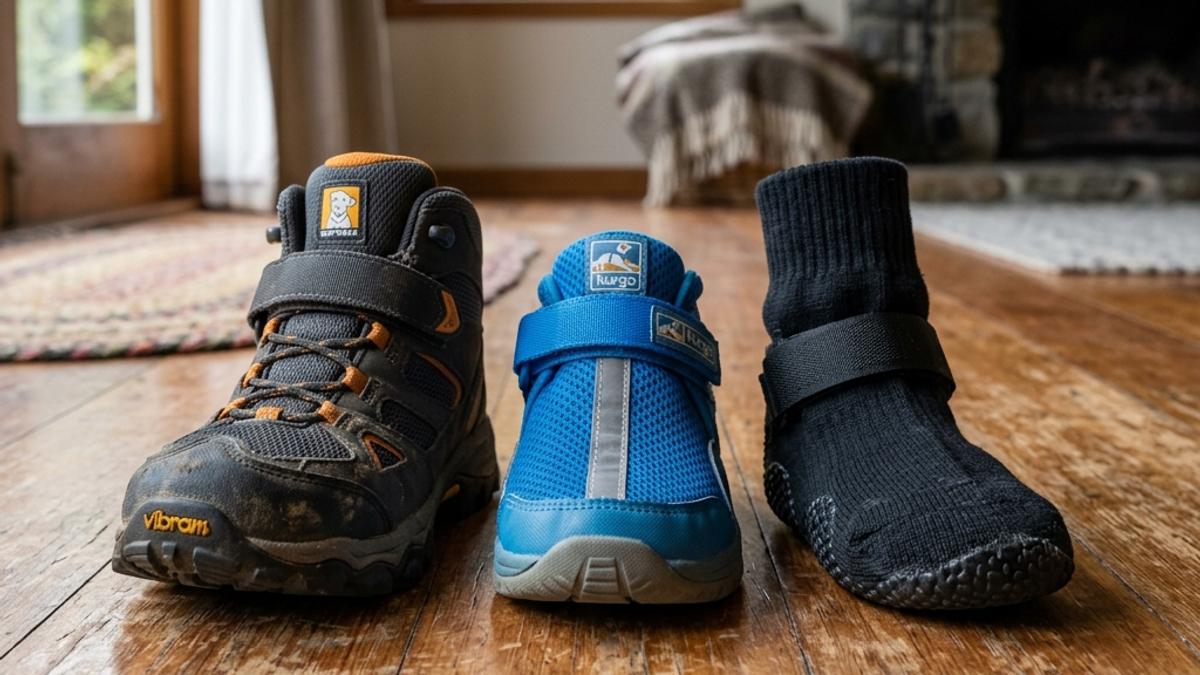
Trail boots can help dogs that walk on sharp gravel, volcanic tracks, scree, forestry roads or rough rural sections. A good trail boot has a grippy flexible sole, secure but not tight straps, and enough protection to stop grit entering from the top.
Avoid using trail boots for the first time on a long tramp. Dogs need short practice sessions at home, then easy walks, then rougher ground. Pair the gear with reliable lead control and recall basics from Dog Lead Types NZ and Dog Recall Training NZ.
Waterproof boots and winter use
Waterproof boots can be useful for dogs that hate cold rain, for muddy urban walks, or to keep paws cleaner after a section turns to sludge. The trade-off is moisture inside the boot. Wet paws sealed in a boot for too long can rub and smell.
Choose water-resistant rather than overly sealed if you mainly need splash protection. Dry the paws and boots after walks, and check between toes for seeds, grit and redness.
Recovery boots and indoor grip
Recovery boots are a special case. They can protect a bandage or paw injury, but only under vet direction. Do not cover a sore, swollen or bleeding paw and hope a boot fixes it. That can trap moisture, hide infection and delay care.
Indoor grip socks or soft boots can help some older dogs on polished floors, especially in rentals with slippery timber or tiles. Keep sessions supervised and remove anything the dog chews.
Measuring and fit
Measure the paw while the dog is standing, because the paw spreads under weight. Most brands need width and sometimes length. The boot should stay on without cutting circulation, twisting or rubbing the dewclaw. If the dog high-steps at first, that can be normal. If they limp, freeze, bite the boot or develop redness, stop and refit.
Buy for all four paws only if needed. Some dogs need front boots more than rear boots because the front paws take more load.
What to look for
- A reason for the boot: heat, gravel, recovery, winter mud or indoor grip.
- Flexible soles that let the dog move normally.
- Straps that secure without rubbing the dewclaw.
- Easy cleaning after beach sand, clay, grass seeds or farm tracks.
- Short training sessions before a real outing.
What to avoid
- Walking at unsafe temperatures just because the dog has boots.
- Boots that twist, rub, trap grit or make the dog alter its gait.
- Covering injuries without vet advice.
- Leaving boots on unsupervised at home.
- Buying by breed size alone without measuring paws.
Related buying guides
Shop category
Quick takeaways
- Dog boots are situational gear, not an everyday requirement for every dog.
- Hot ground still means change the walk, not just add boots.
- Trail boots need practice before rough tracks.
- Recovery boots belong under vet direction.
- Measure standing paws and check for rubbing after every first walk.
References
- SPCA NZ, Keeping pets safe in summer, checked 2026-06-13: https://www.spca.nz/advice-and-welfare/article/keeping-pets-safe-in-summer
- SPCA NZ, Dog behaviour and training, checked 2026-06-13: https://www.spca.nz/advice-and-welfare/article/dog-behaviour-and-training
- MPI, Code of Welfare: Dogs, checked 2026-06-13: https://www.mpi.govt.nz/animals/animal-welfare/codes/all-animal-welfare-codes/code-of-welfare-dogs
Free PetMall tools
Related guides
petmall.co.nz
Shop at PetMall
The products below are practical support items for your pet. PetMall ships across New Zealand.
- Dog FoodStart with food that matches your dog's life stage and activity level — and change brands slowly over 7–10 days.
- Dog TreatsTraining rewards and everyday treats — small, soft pieces work best for consistent reinforcement.
- Dog ToysA small rotation of chew, fetch, and puzzle toys usually works better than buying a large variety at once.
- Dog GroomingA gentle brush and the right shampoo make maintenance easier — especially for dogs that get muddy on walks.
- Leads & HarnessesComfort matters: padded contact points and adjustable fit help reduce rubbing on longer walks or tramping weekends.
- Flea & Worm TreatmentFor NZ conditions, look for protection that fits your routine (monthly vs longer-lasting) and your dog's weight range.