Puppy Toilet Training NZ: A Simple Positive Routine for Kiwi Homes
Puppy toilet training NZ guide: simple routine, positive reinforcement, apartment-pad options and accident fixes for Kiwi puppy owners.
Puppy toilet training NZ works best when you make the right place easy, take your puppy there often, and reward within seconds. Choose one toilet spot, go there after sleep, meals, play and first thing in the morning, prevent unsupervised wandering, and clean accidents calmly. Expect steady progress over weeks, not a magic weekend.
The 7-day setup plan
The first week is about building a habit your puppy can repeat. Do not wait for them to "ask" to go out. Most young puppies do not yet know what that means, and many only realise they need to go when it is already urgent.
| Moment | What to do | Why it works |
|---|---|---|
| First thing in the morning | Carry or lead your puppy to the same toilet spot | Prevents a hallway accident while they are still sleepy |
| After meals or water | Go out within a few minutes | Eating, drinking and movement often trigger toileting |
| After play | Pause the game and take them out | Excitement makes accidents more likely |
| After naps | Go straight outside or to the pad | Waking is one of the most reliable cues |
| Before bed | Calm toilet trip, then quiet sleep routine | Helps night-time settle without turning it into play |
| During the day | Use a timer while they are awake | Owners forget faster than puppies learn |
For many homes, the timer starts at about every 60-90 minutes when the puppy is awake. Some puppies need more frequent trips in the first fortnight. The point is not a perfect number; it is to give your puppy enough chances to get it right.
Pick one toilet spot
Your puppy needs the toilet area to be boring, predictable and easy to reach. In a house with a section, that might be one patch of grass near the back door. In an Auckland apartment, it may be a puppy pad, fake grass tray or balcony setup that you later phase toward outdoor toileting. In a South Island winter, choose a route you can repeat quickly even in rain, frost or a southerly snap.
Keep the cue simple. Walk to the spot, stand still, say one phrase such as "toilet", and wait quietly. If your puppy goes, mark it with "yes" and reward immediately. If they do not go after a few minutes, head back inside and supervise closely, then try again soon.
Avoid turning toilet trips into a full game. Puppies are bright: if every toilet trip becomes ten minutes of zoomies, they may start asking to go out for entertainment rather than toileting.
Reward the behaviour you want
Positive reinforcement is the backbone of good puppy toilet training. SPCA New Zealand supports low-stress, force-free training methods that use reward-based learning, and that principle fits toilet training perfectly: reward the exact behaviour you want, in the place you want it.
Timing matters. Reward within seconds of the wee or poo finishing, while your puppy is still at the toilet spot. Use tiny treats, warm praise, a quick pat, or a short game if your puppy finds that more motivating. Food is usually easiest in the early days because it is clear and fast.
Do not tell your puppy off for accidents. Punishment often teaches a puppy that toileting in front of people is risky, so they may hide behind the couch or wait until nobody is watching. That makes the training slower and more stressful for everyone.
What to do after accidents
Accidents are data, not defiance. If your puppy toilets inside, calmly move them away, clean the area properly, and adjust your plan. Were they unsupervised? Did the timer run too long? Did they wake from a nap while everyone was busy making dinner?
Use an enzyme or pet odour cleaner rather than only a standard household spray — see how to remove pet urine smell and stains for what works on carpet and furniture. Dogs are guided by scent, and leftover urine smell can make the same corner attractive again. Wash bedding, mats and towels promptly. If your rental has carpet, be extra quick and thorough; old smells can survive a casual wipe.
If you catch your puppy mid-accident, interrupt gently without frightening them, take them to the toilet spot, and reward if they finish there. If the accident is already over, just clean it up. They will not connect a later lecture with what happened minutes ago.
Pads, grass trays and apartment life
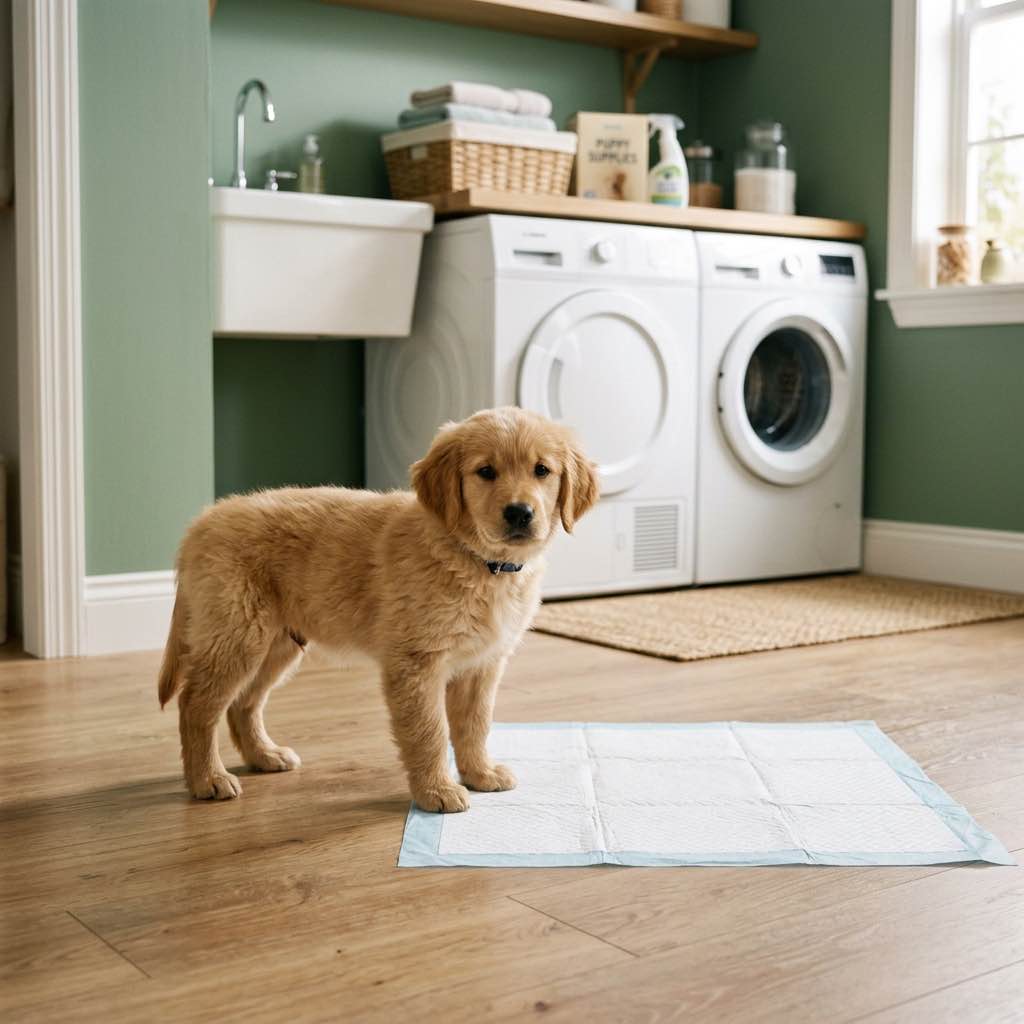
Pads are useful when outdoor access is genuinely hard: apartments, night-time setups, high-rain weeks, puppies not yet ready for public areas, or owners with limited mobility. They can also slow the transition outdoors if the puppy learns that soft indoor surfaces are fair game, so use them deliberately.
If your end goal is outdoor toileting, keep the pad in one fixed place and gradually move it closer to the door or outdoor area. Do not scatter pads across the whole house. That teaches "anywhere inside" rather than "this one toilet station".
A fake grass tray can suit decks, townhouses and small sections, but it still needs regular cleaning. In humid Auckland weather, a neglected tray gets smelly fast. In cold southern weather, a covered porch or sheltered path can make late-night trips less miserable for the human, which means the routine is more likely to stick.
Night-time toilet training
Night-time success comes from calm repetition. Take your puppy out just before bed, keep the trip quiet, then return to the sleep area. If they wake and fuss, pause and listen: some puppies need a toilet trip, others want company. A short, boring toilet trip helps you tell the difference.
For very young puppies, set expectations kindly. They may not be able to last all night. A crate, pen or puppy-proofed sleep area can help prevent wandering accidents, but it should be introduced positively and never used as punishment. If you are using a pen, put bedding at one end and the toilet option at the other so the layout is clear.
NZ owner admin that overlaps with training
Toilet training is also a good time to practise basic owner habits. Keep a lead near the door so your puppy can learn to toilet on lead; that is helpful for motel stays, ferry trips, vet visits, campgrounds and rainy late-night stops. Under the Dog Control Act, owners must keep dogs under control, and in public places owners generally need to carry a leash unless another rule already requires the dog to be on one.
Council registration is separate from toilet training, but new puppy owners should not leave it until later. Auckland Council says dogs should be registered from the month they turn three months old or arrive in New Zealand, and it may ask for details such as a microchip number. Rules and fees vary by council, so check your own district.
Also think about clean-up habits early. Always carry poo bags when leaving your property, and avoid letting a puppy toilet near playgrounds, sports fields, shop fronts, shared apartment entries or sensitive coastal areas. It is basic neighbourliness, and it helps keep dogs welcome in public spaces.
Troubleshooting common problems
If your puppy wees as soon as you come back inside, the outside trip may have been too exciting or too short. Go out, keep it boring, come back in if nothing happens, then try again after a few minutes of close supervision.
If they always use one indoor corner, block access for now and clean it deeply. Many owners give the puppy too much freedom too early. A baby gate, pen or closed door can prevent mistakes while the habit is forming.
If your puppy is pad trained but will not go outside, start rewarding outdoor toileting more heavily than pad toileting. Take a used pad outside for scent if needed, then shrink or remove the pad gradually.
If progress suddenly goes backwards, or your puppy seems uncomfortable, unusually thirsty, unable to hold on, or distressed, talk to your vet rather than assuming it is a training issue. For non-medical training help, look for a force-free puppy class or trainer.
What you actually need
You do not need a trolley full of gear. Start with high-value tiny treats, poo bags, an enzyme cleaner, and either a reliable outdoor route or one indoor toilet station. A pen, crate or baby gate can help with supervision if used kindly.
As real NZ retail examples, Bunnings NZ listed a pet odour remover at NZD $11.89, puppy training grass at NZD $23.98, and a canvas play pen at NZD $72, checked on 4 June 2026. You do not need all of that on day one; buy the smallest practical amount first and see what your puppy actually uses.
Key takeaways
- Puppy toilet training NZ is mostly routine: wake, meal, play, nap and bedtime trips.
- Reward within seconds at the toilet spot; do not punish accidents.
- Pick one toilet area so your puppy learns a clear habit.
- Pads can help apartments and bad weather, but use one fixed spot and transition gradually if outdoor toileting is the goal.
- Clean accidents with enzyme or pet odour cleaner so scent does not invite repeats.
- Keep owner admin in view: lead habits, poo bags, council registration and local rules all matter in NZ.
Related reading
- New Puppy Checklist NZ
- New Dog Owner First 30 Days NZ
- Dog Enrichment NZ
- Dog Registration NZ: Council Renewal Checklist
---
Reference sources
- SPCA New Zealand: Training Methods and Devices, checked 2026-06-04. https://www.spca.nz/advocacy/position-statements/article/training-methods-and-devices
- Animates NZ: Puppy toilet training, checked 2026-06-04. https://www.animates.co.nz/articles/puppy-toilet-training
- Bunnings New Zealand: How To Toilet Train Your Puppy, checked 2026-06-04. https://www.bunnings.co.nz/diy-advice/outdoor-living/pets-wildlife/how-to-toilet-train-your-puppy
- PAW by Blackmores NZ: Your guide to puppy toilet training, checked 2026-06-04. https://www.blackmoresnz.co.nz/pet-health/health-and-vitality/your-guide-to-puppy-toilet-training
- New Zealand Legislation: Dog Control Act 1996, sections 52 and 54A, checked 2026-06-04. https://www.legislation.govt.nz/act/public/1996/13/en/latest/
- Auckland Council: Register your dog with us for the first time, checked 2026-06-04. https://new.aucklandcouncil.govt.nz/en/dogs-animals/register-your-dog/register-dog-first-time.html
- New Zealand Veterinary Association: Puppy socialisation, checked 2026-06-04. https://nzva.org.nz/clinical-resources/companion-animal/puppy-socialisation/
Free PetMall tools
Related guides
petmall.co.nz
Shop at PetMall
The products below are practical support items for your pet. PetMall ships across New Zealand.
- Dog TreatsTraining rewards and everyday treats — small, soft pieces work best for consistent reinforcement.
- ODARID Stain & Odour RemoversPurpose-made pet stain and odour removers — treating the source beats masking the smell, especially for urine on carpet.
- Dog FoodStart with food that matches your dog's life stage and activity level — and change brands slowly over 7–10 days.
- Dog ToysA small rotation of chew, fetch, and puzzle toys usually works better than buying a large variety at once.
- Dog GroomingA gentle brush and the right shampoo make maintenance easier — especially for dogs that get muddy on walks.
- Leads & HarnessesComfort matters: padded contact points and adjustable fit help reduce rubbing on longer walks or tramping weekends.
- Flea & Worm TreatmentFor NZ conditions, look for protection that fits your routine (monthly vs longer-lasting) and your dog's weight range.