Why Does My Cat Headbutt Me? NZ Guide to Head Bunting
Why does your cat headbutt you? It's called bunting — a friendly scent-marking and bonding behaviour. Here's what it means and what to do, NZ owner's guide.
The quick answer: when your cat presses or bumps their head against you — known as head bunting — it's a friendly, affectionate behaviour. Cats have scent glands on their face and head, so bunting deposits their scent on you, marking you as part of their trusted "group". It's one of the clearest signs your cat feels safe and bonded with you.
What head bunting means
- Scent-marking / claiming you — facial glands transfer their scent onto you, blending you into their familiar world.
- Affection and trust — cats bunt people, other friendly cats, and favourite objects.
- Greeting and bonding — often a hello when you sit down or come home.
- Seeking attention — sometimes a polite "pat me, please".
It's a compliment — your cat is telling you they're comfortable. Pair it with other relaxed signals like kneading and slow blinks to read your cat's contented baseline.
Bunting vs rubbing vs pushing
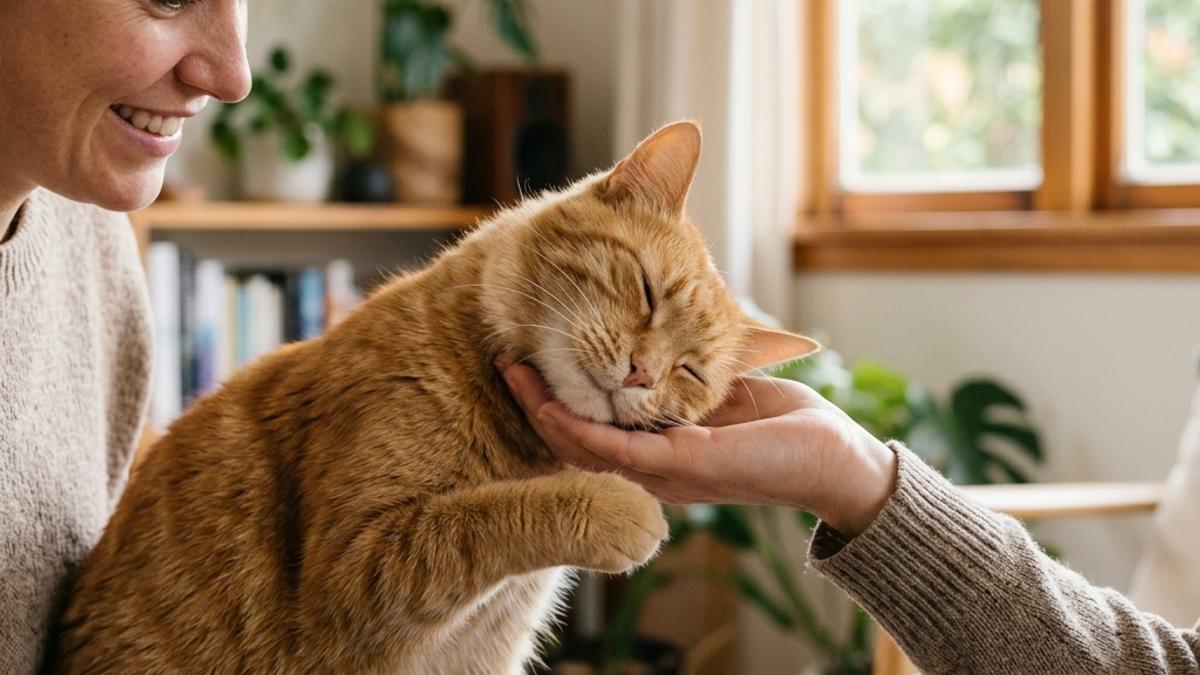
- Bunting — a deliberate head bump or press; affectionate.
- Cheek/body rubbing — same scent-marking idea, along furniture and your legs.
- Hard, repeated head-pressing against walls or floors — this is *different* and not affection; see below.
Use the Cat Behaviour Decoder to combine the signals.
How to respond
- Gentle attention or a calm pat is a fine reply if your cat enjoys it.
- Don't force it — let the cat initiate.
- If you have multiple cats, bunting between them is a good sign of a settled group; isolation or hiding may signal the opposite, see do cats get lonely NZ.
When to take note (this is important)
Head bunting is friendly. "Head pressing" is not. If your cat compulsively presses the top of their head hard against a wall, floor or furniture, appears disoriented, or this starts suddenly, that is a recognised sign of a possible neurological or medical problem — see a vet promptly. Don't confuse a loving bump with persistent head-pressing.
The mechanism is scent, not affection alone: the Merck Veterinary Manual describes cats rubbing the sebaceous glands of the cheeks and body against the environment, other cats and people — depositing their own scent. That is exactly why a bunting cat aims for your face, hands and ankles rather than your back.
Quick takeaways
- Headbutting (bunting) = scent-marking, affection and trust — a good sign.
- Cats bunt to claim you as "their" trusted group.
- Respond with calm attention; let the cat initiate.
- Compulsive head-pressing against surfaces is different → see a vet promptly.
Shop related categories at PetMall
Looking for cosy beds, scratchers and enrichment for a settled cat in New Zealand? Browse the PetMall cat range for current options and nationwide delivery.
Related reading
References
- International Cat Care — Cat communication (bunting), checked 2026-07-08: https://icatcare.org/articles/cat-communication
- Merck Veterinary Manual — Social Behavior of Cats (cats mark by rubbing the sebaceous glands of the cheeks and body on the environment, other cats and people), checked 2026-07-30: https://www.merckvetmanual.com/behavior/behavior-of-cats/social-behavior-of-cats
Important notice
*General behaviour information for NZ owners. Persistent head-pressing (not affectionate bunting) or sudden behaviour changes can signal a medical problem — see a registered NZ vet promptly.*
Free PetMall tools
Related guides
petmall.co.nz
Shop at PetMall
The products below are practical support items for your pet. PetMall ships across New Zealand.
- Cat FoodStart with food that matches your cat's life stage — change brands slowly over 7–10 days to avoid digestive upset.
- Cat LitterClumping or crystal, most cats prefer an unscented litter and a clean tray — one tray per cat plus one spare is the NZ rule of thumb.
- Cat TreatsGreat for bonding and training — keep treats under 10% of daily calories to protect your cat's waistline.
- Cat ToysA small rotation of toys (feather wand, puzzle feeder, and comfort toy) usually works better than buying many at once.
- Cat GroomingRegular brushing cuts hairballs and shedding — essential for long-haired breeds like Ragdolls and British Longhairs.
- Flea & Worm TreatmentFor NZ conditions, choose protection that fits your cat's weight and lifestyle (indoor vs outdoor) and keep it regular.