Why Do Cats Knead? NZ Guide to the 'Making Biscuits' Behaviour
Why do cats knead ('make biscuits')? It's a normal, comforting behaviour rooted in kittenhood. Here's what it means and how to handle claws on your lap.
The quick answer: kneading — that rhythmic pushing with the front paws, often called "making biscuits" — is a normal, comforting behaviour left over from kittenhood, when kittens knead their mother to stimulate milk. In adult cats it usually signals contentment, relaxation, settling a spot, or bonding with you. It's nothing to worry about.
What kneading means
- Comfort and contentment — a relaxed, happy cat, often purring.
- Kittenhood instinct — linked to nursing; many cats keep it for life.
- Settling a spot — like wild cats patting down grass before lying down.
- Bonding / scent-marking — paws have scent glands, so they're marking you as "theirs".
- Sometimes before sleep, or when seeking attention.
It's a good sign — your cat feels safe and comfortable with you.
Dealing with the claws
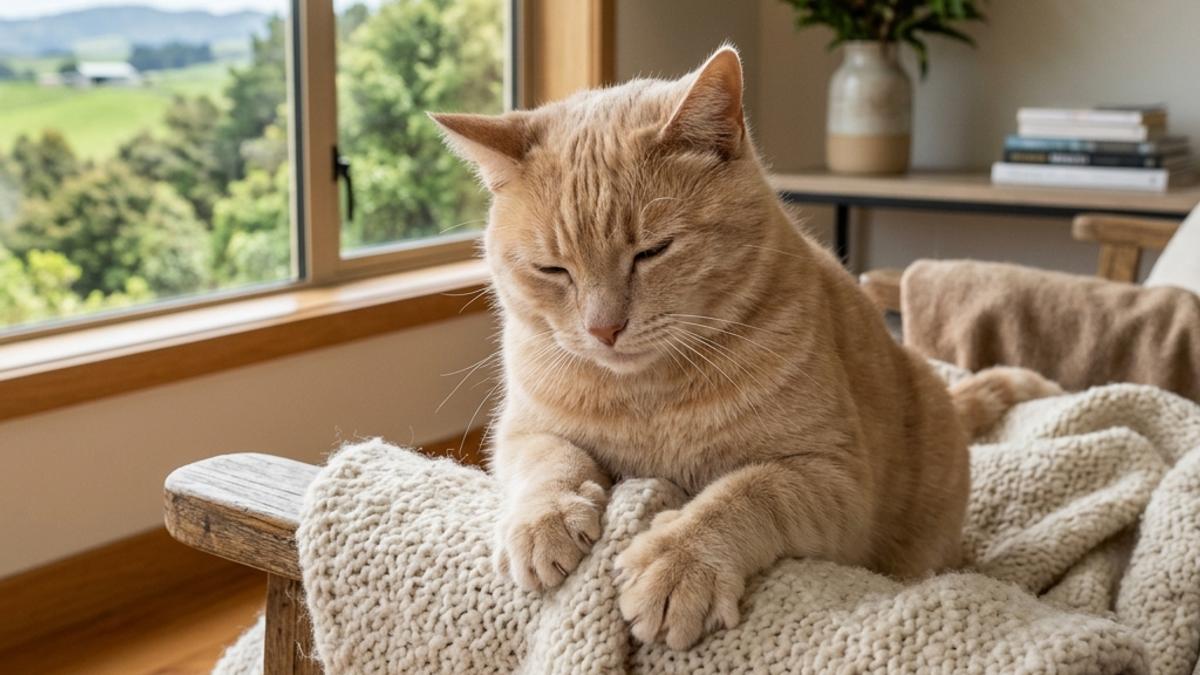
Kneading on a lap can be prickly. Don't punish it (it's affection):
- Lay a soft, thick blanket on your lap as a buffer.
- Keep claws trimmed — see pet nail trimming NZ.
- Gently redirect to a cushion or blanket if it's too much.
- Reward calm settling.
Use the Cat Behaviour Decoder to read your cat's other signals.
When to take note
Kneading itself is normal. But obsessive kneading combined with suckling on fabric, restlessness or distress can occasionally relate to stress — if your cat seems anxious or the behaviour changes suddenly, a vet or feline behaviourist can help.
Quick takeaways
- Kneading = normal, comforting, from kittenhood; usually contentment.
- It also marks you with their scent (bonding).
- Don't punish it; use a blanket buffer and trim claws.
- Sudden change or anxious, obsessive kneading → vet check.
Shop related categories at PetMall
Looking for cat beds, blankets and grooming tools in New Zealand? Browse the PetMall cat range for current options and nationwide delivery.
Related reading
References
- International Cat Care — Why do cats…? (kneading), checked 2026-06-29: https://icatcare.org/articles/why-do-cats
- SPCA New Zealand — cat behaviour advice, checked 2026-06-29: https://www.spca.nz/advice-and-welfare/category?cat=pets&subcat=cats
Important notice
*General behaviour information for NZ owners. Sudden behaviour changes can have medical causes — see a registered NZ vet.*
Free PetMall tools
Related guides
petmall.co.nz
Shop at PetMall
The products below are practical support items for your pet. PetMall ships across New Zealand.
- Cat FoodStart with food that matches your cat's life stage — change brands slowly over 7–10 days to avoid digestive upset.
- Cat LitterClumping or crystal, most cats prefer an unscented litter and a clean tray — one tray per cat plus one spare is the NZ rule of thumb.
- Cat TreatsGreat for bonding and training — keep treats under 10% of daily calories to protect your cat's waistline.
- Cat ToysA small rotation of toys (feather wand, puzzle feeder, and comfort toy) usually works better than buying many at once.
- Cat GroomingRegular brushing cuts hairballs and shedding — essential for long-haired breeds like Ragdolls and British Longhairs.
- Flea & Worm TreatmentFor NZ conditions, choose protection that fits your cat's weight and lifestyle (indoor vs outdoor) and keep it regular.