Why Does My Dog Bark at the Doorbell? NZ Guide to Stopping It
Why does your dog bark at the doorbell or a knock? It's learned alert/territorial behaviour. Here's why it happens and how to calmly train a quieter response in NZ.
The quick answer: barking at the doorbell or a knock is normal, learned alert and territorial behaviour — your dog is announcing an arrival and, often, getting an exciting reaction every time (the door opens, visitors appear). It's not disobedience. The good news is it responds well to calm, positive training that teaches a different, quieter routine.
Why dogs bark at the doorbell
- Alert instinct — dogs are wired to announce something approaching their territory.
- Learned association — *doorbell = exciting things happen* (visitors, attention, the door opening). The bell becomes a trigger.
- Excitement or anxiety — some dogs are thrilled, others are wary of strangers.
- It works — barking is always "rewarded" because the person at the door does arrive.
Use the Dog Behaviour Decoder to read whether your dog is excited, alert, or anxious — the fix differs slightly for each.
How to train a calmer doorbell response
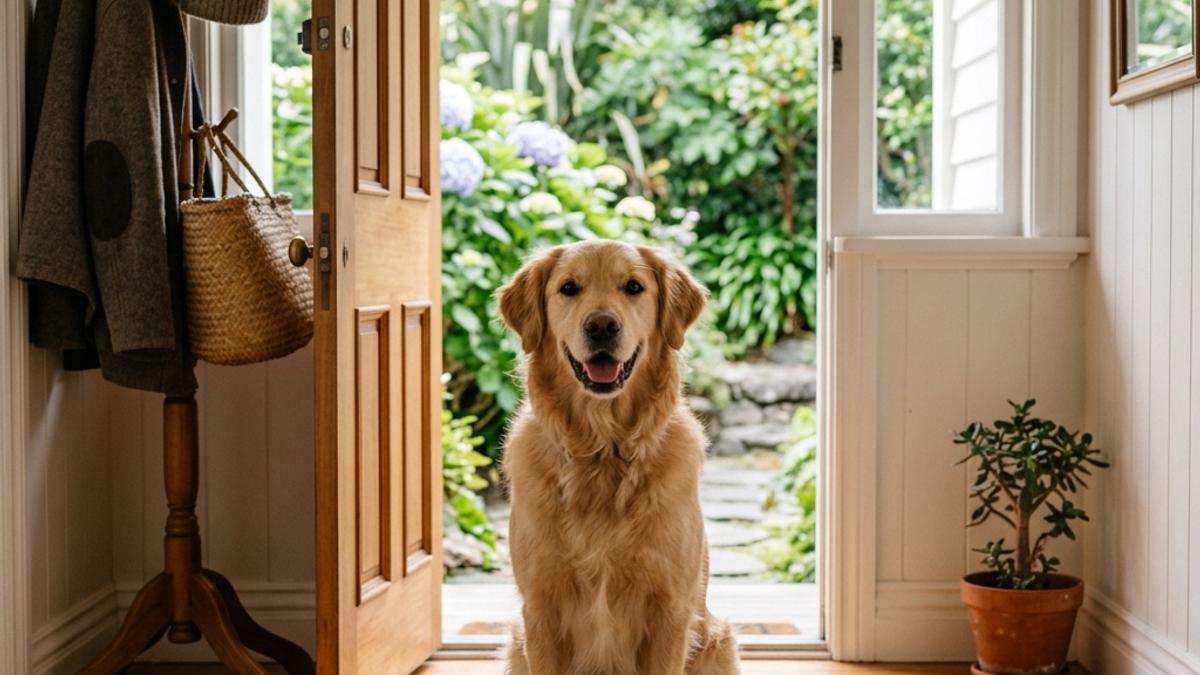
Aim to replace barking with a job your dog *can* do:
- Teach a "place" or "bed" cue — reward your dog for going to a mat when the bell rings. Practise with a helper ringing the bell, rewarding calm.
- Desensitise the trigger — ring the bell yourself many times a day when nothing happens, rewarding quiet. The bell stops predicting excitement.
- Reward quiet, don't punish noise — mark and treat the moment they stop. Yelling just adds to the chaos.
- Manage the environment — a stuffed chew or a "find it" scatter when guests arrive gives a calmer outlet.
- Meet daily needs — a well-exercised, enriched dog reacts less; see dog enrichment NZ.
Consistency from everyone in the household matters — see general stop dog barking NZ techniques too.
One mechanism worth understanding: the Merck Veterinary Manual notes that attention-seeking barking is reinforced by both kinds of owner attention — playing with the dog *and* yelling at it both pay the barking off. So telling your dog off at the door can quietly maintain the very behaviour you're trying to stop; a redirected cue with a reward is what actually changes it.
A note on NZ neighbours and council noise
Persistent barking is a common cause of neighbour complaints, and NZ councils can act on excessive dog noise under the Dog Control Act 1996. Training a calmer doorbell response is good for your dog *and* your street — but ongoing nuisance barking is worth addressing early.
When to get help
If barking is paired with genuine fear, lunging, or guarding the door aggressively, work with a qualified force-free trainer or behaviourist rather than going it alone.
Quick takeaways
- Doorbell barking = normal alert behaviour that's been accidentally reinforced.
- Teach a "place" cue and desensitise the bell; reward quiet, never punish.
- A tired, enriched dog reacts less.
- Persistent nuisance barking can draw council/neighbour complaints — address it early.
- Fear or guarding at the door → qualified force-free trainer.
Shop related categories at PetMall
Looking for training treats, chews, mats and enrichment toys in New Zealand? Browse the PetMall dog range for current options and nationwide delivery.
Related reading
References
- American Kennel Club — Why Dogs Bark at the Doorbell, checked 2026-07-05: https://www.akc.org/expert-advice/training/stop-dog-barking-doorbell/
- Merck Veterinary Manual — Behavior Problems in Dogs (attention-seeking behaviour is reinforced by both positive and negative owner attention), checked 2026-07-30: https://www.merckvetmanual.com/dog-owners/behavior-of-dogs/behavior-problems-in-dogs
Important notice
*General behaviour and training information for NZ owners. Fear-based or aggressive door behaviour should be assessed by a registered NZ vet or qualified force-free behaviourist.*
Free PetMall tools
Related guides
petmall.co.nz
Shop at PetMall
The products below are practical support items for your pet. PetMall ships across New Zealand.
- Dog FoodStart with food that matches your dog's life stage and activity level — and change brands slowly over 7–10 days.
- Dog TreatsTraining rewards and everyday treats — small, soft pieces work best for consistent reinforcement.
- Dog ToysA small rotation of chew, fetch, and puzzle toys usually works better than buying a large variety at once.
- Dog GroomingA gentle brush and the right shampoo make maintenance easier — especially for dogs that get muddy on walks.
- Leads & HarnessesComfort matters: padded contact points and adjustable fit help reduce rubbing on longer walks or tramping weekends.
- Flea & Worm TreatmentFor NZ conditions, look for protection that fits your routine (monthly vs longer-lasting) and your dog's weight range.