Beginner Reptile Heating and Lighting NZ: Safe Setup Checklist
Beginner reptile heating and lighting NZ checklist: heat gradients, UVB, thermostats, monitoring and red-flag review notes.
Beginner reptile heating and lighting NZ planning must be species-specific. Do not buy a heater, lamp or UVB tube because it fits a tank. Start with a legal species, confirm its heat and light needs with a reptile vet or experienced keeper, then build a controlled setup with monitoring before the reptile comes home.
Start with the species, not the gear
A Leopard Gecko, Bearded Dragon, Blue-Tongue Skink and Chameleon can need different heat, light, humidity, enclosure style and daily routines. That is why beginner reptile heating and lighting NZ setup should begin with the species profile and a keeper who knows that species.
Use the Reptiles hub, Best Reptiles for NZ Beginners, Reptiles in NZ Legal Guide and Find a Breed before you buy. If legality, permits, native species or unusual reptiles are involved, check official NZ sources first.
What beginners are really buying
Heating and lighting are not decorations. They are control systems. A beginner setup usually needs:
| Setup piece | Why it matters | Beginner mistake to avoid |
|---|---|---|
| Heat source | Creates a warm area for the species | Choosing random wattage without thermostat control |
| Thermostat or controller | Helps regulate heat output | Running heat equipment unmanaged |
| Thermometers | Shows actual enclosure temperatures | Trusting the dial on the heat product only |
| UVB and visible light | Species-specific light support | Assuming all reptiles need the same bulb |
| Timer | Keeps the day/night routine repeatable | Switching lights manually whenever someone remembers |
| Guards and placement | Reduces contact and overheating risks | Letting animals touch exposed hot gear |
The exact gear depends on species, enclosure material, room temperature and keeper experience. A South Island winter room, a humid Auckland flat and a sunny conservatory can behave differently even with the same tank.
Heat gradient, not one hot box
Reptiles generally need a thermal gradient: a warmer area and a cooler area so the animal can move between zones. Merck Veterinary Manual describes reptile heat sources as needing appropriate sizing, thermostat control, safe screening and placement toward one end of the enclosure.
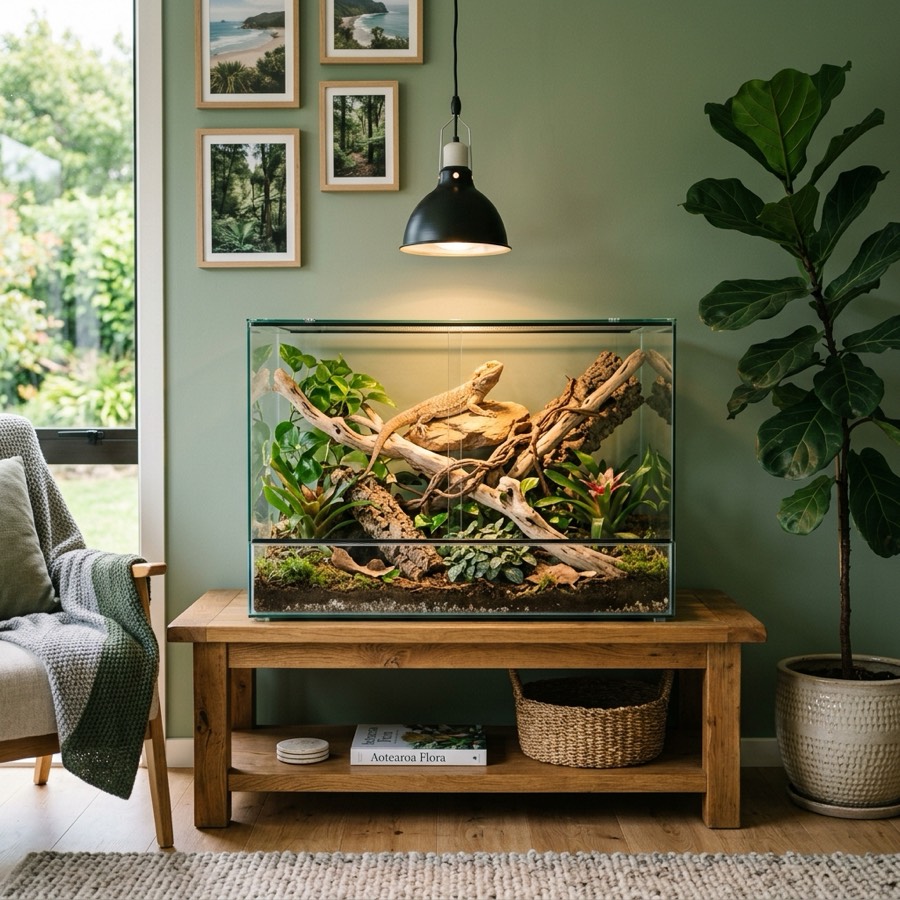
For beginners, the checklist is:
- Put the heat source at the correct end of the enclosure for the species plan.
- Use a thermostat or controller suited to the heat source.
- Use separate measuring tools to check what the animal actually experiences.
- Provide hides and usable space on more than one part of the gradient.
- Avoid direct sun through glass, especially in NZ summer or rooms that heat suddenly.
This guide does not give exact temperatures. A leopard gecko, bearded dragon, skink and chameleon should not be set up from one generic internet table.
UVB is species-specific
UVB and visible light decisions need more care than "add a reptile bulb". Some reptiles need UVB exposure as part of their normal husbandry, while requirements vary by species, age, enclosure mesh, distance, bulb type and replacement schedule. RSPCA and Merck guidance both treat reptile lighting as species-specific husbandry, not a one-size-fits-all accessory.
Ask these questions before buying:
- Does this species need UVB in captivity?
- Which style of UVB product is appropriate for the enclosure?
- What distance and mesh/cover factors affect the animal's exposure?
- How will the bulb be replaced on schedule?
- Can the reptile move away from the light as well as access it?
- Who has confirmed the plan: reptile vet, rescue, breeder or experienced keeper?
Window sunlight is not a safe shortcut. RSPCA Australia warns that window placement can overheat an enclosure, and glass does not provide useful UVB exposure.
Monitoring beats guessing
Beginners often buy the visible gear and forget the measuring gear. A simple checklist is easier to repeat:
- One thermometer near the warm zone.
- One thermometer near the cool zone.
- A way to check surface temperature where relevant.
- A timer for lights.
- A written schedule for checks, bulb replacement and cleaning.
- A power-cut plan for cold nights.
The point is not to turn the home into a lab. It is to stop guessing. If a setup changes because of a heat pump, open window, summer sun, power cut or room move, the reptile's enclosure conditions can change too.
NZ legality and native wildlife boundaries
New Zealand reptile ownership has legal and biosecurity edges. MPI's other-pets guidance places reptiles within import and biosecurity controls, and DOC's lizard information explains the protection status of native lizards. A beginner should not collect reptiles from the wild or rely on social media sellers for legality advice.
Use the Reptiles in NZ Legal Guide for the owner-facing overview, then check DOC, MPI or council sources where the situation is unusual. If you cannot confirm the animal is legal and responsibly sourced, do not build the enclosure yet.
Placement in a Kiwi home
Where the enclosure sits can undo good equipment. Avoid:
- Direct sun through windows.
- Cold draughts and damp garages.
- Heat pumps blasting one side of the tank.
- Kitchens, aerosols and smoke.
- Places where children tap glass or move controls.
- Power boards sitting where water can spill.
In NZ homes, the same room can swing from cool mornings to hot afternoon sun. Check the enclosure at different times of day before the reptile arrives.
Beginner red flags
Pause and get expert help if:
- The care sheet gives only one generic temperature for "all lizards".
- The seller says no thermostat or thermometer is needed.
- The plan depends on window sun for UVB.
- The enclosure has no cooler zone.
- The animal is legal status unknown, wild-caught or "rare" without paperwork.
- You cannot find a reptile-aware vet or experienced keeper to review the setup.
These are not small details. Heating and lighting are core husbandry, which is why this draft stays in review before publication.
First setup checklist
Before bringing home a reptile:
- Read the exact profile, such as Leopard Gecko, Bearded Dragon or Blue-Tongue Skink.
- Confirm the species is legal and appropriately sourced.
- Build the enclosure using Reptile Terrarium Setup NZ as the gear overview.
- Choose heat and UVB equipment only after confirming the species plan.
- Install thermostat control, monitoring and timers before the animal arrives.
- Test the setup in the actual NZ room for several days.
- Ask a reptile vet, rescue, breeder or experienced keeper to review the plan.
Key takeaways
- Beginner reptile heating and lighting NZ setup is species-specific, not tank-size-specific.
- Heat sources need control, measurement and safe placement.
- UVB choices depend on species, distance, mesh, enclosure and replacement schedule.
- Window sun is not a UVB plan and can overheat an enclosure.
- Check NZ legality and sourcing before buying gear or animals.
- This page should stay draft until Nick plus expert review clears the health and safety boundary.
Related reading
- Reptiles hub
- Leopard Gecko profile
- Bearded Dragon profile
- Blue-Tongue Skink profile
- Best Reptiles for NZ Beginners
- Reptiles in NZ Legal Guide
- Reptile Terrarium Setup NZ
- Find a Breed
Reference sources
- Merck Veterinary Manual: Management and husbandry of reptiles - checked 2026-06-04.
- RSPCA Australia Knowledgebase: Where should I keep my reptile? - checked 2026-06-04.
- RSPCA Victoria: Reptiles and frogs - checked 2026-06-04.
- MPI: Other pets - checked 2026-06-04.
- DOC: Lizards - checked 2026-06-04.
Related guides
petmall.co.nz
Shop at PetMall
The products below are practical support items for your pet. PetMall ships across New Zealand.
- Food & FeedingMatch diet to species — feeders, supplements, and the right calcium/D3 dusting keep NZ reptiles healthy.
- Heating & LightingUVB and a proper heat gradient are the foundation of reptile health — get this right before anything else.
- Reptile SuppliesSubstrate, hides, and enclosure gear — stable conditions are the foundation of reptile health in NZ.