Dog Brush NZ: 6 Coat Types and Tools to Use
Dog brush NZ guide: match brushes to short, long, curly, and double coats, avoid coat damage, and build a simple grooming kit at home safely.
The Quick Brush-by-Coat Cheat Sheet
Choosing the right dog brush in NZ starts with understanding your dog's coat. A quick glance at this cheat sheet will help you match the basic tool to the job:
- Short, Smooth Coats (e.g., Beagles): Rubber Curry Brush, Bristle Brush
- Short, Wiry Coats (e.g., Terriers): Bristle Brush, Pin Brush, Stripping Knife (for hand-stripping)
- Medium/Long, Silky Coats (e.g., Golden Retrievers): Pin Brush, Wide-Tooth Comb
- Double Coats (e.g., Labradors, Huskies): Undercoat Rake, Slicker Brush, Deshedding Tool
- Curly/Wavy Coats (e.g., Poodles, Bichon Frise): Slicker Brush, Pin Brush, Wide-Tooth Comb
This guide will help you organise your grooming kit for a happy, healthy hound.
Why Coat Type Matters More Than Brush Brand
When you're looking for a dog brush in NZ, it's easy to get caught up in brand names or fancy features. However, the most crucial factor for effective and safe grooming is your dog's specific coat type. Just like you wouldn't use a scrubbing brush on a delicate silk shirt, you shouldn't use a harsh slicker on a short, smooth coat.
Using the wrong brush can lead to a range of problems, from skin irritation and discomfort for your dog to actual damage to their coat. This damage might include breakage, split ends, or even pulling out healthy hair, which can affect their natural insulation and protection. For double-coated breeds, an incorrect brush can strip out the vital undercoat, leaving them vulnerable to our changeable New Zealand weather, whether it's the summer sun or a chilly southerly.
Understanding your dog's coat type helps you select tools that work *with* their fur, not against it. This ensures you effectively remove loose hair, dirt, and debris – like that pesky beach sand after a run along the coast – while distributing natural oils for a healthy, shiny coat. It also prevents painful matting, especially in our humid conditions, and makes grooming a positive experience for both of you.
Short Coat Breeds: What to Use and Avoid
Short-coated dogs, like Beagles, Boxers, Dalmatians, and many Staffy breeds, often appear low-maintenance, but they still benefit greatly from regular brushing. Their coats are typically smooth, lying close to the body, or sometimes slightly wiry. The goal here is to remove loose hair, stimulate the skin, and distribute natural oils for a healthy sheen.
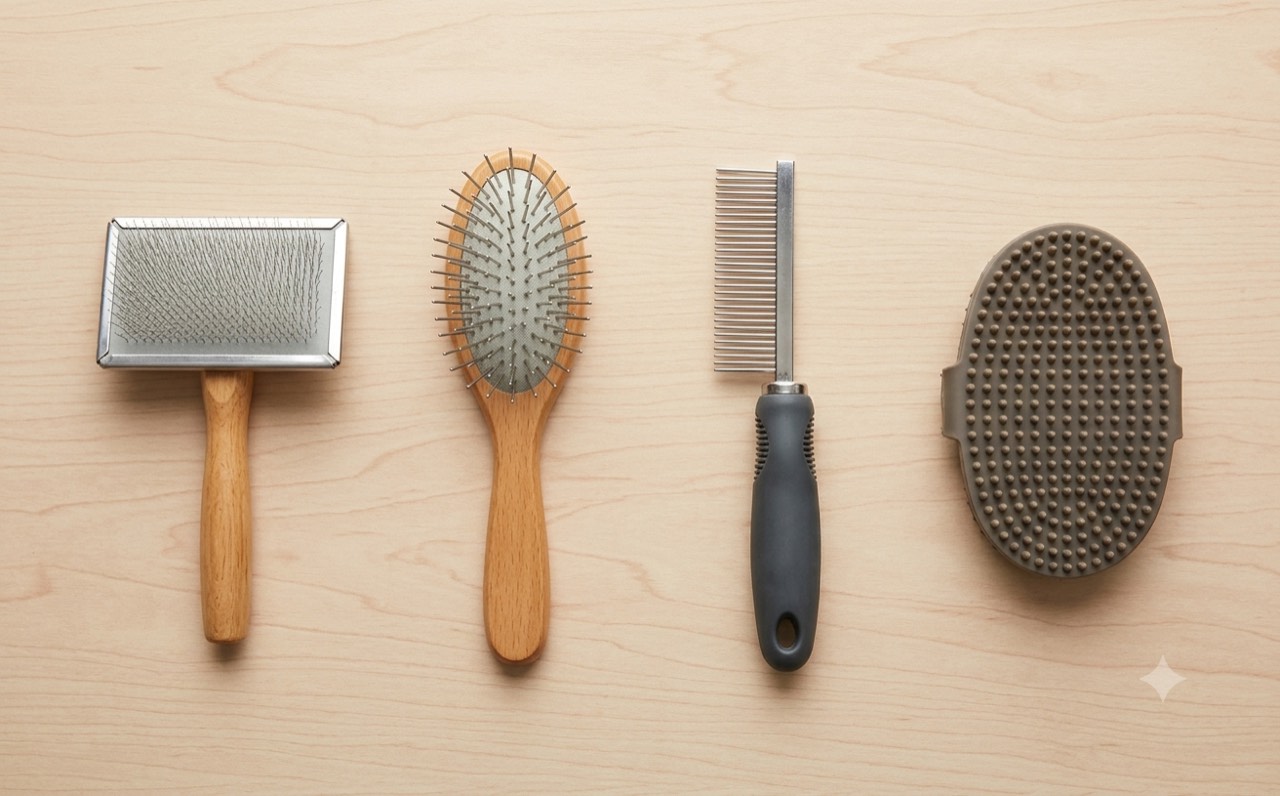
For these breeds, a rubber curry brush is your best friend. These brushes have soft, rubber nubs that gently massage the skin, loosening dead hair and dirt without scratching. They're excellent for baths too, helping to work shampoo through the coat. Many dogs absolutely love the feel of a curry brush, making grooming a pleasant bonding experience.
A bristle brush is also highly effective for short coats. Choose one with natural bristles that are firm enough to penetrate the coat but soft enough not to irritate the skin. Bristle brushes are fantastic for polishing the coat, removing fine dust, and spreading those natural oils, leaving your dog looking sleek and shiny.
For short-coated breeds that shed heavily, like a Labrador Retriever (even though they have a double coat, their outer coat is short), a deshedding tool can be used sparingly and carefully to remove excess undercoat. However, for truly short, single-layer coats, a deshedding tool is usually overkill and can cause irritation.
What to avoid: Harsh slicker brushes or undercoat rakes are generally too aggressive for short coats. They can scratch the skin, pull out healthy hair, and cause discomfort. The fine, bent wires of a slicker are designed for longer, denser coats and aren't suitable for the close-lying fur of a short-haired dog.
Medium, Long, and Double Coat Breeds: Tools by Need
This category covers a vast array of breeds, each with unique grooming requirements. From the flowing locks of a Golden Retriever to the dense insulation of a Siberian Husky, selecting the right tools is paramount.
Medium to Long, Silky Coats
Breeds like Golden Retrievers, Setters, and Border Collies have beautiful, flowing coats that can range from medium to long. These coats are prone to tangles and mats, especially behind the ears, under the legs, and on the tail.
- Pin Brush: This is your primary tool for daily brushing. A pin brush has widely spaced metal pins with rounded tips, designed to glide through longer hair, gently detangling and removing loose fur without pulling. Always brush in layers, starting from the bottom and working your way up, ensuring you reach the skin.
- Wide-Tooth Comb: Essential for checking your work and tackling stubborn tangles. After using the pin brush, run a wide-tooth comb through the coat to ensure all knots are removed. A metal comb with both wide and narrow teeth is ideal. It's particularly useful for areas prone to matting or for removing burrs picked up on a bush walk.
Double Coats
Dogs with double coats, such as Siberian Huskies, Labrador Retrievers, German Shepherds, and Bernese Mountain Dogs, have a dense, soft undercoat for insulation and a coarser, protective outer coat. These breeds shed heavily, especially seasonally, and require specific tools to manage their undercoat. Our NZ humidity can make their shedding even more noticeable.
- Undercoat Rake: This tool has long, widely spaced teeth designed to penetrate the topcoat and gently pull out loose undercoat. It's invaluable during shedding season. Use it with light pressure, following the direction of hair growth.
- Slicker Brush: After using the rake, a slicker brush helps to remove any remaining loose hair from both the undercoat and topcoat. Choose a slicker with flexible pins and a comfortable handle. Use short, gentle strokes, lifting the brush away from the skin at the end of each stroke to avoid scratching.
- Deshedding Tool: Used sparingly, a deshedding tool can be very effective for removing large amounts of loose undercoat. However, overuse can damage the topcoat or irritate the skin, so follow the manufacturer's instructions carefully and use it only when your dog is actively shedding.
Curly and Wavy Coats
Breeds like Poodles, Bichon Frise, Portuguese Water Dogs, and Labradoodles have coats that range from tight curls to loose waves. These coats are highly prone to matting and require diligent grooming to prevent painful knots.
- Slicker Brush: A slicker brush is crucial for curly coats. It helps to separate the curls and remove loose hair before it can form mats. Work in small sections, brushing against the grain initially to lift the hair, then with the grain.
- Pin Brush: Can be used for general detangling and fluffing, especially on longer curly coats.
- Wide-Tooth Comb: Absolutely essential for checking for mats and working through any tangles. Always comb through the entire coat after brushing to ensure no knots have been missed. For very matted areas, a detangling spray can help.
Wiry Coats
Terrier breeds often have wiry coats that are traditionally hand-stripped rather than clipped to maintain their texture. However, for everyday grooming, these tools are useful:
- Bristle Brush: Good for daily tidying and stimulating the skin.
- Pin Brush: Helps to detangle and remove loose hair without damaging the wiry texture.
- Stripping Knife (optional): If you hand-strip your dog, a stripping knife is used to pluck out dead hair, maintaining the coat's characteristic texture and colour. This is a specialised skill often best learned from a professional groomer.
Remember, patience and gentleness are key, especially when dealing with longer or denser coats. Regular brushing not only keeps your dog looking good but also helps you bond and check for any skin issues or parasites.
Common Brushing Mistakes That Damage Coats
Even with the right tools, improper brushing techniques can cause discomfort for your dog and damage their beautiful coat. Avoiding these common mistakes will ensure a positive grooming experience and a healthy, shiny coat.
- Brushing a Dry, Matted Coat: This is perhaps the biggest mistake. Brushing through dry tangles or mats will pull and break the hair, causing pain for your dog and making the mat worse. Always mist the coat lightly with water or a detangling spray before tackling tangles. For severe mats, it's often safer to carefully cut them out or seek professional help.
- Using the Wrong Brush for the Coat Type: As we've discussed, a slicker brush on a short coat can scratch the skin, while a bristle brush won't penetrate a thick double coat. Using an inappropriate tool is inefficient and can cause irritation or ineffective grooming.
- Brushing Too Hard or Aggressively: Your dog's skin is sensitive. Brushing with too much pressure, especially with a slicker or undercoat rake, can cause brush burn, redness, and discomfort. Always use gentle, controlled strokes, letting the brush do the work. If your dog flinches, you're likely being too rough.
- Ignoring Mats and Tangles: Small tangles quickly become large, painful mats if left unchecked. Mats pull on the skin, restrict movement, and can hide skin infections. Regular, thorough brushing is essential to prevent them from forming.
- Not Brushing Often Enough: The frequency of brushing depends on your dog's coat type, but generally, more often is better. Daily brushing for long or curly coats, and a few times a week for short coats, helps prevent build-up of loose hair and tangles.
- Skipping the Comb: Many people stop after using a brush, but a comb is vital, especially for longer or curly coats. It acts as a "mat detector," ensuring you've removed all tangles that the brush might have missed. If a fine-tooth comb can't pass through the coat easily, there are still tangles present.
- Brushing Only the Topcoat: For double-coated or long-haired breeds, it's easy to just skim the surface. You need to part the hair and brush in layers, ensuring you reach down to the skin to remove loose undercoat and prevent mats from forming close to the body.
For more detailed advice on general grooming practices, you might find our guide on dog grooming at home NZ helpful.
Brushes to Have in Your NZ Dog Kit
Building a basic grooming kit tailored to your dog's coat type is a smart move for any New Zealand dog owner. Having the right tools on hand makes regular grooming easier and more effective.
Here's a general guide to what you should consider:
- For Short, Smooth Coats: A rubber curry brush for shedding and massage, and a bristle brush for polishing.
- For Medium, Long, or Curly Coats: A good quality pin brush for general detangling, a slicker brush for removing loose hair and working through mats, and a sturdy wide-tooth metal comb for checking for tangles and finishing.
- For Double Coats: An undercoat rake is essential during shedding season, alongside a slicker brush and a wide-tooth metal comb. A deshedding tool can be a useful addition, used sparingly.
Don't forget nail clippers or a grinder, and dog-specific shampoo and conditioner. For a comprehensive look at different grooming tools, check out our dog grooming brushes guide NZ.
Final Thoughts
Choosing the correct dog brush in NZ for your furry friend is more than just a purchase; it's an investment in their health, comfort, and your bond. By understanding their unique coat type and using the right tools and techniques, you can prevent painful mats, reduce shedding, and keep their coat looking its best. Regular grooming is a fantastic way to connect with your dog and ensure they're happy and healthy, ready for all the adventures New Zealand has to offer.
---
Reference sources
- American Kennel Club, Dog Brushes: How to Choose the Right Dog Brush for Your Pet (undercoat rakes for double-coated breeds), checked 2026-08-06: https://www.akc.org/expert-advice/health/types-dog-brushes-shedding/
- PetMall Wiki, Dog Grooming Brushes NZ, checked 2026-06-04: https://wiki.petmall.co.nz/guides/dog-grooming-brushes-guide-nz
- SPCA New Zealand, Keeping your dog healthy, checked 2026-06-04: https://www.spca.nz/advice-and-welfare/article/keeping-your-dog-healthy
- SPCA New Zealand, Dog & puppy care guide, checked 2026-06-04: https://www.spca.nz/images/assets/1010039/1/dog%26puppy_jun%202024_web.pdf
Related guides
petmall.co.nz
Shop at PetMall
The products below are practical support items for your pet. PetMall ships across New Zealand.
- Dog GroomingA gentle brush and the right shampoo make maintenance easier — especially for dogs that get muddy on walks.
- Dog FoodStart with food that matches your dog's life stage and activity level — and change brands slowly over 7–10 days.
- Dog TreatsTraining rewards and everyday treats — small, soft pieces work best for consistent reinforcement.
- Dog ToysA small rotation of chew, fetch, and puzzle toys usually works better than buying a large variety at once.
- Leads & HarnessesComfort matters: padded contact points and adjustable fit help reduce rubbing on longer walks or tramping weekends.
- Flea & Worm TreatmentFor NZ conditions, look for protection that fits your routine (monthly vs longer-lasting) and your dog's weight range.