Christmas Pet Hazards NZ: Food, Tinsel and Holiday Safety
Christmas pet hazards NZ draft: unsafe foods, tinsel, plants, rubbish, visitors and vet-review poison boundaries.
Christmas pet hazards in NZ are usually preventable: keep chocolate, fruit cake, raisins, grapes, alcohol, cooked bones, fatty leftovers, tinsel, ribbons, batteries, plants and rubbish away from pets. If a pet eats something unsafe or you are unsure, call your vet or after-hours clinic promptly. Do not wait for symptoms or try home treatment from the internet.
The quick answer
SPCA New Zealand warns that many common festive foods are dangerous for pets, including chocolate, fruit cake, Christmas pudding, grapes and raisins. RSPCA also lists chocolate, mince pies, alcohol, cooked bones, tinsel and ornaments as Christmas risks. Pet Poison Helpline notes holiday plants and festive treats create seasonal calls.
This guide is a prevention checklist, not a poisoning-treatment guide.
The highest-risk Christmas food zones
Pets do not need access to the dining table to get into trouble. The most common NZ holiday problem spots are lower than humans think.
| Zone | Why it matters | Prevention |
|---|---|---|
| Coffee table | Chocolate boxes and mince pies sit at pet height | Use closed containers or high shelves |
| Gifts under tree | Food gifts may smell interesting through wrapping | Do not place edible gifts under the tree |
| Handbags | Guests may carry gum, snacks or medicines | Put bags in a closed room |
| Rubbish bags | Bones, wrappers and scraps smell exciting | Remove rubbish quickly |
| Barbecue area | Skewers, corn cobs, fat and bones get dropped | Clean as you cook |
| Kids' plates | Small hands share fast | Supervise or feed pets elsewhere |
If your dog is a skilled bench surfer or your cat opens cupboards, assume festive food is reachable unless it is behind a closed door.
Foods to keep away
Do not feed pets from Christmas plates unless you have checked with your vet and know the food is pet-safe. High-risk festive items include:
- chocolate;
- Christmas cake and pudding;
- raisins, grapes and sultanas;
- alcohol;
- onion and garlic in stuffing or gravy;
- cooked bones;
- corn cobs;
- fatty leftovers;
- sweets, gum and baked goods with xylitol or other sweeteners;
- macadamia nuts;
- mouldy food from bins or compost.
SPCA New Zealand's Christmas advice and dangerous-foods guide both stress that pets metabolise food differently from humans. A "small treat" for us may not be safe for them.
For everyday feeding decisions, use Dog Food Guide NZ, Cat Food Guide NZ and Pet Bowls and Feeders Guide NZ.
Decorations, tinsel and trees
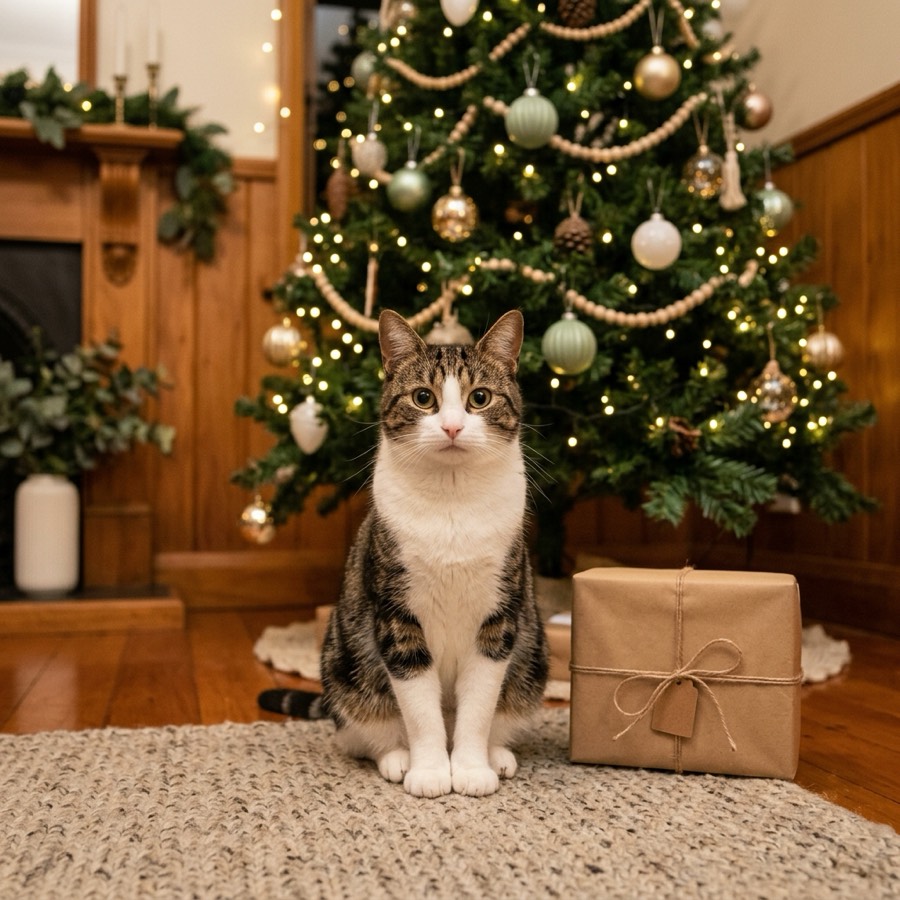
Tinsel, ribbon, string, baubles, lights and tree water can all attract curious pets. RSPCA warns that ornaments and tinsel can be dangerous if swallowed. RSPCA Knowledgebase also highlights tinsel, ribbon and similar household items as risks.
Safer setup:
- Anchor the tree.
- Skip tinsel if you have cats or chew-happy dogs.
- Keep glass ornaments higher.
- Tape or cover cords.
- Do not leave batteries loose.
- Close the room when pets are unsupervised.
- Sweep pine needles and broken ornament pieces.
For cats, climbing and swatting are normal behaviours. Give better outlets with Cat Toys Guide NZ. For dogs, use calm enrichment from Dog Toys Guide NZ during dinner prep.
Holiday plants and flowers
Festive plants vary in risk, and plant identification can be hard. Pet Poison Helpline discusses common holiday plant concerns, while SPCA and RSPCA sources advise keeping risky decorations away from pets.
Use a simple rule: if you do not know whether a plant is safe, keep it out of reach. This is especially important with cats, who may chew leaves or knock vases over.
Do not rely on "my pet has never eaten plants before". Christmas changes the house: new smells, visitors, flowers, wrapped gifts, bright decorations and less supervision.
Visitors, kids and routines
Many Christmas incidents happen because the house routine breaks. Guests prop doors open. Children feed scraps. Someone leaves a handbag on the floor. A dog steals from the barbecue. A cat hides in a spare room and misses dinner.
Make a pet plan before guests arrive:
- Feed pets before the main meal.
- Set a quiet room with water, bed and litter if needed.
- Tell guests not to feed pets.
- Put bags and gifts away.
- Keep doors and gates checked.
- Supervise pets around small children.
Use Dog Behaviour Decoder and Cat Behaviour Decoder if stress behaviour appears during the holidays.
Rubbish and leftovers
Christmas rubbish is often more dangerous than the table. Foil, cling film, skewers, bones, corn cobs, meat strings, chocolate wrappers and alcohol-soaked desserts may all end up in bags pets can tear open.
In summer NZ weather, rubbish also smells stronger and bins may sit outside during barbecues. Tie bags, move them behind closed doors and clear low tables early.
Do not give cooked bones. Do not leave barbecue scraps where dogs can reach them. Do not assume cats will ignore wrappers or string.
Travel, baches and pet sitters
If you are heading to a bach, campground or family house, pack pet food, bowls, bedding, leads, medications if prescribed by your vet, litter and your vet clinic details. Check fences before letting dogs off lead. Keep cats contained until settled.
For pet sitters, leave a clear "do not feed" list and your vet contact. Write it down; do not rely on a quick chat while everyone is loading the car.
Safer ways to include pets
Pets do not need a slice of Christmas dinner to be part of the day. Safer options are usually routine-based: a normal meal in a quiet room, a walk before visitors arrive, a food puzzle using their usual food, or a new toy that is sized for the pet and used under supervision. If guests want to give something, put approved pet treats in a labelled container and make one adult responsible for the daily limit.
For dogs who hover around the barbecue, set up a mat or crate game away from the food area. For cats who climb into wrapping paper, offer a plain cardboard box without ribbon or string. Keep the fun simple and boring enough that it does not create a new hazard.
NZ summer Christmas layer
Christmas in Aotearoa is also summer. Food sits out at barbecues, doors stay open, visitors move between deck and kitchen, and rubbish bags may wait outside in the heat. That combination increases scavenging risk. Clear plates early, shut pantry doors, keep compost lids secure and check under outdoor tables before letting pets back into the area.
What to do if something is eaten
This draft does not provide dose thresholds, symptom timelines, home remedies, induced-vomiting instructions or treatment plans. Those are veterinary decisions.
If your pet eats or may have eaten a risky item:
- remove access to the item;
- keep packaging or plant pieces if safe to do so;
- call your vet or after-hours clinic;
- tell them what was eaten, when, and roughly how much;
- follow their instructions.
Do not wait to see if your pet "looks fine". Some risks are time-sensitive, and online calculators cannot see your pet.
Key takeaways
- Keep festive food, wrapped edible gifts and rubbish out of reach.
- Chocolate, raisins, grapes, alcohol, cooked bones and xylitol-containing sweets are not pet treats.
- Avoid tinsel and loose ribbon around cats and chew-happy pets.
- Give pets a quiet room when visitors and kids are busy.
- Call your vet if a pet eats a risky item or you are unsure.
Related reading
- Dog Behaviour Decoder
- Cat Behaviour Decoder
- Dog Toys Guide NZ
- Cat Toys Guide NZ
- Dog Food Guide NZ
- Cat Food Guide NZ
- Pet Bowls and Feeders Guide NZ
---
Reference sources
- SPCA New Zealand: Keeping pets safe at Christmas, checked 2026-06-04. https://www.spca.nz/advice-and-welfare/article/keeping-pets-safe-at-christmas
- SPCA New Zealand: Dangerous foods for dogs, checked 2026-06-04. https://www.spca.nz/advice-and-welfare/article/dangerous-foods-for-dogs
- RSPCA UK: Christmas dangers for pets, checked 2026-06-04. https://www.rspca.org.uk/adviceandwelfare/seasonal/christmas
- RSPCA Knowledgebase: Common household dangers for pets, checked 2026-06-04. https://kb.rspca.org.au/categories/companion-animals/household-and-garden-dangers/what-are-common-household-dangers-for-pets
- Pet Poison Helpline: Holiday plants toxic to pets, checked 2026-06-04. https://www.petpoisonhelpline.com/uncategorized/deck-halls-holiday-plants-toxic/
- MPI New Zealand: Code of Welfare - Cats, checked 2026-06-04. https://www.mpi.govt.nz/animals/animal-welfare/codes/all-animal-welfare-codes/code-of-welfare-cats/
- MPI New Zealand: Code of Welfare - Dogs, checked 2026-06-04. https://www.mpi.govt.nz/animals/animal-welfare/codes/all-animal-welfare-codes/code-of-welfare-dogs/