Raised Dog Bowls Pros and Cons NZ: Are They Worth It?
Raised dog bowls in NZ: when they help, when to avoid them, bloat cautions, large dogs, messy drinkers and better feeding alternatives.
The quick answer: raised dog bowls are useful for a few situations, but they are not automatically better for every dog. They can reduce floor mess and make eating easier for some dogs with vet-advised mobility needs. But for large and deep-chested dogs, veterinary sources link elevated feeding with gastric dilatation-volvulus risk factors, so do not buy one as a "bloat prevention" tool.
Quick pros and cons
| Raised bowl can help with | Raised bowl can be a poor choice for |
|---|---|
| Messy drinkers on hard floors | Large or deep-chested dogs at bloat risk unless your vet advises |
| Tall dogs that strain awkwardly to reach a low bowl | Fast eaters that gulp bigger mouthfuls |
| Some dogs with vet-advised mobility support | Puppies that may outgrow the height quickly |
| Keeping bowls in one tidy station | Dogs that chew stands or knock them over |
The bloat caution
Bloat and gastric dilatation-volvulus are emergency veterinary conditions, especially associated with large and deep-chested breeds. Merck Veterinary Manual lists avoiding elevated feed bowls among risk-reduction points for dogs at risk. That does not mean every raised bowl is dangerous for every dog, but it does mean "raised bowls prevent bloat" is not a claim to trust.
If you own a Great Dane, German Shepherd, Standard Poodle, Weimaraner, Irish Setter, Doberman, Boxer or other deep-chested dog, ask your NZ vet before making elevated feeding part of the routine.
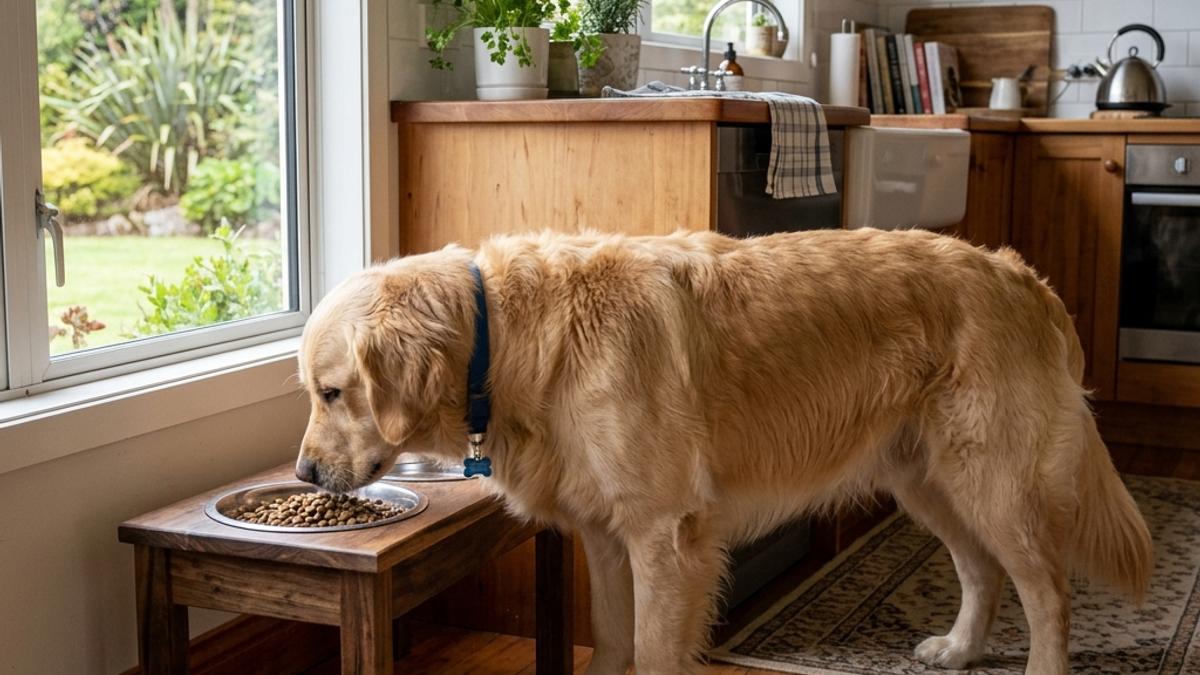
When a raised bowl makes sense
A raised bowl can be practical when the reason is ordinary household fit: less splashing on rental carpet, a tidier feeding corner, or a dog that genuinely eats more comfortably at a modest height. Some older dogs may benefit from a raised setup, but that should be based on the dog in front of you, not a generic senior-dog claim.
If your dog is stiff, reluctant to lower the head, losing weight, coughing when eating or suddenly messy with food, do not solve it with a product first. Ask your vet what is going on.
What to look for
- Stable base that will not tip on tiles, vinyl or garage floors.
- Bowls that lift out for washing.
- Stainless or easy-clean inserts rather than rough plastic.
- A height that lets your dog stand naturally, not reach up or crouch oddly.
- No sharp edges, wobble, chewable splinters or trapped food seams.
For bowl materials and cleaning, read Pet Bowls and Feeders Guide NZ and Pet Bowl Types NZ.
Better alternatives for many dogs
If the real problem is speed eating, a slow feeder or scatter feeding may help more than height. If the issue is weight control, measuring meals matters more than bowl style. If the issue is wet floors, a washable mat under normal bowls may be enough.
For food basics, see Dog Food Guide NZ. If you are changing food format at the same time as changing bowls, use How to Transition Dog Food NZ.
NZ home tips
Put bowls where your dog can eat without foot traffic, toddlers, other pets hovering, or a sliding bowl travelling across polished floors. In multi-dog homes, feed separately if one dog guards food or rushes another. For outdoor feeding on lifestyle blocks or at the bach, bring bowls inside after meals so pests and weather do not turn them into a hygiene problem.
Quick takeaways
- Raised bowls are a convenience tool, not a universal health upgrade.
- Do not use elevated feeding as a bloat-prevention claim for deep-chested dogs.
- Ask your vet before using raised bowls for a dog with mobility, swallowing or appetite changes.
- Stable, washable and correctly sized matters more than style.
- Slow feeders, mats or separate feeding stations may solve the real problem better.
Shop related categories at PetMall
Looking for bowls, feeders and meal-time basics in New Zealand? Browse the PetMall dog range for current options and nationwide delivery.
Related reading
References
- Merck Veterinary Manual, gastric dilatation-volvulus in small animals, checked 2026-06-05: https://www.merckvetmanual.com/digestive-system/diseases-of-the-stomach-and-intestines-in-small-animals/gastric-dilation-and-volvulus-in-small-animals
- MPI, Code of Welfare: Dogs, checked 2026-06-05: https://www.mpi.govt.nz/animals/animal-welfare/codes/all-animal-welfare-codes/code-of-welfare-dogs
- FDA, Complete and Balanced Pet Food, checked 2026-06-05: https://www.fda.gov/animal-veterinary/animal-health-literacy/complete-and-balanced-pet-food
Important notice
*General product information for NZ dog owners. Bloat signs, sudden appetite change, swallowing trouble, coughing with meals or painful movement need prompt veterinary advice.*
Related guides
petmall.co.nz
Shop at PetMall
The products below are practical support items for your pet. PetMall ships across New Zealand.
- Dog FoodStart with food that matches your dog's life stage and activity level — and change brands slowly over 7–10 days.
- Dog TreatsTraining rewards and everyday treats — small, soft pieces work best for consistent reinforcement.
- Dog ToysA small rotation of chew, fetch, and puzzle toys usually works better than buying a large variety at once.
- Dog GroomingA gentle brush and the right shampoo make maintenance easier — especially for dogs that get muddy on walks.
- Leads & HarnessesComfort matters: padded contact points and adjustable fit help reduce rubbing on longer walks or tramping weekends.
- Flea & Worm TreatmentFor NZ conditions, look for protection that fits your routine (monthly vs longer-lasting) and your dog's weight range.