How to Transition Dog Food NZ: A Simple 7-Day Switch Plan
Transition dog food NZ guide: a simple 7-day switch plan, wet/dry mixing tips, puppy notes and signs to slow down.
To transition dog food in NZ, mix the new food into the old food gradually over about a week, keep meal times stable, and watch appetite, stools, body condition and energy. If your dog is sensitive, elderly, a young puppy or changing after vet advice, go slower and ask your vet clinic before making big changes.
The quick answer
Most dogs do best when food changes are boring. Start with mostly old food, add a small amount of the new food, then increase the new food over 7-10 days. SPCA New Zealand advises introducing new food gradually over one or two weeks to reduce stomach upsets. Royal Canin NZ gives a seven-day transition pattern that moves from 25% new food to 100% new food if the dog is coping well.
This is a general feeding guide, not a plan for dogs needing a vet-led diet. If your vet has given you a specific switch schedule, follow that instead.
The 7-day dog food transition plan
Use this as a starting point for a healthy adult dog moving between complete diets. Slow down if your dog is a puppy, senior, stressed, fussy, or has had trouble with food changes before.
| Days | Old food | New food | What to do |
|---|---|---|---|
| 1-2 | 75% | 25% | Keep meals in the usual bowl and place |
| 3-4 | 50% | 50% | Watch stools, appetite and behaviour |
| 5-6 | 25% | 75% | Keep treats and extras quiet |
| 7+ | 0% | 100% | Stay on the new food and monitor for a few weeks |
If your dog gets unsettled, pause at the current mix for a few more days instead of pushing ahead. If things are clearly not going well, step back to the last mix that suited your dog and call your vet clinic for advice.
Measure the total food, not two dinners
The easiest mistake is feeding the old daily amount plus the new daily amount. A transition mix should replace part of the old food, not sit on top of it.
For example, if your dog's daily ration is 200 g and you are on the 75/25 stage, that means about 150 g old food and 50 g new food across the whole day. If you feed breakfast and dinner, split those amounts across the two meals.
Use kitchen scales where you can. Cups are especially unreliable when switching from large kibble to small kibble, or from dry to wet. Royal Canin NZ notes that wet and dry foods differ in calories per gram, so half a cup for half a cup is not a true swap.
Wet to dry, dry to wet, or mixed feeding
Changing format can be harder than changing flavour. A dog moving from wet to dry may need the kibble softened at first. A dog moving from dry to wet may find the richer smell exciting and eat too fast.
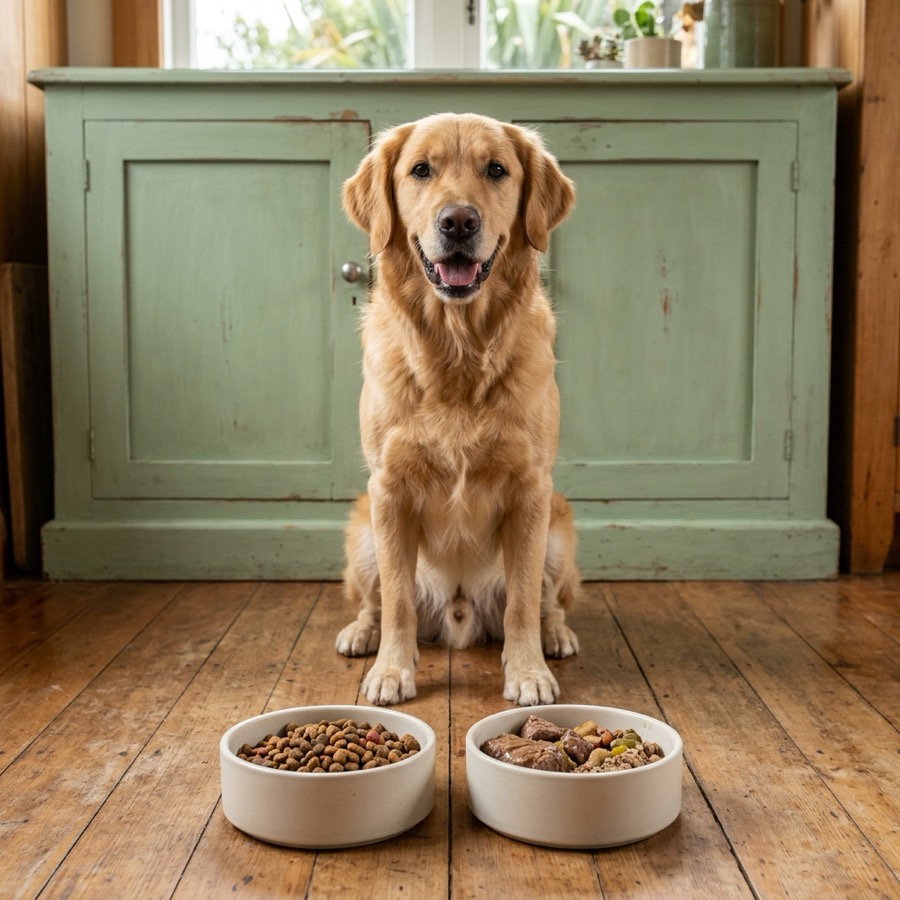
Practical options:
- Keep the old meal time and bowl location.
- Mix thoroughly so the new food is not just sitting on top.
- Add a little warm water if the food brand allows it and your dog prefers softer texture.
- Use slow feeders only if your dog already finds them easy.
- Avoid adding many toppers during the switch; they make it harder to judge the new food.
If mixed feeding is the long-term plan, set a written daily wet amount and dry amount. This helps every person in the house feed the same plan.
Puppy food transitions
Puppies often arrive with food from a breeder, rescue or foster home. Keep that food steady for the first few days if you can. New homes already bring big changes: car rides, new smells, visitors, toilet training, crate practice and first nights away from littermates.
When your puppy is settled, use a slow transition and keep the daily amount based on the puppy food label. Pair this with How Much to Feed a Puppy NZ, the New Puppy Checklist NZ and New Dog Owner First 30 Days NZ.
If a puppy is very young, tiny, underweight, refusing meals or worrying you, do not experiment with multiple foods. Call your vet or the rescue/breeder for guidance.
What to monitor during the switch
You do not need to inspect every mouthful. You do need a simple log for a week or two.
| Check | Good sign | Slow down if |
|---|---|---|
| Appetite | Eats normal meals without stress | Refuses the mixed food repeatedly |
| Stools | Similar to normal for your dog | Soft, messy or changing day by day |
| Behaviour | Normal play, sleep and interest | Restless after meals or guarding the bowl |
| Body condition | Waist and ribs feel similar | Rapid gain or loss across weeks |
| Skin and coat | No obvious change | New itchiness or dull coat after the switch |
The WSAVA body condition score chart can help you keep the weight conversation grounded. Use it as a monitoring tool alongside your vet's regular checks.
Why dogs struggle with sudden food changes
Some dogs can eat anything and seem fine. Others need a slow, steady approach. A sudden change can alter texture, fat level, fibre, moisture, meal size and eating speed all at once. That is a lot for one bowl.
The switch is also emotional. Many dogs like predictable routines. If food changes happen at the same time as moving house, boarding, a new baby, a visiting dog, summer travel, or Guy Fawkes noise, the bowl may become part of a bigger stress pattern.
Keep the routine dull:
- Same bowl.
- Same meal times.
- Same feeding spot.
- Same toilet breaks after meals.
- Same quiet rest after dinner.
Use Dog Behaviour Decoder if food refusal, guarding or anxious behaviour appears alongside the diet change.
NZ shopping and storage notes
In New Zealand, food switches often happen because a bag size is out of stock, a puppy moves to adult food, a dog changes life stage, or a family wants a different wet/dry mix. Plan ahead before the old bag runs out. A transition is much easier when you still have enough old food for a week.
Store food carefully in humid Auckland weather and in warm summer garages. Keep dry food sealed and off damp concrete. For wet food, follow the label's storage instructions after opening.
Budget-wise, compare NZD cost per day, not only bag price. A more expensive bag may feed fewer grams per day, while a cheaper-looking option may need larger portions. The Dog Food Guide NZ explains what to look for before switching brands.
When not to switch casually
Do not casually change food when your dog is already unwell, has suddenly stopped eating, is recovering from a procedure, is on a vet-directed diet, or has had repeated trouble with food changes. Those situations need vet guidance.
Also avoid changing food and treats at the same time. If the switch goes badly, you will not know whether the new kibble, new wet food, new chew, new training treat or new table scraps caused the problem.
During the transition, keep extras simple. If you need rewards for training, use a few pieces from the daily food allowance or a familiar treat your dog already handles well. For enrichment, choose calm food-free options from Dog Toys Guide NZ until the new diet is settled.
After day seven
Once your dog is on the new food, do not keep changing. Royal Canin NZ recommends staying on the new diet long enough to judge the response. Give it a few weeks unless your vet tells you otherwise or your dog clearly is not coping.
Review:
- Is your dog eating consistently?
- Are stools predictable?
- Is body condition stable?
- Is the daily amount realistic for your routine?
- Is everyone in the house feeding the same plan?
If the answer is yes, the transition has done its job quietly.
Key takeaways
- Transition dog food gradually over about 7-10 days.
- Replace part of the old food with new food; do not add a second full ration.
- Use scales, especially when switching wet/dry formats or kibble sizes.
- Keep feeding location, timing and routine stable.
- Slow down for puppies, seniors, sensitive dogs and stressful weeks.
- Ask your vet before changing a vet-directed diet or if your dog is not coping.
Related reading
- Dog Food Guide NZ
- How Much to Feed a Puppy NZ
- New Dog Owner First 30 Days NZ
- New Puppy Checklist NZ
- Dog Behaviour Decoder
- Dog Toys Guide NZ
---
Reference sources
- SPCA New Zealand: What to feed your dog or puppy, checked 2026-06-04. https://www.spca.nz/advice-and-welfare/article/what-to-feed-your-dog-or-puppy
- Royal Canin NZ: A guide to changing your dog's food, checked 2026-06-04. https://www.royalcanin.com/nz/dogs/health-and-wellbeing/a-guide-to-changing-your-dogs-food
- Royal Canin NZ: 5 tips for mixed wet and dry feeding for dogs, checked 2026-06-04. https://www.royalcanin.com/nz/dogs/health-and-wellbeing/5-tips-for-mixed-wet-and-dry-feeding-for-dogs
- WSAVA: Global Nutrition Guidelines, checked 2026-06-04. https://wsava.org/global-guidelines/global-nutrition-guidelines/
- WSAVA: Body Condition Score - Dog, checked 2026-06-04. https://wsava.org/wp-content/uploads/2020/01/Body-Condition-Score-Dog.pdf
- MPI New Zealand: Code of Welfare - Dogs, checked 2026-06-04. https://www.mpi.govt.nz/animals/animal-welfare/codes/all-animal-welfare-codes/code-of-welfare-dogs/
Free PetMall tools
Related guides
petmall.co.nz
Shop at PetMall
The products below are practical support items for your pet. PetMall ships across New Zealand.
- Dog FoodStart with food that matches your dog's life stage and activity level — and change brands slowly over 7–10 days.
- Dog TreatsTraining rewards and everyday treats — small, soft pieces work best for consistent reinforcement.
- Dog ToysA small rotation of chew, fetch, and puzzle toys usually works better than buying a large variety at once.
- Dog GroomingA gentle brush and the right shampoo make maintenance easier — especially for dogs that get muddy on walks.
- Leads & HarnessesComfort matters: padded contact points and adjustable fit help reduce rubbing on longer walks or tramping weekends.
- Flea & Worm TreatmentFor NZ conditions, look for protection that fits your routine (monthly vs longer-lasting) and your dog's weight range.