Pet Bowl Types NZ: Stainless Steel, Ceramic, Slow Feeder, Elevated & Water Fountains Compared
Which pet bowl type is right for your dog or cat in NZ? Compare stainless, ceramic, slow feeder, elevated and water fountain bowls — what each does and who it suits.
Most NZ pet owners buy the first bowl they see in the shop without much thought. That works fine for many pets — but the wrong bowl type can contribute to gulping and bloat risk in large dogs, joint strain in senior pets, dental issues from plastic, or dehydration in cats who won't drink from still water. Here's what the different bowl types actually do and which pets they suit.
The main pet bowl types
1. Stainless steel — the default choice for most dogs and cats
Stainless steel bowls are the most widely recommended bowl type by NZ vets and animal welfare organisations. They're durable, non-porous (bacteria have nowhere to hide), dishwasher safe and don't harbour the odours that can put sensitive dogs and cats off their food or water.
Best for: most dogs and cats as an everyday bowl. If you're not sure what to get, start here.
Why not plastic? Plastic bowls can develop micro-scratches with use — these scratch marks harbour bacteria and may cause contact dermatitis (skin/muzzle irritation) in some dogs, seen as a pink or raw patch around the muzzle and chin. Plastic also leaches with age. Many NZ vets recommend replacing plastic bowls with stainless steel or ceramic.
What to look for: a weighted or rubber-bottomed bowl that doesn't slide across the floor. Dogs and cats that push the bowl while eating will appreciate a non-slip base.
2. Ceramic — heavy, stable and visually appealing
Ceramic or stoneware bowls are heavier than stainless steel (which some pets prefer — they don't move), easy to clean, and come in a wide range of sizes and styles. They're non-porous when unglazed or food-safe glazed.
Best for: cats that prefer stability and don't push their bowl around; flat-faced breeds (Persians, Bulldogs) that benefit from a shallow-angled or wide bowl that doesn't press into their face.
Watch for: cracks or chips in the glaze — a chipped ceramic bowl harbours bacteria in the crack and should be replaced. Also, ceramic bowls are heavy (can chip or break if dropped on hard NZ tile floors).
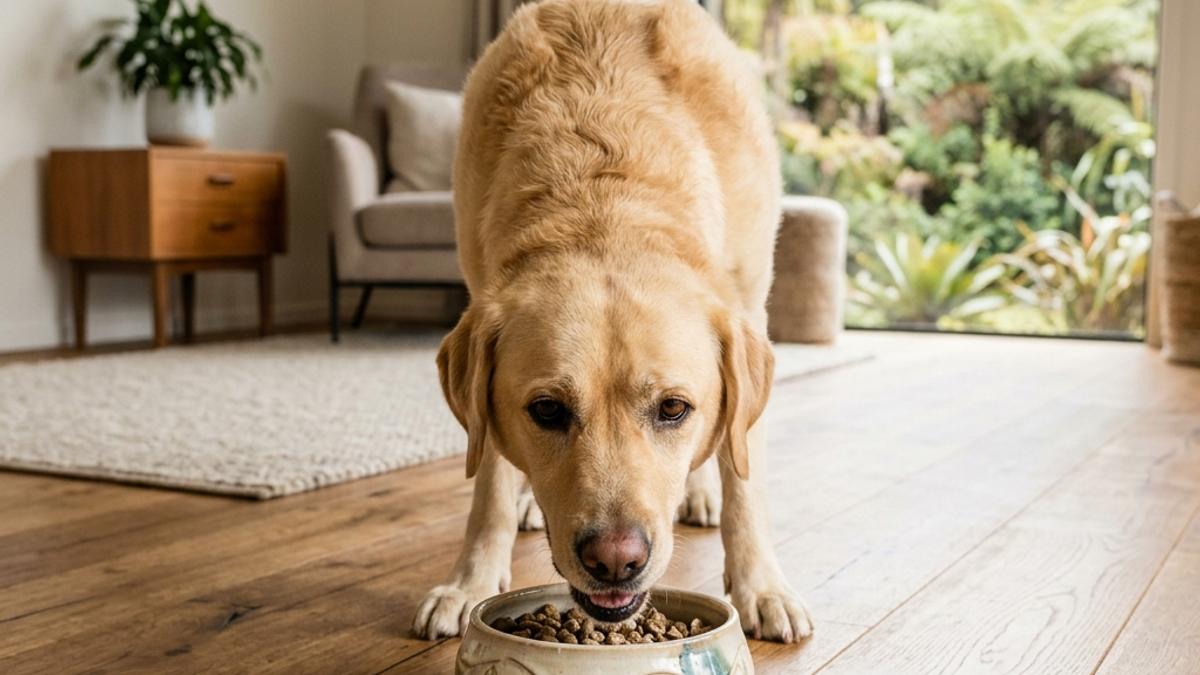
3. Slow feeder bowl — for fast eaters and bloat-risk breeds
Slow feeder bowls have internal ridges, mazes or raised patterns that make a dog or cat work around obstacles to reach food, slowing eating pace significantly. Eating too fast causes:
- Gulping air alongside food, contributing to gas and discomfort
- Vomiting shortly after meals
- In large, deep-chested breeds, increased risk of bloat (gastric dilatation-volvulus / GDV) — a genuine veterinary emergency
Best for:
- Large, deep-chested dogs: Great Danes, German Shepherds, Standard Poodles, Weimaraners, Saint Bernards — breeds with elevated GDV risk. Slower eating reduces air-gulping.
- Any dog that bolts its food and regularly vomits after meals
- Cats that eat too fast — yes, cats can benefit too, especially bored indoor-only cats that need more mealtime engagement
What to look for: a size appropriate to your dog's muzzle length. Very deep ridges in a small-muzzled dog can create frustration rather than slow eating. For dogs with elevated GDV risk, discuss feeding management with your NZ vet.
4. Elevated (raised) feeder stand — for large and senior dogs
An elevated or raised feeder positions the bowl on a stand so the dog eats at chest height rather than bending to floor level. This reduces the neck bend and can be more comfortable for:
- Large breeds with long necks (Great Danes, Greyhounds, Setters, Standard Poodles)
- Senior dogs with arthritis or mobility issues in the neck and shoulders
- Dogs recovering from certain surgeries
What about bloat? Elevated feeders were once recommended *to prevent* bloat in large breeds. More recent veterinary research suggests the relationship is not straightforward — elevated feeders may reduce or may not significantly affect GDV risk depending on the individual dog and other factors. If GDV risk is your concern, discuss both elevated feeders and slow feeders with your vet as part of a feeding management plan.
For cats: low-profile elevated stands (5–10 cm off the floor) are sometimes recommended for flat-faced cats (Persians, Exotics) to reduce the awkward angle of eating from floor level.
5. Automatic feeder — scheduled portions for busy owners
Automatic feeders dispense a pre-set portion of dry food at a scheduled time. They're useful for owners with irregular working hours or who need to maintain consistent meal timing for pets with dietary routines.
Best for: dry food only (wet food spoils too quickly in an auto-feeder), cats and small dogs on controlled portions.
Limitations: they can't handle wet food, don't work for free-choice feeding, and require regular cleaning of the mechanism to prevent stale food residue. If your pet is food-motivated enough to problem-solve, some auto-feeders can be opened.
6. Water fountain — for cats and dogs that don't drink enough still water
Many cats (and some dogs) are reluctant to drink from a still water bowl. This is a genuine concern — chronic mild dehydration in cats is a known contributor to urinary tract issues, which are common in NZ indoor cats. A water fountain circulates and filters water continuously, which many cats find more appealing than a stagnant bowl.
Best for:
- Cats, particularly indoor or senior cats, with a history of urinary issues or low water intake
- Homes where water sits in the bowl for extended periods without being refreshed
- Multiple-cat homes where water competition can cause some cats to avoid the bowl
What to look for: a fountain with a filter rated for your water hardness (NZ water varies significantly — Auckland is soft, some South Island water is harder) and parts that can be fully disassembled for cleaning. Clean the pump mechanism fortnightly. Some cats initially reject a fountain; leave both a fountain and a regular bowl and let them self-select.
Matching bowl type to pet
| Pet / situation | Best bowl type |
|---|---|
| Most dogs — everyday use | Stainless steel, non-slip base |
| Large/deep-chested breeds (GDV risk) | Slow feeder + discuss elevated option with vet |
| Senior dog, neck/shoulder mobility issues | Elevated feeder at chest height |
| Fast-eating dog or cat | Slow feeder |
| Flat-faced cat (Persian, Exotic, British) | Wide ceramic bowl or low elevated stand |
| Cat with low water intake or urinary issues | Water fountain |
| Multiple pets sharing | Separate bowls per pet; stainless steel |
| Dog with muzzle contact dermatitis | Replace plastic with stainless or ceramic |
NZ practical notes
- NZ pet stores stock the full range; water fountains and slow feeders are widely available online with nationwide delivery. For feeding amounts, see how much to feed a puppy NZ and how much to feed a kitten NZ.
- In NZ's warm northern summers, outdoor water bowls can develop algae faster. Clean outdoor stainless steel bowls daily in summer.
- Multiple-pet households: each pet should have their own bowl. Food competition between pets — even friendly ones — is stressful and can lead to guarding behaviour.
- For dogs with significant GDV risk or a history of bloat, feeding management (bowl type, meal splitting, exercise timing) should be discussed with a NZ registered vet, not decided on bowl packaging alone.
Quick takeaways
- Stainless steel is the safest, most hygienic all-purpose choice for most NZ dogs and cats — replace plastic bowls
- Slow feeders reduce fast-eating risks; essential for breeds with elevated bloat (GDV) risk
- Elevated feeders help senior and large-breed dogs with neck discomfort — GDV relationship is more nuanced
- Water fountains significantly improve hydration in cats that resist still water, especially indoor cats
- One bowl per pet; clean regularly; size the bowl to the pet
- Ceramic is fine but inspect regularly for chips or cracks
Related reading
- Pet Bowls & Feeders Guide NZ
- How Much to Feed a Puppy NZ
- How Much to Feed a Kitten NZ
- Dog food and nutrition — dog hub
- Cat care and nutrition — cat hub
Shop pet bowls at PetMall
Looking for pet bowls in New Zealand? PetMall stocks stainless steel, ceramic, slow feeders and water fountains with nationwide delivery.
---
References
- Merck Veterinary Manual, Gastric Dilation and Volvulus in Small Animals, checked 2026-08-08: https://www.merckvetmanual.com/digestive-system/surgical-problems-of-the-gastrointestinal-tract-in-small-animals/gastric-dilation-and-volvulus-in-small-animals
- MPI New Zealand, Code of Welfare for Dogs (feeding and water), checked 2026-06-05: https://www.mpi.govt.nz/animals/animal-welfare/codes/all-animal-welfare-codes/code-of-welfare-dogs/
---
*This guide provides general information for NZ pet owners. For dietary advice specific to your pet's health or breed, consult a registered New Zealand vet.*