Heated Pet Bed Types NZ: Self-Warming, Electric and Microwave Heat Pads
Heated pet bed types NZ guide: compare self-warming mats, electric heated beds and microwave heat pads for winter homes, safety and cleaning.
Heated pet bed types in NZ are useful for cold floors, draughty rentals, older pets and short-coated animals, but warmth must be gentle and optional. The safest choice for many homes is a washable, non-electric self-warming bed. Electric heated beds and microwave heat pads can help in winter, but only when they are pet-safe, supervised as directed, in good condition, and set up so the animal can move away.
Quick comparison
| Type | Look for | Avoid |
|---|---|---|
| Self-warming bed or mat | Washable cover, reflective inner layer, no cords | Thin mats on very cold concrete by themselves |
| Electric heated bed | Pet-specific design, low heat, protected cord, clear instructions | Human electric blankets, damaged cords, chewers |
| Microwave heat pad | Pet-safe product, clear heating time, washable cover | Overheating, guessing microwave time, direct skin contact |
| Insulated cave or igloo bed | Draught protection, washable lining, easy entry | Deep beds for pets that struggle to step in |
| Raised bed plus warm bedding | Airflow off cold floors, dry blankets | Outdoor use without weatherproof shelter |
Start with the room, not the gadget
Before buying heat, check the bed location. A warm bed placed beside a draughty ranch slider, damp garage door or uninsulated laundry floor will still underperform. Move the sleep spot away from cold airflow, add a dry base layer, and use washable bedding. SPCA NZ winter advice stresses warm, dry shelter and comfortable indoor areas.
In many Auckland and Wellington homes, damp is the bigger problem than extreme cold. In Canterbury, Otago and Southland, cold night floors can matter more. Match the setup to your house, not a generic winter photo.
Self-warming beds: low-risk everyday warmth
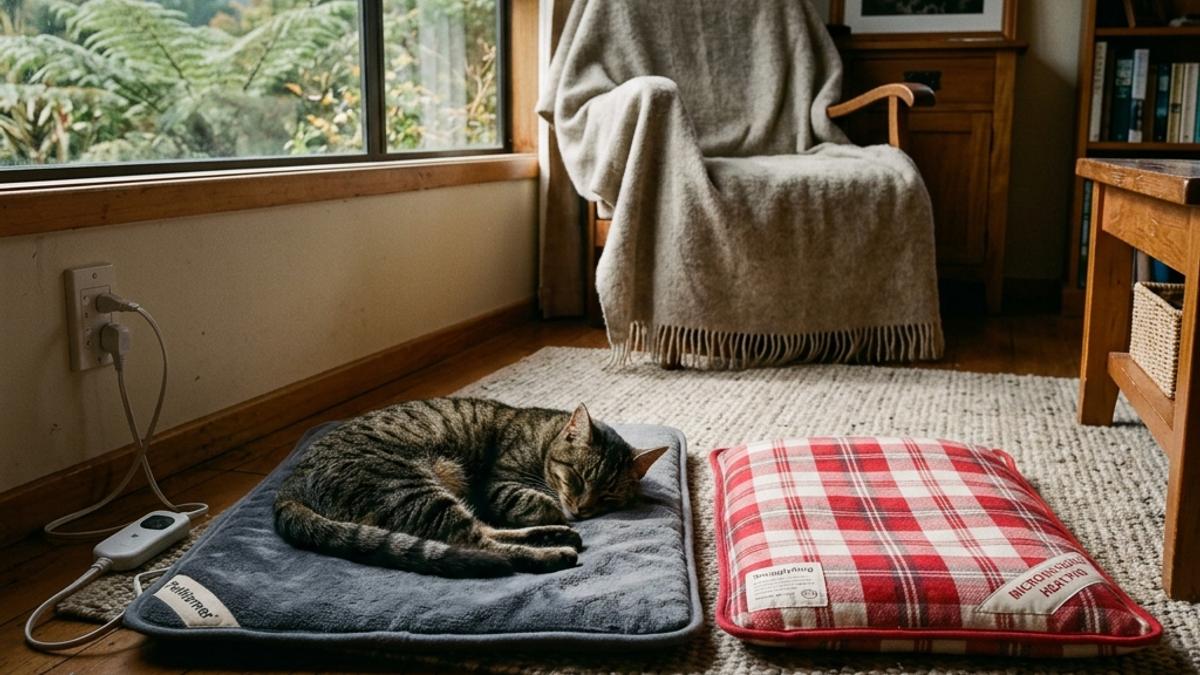
Self-warming mats use the pet's own body heat, often with a reflective inner layer. There are no cords, no heating elements and no timer to forget, which makes them a sensible first choice for cats, small dogs, rabbits indoors and pets that like to choose their own sleeping spot.
Look for a removable washable cover, a non-slip base and enough padding for the floor underneath. Avoid flimsy mats that bunch up or beds that cannot be cleaned after muddy paws, litter dust or winter damp.
Electric heated beds: useful but not casual
Electric heated beds should be pet-specific, low-temperature and used exactly as the manufacturer directs. Look for a protected cord, clear cleaning instructions, a stable temperature design and a bed shape that lets your pet lie partly off the warm area. WorkSafe NZ warns that electrical appliances can be hazardous if used incorrectly, so check cords, plugs and heat patches regularly.
Avoid human electric blankets, old second-hand heat pads with unknown safety history, products with frayed cords, and any electric option for pets that chew, scratch cables or cannot move away easily. If the pet is frail, very young, sedated, unwell or has reduced mobility, ask a NZ vet before using added heat.
Microwave heat pads: good for short warmth
Microwave heat pads can be handy for a cold cat bed, crate rest after a wet walk, or a small pet carrier in winter travel. The key is precision. Use only a product designed for pets, follow the microwave time exactly, test the temperature, and keep it inside its cover. Never improvise with a wheat bag unless it is clearly suitable and safe for the animal's setup.
The warm item should never trap the pet. They need room to move away, especially in a carrier or crate.
What to look for
- Gentle warmth, not a hot surface.
- A bed big enough for the pet to choose warm or cooler zones.
- Removable, washable covers for muddy NZ winter routines.
- Cord protection and simple safety instructions for electric products.
- A low-entry design for older pets that dislike climbing into deep beds.
What to avoid
- Human electric blankets or heat pads used as pet beds.
- Damaged cords, unknown second-hand electrical gear or products without instructions.
- Heating a bed for a pet that cannot move away.
- Thick extra blankets over electric heat unless the product instructions specifically allow it.
- Treating a warm bed as a fix for limping, stiffness or pain.
Vet and comfort note
SPCA NZ notes that warm bedding can help older or arthritic pets cope in winter, but also recommends vet guidance because not all products are safe. If your pet seems stiff, sore, weak, reluctant to jump, or suddenly changes sleeping places, book a NZ vet check. The bed is comfort gear, not treatment.
Related buying guides
Shop category
Quick takeaways
- Self-warming beds are the safest first step for many NZ homes.
- Electric heated beds must be pet-specific, intact and used as directed.
- Pets need room to move away from warmth.
- Washability matters in damp winter homes and muddy routines.
- Pain, stiffness or sudden sleep changes need a NZ vet, not just a warmer bed.
References
- SPCA NZ, Preparing your pets for winter, checked 2026-06-13: https://www.spca.nz/advice-and-welfare/article/preparing-your-pets-for-winter
- SPCA NZ, How to help your arthritic pet cope over winter, checked 2026-06-13: https://www.spca.nz/advice-and-welfare/article/how-to-help-your-arthritic-pet-cope-over-winter
- WorkSafe NZ, Safe living with electricity, checked 2026-06-13: https://www.worksafe.govt.nz/managing-health-and-safety/consumers/safe-living-with-electricity/