Dog vs Cat for Apartments NZ: Which Pet Fits a Small Home?
Dog vs cat for apartments NZ guide comparing routines, rental rules, costs, noise, enrichment and example breed profiles.
Dog vs cat for apartments NZ usually comes down to routine. Choose a dog only if you can handle daily outdoor exercise, toilet breaks, noise management and council/public-space rules. Choose a cat if you want a quieter indoor routine, but can manage litter, scratching, enrichment and safe containment.
There is no universal winner. A calm adult cat may be easier than a puppy in a small flat, while the right low-energy dog can suit a committed apartment owner better than a bored, under-stimulated cat.
Quick Comparison
| Factor | Dog in an apartment | Cat in an apartment |
|---|---|---|
| Daily outdoor need | Usually high: toilet and walks | Usually low if litter-trained |
| Noise risk | Barking, hallway sounds, neighbours | Meowing, night play, litter noise |
| Exercise | Owner-led every day | Indoor play and climbing |
| Rental/body corporate friction | Often higher | Often lower, but still needs consent where required |
| Damage risk | Chewing, scratching doors, accidents | Scratching, litter spills, spraying if stressed |
| Travel/holidays | More walking and care coverage | Litter and feeding cover still needed |
| Example profile | French Bulldog: 5/5 apartment, 2/5 energy | Ragdoll: 5/5 apartment, 2/5 energy |
The Short Answer
A cat is usually easier for small apartments because it can toilet indoors, cope with indoor-only enrichment and needs less public-space management. That is why Best Cat Breeds for Apartments NZ is often the first stop for renters and city owners.
A dog can work if the owner is highly consistent. You need a breed and individual dog that can settle, avoid nuisance barking, manage lift and hallway encounters, and get proper exercise every day. Start with Best Dogs for Apartments NZ, then compare the individual dog, not just the breed.
Apartment Reality Check
Small homes amplify routine problems. A dog that barks at every corridor sound can become a neighbour issue quickly. A cat without scratchers, climbing shelves or play can turn the couch into the main outlet. Neither species thrives when the owner assumes "small pet, small effort".
Ask four questions before choosing:
- Can I meet the pet's toilet needs without stress before work, after work and in bad weather?
- Can I manage noise through training, enrichment and layout?
- Does my tenancy, body corporate or building policy allow this pet?
- What is my NZD budget for food, vet care, insurance, gear and holiday cover?
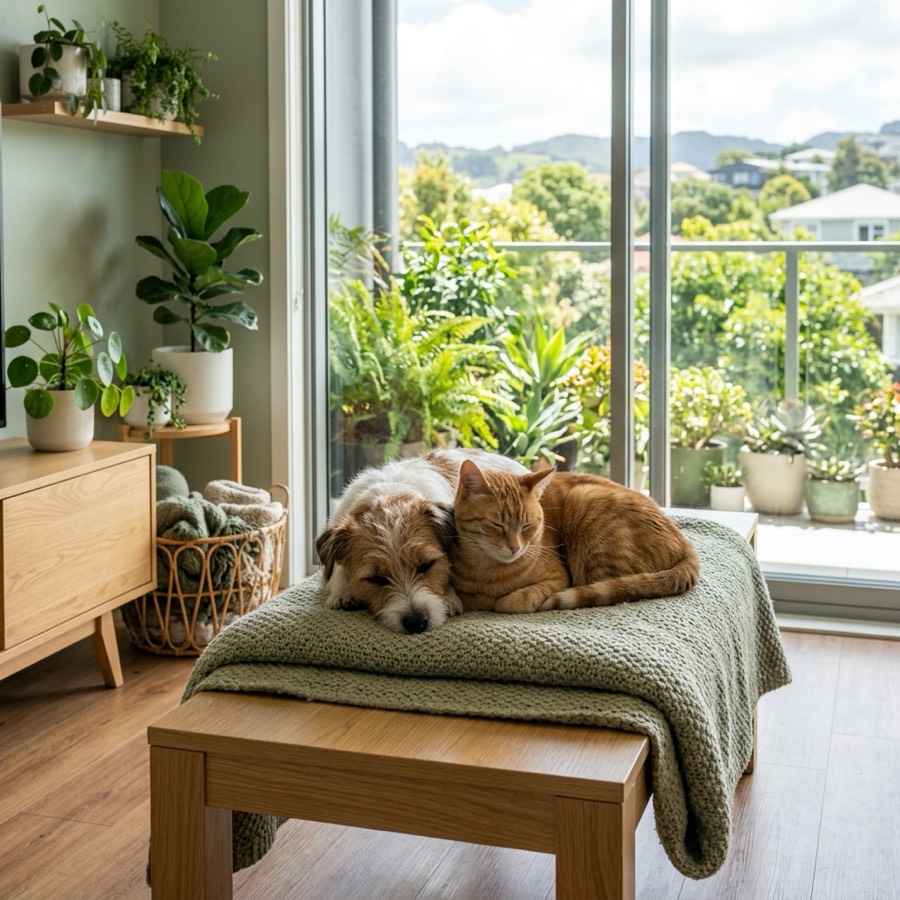
If any answer is fuzzy, pause before adopting or buying.
Renting and Consent in NZ
For rentals, check the tenancy agreement and current Tenancy Services rules before bringing home any pet. Tenancy Services says pet rules changed from 1 December 2025, including consent processes and pet bond rules for relevant situations. This guide is not legal advice; use the official page for your timing and tenancy type.
In practice, apartment landlords and body corporates often care about noise, damage, cleaning, access to common areas and whether the pet is lawful and manageable. Dogs are more visible because they use lifts, stairwells, berms and shared entrances. Cats may be less visible, but scratching, odour, spraying or escaping can still create problems.
Get consent in writing where needed, keep records, and choose the pet after the housing rules are clear.
When a Dog Makes Sense
A dog can suit an apartment owner who genuinely wants a walking routine. That means morning and evening outings, toilet breaks, wet-weather gear, training, enrichment and a plan for days when work runs late.
Lower-energy companion breeds are usually the safer shortlist than working breeds. The French Bulldog profile, for example, scores 5/5 for apartment life and 2/5 for energy. That does not make the breed automatic. Flat-faced dogs still need careful summer, heat and travel planning, and every individual dog needs training.
Dog owners also have public-space responsibilities. Auckland Council's dog-control guidance is a useful example of the general expectation that dogs are kept under control. In an apartment, that starts before the park: calm lift manners, lead skills, polite passing and reliable toileting routines.
Use the Dogs hub for breed navigation and the apartment-dog guide before you shortlist.
When a Cat Makes Sense
A cat usually fits apartments more naturally. Litter trays solve toilet timing, indoor enrichment can be built into vertical space, and a quiet adult cat may cope well while owners work.
The Ragdoll profile scores 5/5 for apartment life and 2/5 for energy, making it a good example of an indoor-focused apartment cat. But a Ragdoll is not a decoration. It still needs grooming, play, food management, safe hiding spots and a plan for summer warmth or winter comfort.
SPCA New Zealand recommends keeping cats safe and happy at home with enrichment and secure outdoor options where possible. In NZ, that also helps reduce roaming risks around roads, dogs, fights and native wildlife.
Use the Cats hub and apartment-cat guide to compare breeds and non-pedigree options.
Cost Differences
Dogs often cost more in gear, training, walking logistics, council-related responsibilities and holiday care. Cats often cost less day to day, but litter, scratching furniture, vet care, insurance decisions and enrichment still add up.
The exact NZD figure depends on size, food, health, insurance, desexing status, local rules, and whether you choose a breeder, rescue or adult adoption. Do not compare only the adoption or purchase fee. Compare the yearly routine.
For deeper budgeting, use Cost of Owning a Dog in NZ and Cost of Owning a Cat in NZ.
Noise, Neighbours and Alone Time
Dogs need more active alone-time training. Barking, whining, door scratching and hallway excitement can become stressful in apartment blocks. Puppies are especially hard because toilet training and sleep routines collide with shared walls.
Cats can also disturb neighbours or flatmates, especially with night zoomies, loud calling, litter smells or scratching. The difference is that many cat problems can be softened with layout: multiple scratchers, a clean litter routine, puzzle feeding, window viewing, climbing shelves and play before bedtime.
If you work long days away from home, an adult cat often beats a young dog. If your life is built around walks, training and weekend outings, a dog may be more rewarding.
NZ Home Match
| Apartment situation | Better shortlist |
|---|---|
| Renter with strict pet conditions | Usually cat, but check written consent |
| Owner wants daily outdoor routine | Dog |
| Long workdays and no midday help | Adult cat |
| Very noise-sensitive neighbours | Calm adult cat, or pause |
| Owner wants public outings and training | Dog |
| Small space but good vertical setup | Cat |
| Hot north-facing unit | Cat or heat-safe dog plan; avoid heat-sensitive choices |
Which Should You Choose?
Choose a dog if you want the routine as much as the pet: walks, training, toilet breaks, public manners and active companionship.
Choose a cat if you want a smaller-home routine built around litter, indoor enrichment, scratching, feeding and safe containment.
The best apartment pet is not the smallest one. It is the animal whose daily needs you can meet without resenting the routine.
Key takeaways
- Dog vs cat for apartments NZ is mostly a routine decision.
- Cats are usually easier in small homes because toileting and enrichment can be indoors.
- Dogs can work only with reliable exercise, training, toilet and noise routines.
- Rental pet rules changed from 1 December 2025; check Tenancy Services before deciding.
- Include real profile pages in the shortlist, not just species stereotypes.
- Budget in NZD for the full year, not only the adoption or purchase day.
Related reading
- Best Dogs for Apartments NZ
- Best Cat Breeds for Apartments NZ
- French Bulldog profile
- Ragdoll profile
- Cost of Owning a Dog in NZ
- Cost of Owning a Cat in NZ
- Dogs hub
- Cats hub
---
Reference sources
- PetMall breed profile data, French Bulldog, checked 2026-06-04: https://wiki.petmall.co.nz/dogs/breeds/french-bulldog
- PetMall breed profile data, Ragdoll, checked 2026-06-04: https://wiki.petmall.co.nz/cats/breeds/ragdoll
- PetMall Wiki, Best Dogs for Apartments NZ, checked 2026-06-04: https://wiki.petmall.co.nz/guides/best-dog-breeds-apartments-nz
- PetMall Wiki, Best Cat Breeds for Apartments NZ, checked 2026-06-04: https://wiki.petmall.co.nz/guides/best-cat-breeds-nz-apartments
- Tenancy Services New Zealand, Rules about pets — from 1 December 2025 tenants must request pet consent, and a landlord who declines must have a valid reason, checked 2026-07-28: https://www.tenancy.govt.nz/starting-a-tenancy/rules-about-pets/
- Tenancy Services New Zealand, Charging a pet bond, checked 2026-06-04: https://www.tenancy.govt.nz/rent-bond-and-bills/bond/charging-a-bond/charging-a-pet-bond/
- Auckland Council, Control your dog, checked 2026-06-04: https://www.aucklandcouncil.govt.nz/dogs-animals/problems-dogs/Pages/control-your-dog.aspx
- SPCA New Zealand, Keeping your cat safe and happy at home, checked 2026-06-04: https://www.spca.nz/advice-and-welfare/article/keeping-your-cat-safe-and-happy-at-home
Free PetMall tools
Related guides
petmall.co.nz
Shop at PetMall
The products below are practical support items for your pet. PetMall ships across New Zealand.
- Dog FoodStart with food that matches your dog's life stage and activity level — and change brands slowly over 7–10 days.
- Dog TreatsTraining rewards and everyday treats — small, soft pieces work best for consistent reinforcement.
- Dog ToysA small rotation of chew, fetch, and puzzle toys usually works better than buying a large variety at once.
- Dog GroomingA gentle brush and the right shampoo make maintenance easier — especially for dogs that get muddy on walks.
- Leads & HarnessesComfort matters: padded contact points and adjustable fit help reduce rubbing on longer walks or tramping weekends.
- Flea & Worm TreatmentFor NZ conditions, look for protection that fits your routine (monthly vs longer-lasting) and your dog's weight range.