Dog Dental Care at Home NZ: Brushing, Chews and Vet-Check Boundaries
Dog dental care NZ draft: home brushing steps, dental chews, vet-check boundaries and what not to do without professional advice.
Dog dental care in NZ starts with gentle home handling, pet-safe brushing, suitable chews and regular vet checks. Home brushing can help reduce plaque, but it does not replace a veterinary oral exam, dental imaging, scaling, extractions, or treatment advice when a dog has pain, bleeding, loose teeth, swelling, bad breath that will not settle, or trouble eating.
The quick answer
If your dog will tolerate it, brush the outside surfaces of the teeth regularly with a dog toothbrush or finger brush and pet toothpaste. Build the habit slowly with rewards. Do not use human toothpaste. Choose chews carefully, favour products with Veterinary Oral Health Council acceptance where available, and ask your vet before relying on dental diets, water additives or chews for a dog with existing mouth problems.
SPCA New Zealand says regular vet visits and grooming help owners notice health concerns. Cornell's canine health guidance says brushing is the most effective home-care method for helping prevent dental disease, while VOHC and VCA both emphasise regular brushing and vet guidance.
What home dental care can and cannot do
Home dental care is maintenance. It can support cleaner teeth between vet checks and help your dog accept mouth handling. It cannot tell you what is happening under the gumline, remove hardened tartar safely, assess tooth roots, or decide whether a dog needs professional dental work.
Use this boundary:
| Home care can help with | Needs vet assessment |
|---|---|
| Teaching a dog to accept mouth handling | Pain, swelling, bleeding or loose teeth |
| Reducing plaque with brushing | Heavy tartar or damaged teeth |
| Choosing safer dental chews | A dog who cannot chew normally |
| Building a daily routine | Bad breath that is sudden or persistent |
| Checking the mouth during grooming | Any concern that your dog is sore or off food |
If you see something worrying, do not brush harder to fix it. Stop and call your vet clinic.
A gentle brushing plan
Many dogs dislike a toothbrush because people go too fast. Treat tooth brushing like training, not a wrestling match.
Stage 1: touch and reward
Sit somewhere calm. Touch the side of your dog's muzzle for one second, mark with praise, and reward. Repeat for a few days until your dog stays relaxed. The aim is not teeth yet; it is trust.
Stage 2: lift the lip
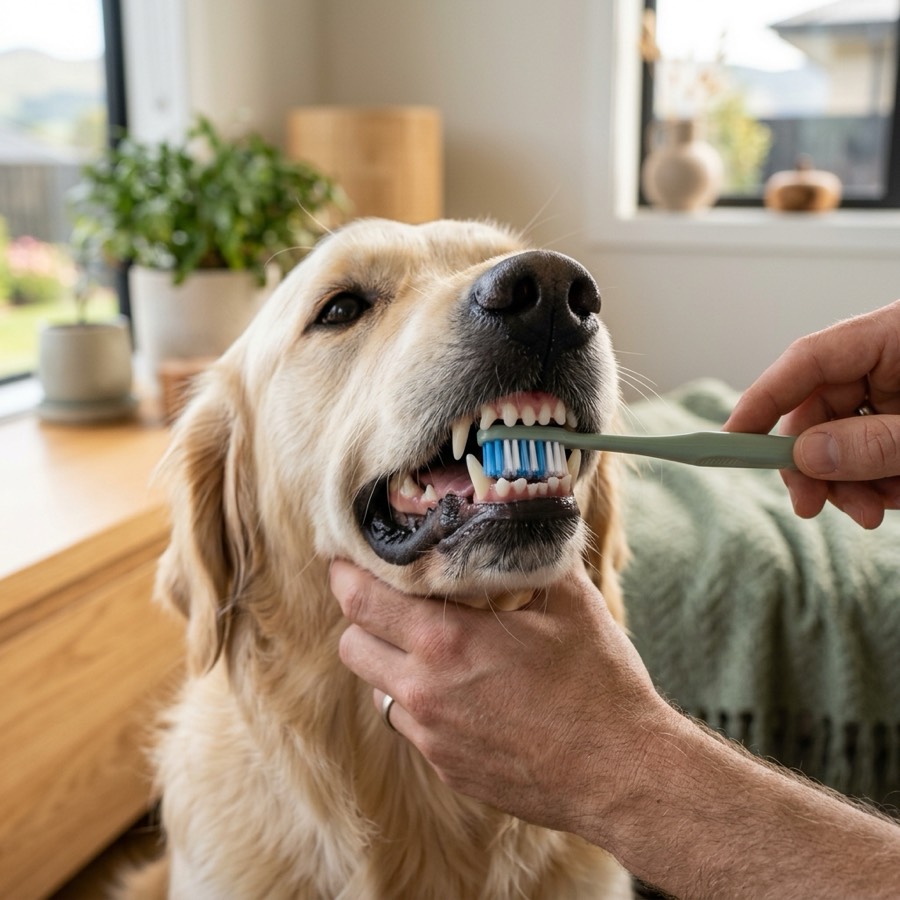
Lift the lip briefly, look at the outside of the teeth, reward, then stop. Keep sessions short. If your dog backs away, growls, freezes or tries to hide, you are moving too fast. Use the Dog Behaviour Decoder to track those stress signals.
Stage 3: introduce pet toothpaste
Let your dog lick a tiny amount of pet toothpaste from your finger. Do not use human toothpaste. VCA says pet toothpaste is designed to be swallowed, while human toothpaste is not appropriate for dogs.
Stage 4: brush a few teeth
Use a soft dog toothbrush, finger brush or dental wipe if recommended. Brush the outside cheek-facing surfaces first, especially upper teeth, because VOHC notes plaque and tartar build up fastest on these surfaces in dogs and cats. You do not need a perfect full-mouth clean on day one.
Stage 5: make it predictable
Attach brushing to an existing routine, such as after evening toilet and before settling. Keep it calm, reward generously, and finish before your dog becomes frustrated.
How often should you brush?
Daily brushing is the ideal often recommended by veterinary dental organisations and clinics, because plaque returns quickly. Cornell describes tooth brushing as the most effective home-care method for preventing dental disease. VOHC says some dogs will not tolerate full daily brushing, so owners should ask their vet what technique is appropriate for their dog.
The practical NZ answer: brush as often as you can do safely and kindly, and ask your vet what target makes sense for your dog. A tiny dog in a Wellington apartment, a retired greyhound, a working farm dog and a puppy learning handling may all need different support.
Chews, toys and VOHC acceptance
Dental chews can help some dogs, but they are not magic. VOHC reviews products for plaque or tartar control claims and publishes accepted product lists. If you are paying extra for a dental claim, check whether the product has VOHC acceptance and whether the size is right for your dog.
Chew rules:
- Match chew size to your dog.
- Supervise chewing.
- Avoid items so hard you would not want them hitting your own tooth.
- Do not use chews as a substitute for vet advice.
- Count edible chews as calories.
Be especially cautious with dogs who gulp chews, guard food, have known mouth pain, or are on a vet-directed diet.
For safer enrichment ideas that are not sold as dental care, see Dog Toys Guide NZ. For feeding context, see Dog Food Guide NZ.
Puppy dental handling
Puppyhood is the easiest time to build mouth-handling confidence. The goal is not a perfect dental clean; it is teaching your puppy that lips, gums, toothbrushes and gentle checks are normal.
Start with:
- Touch muzzle, reward.
- Lift lip, reward.
- Let puppy sniff toothbrush, reward.
- Touch one tooth, reward.
- Stop while the puppy is still happy.
Pair this with New Dog Owner First 30 Days NZ. Handling practice belongs beside grooming, bathing, nail checks and calm settle routines, not only at the vet clinic.
NZ product and cost notes
Dental products in NZ range from low-cost finger brushes and pet toothpaste to dental diets, water additives and chews. Prices vary in NZD by brand, dog size and how often you use them. Keep the shopping decision simple:
- Buy pet-specific toothpaste.
- Choose a brush your dog can tolerate.
- Check VOHC acceptance for products making dental claims.
- Ask your vet before choosing products for an already sore mouth.
- Avoid buying every product at once; one calm routine beats a cupboard full of unused gear.
PetMall's dog grooming category may include general grooming supplies, but dental claims should still be checked against sources like VOHC and your vet's advice.
What not to do
Do not use human toothpaste. Do not scrape teeth with human dental tools. Do not force a toothbrush into a scared dog's mouth. Do not ignore pain signals. Do not assume a chew fixes bad breath. Do not give very hard objects because "they clean teeth" if they risk tooth damage.
Also avoid starting brushing on a dog whose mouth already seems painful. Brushing inflamed or sore gums can make the dog fear dental care and may make things worse. Book a vet check first.
How this fits with grooming
Dental care sits beside grooming, not instead of it. When brushing your dog's coat, bathing, checking paws or trimming nails, you can also do a quick mouth-friendly check: smell, lip lift, look, reward. Do not pry, poke or probe.
Link the routine with Dog Grooming Brushes Guide NZ and How Often to Bathe a Dog NZ. Dogs learn best when handling is calm, predictable and rewarded.
This draft deliberately avoids giving a treatment plan, dosing advice, anaesthesia advice, extraction advice or a diagnosis. A veterinary reviewer should check:
- wording around dental disease and pain signs;
- claims about brushing, chews and VOHC products;
- whether any signs require more urgent vet wording;
- whether product language stays editorially independent;
- whether category should remain health or move to grooming after review.
Key takeaways
- Home dental care supports maintenance; it does not replace vet dental assessment.
- Daily brushing is ideal when safe and tolerated, but training must be gradual.
- Use dog toothpaste, never human toothpaste.
- Look for VOHC acceptance when buying products with dental claims.
- Stop if your dog seems sore, scared or unable to chew normally.
Related reading
- Dog Grooming Brushes Guide NZ
- Dog Food Guide NZ
- Dog Toys Guide NZ
- New Dog Owner First 30 Days NZ
- Dog Behaviour Decoder
- How Often to Bathe a Dog NZ
---
Reference sources
- SPCA New Zealand: Keeping your dog healthy, checked 2026-06-04. https://www.spca.nz/advice-and-welfare/article/keeping-your-dog-healthy
- Veterinary Oral Health Council: Accepted Products, checked 2026-06-04. https://vohc.org/accepted-products/
- Veterinary Oral Health Council: Brushing, checked 2026-06-04. https://vohc.org/brushing/
- Cornell University College of Veterinary Medicine: Dental disease and home dental care, checked 2026-06-04. https://www.vet.cornell.edu/departments-centers-and-institutes/riney-canine-health-center/canine-health-information/dental-disease-and-home-dental-care
- VCA Animal Hospitals: Brushing Teeth in Dogs, checked 2026-06-04. https://vcahospitals.com/know-your-pet/brushing-teeth-in-dogs
- RSPCA UK: Teeth care for dogs, checked 2026-06-04. https://www.rspca.org.uk/adviceandwelfare/pets/dogs/health/teeth
- MPI New Zealand: Code of Welfare - Dogs, checked 2026-06-04. https://www.mpi.govt.nz/animals/animal-welfare/codes/all-animal-welfare-codes/code-of-welfare-dogs/
Free PetMall tools
Related guides
petmall.co.nz
Shop at PetMall
The products below are practical support items for your pet. PetMall ships across New Zealand.
- Dog FoodStart with food that matches your dog's life stage and activity level — and change brands slowly over 7–10 days.
- Dog TreatsTraining rewards and everyday treats — small, soft pieces work best for consistent reinforcement.
- Dog ToysA small rotation of chew, fetch, and puzzle toys usually works better than buying a large variety at once.
- Dog GroomingA gentle brush and the right shampoo make maintenance easier — especially for dogs that get muddy on walks.
- Leads & HarnessesComfort matters: padded contact points and adjustable fit help reduce rubbing on longer walks or tramping weekends.
- Flea & Worm TreatmentFor NZ conditions, look for protection that fits your routine (monthly vs longer-lasting) and your dog's weight range.