Pet Breed Guide NZ
Gouldian Finch
The Gouldian Finch is a small, brilliantly coloured Australian grass finch highly popular in New Zealand. Known for their red, black, or yellow head mutations, they are beautiful aviary birds.
Photo Gallery
NZ Ownership Snapshot
Verified NZ Status- Noise Level
- quiet
- Social Needs
- pairs or groups
Legal to keep in NZ as captive-bred birds. Must be sourced from licensed NZ breeders or imported under MPI biosecurity clearance. Wild-caught birds cannot be imported.
Breed Snapshot
- Size
- Small: 12–14 cm; ~14 g
- Lifespan
- 5–8 years
- Origin
- Australia
- Care Focus
- Active, social, shy, gentle
- NZ Price
- NZD $80–$250 per bird depending on head colour mutation
- Annual Vet Cost
- NZD $80–$150 for avian vet consult; find an avian vet before buying
Personality Scores
Origins & History
The Gouldian Finch (Erythrura gouldiae), also known as the Rainbow Finch or Lady Gouldian Finch, is a brilliantly coloured passerine bird native to the savannah woodlands of northern Australia. Described by British ornithologist John Gould in 1844 and named in honour of his late wife, these birds are famous for their spectacular, multi-hued plumage. In the wild, they are threatened by habitat loss, but a highly successful captive-breeding population exists worldwide. In New Zealand, Gouldian Finches have been bred by dedicated aviculturists for decades, establishing them as a highly sought-after, prized species in Kiwi aviaries.
Aviary Requirements & NZ Winter Care
Gouldian Finches are active, social birds that require spacious flight environments. They are not suited to small, restrictive bird cages and do best in walk-in aviaries or large breeding cabinets. Because they originate from the warm, tropical grasslands of Australia, they are highly sensitive to cold, damp climates.
- Winter Protection: New Zealand winters present a significant challenge. Gouldian Finches must be protected from drafts, frost, and dampness. Aviaries should be insulated, and during cold southern or damp northern winter nights, indoor heating or aviary heat lamps must be provided to maintain temperatures above 10-12°C.
- Social Setup: They are highly social and should never be kept alone. They thrive in pairs or small flocks. Multiple pairs can be housed together in a communal aviary, provided there is enough space to prevent territorial bickering over nesting sites. For general guidance on introducing new birds, refer to the SPCA NZ bird care advice.
Diet & Nutrition
A premium diet is critical to support the Gouldian Finch's vibrant feather production, particularly during their annual moult which is physically demanding.
- Base Diet: A high-quality seed mix containing French white millet, panicum, and canary seed.
- Supplements: Fresh greens (such as silverbeet or dandelion leaves), sprouted seeds, and egg food.
- Breeding Diet: During the breeding season, they require additional protein, which can be provided via live food like mealworms or specialized commercial soft food.
- Minerals: Cuttlebone, grit, and charcoal must always be accessible to aid digestion and provide calcium.
For comparison with other popular finch species kept in New Zealand, you can view our Zebra Finch guide.
Legal Status in New Zealand
Gouldian Finches are classified as a legal species to keep as pets in New Zealand. They are fully established as captive-bred birds. Under Ministry for Primary Industries (MPI) regulations, wild-caught birds cannot be imported, and any new imports of captive-bred stock are subject to strict quarantine and biosecurity clearance. Buyers must only purchase birds from reputable local breeders who have successfully raised them within NZ.
Fun Facts
Fact 1
They are named in honour of Lady Elizabeth Gould, the wife of British ornithologist John Gould.
Fact 2
Wild Gouldian Finches have three natural head color variations: black-headed (most common), red-headed, and yellow-headed (rarest).
Fact 3
Unlike many other finches, Gouldian Finches do not build complex domed nests; they prefer nesting in hollow logs or wooden nest boxes.
Fact 4
They undergo a rapid, intense annual moult during which they lose almost all their feathers and require high-protein diets.
Fact 5
Their nestlings have light-reflecting, glowing blue nodules at the sides of their beaks to help parents find them in dark nests.
Related Breeds
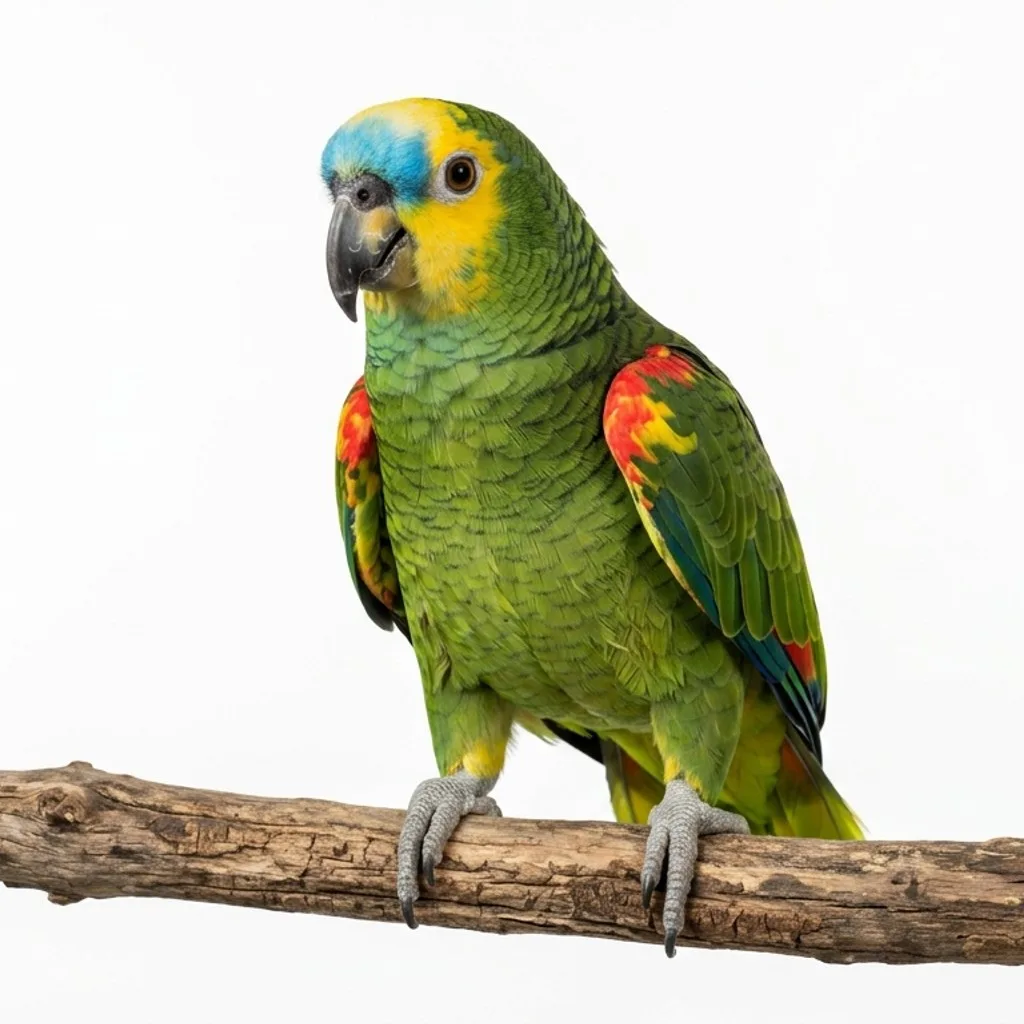
Blue-fronted Amazon Parrot
The Blue-fronted Amazon is a medium-sized green parrot from South America, marked by blue across the forehead and yellow on the crown and cheeks, and it suits experienced keepers rather than first-time bird owners. Outgoing, playful and often boisterous, it is an accomplished talker that can repeat words and phrases with real clarity. It is also genuinely loud, calling most at dawn and dusk, and adolescents commonly move through a bluffing stage that calls for patient, consistent handling. A lifespan of 40 to 60 years makes this a decades-long commitment. Daily care means fresh food and water, spot cleaning, and two to four hours of supervised time out of the cage, with rotating destructible toys and training sessions to head off the boredom that shows up as feather plucking or aggression. Best suited to a settled, experienced household with daily time and tolerance for noise.
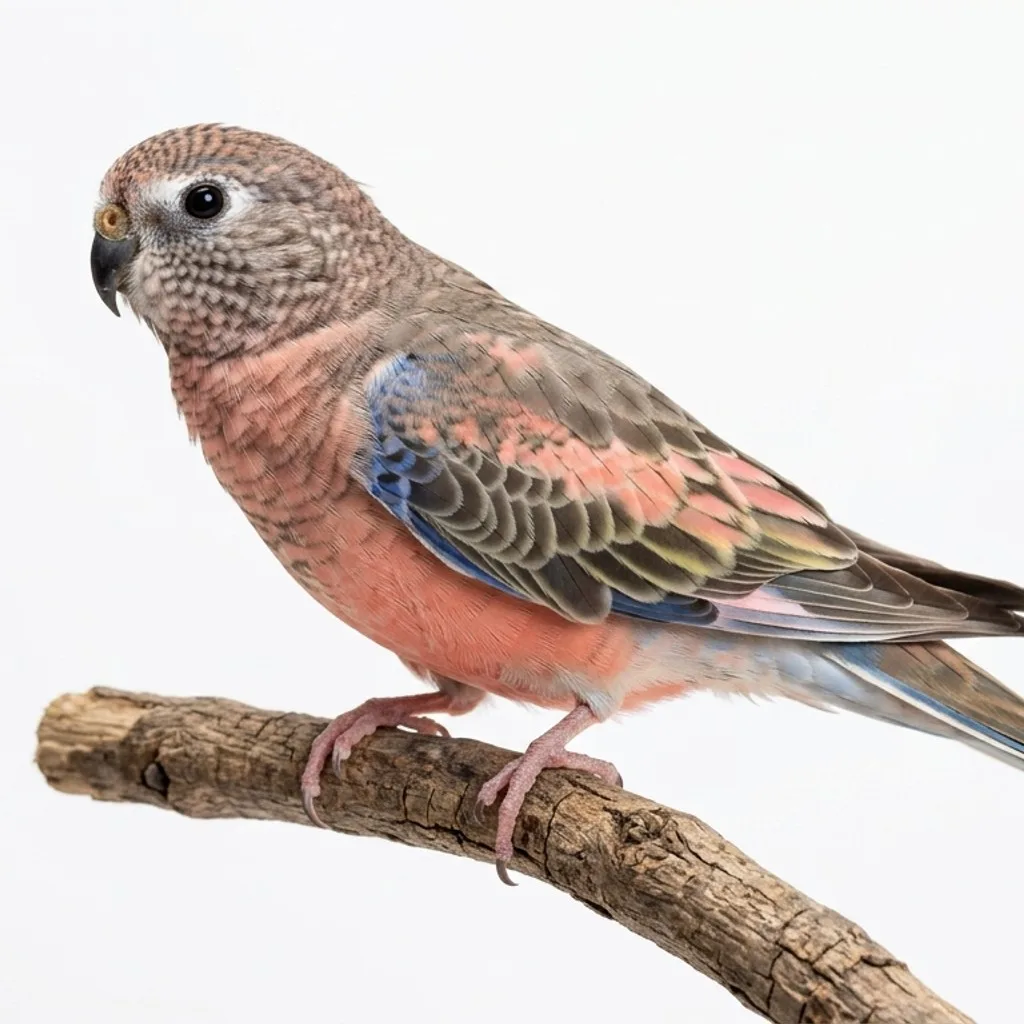
Bourke's Parakeet
Bourke's Parakeet is a small, softly coloured parrot from inland Australia, rosy pink below with a grey-brown back and blue in the wings, and it is one of the gentler options for a first-time bird owner. It is quiet by parakeet standards, offering melodic chirps rather than squawking, and it is crepuscular, so most of its activity falls around dawn and dusk while the day passes in dozing and gentle foraging. Bourkies are docile, rarely bite, and become tame with steady, unhurried handling, though they tend to enjoy company more than cuddling and are not mimics. They do best in pairs or small groups, with a roomy cage, varied perches, chewable toys and supervised flight in a bird-proofed room. A lifespan of 8 to 12 years and soft vocalisations make them workable in flats and quiet homes that want a calm, undemanding bird.
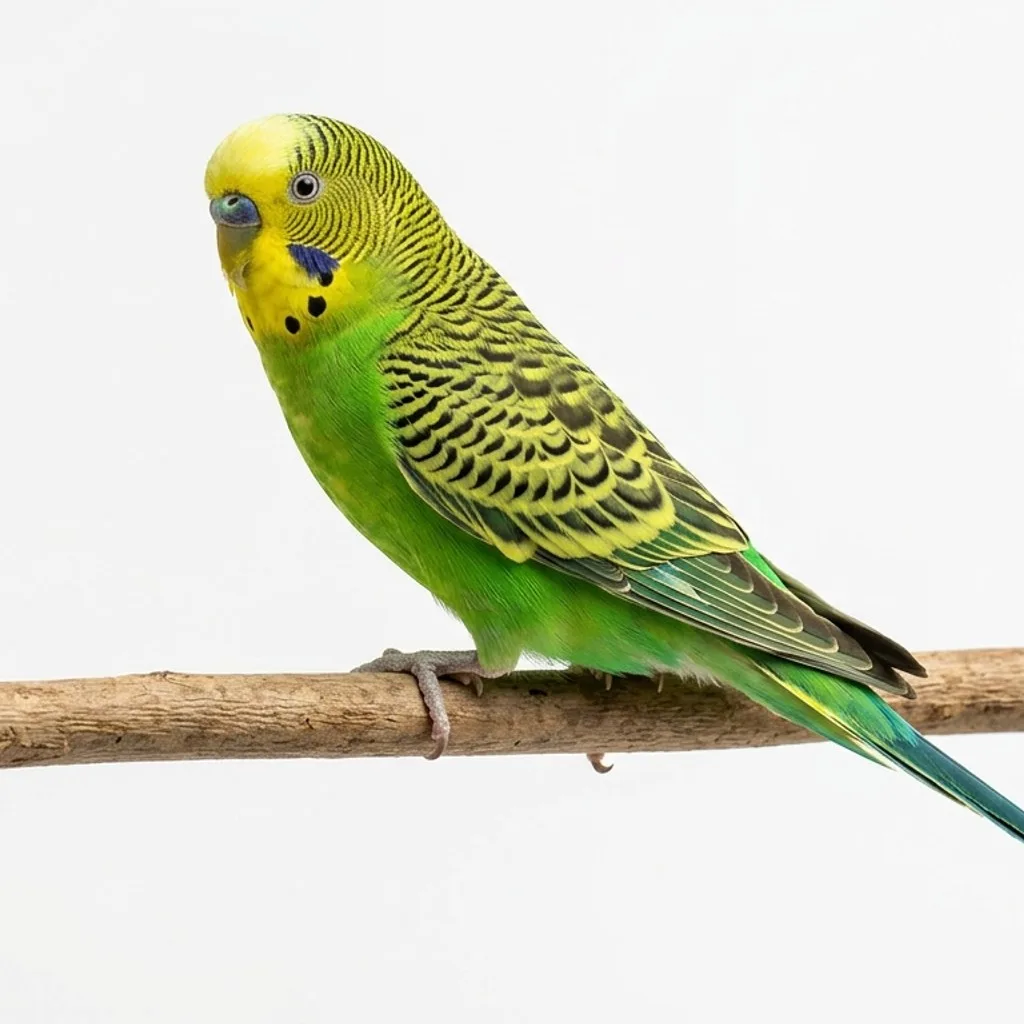
Budgerigar (Budgie)
The Budgerigar, or budgie, is a small long-tailed seed-eating parrot from Australia and one of the most widely kept companion birds in the world. It is lively, inquisitive and intensely social: budgies live in large flocks in the wild, so a single bird needs either a companion budgie or committed daily human interaction to stay settled. They are bright enough to learn to step up, perform simple tricks and mimic speech, males more readily than females. Wild birds are green and yellow with black scalloping on the wings, while selective breeding has produced blue, white, yellow, grey and pied colour mutations. Care is straightforward rather than trivial: fresh food and water twice daily, a pellet-based diet with seed as a treat, spot cleaning, and 30 to 60 minutes of supervised flight in a bird-safe room. Their small size suits apartments, though near-constant chirping makes them a poor match for a noise-sensitive household.
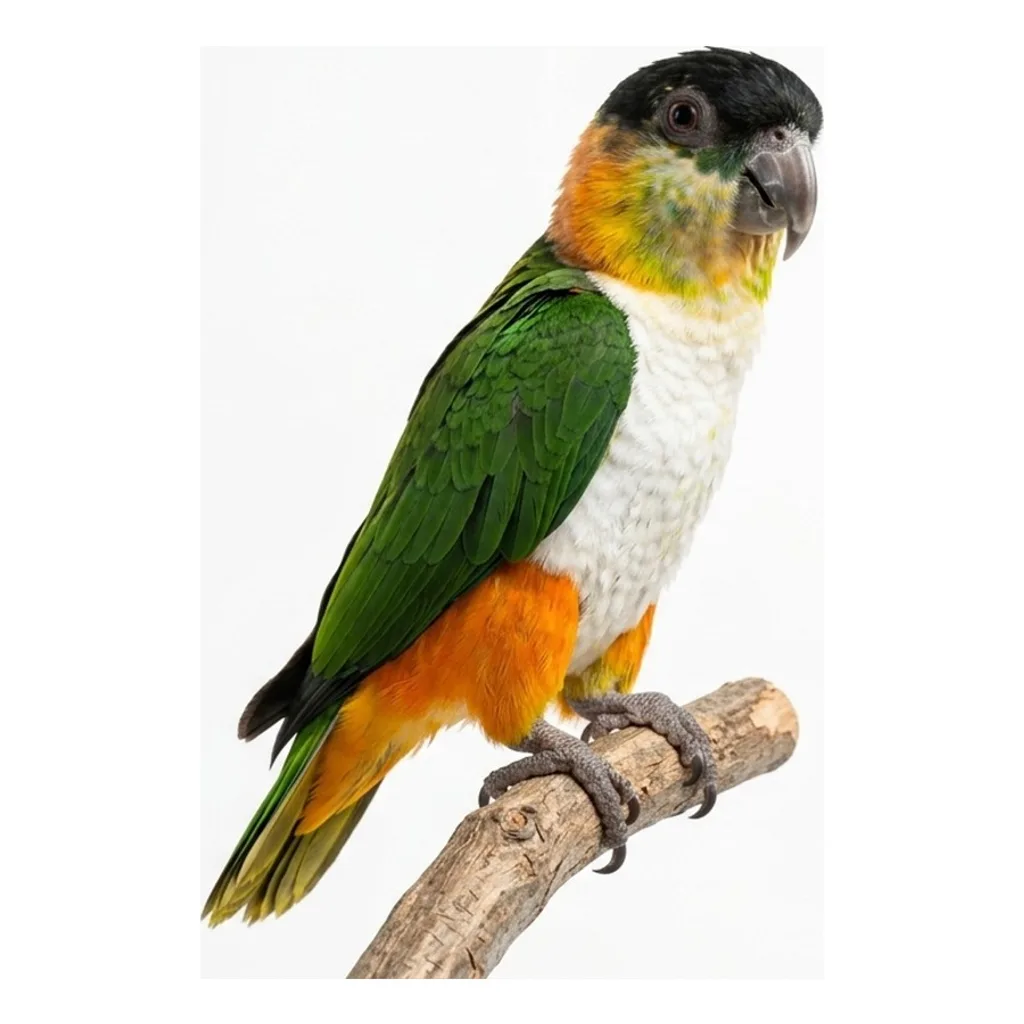
Caique
The Caique is a small, stocky South American parrot represented by two species, the Black-headed and the White-bellied, both bold, comical and relentlessly busy. Roughly 23 to 25 cm long and 150 to 170 grams, it carries a large personality in a compact frame and is better known for its hopping gait across flat surfaces than for talking, although it mimics sounds and chirps freely. Noise sits at a moderate level rather than a piercing one. A Caique needs at least two to four hours of supervised time out of the cage each day, the largest enclosure a home can fit, and a steady rotation of chewable and foraging toys, since a bored bird slides quickly into plucking or aggression. With a lifespan of 25 to 40 years, it fits an active, sociable household that is home often and ready for a decades-long companion.