Pet Breed Guide NZ
Crimson Rosella
The Crimson Rosella is a gorgeous Australian parrot known for its vibrant crimson and blue plumage. Popular in NZ aviaries, they are active, independent birds.
Photo Gallery
NZ Ownership Snapshot
Verified NZ Status- Noise Level
- moderate
- Social Needs
- pairs preferred
Legal as captive-bred pets in NZ. Wild birds are protected. Purchase only from licensed NZ breeders.
Breed Snapshot
- Size
- Medium: ~36 cm; ~140 g
- Lifespan
- 15–20 years
- Origin
- Australia
- Care Focus
- Active, independent, curious, intelligent, calmer
- NZ Price
- NZD $150–$450 from licensed NZ breeders
- Annual Vet Cost
- NZD $80–$150 for avian vet consult; find an avian vet before buying
Personality Scores
Origins & History
The Crimson Rosella (Platycercus elegans) is a medium-sized parrot native to eastern and southeastern Australia. Famous for its striking crimson-red body, royal blue cheeks, and blue-edged wings and tail, it is one of the most visually stunning members of the parrot family. Crimson Rosellas inhabit moist mountain forests and woodlands. In New Zealand, they have been kept by dedicated aviculturists for decades. Unlike their close relatives, the Eastern Rosellas, they have not established widespread wild populations in New Zealand, making captive-bred stock from local breeders the only source for pet owners.
Care & Housing Requirements
Crimson Rosellas are energetic, active birds that require plenty of horizontal flying space.
- Aviary Needs: They are best suited to large outdoor flight aviaries (minimum 3-4 metres in length) rather than standard indoor bird cages. They require clean, dry housing with protection from cold drafts and dampness.
- Social Interaction: They are generally kept in pairs. During the breeding season, they can be highly territorial, meaning each breeding pair must be housed in a separate aviary to prevent aggressive fights. For general guidelines on keeping birds healthy, read the SPCA NZ bird care advice.
- Enrichment: Rosellas are intelligent and require daily mental stimulation. Provide fresh native branches (such as Eucalyptus or Manuka) for them to chew, which also helps naturally trim their beaks and claws.
Diet & Nutrition
A well-balanced diet is essential to maintain their vibrant red plumage and overall health.
- Base Diet: A premium parakeet or medium parrot seed mix containing various millets, canary seed, oats, and a restricted amount of oil-rich sunflower seeds.
- Fresh Foods: Offer daily fresh vegetables (spinach, silverbeet, broccoli, carrots) and fresh fruits (apples, berries, grapes).
- Minerals: Cuttlebone, calcium supplements, and clean drinking water are critical daily essentials.
For comparison on care and regulations with their close relative, you can read our Eastern Rosella guide.
Temperament & Hand-Taming
Crimson Rosellas are independent and have a calmer, slightly quieter temperament than Eastern Rosellas, though they still possess loud contact calls. They are not typically 'cuddly' pets and do not tolerate regular physical handling well. However, if hand-raised or socialised patiently from a young age, they can become remarkably trustful, learning to sit on shoulders and mimic clear whistles or short phrases. They are highly active and enjoyable to watch in a flight setup.
Fun Facts
Fact 1
Juvenile Crimson Rosellas are predominantly olive-green, gaining their brilliant crimson plumage during their first annual moult.
Fact 2
They are native to the high-rainfall mountain forests of Eastern Australia and are well-adapted to cooler temperatures.
Fact 3
Unlike many parrots, they hold food in their left claw while eating, showcasing a form of lateralization similar to human left-handedness.
Fact 4
There are several subspecies, including the 'Yellow Rosella' and 'Adelaide Rosella', which have different yellow and orange color variations.
Fact 5
They play a crucial role in their native Australian ecosystem by feeding on and dispersing the seeds of native Eucalyptus trees.
Related Breeds
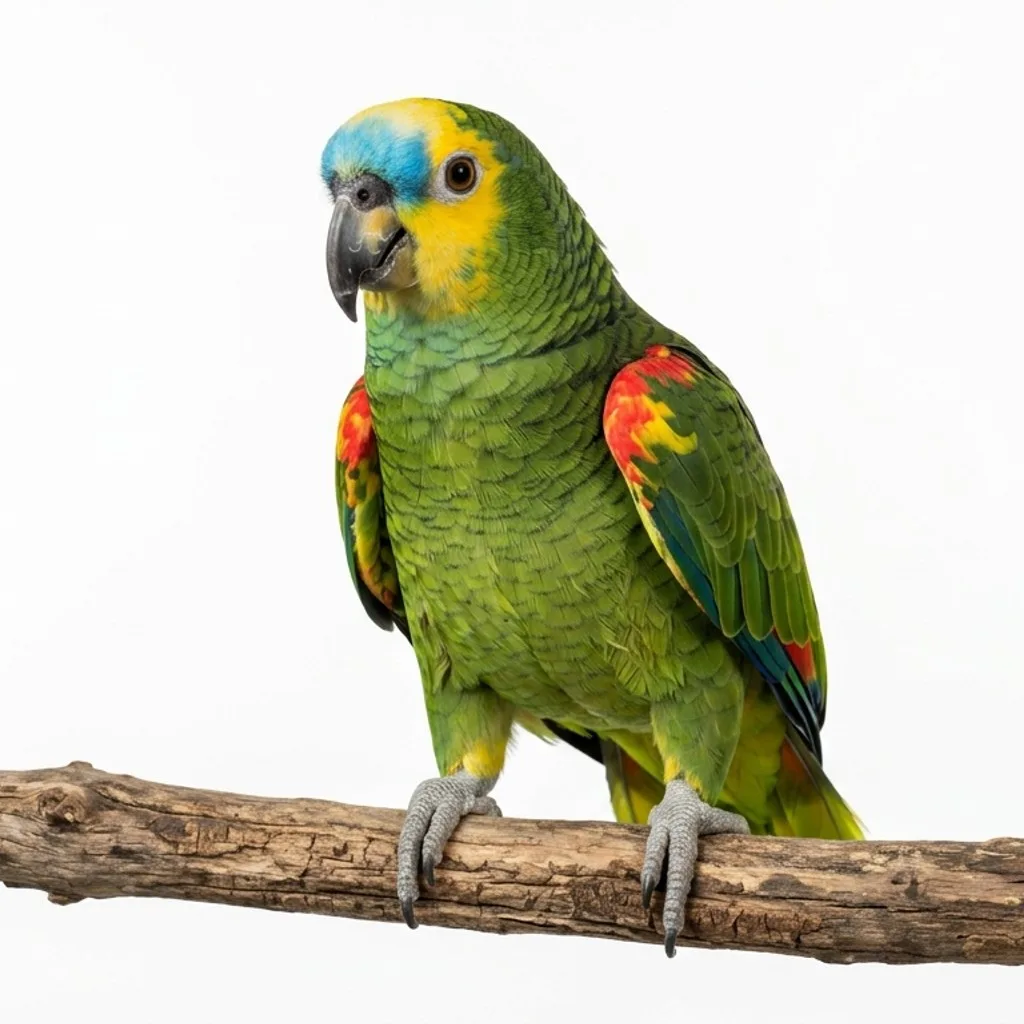
Blue-fronted Amazon Parrot
The Blue-fronted Amazon is a medium-sized green parrot from South America, marked by blue across the forehead and yellow on the crown and cheeks, and it suits experienced keepers rather than first-time bird owners. Outgoing, playful and often boisterous, it is an accomplished talker that can repeat words and phrases with real clarity. It is also genuinely loud, calling most at dawn and dusk, and adolescents commonly move through a bluffing stage that calls for patient, consistent handling. A lifespan of 40 to 60 years makes this a decades-long commitment. Daily care means fresh food and water, spot cleaning, and two to four hours of supervised time out of the cage, with rotating destructible toys and training sessions to head off the boredom that shows up as feather plucking or aggression. Best suited to a settled, experienced household with daily time and tolerance for noise.
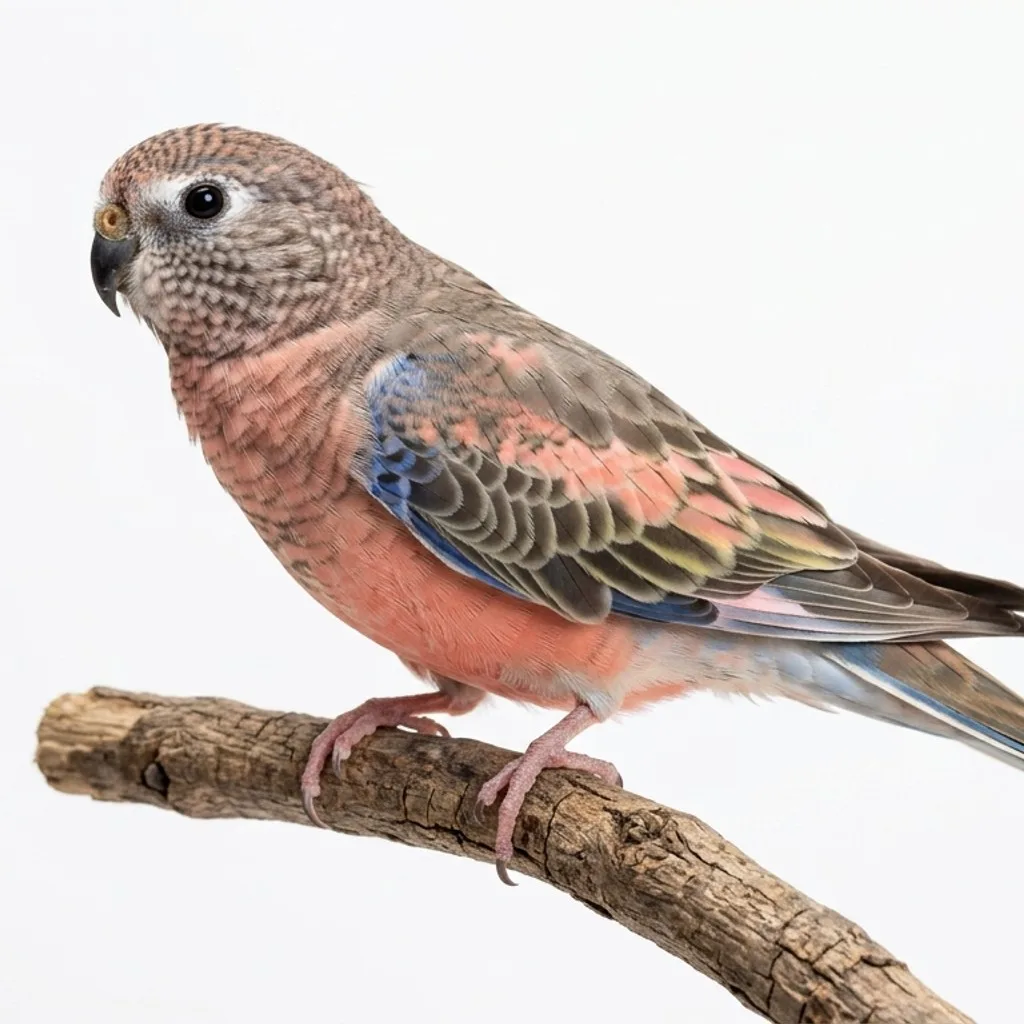
Bourke's Parakeet
Bourke's Parakeet is a small, softly coloured parrot from inland Australia, rosy pink below with a grey-brown back and blue in the wings, and it is one of the gentler options for a first-time bird owner. It is quiet by parakeet standards, offering melodic chirps rather than squawking, and it is crepuscular, so most of its activity falls around dawn and dusk while the day passes in dozing and gentle foraging. Bourkies are docile, rarely bite, and become tame with steady, unhurried handling, though they tend to enjoy company more than cuddling and are not mimics. They do best in pairs or small groups, with a roomy cage, varied perches, chewable toys and supervised flight in a bird-proofed room. A lifespan of 8 to 12 years and soft vocalisations make them workable in flats and quiet homes that want a calm, undemanding bird.
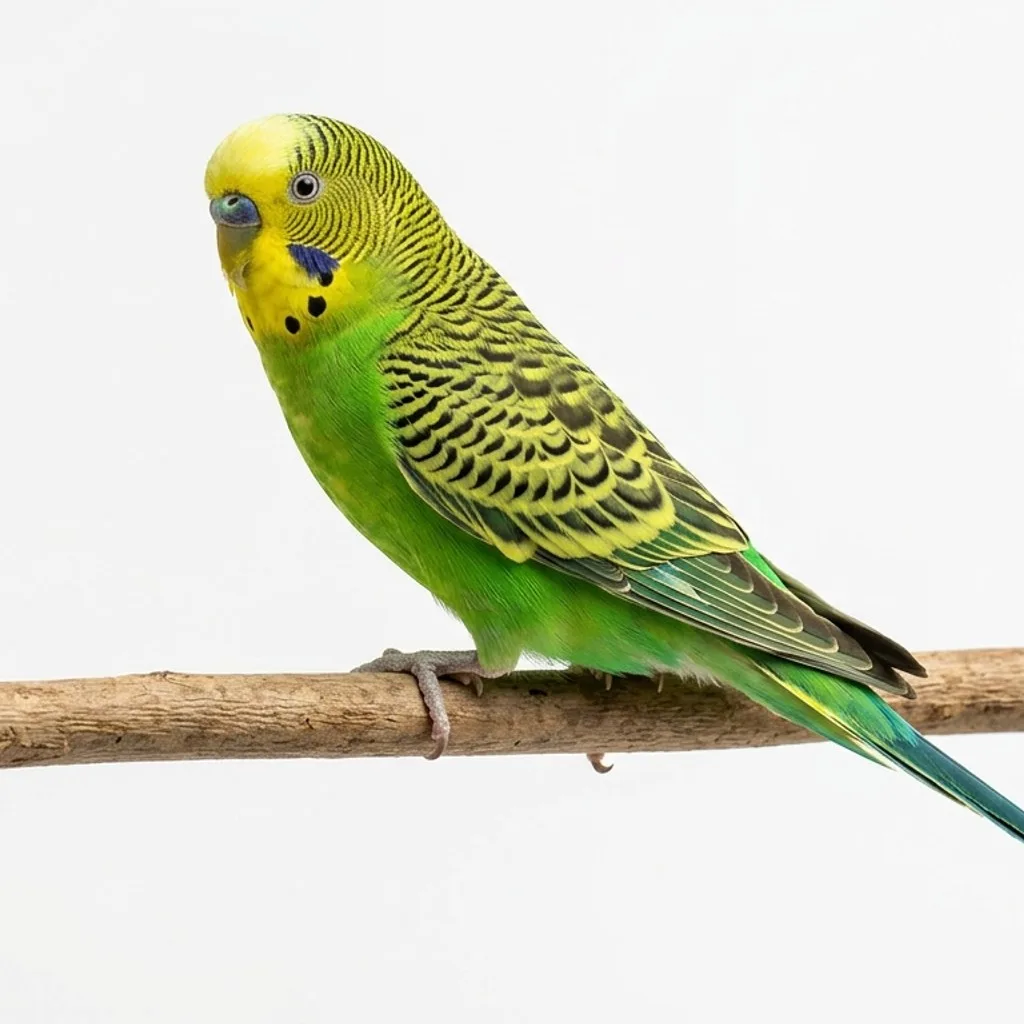
Budgerigar (Budgie)
The Budgerigar, or budgie, is a small long-tailed seed-eating parrot from Australia and one of the most widely kept companion birds in the world. It is lively, inquisitive and intensely social: budgies live in large flocks in the wild, so a single bird needs either a companion budgie or committed daily human interaction to stay settled. They are bright enough to learn to step up, perform simple tricks and mimic speech, males more readily than females. Wild birds are green and yellow with black scalloping on the wings, while selective breeding has produced blue, white, yellow, grey and pied colour mutations. Care is straightforward rather than trivial: fresh food and water twice daily, a pellet-based diet with seed as a treat, spot cleaning, and 30 to 60 minutes of supervised flight in a bird-safe room. Their small size suits apartments, though near-constant chirping makes them a poor match for a noise-sensitive household.
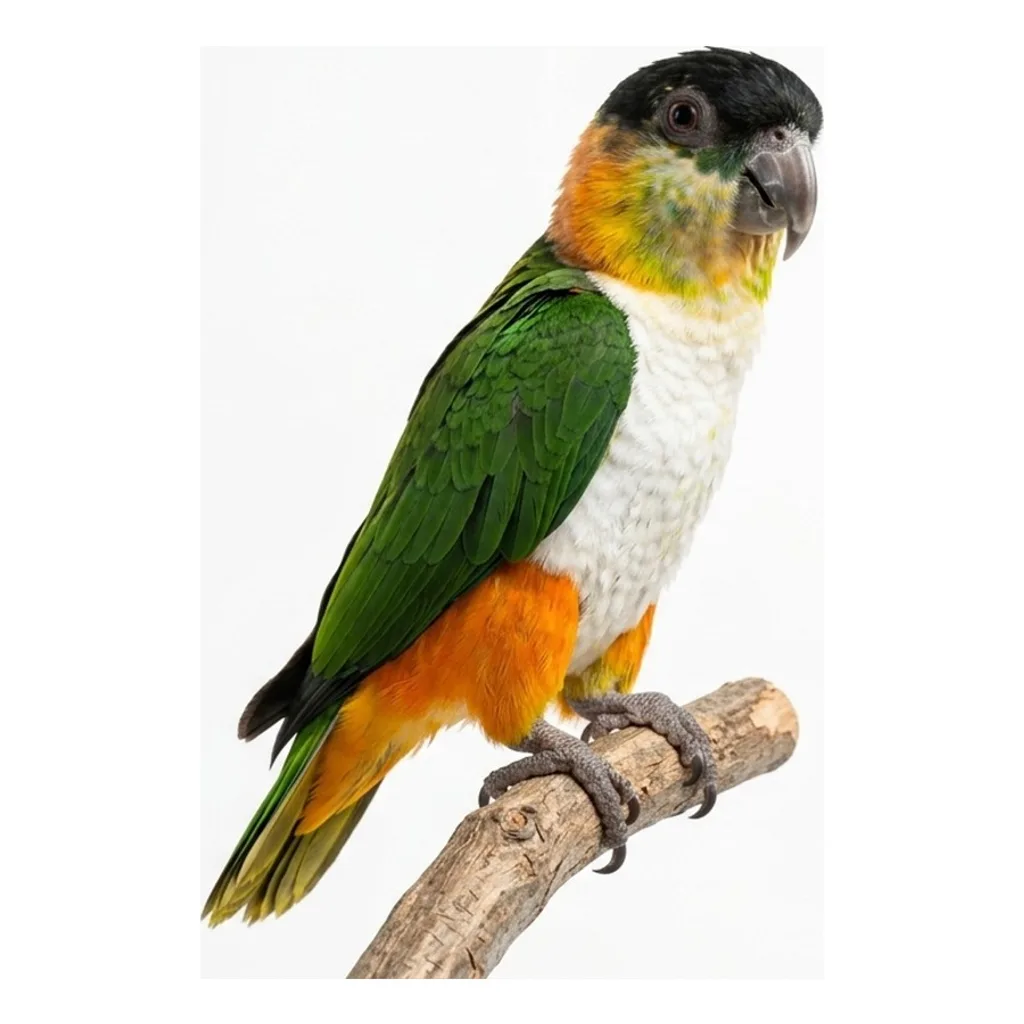
Caique
The Caique is a small, stocky South American parrot represented by two species, the Black-headed and the White-bellied, both bold, comical and relentlessly busy. Roughly 23 to 25 cm long and 150 to 170 grams, it carries a large personality in a compact frame and is better known for its hopping gait across flat surfaces than for talking, although it mimics sounds and chirps freely. Noise sits at a moderate level rather than a piercing one. A Caique needs at least two to four hours of supervised time out of the cage each day, the largest enclosure a home can fit, and a steady rotation of chewable and foraging toys, since a bored bird slides quickly into plucking or aggression. With a lifespan of 25 to 40 years, it fits an active, sociable household that is home often and ready for a decades-long companion.