Wet vs Dry Cat Food NZ: Which Should You Choose?
Wet vs dry cat food in NZ: hydration, cost, convenience, kittens, indoor cats, mixed feeding and what to check on the label.
The quick answer: wet, dry and mixed feeding can all work for healthy cats if the food is complete, balanced, life-stage appropriate and portioned properly. Wet food helps with water intake and meal control. Dry food is convenient and useful for puzzle feeders. Many NZ households do best with a measured mix, not an all-or-nothing rule.
Quick comparison
| Choice | Good for | Trade-off |
|---|---|---|
| Wet food | Cats that drink little, measured meals, fussy eaters | Costs more per day, needs chilling after opening |
| Dry food | Convenience, puzzle feeders, grazing-style routines | Easy to overfeed, needs strong water setup |
| Mixed feeding | Balance of hydration, cost and routine | You must measure both so calories do not creep up |
What matters more than wet or dry
Start with the label. The food should be complete and balanced for your cat's life stage: kitten, adult or senior. SPCA New Zealand advises kitten food for growing cats, adult food after about 12 months, and senior diets for cats over seven years, with vet input when health problems are involved.
WSAVA nutrition guidance also encourages owners to look beyond front-of-pack marketing. Ask who formulates the food, whether it is tested, and whether it is suitable as a sole diet. A beautiful ingredient list is not useful if the food is not nutritionally complete.
For the broader food decision, see Cat Food Guide NZ.
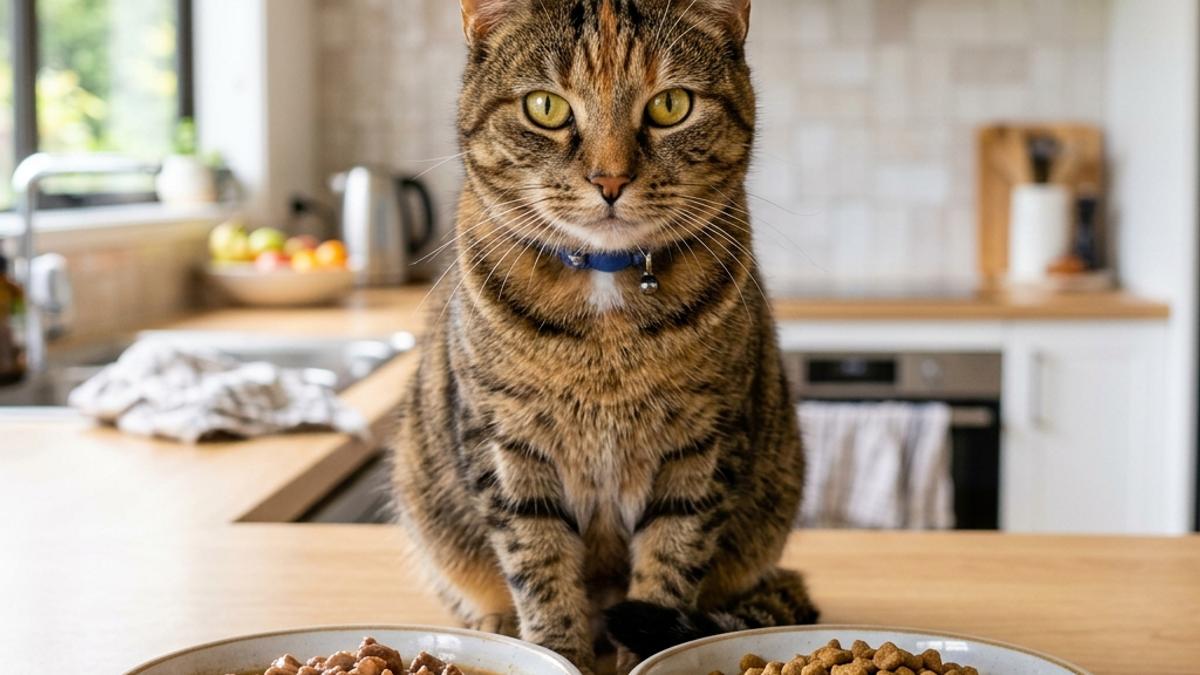
Wet food: where it shines
Wet food is useful for cats that do not naturally drink much, which is common in indoor cats. FDA pet food guidance notes canned foods are typically far higher in moisture than dry foods, and Cornell's feline hydration advice notes that food moisture contributes to overall water intake.
Wet food also works well for measured meal times. That can suit cats in Auckland apartments, Wellington flats or multi-cat homes where one cat steals from another. It is harder to leave out all day, though, especially in warm kitchens or humid summer weather.
Dry food: where it shines
Dry food is convenient, often cheaper per feed, and easier to use in puzzle feeders or automatic feeders. That makes it useful for indoor cats that need enrichment during work hours.
The risk is portion creep. A small extra scoop each day can slowly become weight gain, especially for desexed indoor cats. Use the feeding guide for your cat's ideal body condition, then adjust with your vet if weight changes. For kitten feeding basics, read How Much to Feed a Kitten NZ.
Mixed feeding: the practical NZ option
Mixed feeding can be the sweet spot: wet food for hydration and routine, dry food for puzzles, overnight snacks or budget control. The key is to measure the combined daily amount. Do not feed a full wet portion plus a full dry portion unless the feeding guides say that total suits your cat.
If you are planning annual costs, remember food is only one line beside litter, vet care, parasite prevention, toys, carriers and boarding. Use Cost of Owning a Cat in NZ before committing to a feeding style that stretches the weekly budget.
Water setup matters
If your cat eats mostly dry food, water placement becomes part of the system. Offer fresh water in more than one spot, keep bowls away from litter trays, and try a wide ceramic or stainless bowl if whisker contact seems to bother your cat. Some cats like fountains; others ignore them.
Quick takeaways
- Wet, dry and mixed feeding can all work if the food is complete and portioned.
- Wet food supports water intake and measured meals.
- Dry food is convenient and good for puzzle feeding, but easy to overfeed.
- Mixed feeding is practical if you count the total daily food, not each type separately.
- For cats with kidney, urinary, dental, diabetes, vomiting or weight-loss concerns, ask your vet before changing diet.
Shop related categories at PetMall
Looking for cat food and feeding gear in New Zealand? Browse the PetMall cat range for current options and nationwide delivery.
Related reading
References
- SPCA New Zealand, what to feed your cat or kitten, checked 2026-06-05: https://www.spca.nz/advice-and-welfare/article/what-to-feed-your-cat-or-kitten
- WSAVA Global Nutrition Guidelines and nutrition toolkit, checked 2026-06-05: https://wsava.org/global-guidelines/global-nutrition-guidelines/
- FDA, Complete and Balanced Pet Food, checked 2026-06-05: https://www.fda.gov/animal-veterinary/animal-health-literacy/complete-and-balanced-pet-food
- Cornell Feline Health Center, feline hydration, checked 2026-06-05: https://www.vet.cornell.edu/departments-centers-and-institutes/cornell-feline-health-center/health-information/feline-health-topics/hydration
Important notice
*General nutrition information for NZ cat owners. Diet changes for diagnosed disease, urinary issues, kidney disease, diabetes, dental pain, vomiting or unexplained weight change should be discussed with a NZ vet.*
Related guides
petmall.co.nz
Shop at PetMall
The products below are practical support items for your pet. PetMall ships across New Zealand.
- Cat FoodStart with food that matches your cat's life stage — change brands slowly over 7–10 days to avoid digestive upset.
- Cat LitterClumping or crystal, most cats prefer an unscented litter and a clean tray — one tray per cat plus one spare is the NZ rule of thumb.
- Cat TreatsGreat for bonding and training — keep treats under 10% of daily calories to protect your cat's waistline.
- Cat ToysA small rotation of toys (feather wand, puzzle feeder, and comfort toy) usually works better than buying many at once.
- Cat GroomingRegular brushing cuts hairballs and shedding — essential for long-haired breeds like Ragdolls and British Longhairs.
- Flea & Worm TreatmentFor NZ conditions, choose protection that fits your cat's weight and lifestyle (indoor vs outdoor) and keep it regular.