Samoyed vs Alaskan Malamute NZ: Which Fluffy Arctic Dog Is Right for You?
Two beautiful arctic breeds compared for NZ owners. Samoyed vs Alaskan Malamute: size, temperament, grooming, heat tolerance and which suits NZ's climate and lifestyle.
Both the Samoyed and the Alaskan Malamute are large, strikingly beautiful arctic breeds with thick double coats — and both turn heads in New Zealand. But they have meaningfully different temperaments, exercise needs, and tolerance for NZ's warmer regions. Here's what to know before choosing either.
Side-by-side overview
| Samoyed | Alaskan Malamute | |
|---|---|---|
| Weight | 20–29 kg (male); 16–23 kg (female) | 36–41 kg (male); 32–36 kg (female) |
| Lifespan | 12–14 years | 10–14 years |
| NZ Price (breeder) | $2,000–$4,000 | $2,500–$4,500 |
| NZ Price (adoption) | $150–$350 via SPCA | $150–$400 via SPCA |
| Energy level | ★★★★☆ | ★★★☆☆ |
| Trainability | ★★★☆☆ | ★★★★☆ |
| Grooming needs | ★★★★★ | ★★★☆☆ |
| Apartment suitability | ★★☆☆☆ | ★★★☆☆ |
| Good with kids | ★★★★★ | ★★★★★ |
| Good with other pets | ★★★★☆ | ★★★★☆ |
*Scores from PetMall breed profiles (1–5).*
Key personality difference: cheerful social butterfly vs powerful pack dog
The Samoyed is often described as "the dog that smiles." That curved mouth isn't just cute — it prevents drool and was bred as a functional adaptation, but the cheerful expression mirrors the breed's genuinely sunny, social personality. Samoyeds were bred by the Samoyedic peoples of Siberia as an all-purpose dog: herding reindeer, pulling sleds, and sleeping inside tents to warm their owners at night. This intimate human contact for thousands of years produced a dog that needs human company as much as exercise. Leave a Samoyed alone for long periods and you'll hear about it — loudly.
The Alaskan Malamute has a different history and a different energy. Bred by the Mahlemut Inuit people primarily as a heavy freight-sled dog, Malamutes are built for power rather than speed. They're pack animals by nature: loyal within their family group but with a more independent streak than the Samoyed, and a strong prey drive that can make them unreliable off-lead around small animals. Malamutes can be stubborn and will test boundaries with inexperienced owners.
Both breeds are affectionate and gentle with their families. Neither is a guard dog — they tend to greet strangers happily rather than alerting.
Size difference matters in NZ
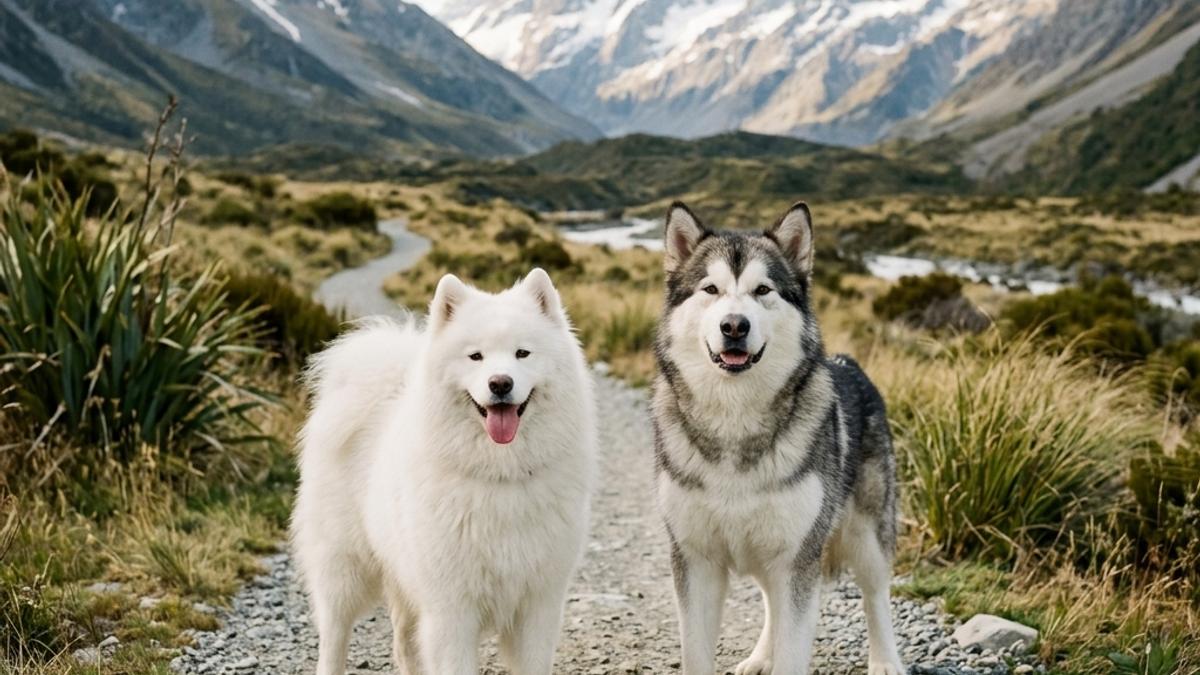
This is more significant than it might seem. An adult male Malamute at 36–41 kg is a large, powerful dog. In a Wellington townhouse or an Auckland apartment, that bulk becomes a genuine management challenge, especially with children or elderly family members. The Samoyed at 20–29 kg (male) is noticeably more manageable in tighter spaces, though still a medium-large dog.
On a lifestyle block or in a house with a large section, both breeds can thrive given enough exercise.
NZ climate considerations
This is the most critical practical question for NZ owners, and one that prospective owners often underestimate.
Both breeds were developed in subarctic conditions and can struggle significantly in warm, humid New Zealand summers, particularly in:
- Auckland and Northland: High humidity + warm temperatures can cause severe heat stress
- Waikato and Bay of Plenty: Similar humidity risk in summer
Both breeds are better suited to:
- South Island: Cooler, drier climate, especially Otago and Southland
- Elevated areas: Waikato plateau, central plateau
- Wellington and Christchurch winters: These breeds genuinely enjoy the cold
If you live in a warm NZ region and want either of these breeds, you need to be serious about:
- Air-conditioned or well-ventilated indoor access in summer
- Avoiding exercise in the heat of the day
- Access to shade and cool water at all times
- Never leaving them in a hot car
See our NZ summer pet safety guide for heat management tips.
Grooming: a major commitment for both
The Samoyed's extraordinary white coat is one of its most striking features — and its most demanding. It needs brushing 2–3 times a week outside of shedding season, and daily during the twice-yearly coat blowout. Without consistent grooming, the coat mats and causes skin issues. Professional grooming every 8–12 weeks is recommended. The white coat also shows every speck of NZ red dirt or mud.
The Alaskan Malamute has a dense double coat that also blows out twice yearly, but it's somewhat less intensive to maintain than the Samoyed — brush 2–3 times a week normally, daily during blowouts. Their coat is generally not as prone to matting.
Owners of both breeds should budget $80–$200+ per professional groom in NZ.
Training and independence
The Malamute scores slightly higher on trainability (★★★★☆) than the Samoyed (★★★☆☆), but both are independent thinkers that will test a first-time owner. Neither is as biddable as a Border Collie or Labrador. They respond well to:
- Reward-based, positive reinforcement training (treats work extremely well)
- Consistent, calm leadership from puppyhood
- Early socialisation with people, children, and other animals
The Malamute's stubbornness can be frustrating for new dog owners. The Samoyed's intelligence is sometimes expressed through creative problem-solving (i.e., finding ways into the rubbish or out of the garden) rather than compliance.
Both breeds need recall training from a very young age. A Malamute in particular should rarely be off-lead in unfenced areas due to its prey drive and running speed. See our dog recall training guide.
Who each breed suits in NZ
Samoyed suits you if:
- You live in a cooler NZ region or have climate-controlled indoor access
- You want a cheerful, social, family-oriented dog
- You can commit to high grooming maintenance (daily brushing during blowouts)
- You're an active family who can exercise the dog 1–1.5 hours daily
- You don't want a dog that's too large or overpowering
Alaskan Malamute suits you if:
- You live in a South Island or elevated location with cooler summers
- You want a powerful, pack-oriented dog with a strong presence
- You have experience with large, independent breeds
- You can provide structured exercise and training from puppyhood
- You have a large, securely fenced outdoor space
Neither suits you if:
- You live in a warm, humid NZ region without air conditioning
- You're a first-time dog owner looking for an easy-going breed
- You have a small property or live in a tight urban space
- You're away from home frequently without dog company
For more breed comparisons and matching tools, see our Find a Breed tool and best dog breeds for cold South Island homes NZ.
Quick takeaways
- Samoyed is smaller, more social, higher grooming demand; Malamute is larger, more independent, slightly easier to groom
- Both struggle with NZ's warm humid summers — best suited to cooler regions
- Neither is suitable for a first-time dog owner looking for an easy, low-maintenance companion
- Both are exceptional family dogs in the right climate and with the right commitment
- Malamute's size and prey drive require experienced handling and secure fencing
See also
- Samoyed breed profile
- Alaskan Malamute breed profile
- Siberian Husky vs Alaskan Malamute NZ
- Best dog breeds for cold South Island homes NZ
- NZ summer pet safety
- Find a Breed
---
References
- American Kennel Club (AKC), Samoyed Breed Standard & Traits: https://www.akc.org/dog-breeds/samoyed/
- American Kennel Club (AKC), Alaskan Malamute Breed Profile: https://www.akc.org/dog-breeds/alaskan-malamute/
- Merck Veterinary Manual, Hip Dysplasia in Dogs: https://www.merckvetmanual.com/musculoskeletal-system/arthropathies-and-related-disorders-in-small-animals/hip-dysplasia-in-dogs
- MPI New Zealand, Code of Welfare for Dogs, checked 2026-06-05: https://www.mpi.govt.nz/animals/animal-welfare/codes/all-animal-welfare-codes/code-of-welfare-dogs/
---
*This guide provides general comparison information. Individual dogs vary widely. Consult a registered NZ vet and reputable breeders before choosing either breed.*
Free PetMall tools
Related guides
petmall.co.nz
Shop at PetMall
The products below are practical support items for your pet. PetMall ships across New Zealand.
- Dog FoodStart with food that matches your dog's life stage and activity level — and change brands slowly over 7–10 days.
- Dog TreatsTraining rewards and everyday treats — small, soft pieces work best for consistent reinforcement.
- Dog ToysA small rotation of chew, fetch, and puzzle toys usually works better than buying a large variety at once.
- Dog GroomingA gentle brush and the right shampoo make maintenance easier — especially for dogs that get muddy on walks.
- Leads & HarnessesComfort matters: padded contact points and adjustable fit help reduce rubbing on longer walks or tramping weekends.
- Flea & Worm TreatmentFor NZ conditions, look for protection that fits your routine (monthly vs longer-lasting) and your dog's weight range.