Best Dog Breeds for Cold South Island Homes NZ
Best dog breeds for cold South Island homes NZ: compare cold-weather breed profiles with grooming, housing and summer cautions.
The best dog breeds for cold South Island homes NZ owners can shortlist often have dense coats, sturdy bodies and an outdoor-loving temperament. But cold-friendly does not mean outdoor-only. Dogs still need dry shelter, indoor rest, grooming, training and summer heat planning.
What "cold-friendly" should mean
Cold-friendly means a breed may cope better with chilly walks, frosty mornings or snow-country adventures than a very fine-coated dog. It does not mean the dog should sleep wet, live outside without comfort, or be ignored in summer.
For Canterbury frosts, Otago winters, alpine holidays and damp West Coast weather, think about the whole routine: coat care, mud, drying space, car travel, fencing, council rules and household time. Use the Dogs hub, Find a Breed and Dog Beds Guide NZ before choosing by coat alone.
Quick comparison
| Breed | Why it suits colder homes | Watch-outs |
|---|---|---|
| Siberian Husky | Built for cold-weather activity and movement. | Escape risk, recall and summer heat need serious management. |
| Alaskan Malamute | Powerful cold-weather working heritage. | Size, strength, shedding and containment are big commitments. |
| Samoyed | Dense coat and cheerful family style. | Heavy grooming and barking can be issues. |
| Bernese Mountain Dog | Large, steady mountain-dog presence. | Size, cost and indoor space matter. |
| Newfoundland | Thick coat and calm giant temperament. | Drool, grooming, water and car space are real. |
| Saint Bernard | Cold-climate giant with family appeal. | Very large dog costs and management. |
| Rough Collie | Long coat, trainability and family focus. | Coat care and barking need routine. |
| German Shepherd | Versatile, trainable and weather-tolerant for many homes. | Needs training, exercise and mental work. |
Siberian Husky
A Siberian Husky is the obvious cold-weather shortlist dog, especially for owners who love winter walks and snow-country trips. The breed can enjoy chilly movement more than many short-coated dogs.
The reality check is containment. Huskies are famous for independence, digging, roaming and selective recall. A cold South Island climate does not fix fencing, training or boredom.
Alaskan Malamute
An Alaskan Malamute brings size, coat and cold-weather heritage. It can suit experienced owners with space, secure fencing and a genuine love of grooming.
This is not a casual backyard snow dog. Strength, shedding and independent thinking mean the household needs rules before the puppy grows into a powerful adult.
Samoyed
A Samoyed can be a joyful cold-weather family dog. The coat is one of the main reasons people consider the breed, but that coat comes with brushing, drying and white fur around the house.
For wet winters, plan a mudroom routine: towels, drying time, bedding, vacuuming and calm indoor settling. A damp coat left unmanaged is not cosy living.
Bernese Mountain Dog
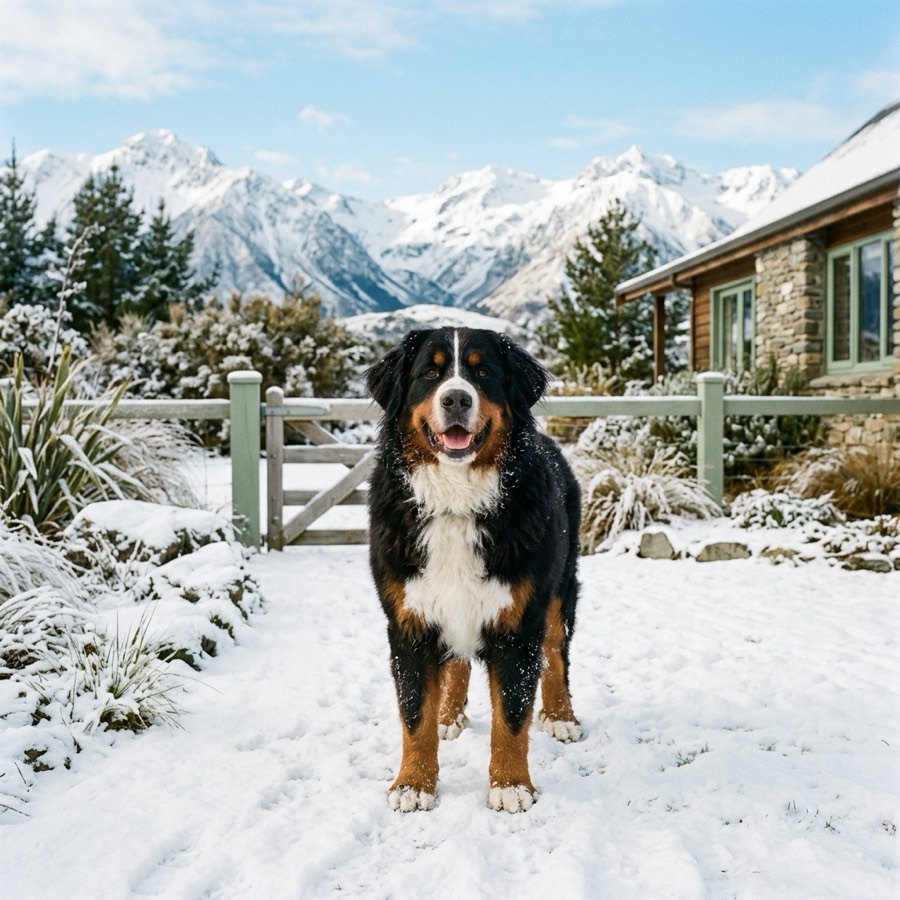
A Bernese Mountain Dog has the look and temperament many people imagine for colder homes: large, steady and companionable. It can suit families with space and a calm routine.
The main trade-off is size. Food, transport, bedding, vet care and training all cost more in NZD when the dog is this large.
Newfoundland
A Newfoundland can be a gentle giant for the right home, with a thick coat and calm style that often suits cooler climates better than hot flats.
But the practical work is large too: drool, wet coat care, car access, grooming, water bowls, flooring and space. If you do not want a big dog living inside with the family, choose another breed.
Saint Bernard
A Saint Bernard is another cold-weather giant with strong appeal. It can suit owners who want a large companion and have the budget, space and patience for giant-breed logistics.
Think about stairs, rental permission, heat pumps, summer shade and a vehicle that can safely carry the dog. Cold tolerance does not remove day-to-day management.
Rough Collie
A Rough Collie can work well for families wanting a long-coated, trainable dog without moving into giant-breed territory. It may suit cooler regions when grooming is kept up.
The coat needs time. Burrs, mud, wet grass and shedding seasons are part of ownership, especially around lifestyle blocks or rural edges.
German Shepherd
A German Shepherd is not a snow specialist, but it is versatile, trainable and often more weather-practical than many fine-coated breeds. It can suit active South Island families who want a working-style companion.
The key is structure: training, socialisation, exercise and a dry place to recover. A German Shepherd left outside to self-manage can become noisy, bored or over-watchful.
South Island setup checklist
Before choosing a cold-friendly dog:
- Check the breed profile, not just the coat photo.
- Budget in NZD for grooming, bedding, fencing, training and larger food bills.
- Plan summer shade and cooling as carefully as winter comfort.
- Keep bedding dry and washable.
- Check rental or body corporate pet consent.
- Check DOC dog access before alpine tracks or conservation areas.
- Make room inside; cold-friendly dogs still need family life and shelter.
MPI's dog welfare code gives the serious baseline: owners are responsible for meeting dogs' welfare needs, including suitable shelter and care. NIWA and MetService are useful reminders that NZ weather is variable, so a South Island dog setup should handle frost, rain, wind and summer heat.
Match the home, not the postcard
Snow photos sell the dream, but most South Island dog ownership is ordinary weekdays: wet school runs, frosty early starts, muddy walks, hot January afternoons and a dog drying inside while dinner is cooked. A breed that looks perfect beside a mountain may still be wrong for a small rental, shared driveway or owner who hates grooming.
Apartment owners should think about lift access, barking, neighbours and drying space. Lifestyle-block owners should think about gates, stock, chickens, electric fencing and visitors arriving in utes. Beach-town owners should think about sand, salt, wind and seasonal dog rules. The right cold-friendly dog is the one whose whole-year routine works in your actual house.
What not to choose by
Do not choose only by coat thickness, size or "snow dog" reputation. A heavy-coated dog can still struggle in summer, a giant dog can still dislike being left alone, and a smart working-style dog can become noisy without training. Shortlist breeds by temperament, trainability, space, grooming, cost and the amount of daily time the adults can give.
Key takeaways
- The best dog breeds for cold South Island homes NZ owners choose still need indoor comfort and dry shelter.
- Dense coats bring grooming, drying and shedding work.
- Giant cold-weather breeds cost more to feed, transport and house.
- Huskies and Malamutes need secure containment and realistic recall expectations.
- Summer heat planning matters even for winter-loving breeds.
- Choose the breed for the routine you can repeat all year, not one snowy weekend.
Related reading
- Dogs hub
- Find a Breed
- Dog Beds Guide NZ
- Siberian Husky profile
- Alaskan Malamute profile
- Samoyed profile
- Bernese Mountain Dog profile
- Newfoundland profile
- Saint Bernard profile
How we picked
This shortlist is based on PetMall's own breed and species profile data linked in the article, especially size, activity needs, grooming needs, beginner suitability, apartment or family fit, and NZ suitability notes. We also used general breed characteristics already summarised in those profiles. It is not a veterinary, legal or behaviour guarantee; owners still need to read the full profiles and match the individual animal to their home.
Profile and guide links used:
- Dogs hub
- Find a Breed
- Dog Beds Guide NZ
- Siberian Husky
- Alaskan Malamute
- Samoyed
- Bernese Mountain Dog
- Newfoundland
- Saint Bernard
- Rough Collie
- German Shepherd
Reference sources
- MPI: Code of Welfare: Dogs - checked 2026-06-04.
- DOC: Where you can take your dog and access rules - checked 2026-06-04.
- Tenancy Services: Requesting pet consent - checked 2026-06-04.
- NIWA: Climate and weather - checked 2026-06-04.
- MetService: Warnings - checked 2026-06-04.
Free PetMall tools
Related guides
petmall.co.nz
Shop at PetMall
The products below are practical support items for your pet. PetMall ships across New Zealand.
- Dog FoodStart with food that matches your dog's life stage and activity level — and change brands slowly over 7–10 days.
- Dog TreatsTraining rewards and everyday treats — small, soft pieces work best for consistent reinforcement.
- Dog ToysA small rotation of chew, fetch, and puzzle toys usually works better than buying a large variety at once.
- Dog GroomingA gentle brush and the right shampoo make maintenance easier — especially for dogs that get muddy on walks.
- Leads & HarnessesComfort matters: padded contact points and adjustable fit help reduce rubbing on longer walks or tramping weekends.
- Flea & Worm TreatmentFor NZ conditions, look for protection that fits your routine (monthly vs longer-lasting) and your dog's weight range.