Best Low-Shedding Cat Breeds NZ: Cleaner Coats, Realistic Expectations
Best low-shedding cat breeds NZ guide: compare real cat profiles with allergy cautions, grooming needs and rental tips.
The best low-shedding cat breeds NZ homes can shortlist may leave less fur on clothes, couches and rentals, but no cat is allergy-free. Look for coat type, grooming needs, temperament and the individual cat, then test real-life contact before assuming a breed will solve shedding or allergy problems.
Low-shedding does not mean no allergies
Some people search for "hypoallergenic cats", but PetMall uses more cautious wording: low-shedding or lower-allergen tendency. Research on cat allergens notes that there are no allergen-free cats, and allergen levels can vary widely between individual cats. Hair length is only one part of the picture.
If someone in the household has cat allergies, talk to a health professional and spend time with the individual cat before adopting or buying. Do not rely on a breeder promise that a kitten will be "non-allergenic".
Use the Cats hub, Find a Breed and Best Cat Breeds for Apartments NZ to compare coat, temperament, activity and indoor suitability.
Quick comparison
| Breed | Why it makes the shortlist | Watch-outs |
|---|---|---|
| Devon Rex | Short, unusual coat and playful indoor personality. | Coat is not maintenance-free; individual allergy response varies. |
| Cornish Rex | Fine coat and active, people-focused style. | Needs warmth, enrichment and gentle handling. |
| Russian Blue | Short dense coat and tidy indoor reputation. | Reserved temperament needs a calm household. |
| Siamese | Short coat and high social engagement. | Vocal, busy and people-needy. |
| Burmese | Short coat and affectionate companion style. | Wants company; not a set-and-forget apartment cat. |
| Bengal | Sleek coat and athletic build. | High energy, climbing and enrichment needs. |
| Sphynx | Little to no fur shedding. | Skin care, warmth and allergy caution still matter. |
| Oriental Shorthair | Short coat and lively, social personality. | Vocal and demanding; needs interaction. |
Devon Rex
A Devon Rex is often shortlisted by people wanting less visible fur around a flat or apartment. Its coat is short and distinctive, and many Devons are playful, social indoor cats.
The key is realistic care. Less loose fur does not mean no grooming, no cleaning or no allergens. Spend time with the individual cat and ask about coat care before deciding.
Cornish Rex
A Cornish Rex has a fine coat and an active, people-oriented personality. It can suit owners who want a lively indoor cat and do not want long hair drifting through the house.
Because the coat is fine, think about warmth and comfort in NZ winter flats. A sunny window, cosy bedding and stable indoor routine matter, especially in cooler South Island homes.
Russian Blue
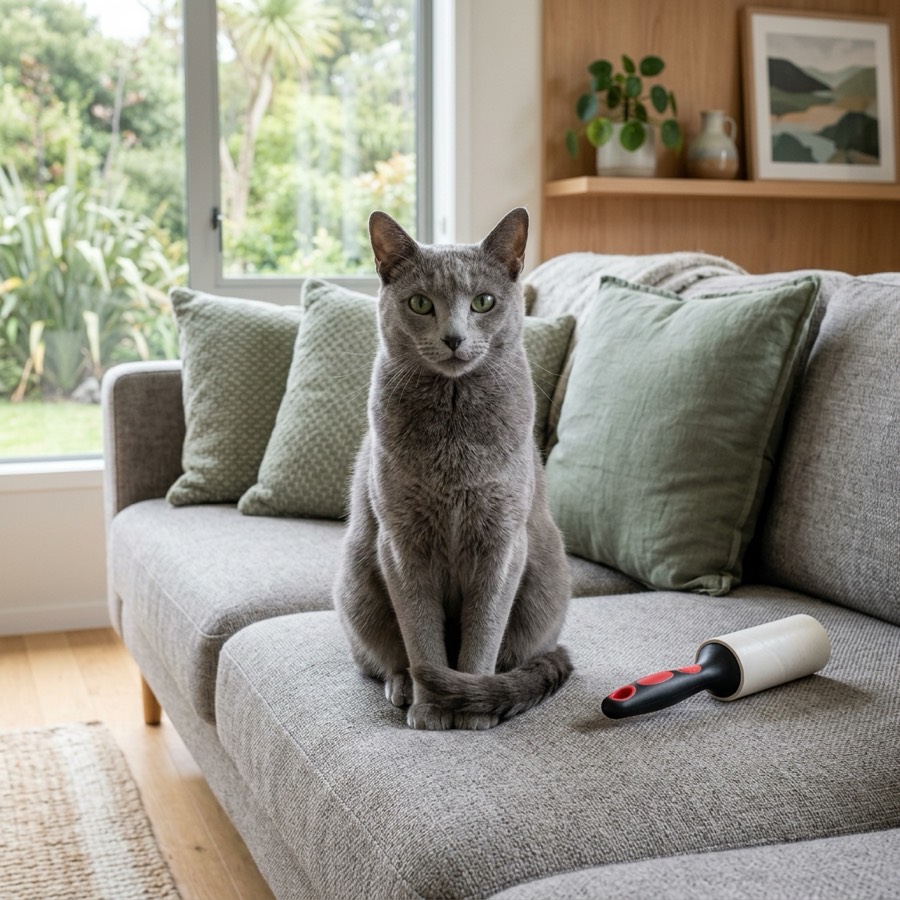
A Russian Blue can suit tidy, calm households wanting a short-coated cat with a quieter style. The breed is often attractive to apartment owners because it combines a neat coat with a more reserved temperament.
Reserved does not mean ignored. Russian Blues still need play, scratching outlets, safe hiding places and gentle introductions to visitors.
Siamese
A Siamese has a short coat, but the bigger ownership question is noise and attention. Siamese cats are social and vocal, so they may suit owners who want interaction rather than a silent decorative pet.
For townhouses or apartments, think about neighbours and routine. A low-shedding cat that yowls from boredom is not a low-impact cat.
Burmese
A Burmese brings a short coat and affectionate personality. It may suit homes that want a close companion and can provide daily play and company.
This breed can be a poor fit for households that are away long hours and want a cat that self-manages. Low shedding should not outrank temperament.
Bengal
A Bengal has a sleek coat and athletic build. The coat may be easier than long-haired breeds, but Bengals often need more climbing, hunting-style play and environmental enrichment than beginners expect.
In a rental, plan scratching surfaces, vertical space and noise management before choosing by coat alone. Tenancy consent may be simple for a cat, but damage and disruption are still real concerns.
Sphynx
A Sphynx is the obvious "low fur" option, but it is not a no-maintenance or allergy-free cat. TICA notes Sphynx cats are not simply hypoallergenic, and their skin and warmth needs are part of ownership.
For NZ homes, think about winter warmth, sun exposure, bedding cleanliness and hands-on care. If you want low effort, the Sphynx may surprise you in the wrong direction.
Oriental Shorthair
An Oriental Shorthair combines a short coat with a lively, social style. It can suit owners who like Siamese-type interaction and want less long-hair cleanup.
The watch-out is intensity. This is a cat to live with, talk to and entertain, not merely a low-shedding furnishing.
How to choose in New Zealand
Low-shedding cat choice should include:
- Real contact with the individual cat before committing.
- A grooming and vacuuming routine you can repeat.
- NZD budget for litter, scratching gear, enrichment, vet care and rental cleaning.
- Tenancy or body corporate pet consent where needed.
- Indoor enrichment for apartments and wet winter weeks.
- A plan for visitors or family members with allergies.
Cornell's cat care guidance also reminds owners that coat condition can reflect overall care and grooming. If a cat's coat changes, seek veterinary advice rather than treating it as normal shedding.
Test the individual cat, not the marketing
If allergies are part of the decision, arrange calm, repeated contact with the actual cat where possible. A quick cuddle at a busy viewing is not the same as sitting in a room, touching bedding, handling toys and seeing how the household reacts later. For rescue cats, ask about foster notes. For breeders, ask how adult relatives shed and what grooming routine they recommend.
Keep the language honest with children and flatmates too. "This breed may shed less" is safer than promising "this cat will not make you sneeze". If a household member has a serious allergy history, this is a human health decision as well as a pet choice.
Cleaning routine matters
The tidy homes are usually the repeatable homes. Choose washable bedding, scratching areas you can vacuum, litter zones away from food prep, and a weekly brushing or wipe-down rhythm that fits real life. A short-coated cat in a damp Auckland apartment may still leave dander and litter dust around the house. A Sphynx may leave oils on bedding even without loose fur.
Key takeaways
- The best low-shedding cat breeds NZ homes can shortlist may reduce visible fur, but no breed is allergy-free.
- Say "low-shedding" or "lower-allergen tendency", not "won't trigger allergies".
- Short-coated cats still need grooming, enrichment and vet care.
- Sphynx cats shed little fur but need hands-on skin and warmth management.
- Choose temperament and household fit before coat marketing.
- Test the individual cat, especially where allergies or rental constraints matter.
Related reading
- Cats hub
- Find a Breed
- Best Cat Breeds for Apartments NZ
- Devon Rex profile
- Cornish Rex profile
- Russian Blue profile
- Siamese profile
- Sphynx profile
How we picked
This shortlist is based on PetMall's own breed and species profile data linked in the article, especially size, activity needs, grooming needs, beginner suitability, apartment or family fit, and NZ suitability notes. We also used general breed characteristics already summarised in those profiles. It is not a veterinary, legal or behaviour guarantee; owners still need to read the full profiles and match the individual animal to their home.
Profile and guide links used:
- Cats hub
- Find a Breed
- Best Cat Breeds for Apartments NZ
- Devon Rex
- Cornish Rex
- Russian Blue
- Siamese
- Burmese
- Bengal
- Sphynx
- Oriental Shorthair
Reference sources
- National Library of Medicine / PMC: Keep the cat, change the care pathway - checked 2026-06-04.
- Cornell Feline Health Center: Choosing and caring for your new cat - checked 2026-06-04.
- TICA: Sphynx - checked 2026-06-04.
- MPI: Code of Welfare: Companion Cats - checked 2026-06-04.
- Tenancy Services: Requesting pet consent - checked 2026-06-04.
Free PetMall tools
Related guides
petmall.co.nz
Shop at PetMall
The products below are practical support items for your pet. PetMall ships across New Zealand.
- Cat GroomingRegular brushing cuts hairballs and shedding — essential for long-haired breeds like Ragdolls and British Longhairs.
- Cat FoodStart with food that matches your cat's life stage — change brands slowly over 7–10 days to avoid digestive upset.
- Cat LitterClumping or crystal, most cats prefer an unscented litter and a clean tray — one tray per cat plus one spare is the NZ rule of thumb.
- Cat TreatsGreat for bonding and training — keep treats under 10% of daily calories to protect your cat's waistline.
- Cat ToysA small rotation of toys (feather wand, puzzle feeder, and comfort toy) usually works better than buying many at once.
- Flea & Worm TreatmentFor NZ conditions, choose protection that fits your cat's weight and lifestyle (indoor vs outdoor) and keep it regular.