Pet Water Fountain Types NZ: Cat Fountains, Dog Fountains and What to Avoid
Pet water fountain types NZ guide: compare cat fountains, dog fountains, ceramic, stainless and plastic models, filters, cleaning and placement.
Pet water fountain types in NZ are worth considering for cats that prefer running water, multi-pet homes that need more water stations, and warm summer rooms where fresh water gets unappealing quickly. The best fountain is not the flashiest one. Look for easy cleaning, a quiet pump, stable materials, available replacement filters and a shape your pet will actually drink from.
Quick comparison
| Fountain type | Look for | Avoid |
|---|---|---|
| Stainless steel | Easy cleaning, sturdy, less odour retention | Sharp edges, awkward pump access |
| Ceramic | Heavy, stable, good for cats that dislike plastic | Fragile bowls in busy dog homes |
| Plastic | Lightweight and cheaper | Scratched plastic, odour, hard-to-clean corners |
| Flower or stream style | Multiple drinking points, gentle flow | Splashy designs near power boards |
| Large dog fountain | Bigger reservoir, stable base | Small cat fountain used for a large thirsty dog |
When a fountain helps
Some cats prefer water away from food and litter trays, and SPCA NZ notes that some cats prefer running water. A fountain can help by keeping water moving and interesting, especially for indoor cats, dry-food eaters or cats that ignore a still bowl. It is also useful in multi-cat homes where one cat guards resources.
For dogs, a fountain is usually about convenience rather than magic. It can help if you need a larger water station in the kitchen, laundry or covered patio, but it still needs daily checking. A fountain is not a substitute for shade, clean bowls and carrying water on hot walks.
Material choices
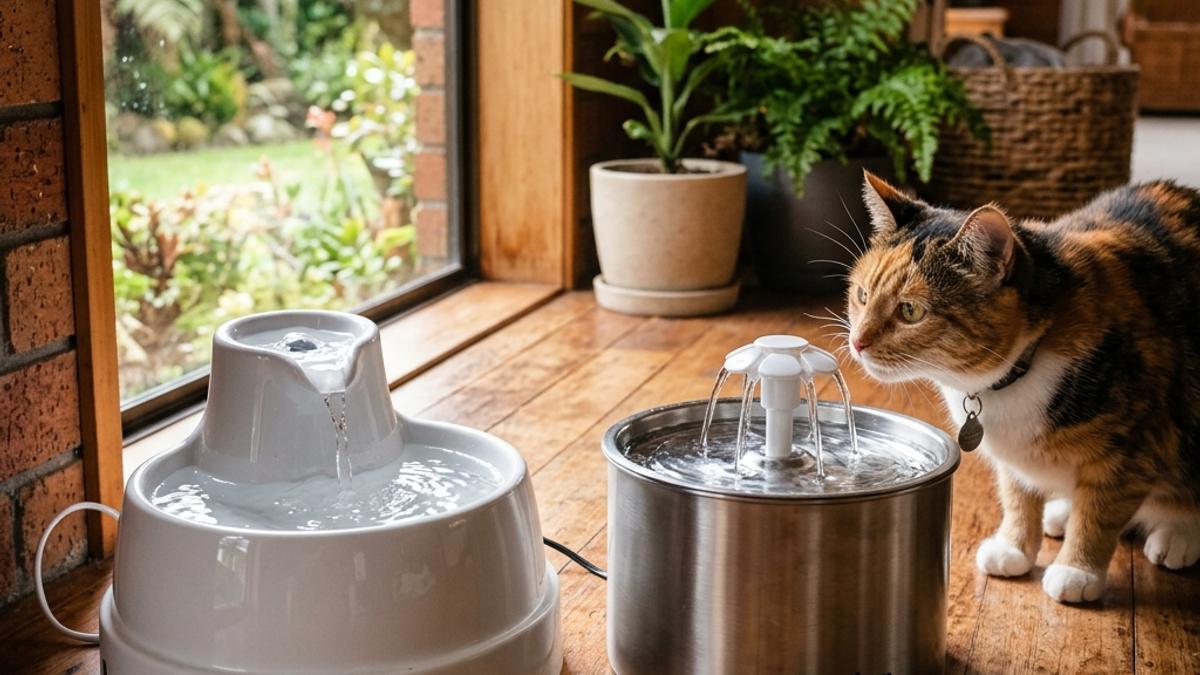
Stainless steel is a strong default because it is durable and easy to wash. Ceramic is stable and often appealing for cats that dislike light plastic bowls, but it can chip if knocked around. Plastic is lighter and cheaper, but scratched plastic can hold odour and grime, so it needs more careful replacement.
Look for smooth surfaces, removable parts and a pump compartment you can reach. If cleaning requires a tiny brush, a manual and twenty minutes every time, it will not stay clean in a busy NZ household.
Pump, filter and noise checks
A fountain only works if the pump stays clean and quiet. Check that replacement filters are easy to buy, the cable route is sensible, and the water level is visible enough that the pump will not run dry. Running a pump dry can damage it and makes an awful noise.
Filters help catch hair and debris, but they do not remove the need to wash the fountain. Rinse and refill often, wash the parts as directed, and clean more frequently in warm Auckland humidity, multi-pet homes or where dogs drop grass and food into the water.
Placement in a NZ home
Put water away from litter trays, food bowls, heat pumps, direct sun and power-board clutter. Many cats drink better when water is in a quiet spot with an escape route, not wedged beside the fridge where people step over them. In a rental, protect timber floors with a waterproof mat and keep cords tidy.
Offer at least one normal bowl as a backup. Power cuts, pump faults and filters running out should not leave your pet without water. For cats, use Cat Care NZ Complete Guide for broader indoor setup. For bowl materials and feeders, see Pet Bowls and Feeders Guide NZ.
What to look for
- Smooth stainless or ceramic surfaces where possible.
- A quiet pump and replacement filters you can source in NZ.
- A reservoir sized to your pet and household.
- Easy disassembly for frequent washing.
- A stable base that will not tip when a dog noses it.
What to avoid
- Hard-to-clean corners, decorative grooves and hidden slime traps.
- No-name filter sizes you cannot replace later.
- Placing water beside food, litter trays or heat sources.
- Assuming a fountain fixes drinking changes. Sudden thirst changes need a NZ vet.
- Running only one water source in the home.
Health and vet note
This is a buying guide, not a medical guide. If your pet suddenly drinks much more or much less than usual, urinates more, seems unwell, vomits, or shows pain toileting, contact a NZ vet. A fountain can encourage normal water access, but it cannot diagnose or treat a health problem.
Related buying guides
- Pet Product Buying Guides NZ
- Pet Bowls and Feeders Guide NZ
- Cat Care NZ Complete Guide
- New Puppy Checklist NZ
Shop category
Quick takeaways
- A fountain helps some cats, but clean placement and backup bowls still matter.
- Stainless steel and ceramic are usually easier to keep fresh than scratched plastic.
- Replacement filters and pump access should be checked before buying.
- Keep water away from food, litter trays and direct sun.
- Sudden drinking changes belong with a NZ vet, not a product swap.
References
- SPCA NZ, Keeping pets safe in summer, checked 2026-06-13: https://www.spca.nz/advice-and-welfare/article/keeping-pets-safe-in-summer
- SPCA NZ, Keeping your cat safe and happy at home, checked 2026-06-13: https://www.spca.nz/advice-and-welfare/article/keeping-your-cat-safe-and-happy-at-home
- MPI, Code of Welfare: Dogs, checked 2026-06-13: https://www.mpi.govt.nz/animals/animal-welfare/codes/all-animal-welfare-codes/code-of-welfare-dogs
Free PetMall tools
Related guides
petmall.co.nz
Shop at PetMall
The products below are practical support items for your pet. PetMall ships across New Zealand.
- Cat FoodStart with food that matches your cat's life stage — change brands slowly over 7–10 days to avoid digestive upset.
- Cat LitterClumping or crystal, most cats prefer an unscented litter and a clean tray — one tray per cat plus one spare is the NZ rule of thumb.
- Cat TreatsGreat for bonding and training — keep treats under 10% of daily calories to protect your cat's waistline.
- Cat ToysA small rotation of toys (feather wand, puzzle feeder, and comfort toy) usually works better than buying many at once.
- Cat GroomingRegular brushing cuts hairballs and shedding — essential for long-haired breeds like Ragdolls and British Longhairs.
- Flea & Worm TreatmentFor NZ conditions, choose protection that fits your cat's weight and lifestyle (indoor vs outdoor) and keep it regular.