Kitten vs Adult Cat in NZ: Which Should You Get?
Kitten or adult cat in NZ? Compare time, cost, temperament and settling-in to choose the right fit — plus why adopting an adult cat is often the easy option.
The quick answer: a kitten suits people who want to raise a cat from the start and have time for the high-energy, mischievous early months. An adult cat suits those who want a known temperament, calmer company and an easier settle-in — many adult rescues are already litter-trained, desexed and microchipped. Neither is "better"; it's about your time and what you want.
Quick comparison
| Factor | Kitten | Adult cat |
|---|---|---|
| Time/energy early on | High — play, supervision, kitten-proofing | Lower; often already litter-trained |
| Temperament | Develops as they grow | Known and visible now |
| First-year cost | Higher (desexing, vaccines, gear) | Often lower via adoption |
| Settling in | Curious, fast, into everything | Often quicker; some need a quiet adjustment |
Choosing a kitten
Pros: you shape socialisation and bonding from the start. Cons: kittens are a lot of work — constant play, climbing, supervision, kitten-proofing, and a higher first-year vet bill. Their adult temperament is still developing. See first-time cat owner NZ 30-day setup.
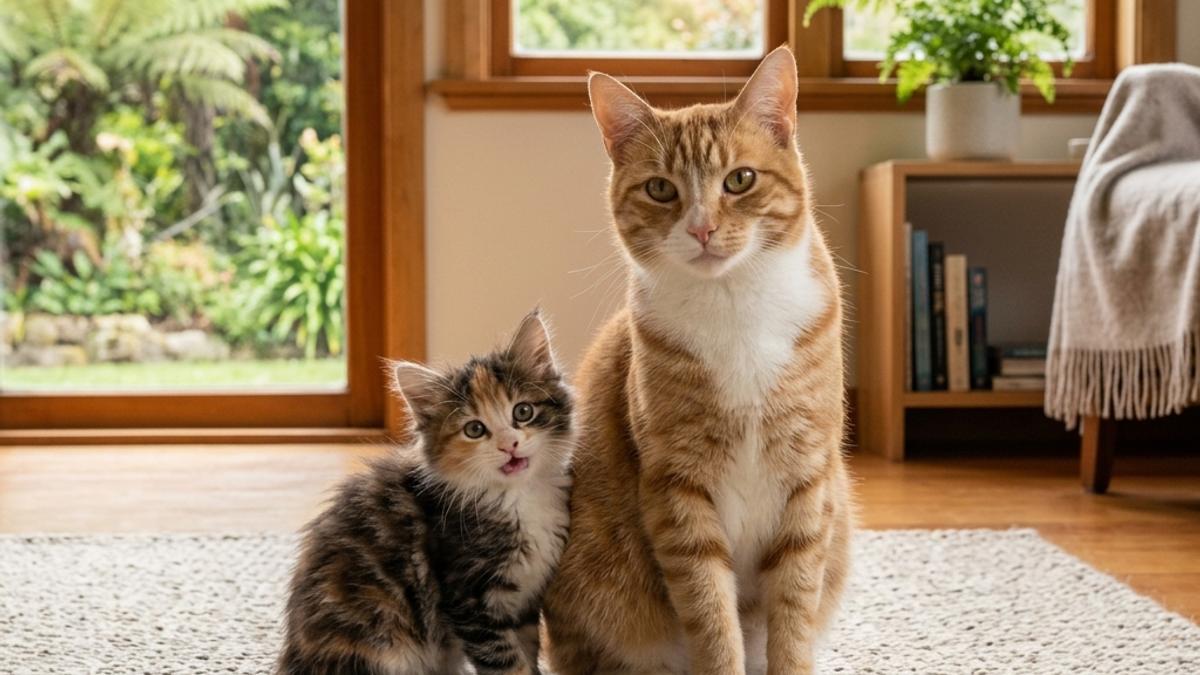
Choosing an adult cat
Pros: their personality, size and coat are already visible, so you can pick a match. Many adult rescue cats are litter-trained, desexed, microchipped and past the destructive kitten stage — so daily life is easier sooner, and adoption fees are usually lower. Cons: some need a quiet decompression period, and history may be unknown. If you want to see how an adult cat behaves around strangers before committing, several NZ cat cafés host adoptable cats from local rescues and let you spend an hour with them.
NZ context
Whichever you choose: microchip, desex, and consider keeping the cat indoors or contained (better for the cat and NZ native wildlife). For the indoor-vs-outdoor decision see indoor vs outdoor cat NZ. Costs: see how much does a cat cost in NZ?.
Quick takeaways
- Kitten = shape from the start, but lots of early work + unknown adult temperament.
- Adult cat = known personality, often easier and cheaper (especially via adoption).
- Be honest about your time in the first months.
- Either way: microchip, desex, and plan containment for wildlife.
What the vet-side guidance actually says
Two pieces of clinical framing make this decision easier.
The socialisation window closes early. A kitten's sensitive period runs from roughly 2 to 7 weeks of age — long before most kittens go home. Kittens handled daily by people during that first month grow up more confident with people; kittens isolated through it tend to stay reluctant to approach. Practically, that means the temperament of a kitten you collect at 8–12 weeks was substantially set by whoever raised the litter, not by you. Ask how the litter was raised, and whether the kittens were handled and exposed to normal household noise. A well-socialised adult rescue is a safer bet than a poorly-raised kitten.
"Kitten" is a whole year, not a season. The AAFP/AAHA feline life stage framework treats kitten as birth to one year, young adult as 1–6, mature adult as 7–10, and senior as 10 and over. A cat's healthcare needs — vaccination and desexing timing, weight and dental checks, screening for the diseases of older cats — differ by stage, so it is worth deciding which stage you actually have room for. Taking on a mature adult or senior cat from a NZ rescue is a genuinely good option if you want a settled cat, provided you go in expecting more frequent vet visits.
Shop related categories at PetMall
Looking for cat supplies in New Zealand? Browse the PetMall cat range for current options and nationwide delivery.
Related reading
- First-Time Cat Owner NZ: 30-Day Setup
- Indoor vs Outdoor Cat NZ
- How Much Does a Cat Cost in NZ?
- Cat breeds in NZ
References
- International Cat Care — Thinking of getting a cat, checked 2026-07-08: https://icatcare.org/articles/thinking-of-getting-a-cat
- MSD/Merck Veterinary Manual — Social behaviour of cats: socialisation (sensitive) period from 2 to 7 weeks; effect of daily handling in the first month, checked 2026-08-27: https://www.merckvetmanual.com/behavior/normal-social-behavior-and-behavioral-problems-of-domestic-animals/social-behavior-of-cats
- American Association of Feline Practitioners / AAHA — Feline Life Stage Guidelines (kitten to 1 year; young adult 1–6; mature adult 7–10; senior 10+), checked 2026-08-27: https://catvets.com/guidelines/practice-guidelines/life-stage-guidelines
Important notice
*General information for NZ pet owners. For temperament or health assessment of a specific cat, consult the rescue or a registered NZ vet.*
Free PetMall tools
Related guides
petmall.co.nz
Shop at PetMall
The products below are practical support items for your pet. PetMall ships across New Zealand.
- Cat FoodStart with food that matches your cat's life stage — change brands slowly over 7–10 days to avoid digestive upset.
- Cat LitterClumping or crystal, most cats prefer an unscented litter and a clean tray — one tray per cat plus one spare is the NZ rule of thumb.
- Cat TreatsGreat for bonding and training — keep treats under 10% of daily calories to protect your cat's waistline.
- Cat ToysA small rotation of toys (feather wand, puzzle feeder, and comfort toy) usually works better than buying many at once.
- Cat GroomingRegular brushing cuts hairballs and shedding — essential for long-haired breeds like Ragdolls and British Longhairs.
- Flea & Worm TreatmentFor NZ conditions, choose protection that fits your cat's weight and lifestyle (indoor vs outdoor) and keep it regular.