Adopting a Rescue Cat in NZ: Settling In, Fostering & When to Call the Vet
Bringing home a rescue cat in NZ? What adoption includes, how to settle a shy cat, how fostering helps, and the warning signs that need a vet.
The quick answer: rescue cats settle best when you start small and let the cat set the pace — one quiet room first, hiding places allowed, no forced cuddles. Most adopted cats take days to weeks to relax into a new home, and shy or previously sick cats can take longer. Adoption from the SPCA or a rescue usually includes desexing, microchipping and vaccinations, and fostering is how many of these cats get well enough to be adopted at all.
What adoption usually includes
Adopting from the SPCA or an established NZ rescue typically means your cat comes desexed, microchipped (and registered), vaccinated and vet-checked — a big head start compared to taking on a kitten of unknown background. You'll also get the cat's known history, which helps you settle them. Budget-wise, see the new kitten checklist for setup gear.
Why fostering matters (and where your cat may have come from)
Many rescue cats — especially sick or underweight kittens — spend weeks in foster care before adoption. SPCA's recent story of Finnick, a kitten who arrived struggling to breathe and recovered through vet care and a foster home before being adopted, is typical of how the system works: fosterers provide a calm home where animals recover and learn to trust people. If you can't adopt right now, fostering for the SPCA or a local rescue is one of the most useful things a NZ cat lover can do — food and vet costs are usually covered by the organisation. Some NZ cat cafés run on the same principle — they host adoptable foster cats from local rescues, so you can meet a cat properly before applying.
Setting up for arrival
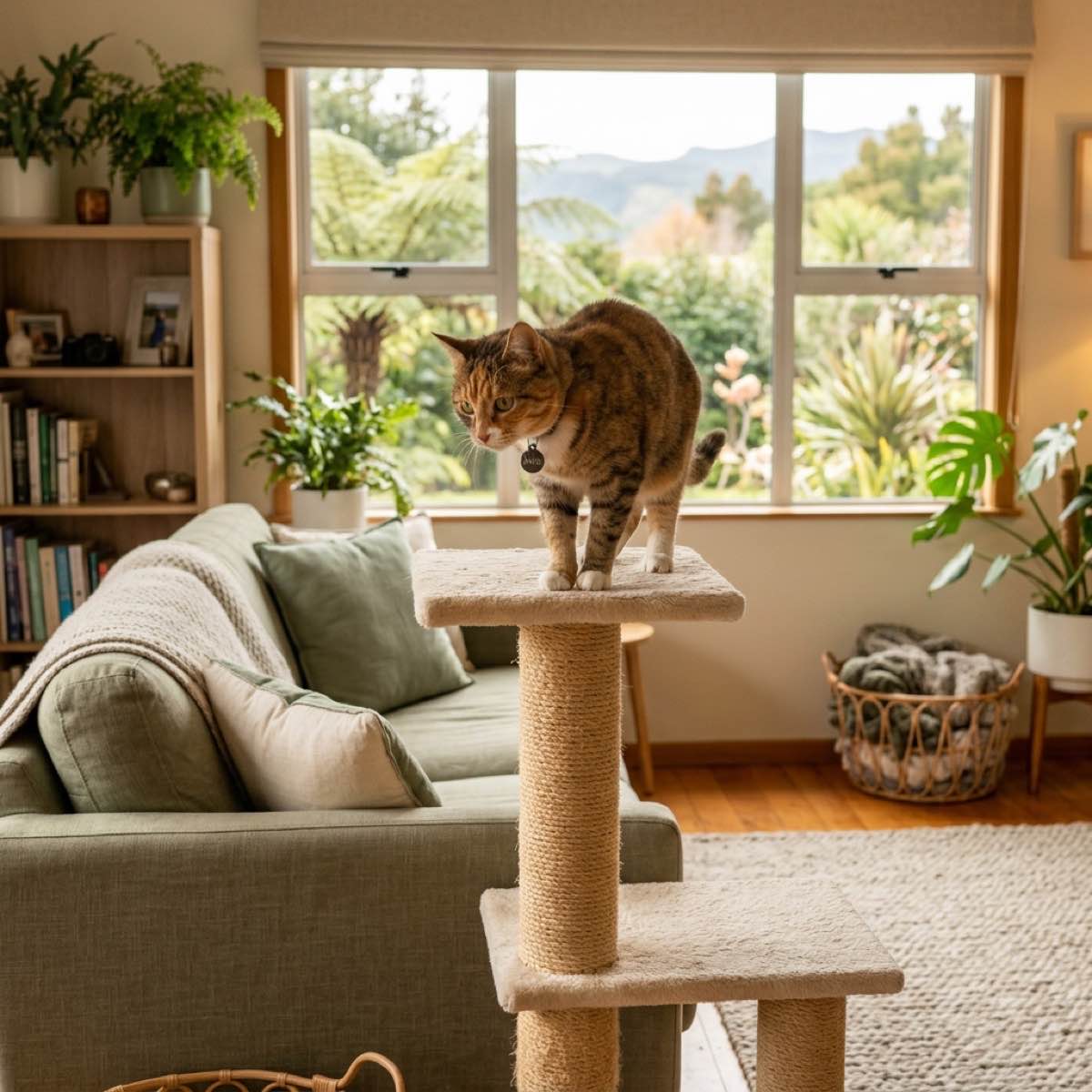
- One quiet room first: litter tray, food and water (apart from the tray), a bed, a hiding spot (a box on its side works), and a scratching post.
- Let the cat hide. Hiding is normal coping, not rejection. Sit nearby, talk quietly, let the cat come to you.
- Keep the routine boring and predictable — same feeding times, same voices, no parade of visitors in week one.
- Keep them indoors initially (commonly several weeks) so they bond to the new home before exploring — see indoor vs outdoor cats in NZ.
- Introducing to resident pets? Go slow and use scent first — see how to introduce a new kitten (the same staged approach applies to adult cats) and our guide on introducing a cat to a dog.
How long does settling take?
A rough pattern many rescues describe: a few days to stop hiding constantly, a few weeks to learn your routine and territory, and a few months to fully bond. Shy, senior or previously unwell cats sit at the slow end. Progress isn't linear — setbacks after a fright are normal. Patience beats pressure every time, just as with settling a rescue dog.
When to call the vet (don't wait on these)
Newly adopted cats — especially shelter kittens — can brew respiratory bugs ("cat flu") in their first weeks. Contact your vet (or the rescue, who will often want to know too) if you see:
- Breathing difficulty or open-mouth breathing — urgent.
- Not eating for more than a day (kittens: much sooner).
- Heavy or worsening eye/nasal discharge, constant sneezing, or a cat that's flat and lethargic.
- Anything that's not improving after a couple of days of rest.
Don't try to diagnose or medicate at home — follow your vet's instructions. Mild clear sniffles in a recently rehomed cat often pass with warmth, rest and good food, but the signs above are vet territory.
Quick takeaways
- Start in one quiet room; let the cat hide and set the pace.
- Adoption usually includes desexing, microchip and vaccinations.
- Fostering is how sick rescue cats recover — and a great way to help if you can't adopt.
- Settling takes days→weeks→months; setbacks are normal.
- Breathing trouble, not eating, heavy discharge or no improvement → vet, promptly.
Shop related categories at PetMall
Setting up for a rescue cat in New Zealand? Browse the PetMall cat range for beds, trays, posts and hideaways with nationwide delivery.
Related reading
- New Kitten Checklist NZ
- Indoor vs Outdoor Cat NZ
- Cat Care NZ: Complete Guide
- Settling a Rescue Dog in NZ
- Kitten First Weeks Checklist (free tool)
References
- SPCA New Zealand — Finnick's story (rescue, foster care and adoption), checked 2026-06-12: https://www.spca.nz/news-and-events/news-article/finnicks-story
- SPCA New Zealand — Cat flu advice (signs and when to seek help), checked 2026-06-12: https://www.spca.nz/advice-and-welfare/article/cat-flu
- SPCA New Zealand — Fostering, checked 2026-06-12: https://www.spca.nz/volunteer/foster
- International Cat Care, *Helping your new cat or kitten settle in*, checked 2026-07-13: https://icatcare.org/articles/helping-your-new-cat-or-kitten-settle-in
Important notice
*General settling-in information for NZ owners — not veterinary advice. For any of the warning signs above, or any health concern with a newly adopted cat, contact a NZ vet and follow their instructions.*
Free PetMall tools
Related guides
petmall.co.nz
Shop at PetMall
The products below are practical support items for your pet. PetMall ships across New Zealand.
- Cat FoodStart with food that matches your cat's life stage — change brands slowly over 7–10 days to avoid digestive upset.
- Cat LitterClumping or crystal, most cats prefer an unscented litter and a clean tray — one tray per cat plus one spare is the NZ rule of thumb.
- Cat TreatsGreat for bonding and training — keep treats under 10% of daily calories to protect your cat's waistline.
- Cat ToysA small rotation of toys (feather wand, puzzle feeder, and comfort toy) usually works better than buying many at once.
- Cat GroomingRegular brushing cuts hairballs and shedding — essential for long-haired breeds like Ragdolls and British Longhairs.
- Flea & Worm TreatmentFor NZ conditions, choose protection that fits your cat's weight and lifestyle (indoor vs outdoor) and keep it regular.