Can Cats Eat Raw Chicken? NZ Safety Answer
Can cats eat raw chicken in NZ? Avoid it. Raw chicken carries dangerous bacteria like Salmonella, and bones cause gastrointestinal obstructions.
Quick answer
Avoid raw chicken as an ad hoc cat treat. VCA says raw food diets for cats raise infectious-disease, nutritional-balance and foreign-body concerns.
Why
Cats are obligate carnivores, meaning they require meat to survive. However, this biological need does not make raw chicken from the supermarket a safe or healthy treat. Raw poultry is frequently contaminated with dangerous pathogens, including *Salmonella*, *Listeria monocytogenes*, and *Campylobacter*. Ingestion of these bacteria can cause severe acute gastroenteritis in cats, resulting in vomiting, diarrhea (sometimes bloody), fever, lethargy, and life-threatening dehydration. Additionally, feeding raw meat poses a significant public health risk to humans in the home. Cats shed these pathogens in their saliva and feces, meaning that handling the raw food or petting a cat that consumes it can transmit infections to people—especially young children or immunocompromised individuals. Furthermore, raw chicken bones (like neck bones or wings) are a serious physical risk; they can easily cause choking, lacerate the esophagus, or lodge in the gastrointestinal tract, causing a bowel obstruction.
How much is a problem
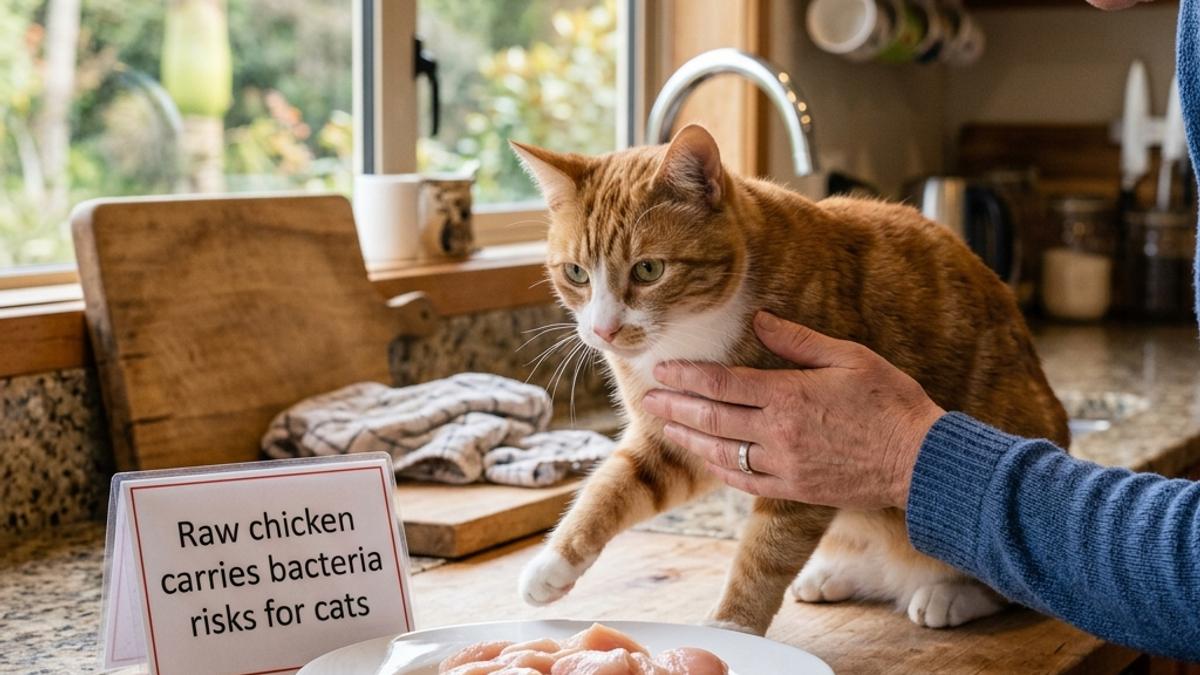
Raw chicken is not recommended in any amount as an ad hoc treat. The risk of bacterial contamination is present in even a small piece of raw meat.
If your cat has eaten it
If your cat ate raw chicken, monitor them closely over the next 24 to 72 hours. Look for signs of gastrointestinal infection, including vomiting, diarrhea, loss of appetite, fever, and lethargy. If you suspect they swallowed raw bones, watch for signs of distress, including gagging, drooling, coughing, or persistent vomiting, which indicate a possible physical obstruction.
Safer alternatives
If you want to give your cat a chicken treat, offer a small piece of plain, boneless, skinless chicken breast that has been boiled or baked with absolutely no salt, butter, oil, garlic, or onion.
Related reading
- See the full list: Foods Cats Can and Can't Eat NZ
- Cat Food Guide NZ
- Cat Care NZ Complete Guide
- New Kitten Checklist NZ
References
- VCA Animal Hospitals, Raw Food Diets in Cats, checked 2026-07-16: https://vcahospitals.com/know-your-pet/avoiding-raw-food-in-cats
- ASPCA, People Foods to Avoid Feeding Your Pets, checked 2026-07-16: https://www.aspca.org/pet-care/aspca-poison-control/people-foods-avoid-feeding-your-pets
When to see a vet
If your cat is vomiting, has diarrhea, is lethargic, or is showing signs of choking or a bone blockage, consult your NZ vet immediately.
Important notice
*General food-safety information for NZ pet owners, reviewed against ASPCA/VCA guidance (July 2026). For any suspected ingestion or illness, contact a NZ vet, after-hours emergency clinic, or SPCA for advice.*
Free PetMall tools
Related guides
petmall.co.nz
Shop at PetMall
The products below are practical support items for your pet. PetMall ships across New Zealand.
- Cat FoodStart with food that matches your cat's life stage — change brands slowly over 7–10 days to avoid digestive upset.
- Cat LitterClumping or crystal, most cats prefer an unscented litter and a clean tray — one tray per cat plus one spare is the NZ rule of thumb.
- Cat TreatsGreat for bonding and training — keep treats under 10% of daily calories to protect your cat's waistline.
- Cat ToysA small rotation of toys (feather wand, puzzle feeder, and comfort toy) usually works better than buying many at once.
- Cat GroomingRegular brushing cuts hairballs and shedding — essential for long-haired breeds like Ragdolls and British Longhairs.
- Flea & Worm TreatmentFor NZ conditions, choose protection that fits your cat's weight and lifestyle (indoor vs outdoor) and keep it regular.