Can Cats Eat Ham? NZ Safety Answer
Can cats eat ham in NZ? Best avoided. Cured ham is too high in sodium and fat, risking dehydration, kidney strain, and acute pancreatitis.
Quick answer
Best avoided. ASPCA advises avoiding processed meats such as lunch meat or bacon because they can be high in salt, and warns that excessive salt intake can cause vomiting, diarrhoea, tremors and even seizures. Cats need complete cat food rather than processed human leftovers.
Why
Ham is a processed pork product that is highly unsuitable for cats. The primary concern is the extremely high sodium (salt) and fat content. Cats have small bodies and delicate kidneys, and consuming high-sodium foods can cause dehydration, placing excessive strain on their renal system. In addition, the high fat content in ham, especially the fat cap or crackling, is a major risk factor for triggering acute pancreatitis—a painful and serious inflammation of the pancreas. Furthermore, commercial hams are often cured, smoked, or glazed with ingredients that are toxic to cats, such as garlic and onion powder, honey, or cloves.
How much is a problem
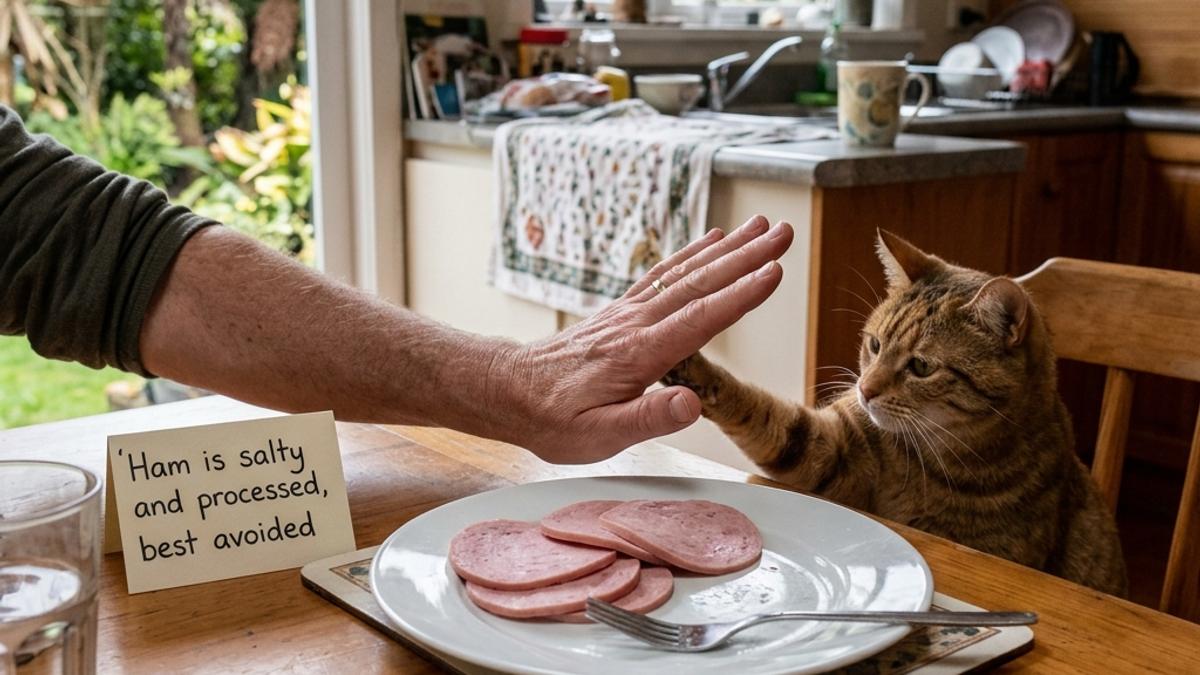
While a single tiny, paper-thin sliver of plain, cooked ham (the size of a postage stamp) might not cause permanent harm, ham should never be fed as a regular treat. A larger portion of ham or ham containing glazes and seasonings can cause gastrointestinal upset, vomiting, diarrhoea, or a pancreatic flare-up.
If your cat has eaten it
If your cat ate a piece of ham, monitor them closely for the next 24 to 48 hours. Look for signs of digestive upset or pancreatitis: vomiting, diarrhoea, loss of appetite, abdominal pain (the cat may hide or resist being picked up), and lethargy. Also, ensure they have access to fresh water to combat the high sodium intake.
Safer alternatives
Offer a tiny piece of plain, boiled boneless chicken breast or turkey with absolutely no salt, fat, glaze, garlic, or onion.
Related reading
- See the full list: Foods Cats Can and Can't Eat NZ
- Cat Food Guide NZ
- Cat Care NZ Complete Guide
- New Kitten Checklist NZ
References
- ASPCA, People Foods to Avoid Feeding Your Pets, checked 2026-09-03: https://www.aspca.org/pet-care/animal-poison-control/people-foods-avoid-feeding-your-pets
- ASPCA Animal Poison Control, Sharing Is Caring: Foods You Can Safely Share with Your Pet, checked 2026-09-03: https://www.aspca.org/news/sharing-caring-foods-you-can-safely-share-your-pet
- VCA Animal Hospitals, Toxic Household Hazards for Cats, checked 2026-07-16: https://vcahospitals.com/know-your-pet/household-hazards-toxic-hazards-for-cats
When to see a vet
If your cat is vomiting, has severe diarrhoea, shows signs of abdominal pain, or is extremely lethargic after eating ham, consult your NZ vet immediately.
Important notice
*General food-safety information for NZ pet owners, reviewed against ASPCA/VCA guidance (July 2026). For any suspected ingestion or illness, contact a NZ vet, after-hours emergency clinic, or SPCA for advice.*
Free PetMall tools
Related guides
petmall.co.nz
Shop at PetMall
The products below are practical support items for your pet. PetMall ships across New Zealand.
- Cat FoodStart with food that matches your cat's life stage — change brands slowly over 7–10 days to avoid digestive upset.
- Cat LitterClumping or crystal, most cats prefer an unscented litter and a clean tray — one tray per cat plus one spare is the NZ rule of thumb.
- Cat TreatsGreat for bonding and training — keep treats under 10% of daily calories to protect your cat's waistline.
- Cat ToysA small rotation of toys (feather wand, puzzle feeder, and comfort toy) usually works better than buying many at once.
- Cat GroomingRegular brushing cuts hairballs and shedding — essential for long-haired breeds like Ragdolls and British Longhairs.
- Flea & Worm TreatmentFor NZ conditions, choose protection that fits your cat's weight and lifestyle (indoor vs outdoor) and keep it regular.