Australian Cattle Dog vs Australian Kelpie NZ: Which Farm Dog Suits You?
Both are brilliant NZ working dogs, but they herd differently and suit different lifestyles. Compare the Australian Cattle Dog and Kelpie on temperament, exercise, training and suitability.
If you're choosing between an Australian Cattle Dog (ACD) and an Australian Kelpie as a farm dog or active companion, the short answer is: both are exceptional — but they do different jobs. The ACD herds by nipping heels and using its body; the Kelpie herds with intense eye contact, wide outruns, and an almost tireless work ethic. Match the dog to your stock type and your lifestyle before anything else.
Side-by-side overview
| Australian Cattle Dog | Australian Kelpie | |
|---|---|---|
| Weight | 16–23 kg | 14–21 kg (male); 12–18 kg (female) |
| Lifespan | 12–16 years | 12–16 years |
| NZ Price (breeder) | $1,000–$3,000 | $800–$2,500 |
| NZ Price (adoption) | $150–$450 via SPCA | $150–$350 via SPCA |
| Energy level | ★★★★★ | ★★★★★ |
| Trainability | ★★★★☆ | ★★★★★ |
| Grooming needs | ★★★☆☆ | ★★☆☆☆ |
| Apartment suitability | ★☆☆☆☆ | ★★☆☆☆ |
| Good with kids | ★★★☆☆ | ★★★★☆ |
*Scores from PetMall breed profiles (1–5). Neither breed is suitable for an inactive or urban-only lifestyle.*
Herding style: the fundamental difference
This is the most important distinction for anyone using these dogs for actual stock work.
The Australian Cattle Dog was bred specifically for droving cattle over long distances across rough Australian (and later New Zealand) terrain. Its signature move is the heel-nip: it darts in low, bites at the heels of cattle, and instantly backs away to avoid a kick. ACDs use their stocky, muscular bodies to physically intimidate and redirect animals. On NZ stations, they're especially valued for cattle work and for moving animals through yards and races where close, forceful control is needed.
The Australian Kelpie herds primarily through "eye" — a fixed, intense stare that applies psychological pressure to livestock — combined with wide, fast outruns that sweep behind a mob to gather and contain it. Kelpies are legendary for their ability to run over the backs of closely packed sheep (the "backing" behaviour), a skill genuinely useful in NZ sheep-loading situations. Their light build and extraordinary stamina make them masters of open-paddock mustering across NZ hill country.
For sheep work in open terrain: Kelpie. For cattle work and yard work: ACD. Many NZ farms run both breeds alongside the Huntaway and Border Collie for this reason.
Temperament and personality
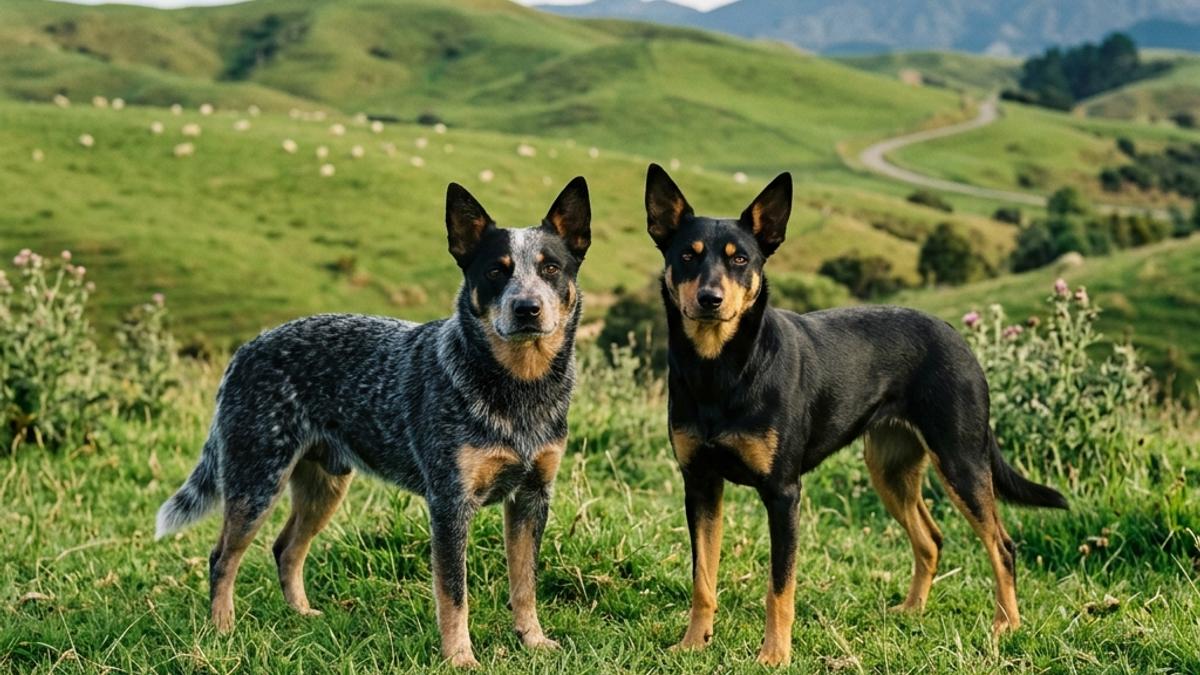
Both breeds are loyal, intelligent, and intensely focused — but they express it differently.
The ACD is often described as the "shadow dog": it bonds tightly to one or two people and follows them constantly. This intense loyalty makes it a dedicated working partner but can tip into possessiveness. ACDs are wary of strangers and need thorough socialisation from a young age. Their cattle-heritage instinct to nip can surface around children, especially moving toddlers — not aggression, but instinct that needs management.
The Kelpie is arguably more socially flexible. It's still a working-line dog through and through, but Kelpies raised as companions tend to be slightly more relaxed with strangers when well socialised. They're highly people-oriented and thrive on human approval — a quality that makes them easier to train for complex tasks. Their main challenge is the same as the ACD's: without enough work or mental stimulation, they find their own (usually destructive) outlets.
Exercise and mental stimulation
Both breeds need at least 1.5–2 hours of vigorous exercise daily, and ideally have a job to do. Walking around the block will not come close to meeting their needs.
- Cattle Dogs suit handlers who can offer running, agility, herding, or advanced obedience. They also do well in dog sports like flyball and stock-work trials.
- Kelpies are similar but may have slightly more stamina — some working Kelpies cover 50+ km a day on NZ stations. Recreational Kelpies need long runs, swimming, and complex training tasks.
Neither breed is suited to apartment living or sedentary households. See our dog enrichment guide NZ for ideas on meeting high-energy breed needs in non-farm environments.
Training
Both are highly trainable, though the Kelpie edges ahead in trainability scores (★★★★★ vs ★★★★☆). The Kelpie's eagerness to please combined with its intelligence makes it highly responsive to consistent positive training. The ACD is equally smart but slightly more stubborn and independent-minded — it may test boundaries once it decides it knows better.
Both breeds respond poorly to harsh or inconsistent handling and excel with reward-based, relationship-driven training. For new owners of either breed, see our dog training guide NZ.
Health and vet costs
Both breeds are generally robust working dogs with low rates of hereditary disease, but responsible breeders test for:
- ACD: Progressive retinal atrophy (PRA), hereditary deafness (Deafness is linked to the merle gene in blue heelers), hip dysplasia. Check ANKC health test certificates.
- Kelpie: Hip dysplasia, Progressive retinal atrophy (PRA), Kelpie collie eye anomaly in some lines.
Both have low health scores in our profiles (★★☆☆☆ = historically healthy), but all dogs need annual vet check-ups, vaccinations, and dental care. See our NZ vet costs guide for budget expectations.
Who each breed suits in NZ
Australian Cattle Dog suits you if:
- You have a lifestyle block, farm, or large property with cattle or mixed stock
- You want a deeply loyal one-owner dog that goes everywhere with you
- You can commit to 2+ hours of vigorous activity daily
- You can handle a confident, sometimes stubborn, instinct-driven dog
Australian Kelpie suits you if:
- You run sheep or work open hill-country terrain
- You want the most trainable, biddable of the herding breeds
- You can provide constant mental stimulation (farm work, trials, canine sports)
- You want a slightly lighter, faster dog with extraordinary stamina
Neither suits you if:
- You live in an apartment or urban property without large outdoor access
- You work long hours and leave dogs alone without stimulation
- You want a relaxed, calm companion dog
For help matching a breed to your situation, try our Find a Breed tool. If a lifestyle-block dog is on your radar, see best dog breeds for lifestyle blocks and farms NZ.
Registration and ownership costs in NZ
Both breeds require council registration in NZ. Annual fees vary by council and whether your dog is desexed — see our dog registration guide NZ for the current fee structure. Working dogs kept on a farm (not as pets) may qualify for a different registration category; check with your local council.
First-year ownership costs including purchase, desexing, vaccinations, microchipping, food, and equipment typically run $2,500–$5,000+. See our cost of owning a dog NZ guide for full breakdowns.
Quick takeaways
- ACD herds by body contact and heel-nipping; Kelpie herds by eye pressure and wide outruns
- Both need 2+ hours of vigorous exercise daily and a purposeful job
- Kelpie slightly more trainable and socially flexible; ACD more intensely bonded to one handler
- ACD better for cattle and close yard work; Kelpie better for open sheep mustering
- Neither suits apartment or low-activity households
See also
- Australian Cattle Dog breed profile
- Australian Kelpie breed profile
- Best dog breeds for lifestyle blocks and farms NZ
- Dog training guide NZ
- Dog enrichment guide NZ
- Find a Breed
---
Sources
- https://www.akc.org/dog-breeds/australian-cattle-dog/
- https://www.akc.org/dog-breeds/australian-kelpie/
- https://www.merckvetmanual.com/musculoskeletal-system/arthropathies-and-related-disorders-in-small-animals/hip-dysplasia-in-dogs
- https://www.legislation.govt.nz/act/public/1996/0013/latest/DLM374319.html
Free PetMall tools
Related guides
petmall.co.nz
Shop at PetMall
The products below are practical support items for your pet. PetMall ships across New Zealand.
- Dog FoodStart with food that matches your dog's life stage and activity level — and change brands slowly over 7–10 days.
- Dog TreatsTraining rewards and everyday treats — small, soft pieces work best for consistent reinforcement.
- Dog ToysA small rotation of chew, fetch, and puzzle toys usually works better than buying a large variety at once.
- Dog GroomingA gentle brush and the right shampoo make maintenance easier — especially for dogs that get muddy on walks.
- Leads & HarnessesComfort matters: padded contact points and adjustable fit help reduce rubbing on longer walks or tramping weekends.
- Flea & Worm TreatmentFor NZ conditions, look for protection that fits your routine (monthly vs longer-lasting) and your dog's weight range.