Shih Tzu vs Cavalier King Charles Spaniel NZ: Which Small Companion Dog Is Right for You?
Shih Tzu or Cavalier King Charles Spaniel? Both are popular small NZ companion dogs — gentle, low-exercise and apartment-friendly. Compare temperament, grooming and health to choose.
Two of New Zealand's most popular small companion dogs — and two of the best apartment-friendly breeds available. The Shih Tzu and the Cavalier King Charles Spaniel both share an indoor, companion-dog orientation, gentle temperament and manageable exercise needs. They differ significantly in grooming demands, health profiles and where they sit on the energy spectrum. Here's how they compare.
Quick comparison
| Shih Tzu | Cavalier King Charles Spaniel | |
|---|---|---|
| Size | Small — 4–7 kg, 20–28 cm | Small — 5.9–8.2 kg, 30–33 cm |
| Coat | Long, silky double coat | Medium silky with ear/leg feathering |
| Grooming | High — daily brushing or short clip every 6–8 weeks | Moderate — brushing 3–4x weekly, regular ear care |
| Energy level | Low–moderate | Moderate — adaptable |
| Exercise (daily) | 20–30 minutes | 30–45 minutes |
| Good with kids? | Yes, with gentle children | Excellent — very patient |
| Good for apartments? | Excellent | Excellent |
| NZ price estimate | $1,000–$2,000 | $2,000–$3,500 |
| Lifespan | 10–16 years | 9–14 years |
Full profiles: Shih Tzu · Cavalier King Charles Spaniel
Temperament: how they differ in personality
Shih Tzu: Shih Tzus have a royal heritage (bred as companion dogs for Chinese royalty) and carry themselves with a certain dignity. They're affectionate but on their own terms — they enjoy attention and lap time but are more independent in their thinking than a Cavalier. Shih Tzus can be stubborn: they know what they want and will try to get it. They're loyal to their family, generally good with other pets and can be slightly territorial with strangers until properly introduced. They're playful but their play style is more gentle and self-directed.
Cavalier King Charles Spaniel: the Cavalier is frequently described as the ideal companion dog — gentle, patient, endlessly affectionate and consistently friendly with everyone. They greet strangers warmly, tolerate enormous handling from children, and have an almost uncanny ability to sense their owner's mood. Cavaliers are more consistently people-oriented than Shih Tzus and have fewer independent-streak moments. They adapt to both active and quiet households more readily.
For families with young children: the Cavalier's patience gives it an edge. For owners who appreciate a slightly more independent, dignified small dog: the Shih Tzu fits better.
Exercise needs
Both breeds have lower exercise requirements than most dogs — a genuine advantage for NZ apartment owners.
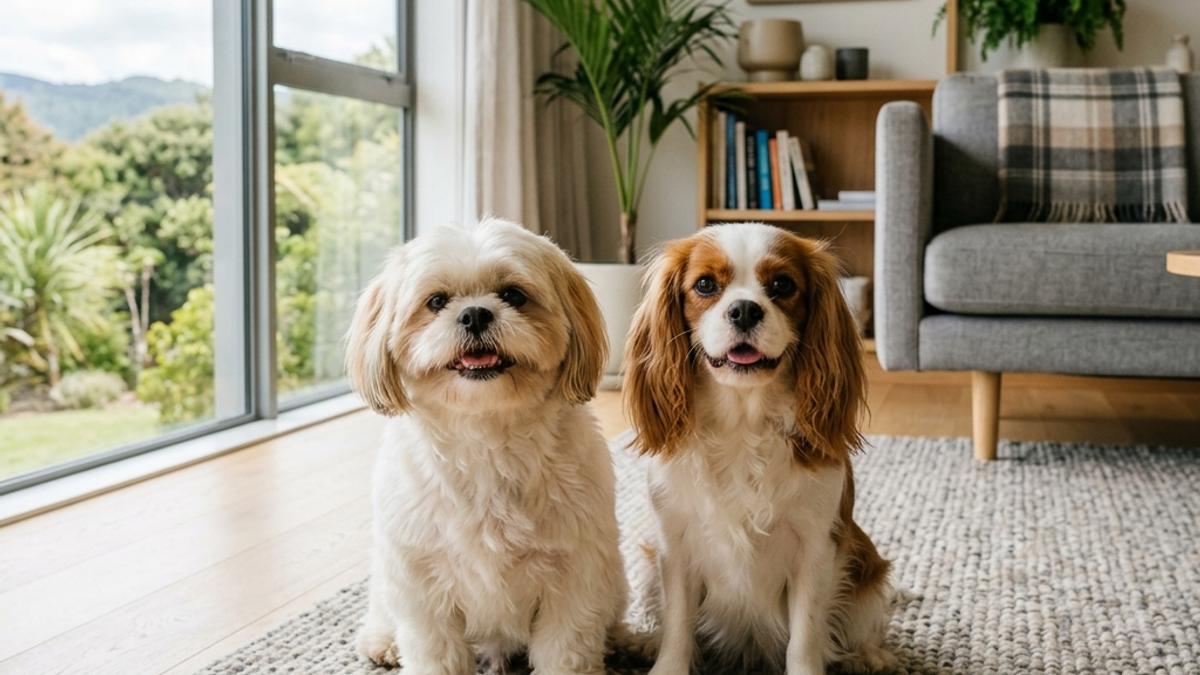
Shih Tzu: 20–30 minutes daily is sufficient. Short walks, indoor play sessions. They're not built for vigorous exercise and don't want it. Flat-faced structure (brachycephalic) means care in hot weather — avoid exercise in NZ's summer heat mid-day.
Cavalier: 30–45 minutes daily, flexible in style. Cavaliers are more adaptable — they can match an active owner's pace on longer walks or settle with a shorter one. They're not as heat-sensitive as the Shih Tzu.
Both breeds suit retirees, apartment dwellers and lower-activity households. See our best cats for seniors NZ guide if you're comparing dogs to cats for lower-activity households — but for small dogs, both of these breeds are the standard recommendation.
Grooming
Both have significant grooming needs, but in different ways.
Shih Tzu: the long, flowing coat requires daily brushing to prevent matting if kept long, or professional clipping every 6–8 weeks into a "puppy cut" that's much more manageable. Facial hair grows into the eyes — either tie it up with a topknot or keep it trimmed. The flat face means daily eye cleaning (discharge is normal and needs wiping) and checking/cleaning facial skin folds. Regular ear checks. Professional grooming is a significant ongoing cost.
Cavalier: the silky medium coat requires brushing 3–4 times weekly and is less prone to severe matting than the Shih Tzu's double coat. Professional grooming every 6–8 weeks for a tidy-up, though many Cavalier owners manage between professional visits easily. Ear care is important — the long, low-hanging ears trap moisture and are prone to infection, especially in NZ's humid northern regions. Check and wipe ears weekly. See our dog brush types NZ guide for the right tools for silky coats.
Health — this is the most important difference
Shih Tzu is a brachycephalic breed — the flat face causes respiratory compromise of varying severity. In NZ's hot northern summers, Shih Tzus need careful management: no vigorous exercise in heat, cool indoor environments, access to shade and water. Their lifespan is excellent for a small breed — up to 16 years — and they're generally considered robust despite the brachycephalic concerns.
Cavalier King Charles Spaniel has two significant genetic health concerns that affect the breed population broadly:
- Mitral Valve Disease (MVD): a heart condition that affects the majority of Cavaliers by mid-age. The Cavalier Health Protocol requires heart testing both parents before breeding. This is non-negotiable when buying a Cavalier in NZ — ask breeders for cardiac clearances.
- Syringomyelia / Chiari-like Malformation (SM/CM): a neurological condition related to the skull structure. MRI screening is available; responsible breeders test their breeding dogs.
The Cavalier's health costs and risk profile are genuinely significant. A Cavalier from health-screened parents is a much better long-term investment. Average lifespan is 9–14 years — notably shorter than the Shih Tzu in many cases.
Cost in NZ
Shih Tzu: $1,000–$2,000 from responsible NZ breeders.
Cavalier King Charles Spaniel: $2,000–$3,500 — the health testing required for responsible Cavalier breeding (cardiac certification, MRI) is expensive, and this is reflected in price. Cavaliers priced significantly below this range almost certainly have no health screening.
Factor ongoing professional grooming into the budget for both breeds — at $60–$90 per session every 6–8 weeks.
NZ apartment suitability
Both breeds are among the best options for NZ apartment living:
- Exercise needs are manageable within walking distance of most NZ urban apartments
- Both are quiet enough for apartment buildings (neither is a persistent barker by breed tendency)
- Both handle indoor living without outdoor access well
The Shih Tzu's heat sensitivity is worth noting for Auckland and northern NZ apartments without air conditioning.
Which breed suits you?
Choose a Shih Tzu if:
- You want a slightly more independent, dignified small companion
- You want a longer average lifespan (up to 16 years)
- You prefer a very low exercise requirement
- You're comfortable with daily grooming or regular professional clips
- Budget-wise, the lower Shih Tzu price is relevant
Choose a Cavalier King Charles Spaniel if:
- You want the most consistently gentle, patient, people-oriented small dog available
- You have young children or elderly family members
- You're committed to buying from health-screened (cardiac) lines and budgeting accordingly
- You want slightly more flexibility in exercise style (adapts to both active and quiet days)
Quick takeaways
- Both are gentle, apartment-friendly NZ companion dogs with low exercise needs
- Shih Tzus are slightly more independent and stubborn; Cavaliers are more consistently patient and people-oriented
- Both require regular grooming; Shih Tzu coats are more demanding if kept long
- Cavalier health screening (MVD/SM) is essential — do not buy without cardiac clearance documentation
- Shih Tzus live longer on average; Cavaliers are more affectionate but carry higher health risks
- Shih Tzu price is lower; Cavalier price reflects necessary health testing
Related reading
- Shih Tzu breed profile NZ
- Cavalier King Charles Spaniel profile NZ
- Best Dogs for First-Time Owners NZ
- Best Dog Breeds for Apartments NZ
- Dog Brush Types NZ
- Find your perfect breed
---
Sources
- https://www.akc.org/dog-breeds/shih-tzu/
- https://www.akc.org/dog-breeds/cavalier-king-charles-spaniel/
- https://www.merckvetmanual.com/musculoskeletal-system/arthropathies-and-related-disorders-in-small-animals/patellar-luxation-in-dogs-and-cats
- https://www.legislation.govt.nz/act/public/1996/0013/latest/DLM374319.html
Free PetMall tools
Related guides
petmall.co.nz
Shop at PetMall
The products below are practical support items for your pet. PetMall ships across New Zealand.
- Dog FoodStart with food that matches your dog's life stage and activity level — and change brands slowly over 7–10 days.
- Dog TreatsTraining rewards and everyday treats — small, soft pieces work best for consistent reinforcement.
- Dog ToysA small rotation of chew, fetch, and puzzle toys usually works better than buying a large variety at once.
- Dog GroomingA gentle brush and the right shampoo make maintenance easier — especially for dogs that get muddy on walks.
- Leads & HarnessesComfort matters: padded contact points and adjustable fit help reduce rubbing on longer walks or tramping weekends.
- Flea & Worm TreatmentFor NZ conditions, look for protection that fits your routine (monthly vs longer-lasting) and your dog's weight range.