Kea Around Homes in NZ: Why Pet Food, Bins and Outdoor Gear Need Securing
Live in kea country? Never feed kea — and don't leave pet food, rubbish or gear outside. DOC's practical advice for South Island households on coexisting with kea.
The quick answer: if you live in or visit kea country (the South Island high country), the golden rule is never feed kea — and that includes not leaving pet food, rubbish, compost or outdoor gear where they can get to it. Kea are protected, endangered, and dangerously curious; human and pet food makes them bolder and shortens their lives. Feed your pets indoors, store pet food securely, and lock down bins and gear.
Meet the kea
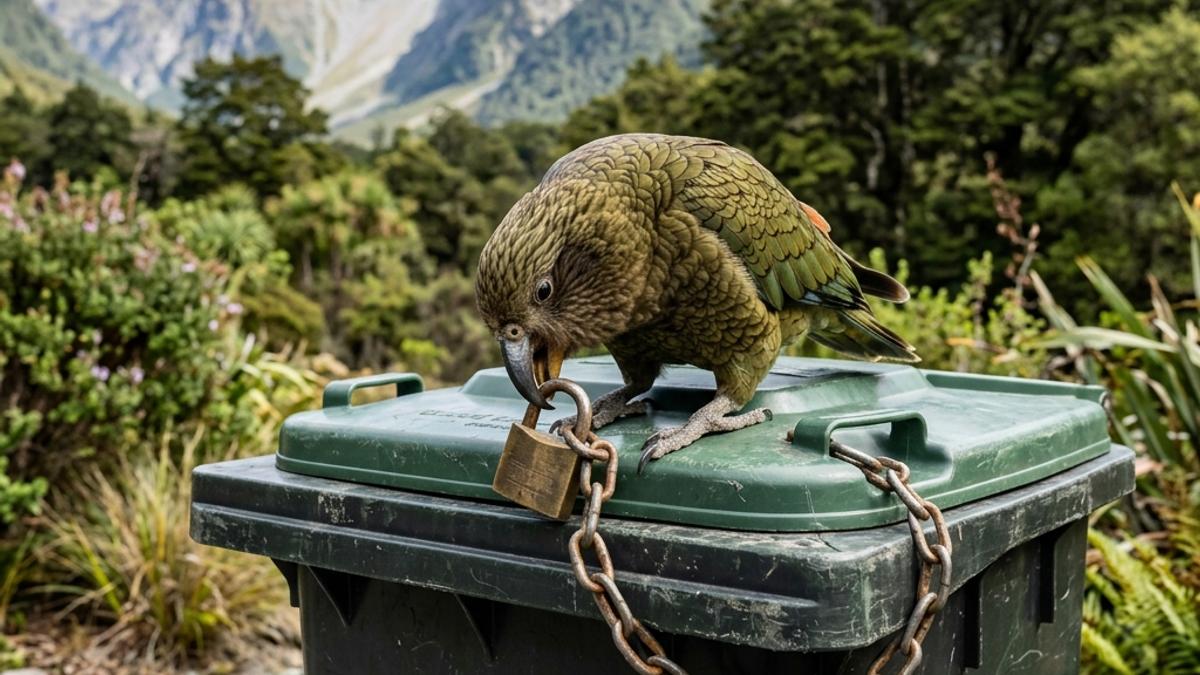
Kea are the world's only alpine parrot — endemic to New Zealand and found across the South Island from Golden Bay to Fiordland. They are protected and classed as Nationally Endangered, with an estimated population of only around 1,000–5,000 birds. They're famously intelligent, playful and destructive — their curiosity leads them to investigate (and demolish) car trim, packs, boots, and anything else interesting around carparks, campsites and homes.
Why you must never feed kea (pet food included)
DOC is clear: never feed kea — it's harmful to them. Feeding:
- Reduces their natural caution, drawing them toward roads (vehicle strike is a major killer) and toward pest-control areas where they risk accidental 1080 poisoning.
- Creates problem behaviour — bold, food-habituated kea get into more conflict with people and are more likely to be hurt.
Leaving pet food in a bowl outside is effectively feeding kea. So is an open rubbish bin or compost. The kindest thing for this endangered bird is to remove the temptation entirely.
Practical steps for pet owners in kea country
- Feed pets indoors, and don't leave food bowls outside between meals.
- Store pet food in secure, sealed containers — not open bags on a deck or in a carport.
- Lock down rubbish and compost — use kea-resistant bins or keep them in a shed/garage; kea easily open loose lids.
- Don't leave gear lying around — DOC warns that loose clothing, boots, packs and brightly coloured objects attract kea around campsites and carparks. The same goes for your section.
- Watch lead on buildings — kea chew lead head nails, flashings and old paint because it's soft and tastes sweet, which poisons them. Replace lead building materials with safe alternatives where you can.
- Protect vehicles where kea gather (don't leave windows down; expect them to investigate wipers, aerials and seals).
What about your pets and kea?
Keep dogs under control in kea areas — kea spend time on the ground and are vulnerable, and a protected native bird must not be harassed or harmed. This is the same responsible-owner principle behind keeping cats from hunting native wildlife (see why cats bring home prey, below). If kea are regularly around your property, the fix is removing food and attractants, not confronting the birds.
Why this is in the news
DOC issued a fresh reminder to live alongside kea after a kea was shot and had to be euthanised. The takeaway for residents isn't about the incident itself — it's that we share this landscape with a rare, protected species, and small changes around our homes (especially with pet food and rubbish) make a real difference to their survival.
Quick takeaways
- Never feed kea — it's harmful and they're protected and endangered.
- Leaving pet food, open bins or compost outside is effectively feeding them.
- Feed pets indoors; store pet food sealed; use kea-resistant/secured bins.
- Don't leave boots, packs or bright gear out; watch lead on buildings; protect vehicles.
- Most relevant to South Island kea-range homes, holiday homes, campsites and rural properties.
Securing pet food at home
Airtight, sealed pet-food storage keeps food fresh and keeps kea (and other wildlife and pests) out. Browse the PetMall range for storage and feeding gear with nationwide delivery.
Related reading
References
- Kea Conservation Trust, Lead Free Kea Project Outcomes, checked 2026-08-08: https://www.keaconservation.co.nz/projects/lead-free-kea-project-outcomes/
- Department of Conservation (DOC) — Kea (species page & guidance: never feed, secure attractants, lead risk), checked 2026-06-06: https://www.doc.govt.nz/nature/native-animals/birds/birds-a-z/kea/
- Department of Conservation (DOC) — media release on living alongside kea, 2026-06-04, checked 2026-06-06: https://www.doc.govt.nz/news/media-releases/2026-media-releases/
Important notice
*Kea are a protected, endangered species. It is an offence to feed, harm or harass them. To report kea in conflict, an injured kea, or wildlife offences, call DOC on 0800 DOC HOT (0800 362 468).*