Dog Treat Types NZ: Training, Dental, Chew & Freeze-Dried — How to Choose
Confused by dog treats in NZ? Compare training treats, dental chews, long-lasting chews and freeze-dried — what each is for and how to pick safely.
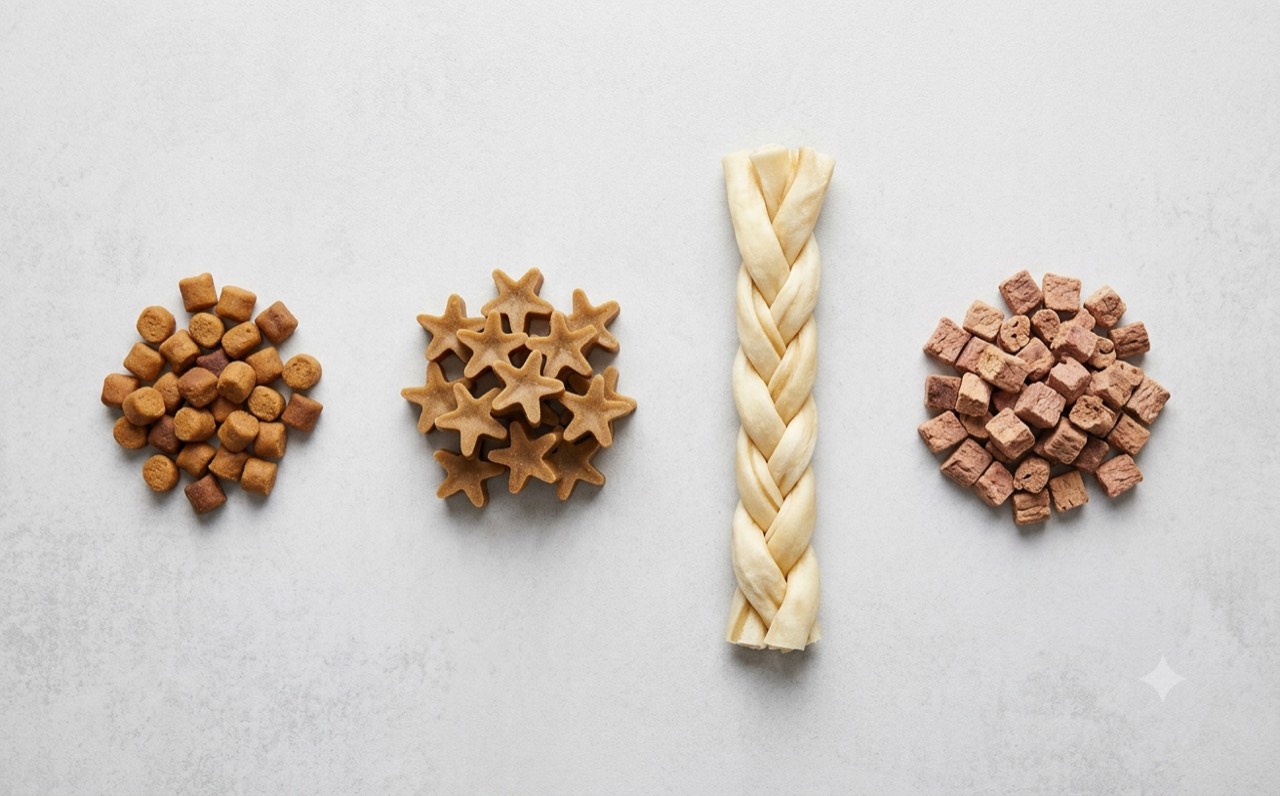
The quick answer: there's no single "best" dog treat — you match the treat to the job. Use small, soft training treats for teaching and rewards, dental chews for daily chewing and teeth, long-lasting chews for downtime and boredom, and freeze-dried/single-ingredient treats when you want a clean, high-value reward. Whatever you choose, treats should stay under about 10% of your dog's daily food, and you adjust meals down to match. For ranked picks across these categories, see our best dog treats NZ guide.
Most Kiwi owners just grab a bag at random. Choosing by purpose gets you better training results, cleaner teeth and fewer tummy upsets.
Quick guide: which treat for which job
| Treat type | Best for | Watch out for |
|---|---|---|
| Training treats (small, soft) | Reward-based training, recall, puppy class | Buy small/soft so you can give many without overfeeding |
| Dental chews | Daily chewing, teeth and gums | Still has calories — count it in the 10% |
| Long-lasting chews | Settling, crate time, boredom | Supervise; remove small end pieces; choose size for your dog |
| Freeze-dried / single-ingredient | High-value rewards, fussy or sensitive dogs | Usually richer — use small amounts |
| Biscuits / everyday treats | Casual treats | Easy to over-give; check the calories |
Training treats — small, soft, lots of them
For training, the treat matters less than the size and speed. You want something tiny and soft your dog can eat in a second so you can reward repeatedly without filling them up. Soft treats also break into smaller pieces for puppy class or recall practice.
This is the treat to keep in a pouch for everyday training. Pair it with reward-based methods — see crate training a puppy NZ and our dog training tools guide NZ for clickers, pouches and pads.
Dental chews — daily teeth support
Dental chews are designed to be chewed daily and can help reduce plaque build-up as part of a routine. They are a treat, not a replacement for vet dental care, and they still carry calories — count them in the daily treat budget. If your dog gulps rather than chews, pick a size and texture that makes them actually chew.
Long-lasting chews — for downtime and boredom
Long-lasting chews give a dog something to do during crate time, settling or a quiet evening. They're useful for boredom and calm enrichment. Safety first: supervise, choose a chew sized for your dog (too small is a choking risk), and take away the last small piece. Very hard chews can crack teeth in heavy chewers — when in doubt, ask your vet what's suitable.
Freeze-dried & single-ingredient — clean, high-value
Freeze-dried meat or single-ingredient treats are a popular NZ choice for a "high-value" reward (the treat you save for hard training moments) and for dogs with sensitivities, because the ingredient list is short. They tend to be richer, so use small amounts. They're handy when you want to know exactly what your dog is eating.
The 10% rule and NZ feeding context
Treats should make up no more than about 10% of your dog's daily calories — the rest comes from a balanced diet. The WSAVA Global Nutrition Committee puts it plainly: treats "should always make up less than 10% of a dog's daily calorie intake", and they should never replace a meal. If a commercial treat doesn't state its calorie content, WSAVA suggests asking the manufacturer. If you're training a lot in a day, take that food out of meals so your dog doesn't gain weight. For portion context, see how much to feed a puppy NZ.
A few NZ-specific notes:
- Avoid cooked bones and anything that splinters.
- Keep human foods that are toxic to dogs (chocolate, grapes/raisins, onion, xylitol) well away — they are never treats.
- Introduce any new treat gradually to avoid an upset stomach.
- Store treats sealed; NZ humidity can spoil soft treats faster than you'd expect.
How to choose, in one minute
- Training a lot? Small, soft, low-calorie training treats.
- Teeth/daily chewing? A dental chew sized to make your dog actually chew.
- Need to keep a dog busy/calm? A supervised long-lasting chew, correct size.
- Fussy or sensitive dog, or a special reward? Freeze-dried/single-ingredient, small amounts.
- Always: keep treats under ~10% of daily food and adjust meals.
Quick takeaways
- Match the treat to the job: train / dental / chew / high-value.
- Training treats should be tiny and soft so you can reward often.
- Long-lasting chews need supervision and the right size.
- Keep treats to ~10% of daily calories and trim meals to match.
- Never use toxic human foods (chocolate, grapes, onion, xylitol) as treats.
Shop related categories at PetMall
Looking for dog treats in New Zealand? Browse the PetMall category for current options and nationwide delivery.
Related reading
References
- MPI New Zealand, Code of Welfare for Dogs (diet and feeding), checked 2026-06-04: https://www.mpi.govt.nz/animals/animal-welfare/codes/all-animal-welfare-codes/code-of-welfare-dogs/
- WSAVA Global Nutrition Committee, *Feeding Treats to Your Dog* (Global Nutrition Toolkit), checked 2026-08-02: https://wsava.org/wp-content/uploads/2025/11/WSAVA_GuidetoTreats_Dogs_251107.pdf
Important notice
*This guide provides general information for NZ pet owners. For diet advice specific to your dog's weight or health, talk to a registered New Zealand vet.*
Related guides
petmall.co.nz
Shop at PetMall
The products below are practical support items for your pet. PetMall ships across New Zealand.
- Dog TreatsTraining rewards and everyday treats — small, soft pieces work best for consistent reinforcement.
- Dog FoodStart with food that matches your dog's life stage and activity level — and change brands slowly over 7–10 days.
- Dog ToysA small rotation of chew, fetch, and puzzle toys usually works better than buying a large variety at once.
- Dog GroomingA gentle brush and the right shampoo make maintenance easier — especially for dogs that get muddy on walks.
- Leads & HarnessesComfort matters: padded contact points and adjustable fit help reduce rubbing on longer walks or tramping weekends.
- Flea & Worm TreatmentFor NZ conditions, look for protection that fits your routine (monthly vs longer-lasting) and your dog's weight range.