Dog Microchipping in NZ: The Law, How It Works & Why Details Matter
Is microchipping compulsory for dogs in NZ? Mostly yes — within 2 months of first registration. How chips work, NDD vs NZCAR, costs, and keeping details current.
The quick answer: in New Zealand, microchipping is compulsory for most dogs — under the Dog Control Act 1996, a dog registered for the first time must be microchipped within 2 months of that first registration (the main exemption is working farm dogs kept for herding or driving stock). A microchip is only as good as the contact details attached to it, so registering the chip and keeping your details current is what actually gets a lost dog home.
Note: registration fees, microchipping costs and any free-chipping services vary by council and change over time — always check your own council's current information.
A pound story that makes the point
Christchurch City Council recently shared the story of Noah — a young dog who arrived at the shelter as a wanderer with no microchip, meaning no way to find his owner. Nobody claimed him; he was rehomed and went on to train as a biosecurity detector dog. A happy ending — but if Noah had been chipped with current details, he'd simply have gone home. That's the whole case for microchipping in one story.
What a microchip is (and isn't)
A microchip is a rice-grain-sized transponder injected under the skin between the shoulder blades — a quick, one-off procedure done by vets and many councils. When scanned, it shows a unique number that links to your contact details on a database.
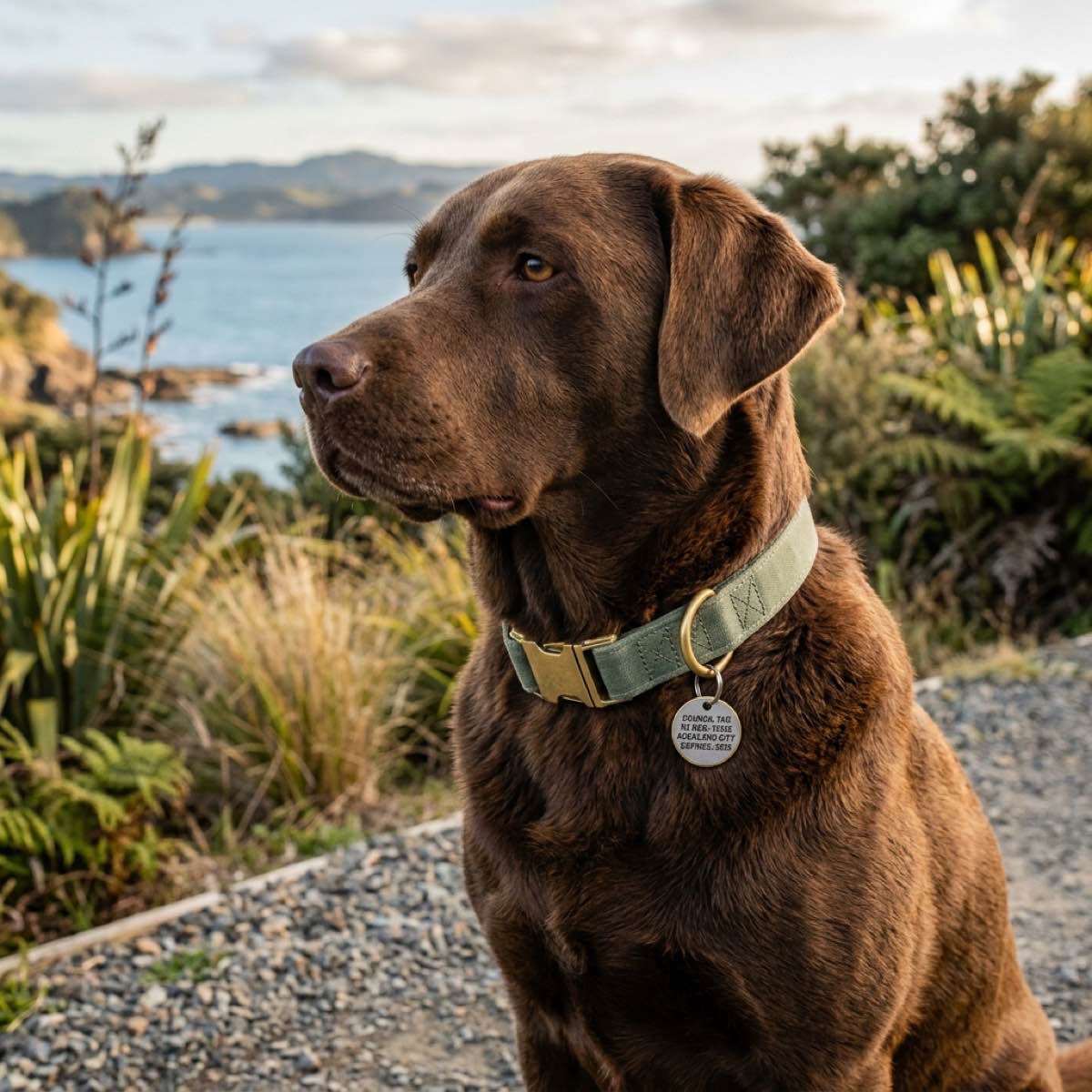
- It is not a GPS tracker — it can't locate your dog; it identifies your dog when someone scans it.
- It lasts for life, with no battery.
The law (Dog Control Act 1996)
- All dogs registered for the first time must be microchipped within 2 months of that first registration.
- Working farm dogs (kept solely or principally for herding/driving stock) are exempt — unless they're impounded unregistered or classified.
- Dogs classified as dangerous or menacing, and dogs that are impounded unregistered (or registered but impounded twice), must be microchipped regardless.
- Microchipping is separate from (and additional to) annual council registration — see our dog registration checklist.
NDD vs NZCAR — two different databases
This trips up a lot of owners:
- National Dog Database (NDD) — the government database behind council dog registration. When your council records your dog's microchip, it goes here.
- NZ Companion Animal Register (NZCAR) — a separate, voluntary register used widely by vets, the SPCA and rescues (and required for *cats* by some council bylaws — see cat rules in NZ). Many owners list their dog's chip on NZCAR as well, so after-hours vets and welfare groups can also look it up.
Best practice: make sure the chip number is on your council record, and consider adding it to NZCAR too. Then keep both current.
What it costs
Microchipping is a one-off cost that varies — vets charge a modest fee, and many councils offer cheap or free chipping clinics from time to time (for example, Christchurch City Council has run free microchipping for Christchurch-registered dogs — a council-specific service, not a nationwide rule). Factor it into the cost of owning a dog.
The part everyone forgets: update your details
A chip pointing at an old phone number or address is nearly useless. Update your details with your council (and NZCAR if listed) when you move house, change number, or rehome the dog. If your dog goes missing: contact your council's animal management team and local vets promptly, and report it — a chipped dog with current details is usually home within hours.
Quick takeaways
- Microchipping is compulsory for most NZ dogs — within 2 months of first registration.
- Working farm dogs are the main exemption; dangerous/menacing and impounded dogs must be chipped.
- A chip is ID, not GPS — it only works if your contact details are current.
- Know the difference: council/NDD record (official) + NZCAR (voluntary, widely used) — ideally both.
- Costs vary by council/vet; watch for council free-chipping events.
Shop related categories at PetMall
A microchip works best alongside a collar and tag. Browse the PetMall dog range for collars, tags and leads with nationwide delivery.
Related reading
- Microchip vs Collar ID NZ
- Dog Registration NZ: Council Checklist
- New Dog Owner: First 30 Days NZ
- Puppy First Weeks Checklist (free tool)
References
- Department of Internal Affairs (DIA) — Dog control: microchipping questions and answers, checked 2026-06-13: https://www.dia.govt.nz/Dog-Control---Microchipping-Questions-and-Answers
- New Zealand Legislation — Dog Control Act 1996, s 36A (microchip transponder must be implanted in certain dogs), checked 2026-06-13: https://www.legislation.govt.nz/act/public/1996/0013/latest/DLM375153.html
- Christchurch City Council Newsline — From pound pup to detector dog (Noah's story), 2026-06-09, checked 2026-06-13: https://www.newsline.ccc.govt.nz/news/story/from-pound-pup-to-detector-dog
Important notice
*General information for NZ dog owners, current as of 2026 — not legal advice. Registration and microchipping processes, fees and free services vary by council and change; always confirm with your own council and the official sources above.*
Free PetMall tools
Related guides
petmall.co.nz
Shop at PetMall
The products below are practical support items for your pet. PetMall ships across New Zealand.
- Dog FoodStart with food that matches your dog's life stage and activity level — and change brands slowly over 7–10 days.
- Dog TreatsTraining rewards and everyday treats — small, soft pieces work best for consistent reinforcement.
- Dog ToysA small rotation of chew, fetch, and puzzle toys usually works better than buying a large variety at once.
- Dog GroomingA gentle brush and the right shampoo make maintenance easier — especially for dogs that get muddy on walks.
- Leads & HarnessesComfort matters: padded contact points and adjustable fit help reduce rubbing on longer walks or tramping weekends.
- Flea & Worm TreatmentFor NZ conditions, look for protection that fits your routine (monthly vs longer-lasting) and your dog's weight range.