Can Dogs Eat Watermelon? NZ Safety Answer
Can dogs eat watermelon in NZ? Yes, plain flesh is safe and hydrating. Never feed watermelon rind or seeds as they cause bowel obstructions.
Quick answer
Plain watermelon flesh may be okay in small amounts, but rind and large chunks are not good dog treats. VCA lists watermelon rinds among indigestible food parts that can cause obstruction.
Why
Watermelon is a highly hydrating and low-calorie treat for dogs, consisting of approximately 92% water. It contains vitamins A, B6, and C, as well as potassium and beneficial antioxidants like lycopene. However, while the red flesh is safe, the green rind and the black seeds present significant hazards. Watermelon rind is exceptionally fibrous and tough, making it completely indigestible for a dog's stomach. If swallowed in chunks, it can lodge in the stomach or intestines, causing a life-threatening gastrointestinal obstruction. Furthermore, the black seeds can cause intestinal irritation, especially in small breeds, and should be removed before serving. Only plain watermelon should be offered—avoid any preparations containing added salt, alcohol (such as vodka-infused watermelon at summer parties), or sugar.
How much is a problem
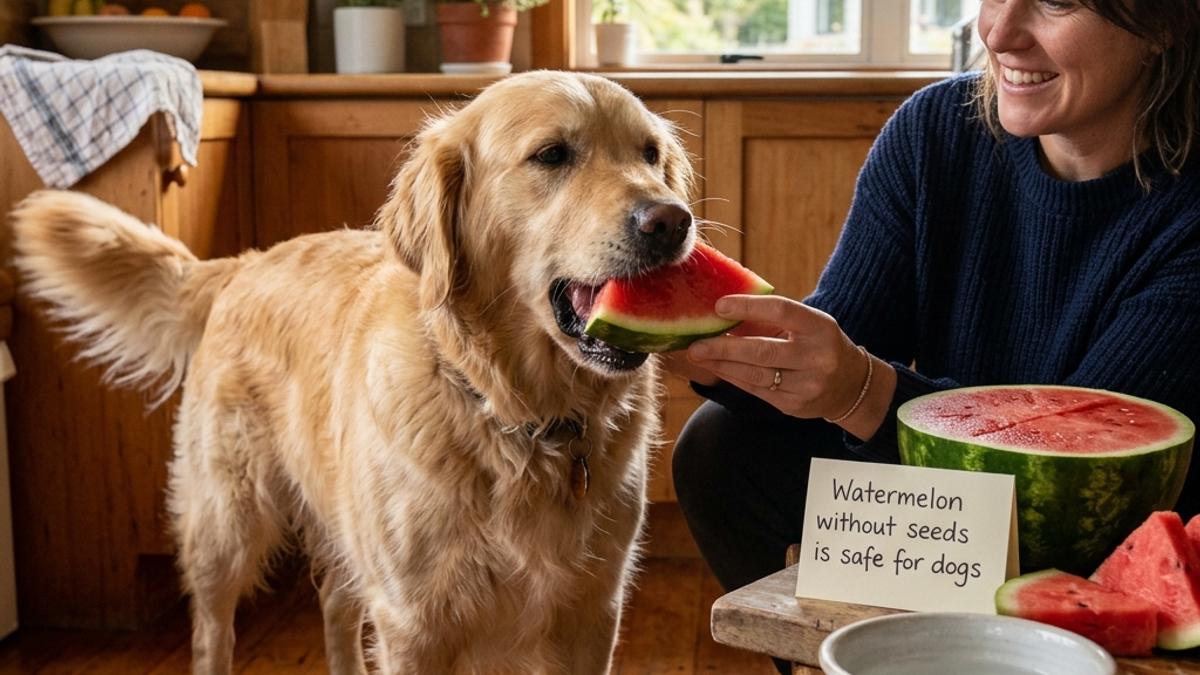
Watermelon should only be fed as a supplement to their primary diet. A couple of small, 2 cm cubes of seedless, rind-free watermelon flesh is a perfect portion size for a medium dog. Feeding too many watermelon pieces can cause loose stools, diarrhea, or gas due to the sudden increase in water and dietary sugars.
If your dog has eaten it
If your dog ate a few pieces of seedless watermelon flesh, they will likely be perfectly fine. However, if they ate the tough green rind or swallowed large pieces of the rind whole, monitor them closely for signs of airway or gastrointestinal obstruction. Symptoms of an intestinal blockage include repeated vomiting, inability to keep food or water down, lethargy, abdominal pain (hunching), loss of appetite, and changes in bowel movements.
Safer alternatives
Other highly hydrating, safe treats include thin slices of raw cucumber (peeled or unpeeled) or small slices of zucchini.
Related reading
- See the full list: Foods Dogs Can and Can't Eat NZ
- Dog Food Guide NZ
- Pet Emergency Kit NZ Civil Defence Guide
- New Dog Owner: First 30 Days NZ
References
- ASPCA, Sharing Is Caring: Foods You Can Safely Share with Your Pet, checked 2026-07-16: https://www.aspca.org/news/sharing-caring-foods-you-can-safely-share-your-pet
- VCA Animal Hospitals, Prevent pet poisoning this 4th of July, checked 2026-07-16: https://vcahospitals.com/resources/lifestyle-dog/hazards-safety/prevent-pet-poisoning-this-4th-of-july
When to see a vet
If your dog has eaten watermelon rind and is vomiting, lethargic, or showing abdominal pain, contact your NZ vet immediately.
Important notice
*General food-safety information for NZ pet owners, reviewed against ASPCA/VCA guidance (July 2026). For any suspected ingestion or illness, contact a NZ vet, after-hours emergency clinic, or SPCA for advice.*
Free PetMall tools
Related guides
petmall.co.nz
Shop at PetMall
The products below are practical support items for your pet. PetMall ships across New Zealand.
- Dog FoodStart with food that matches your dog's life stage and activity level — and change brands slowly over 7–10 days.
- Dog TreatsTraining rewards and everyday treats — small, soft pieces work best for consistent reinforcement.
- Dog ToysA small rotation of chew, fetch, and puzzle toys usually works better than buying a large variety at once.
- Dog GroomingA gentle brush and the right shampoo make maintenance easier — especially for dogs that get muddy on walks.
- Leads & HarnessesComfort matters: padded contact points and adjustable fit help reduce rubbing on longer walks or tramping weekends.
- Flea & Worm TreatmentFor NZ conditions, look for protection that fits your routine (monthly vs longer-lasting) and your dog's weight range.