Abyssinian vs Somali NZ: The Short-Haired and Long-Haired Aby Compared
The Somali is essentially a long-haired Abyssinian. But there are real differences in coat care, availability and how active they are. Compare both for your NZ home.
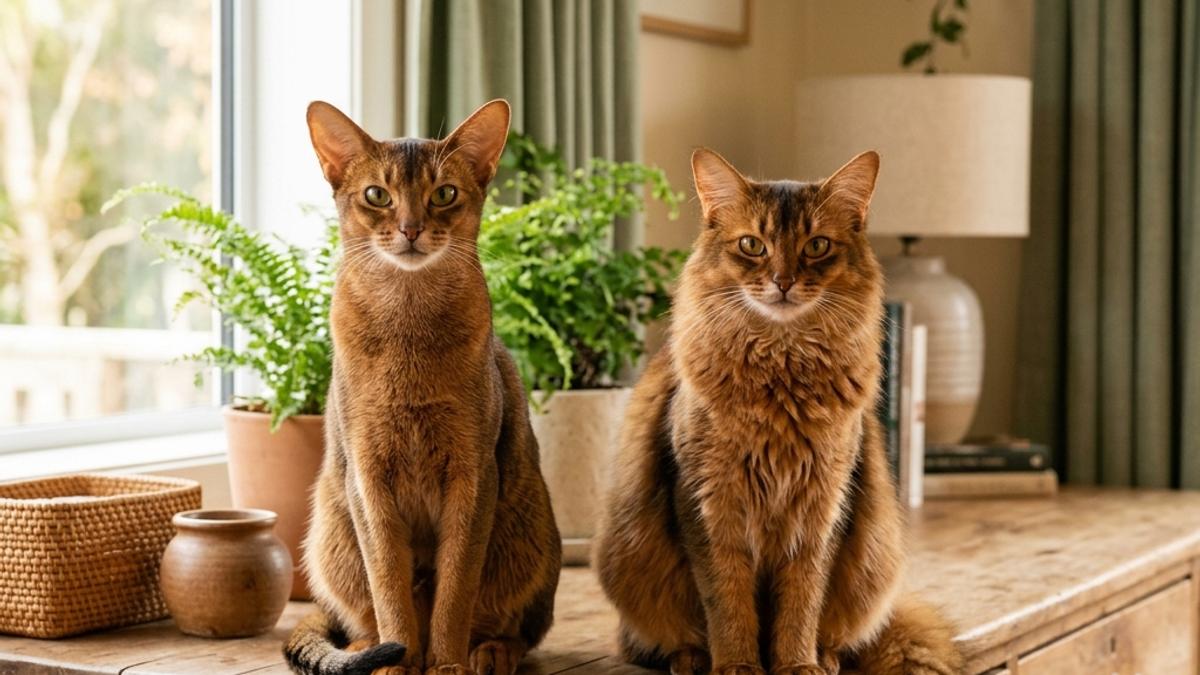
The Somali is directly descended from the Abyssinian — it is, for practical purposes, a long-haired Abyssinian. The two breeds share the same ticked tabby coat pattern, the same wedge-shaped head, and the same high-energy, extroverted personality. The primary difference is coat length and maintenance. Here's what NZ owners need to know.
The essential difference
Abyssinian: Short, dense, ticked coat; minimal grooming. Somali: Semi-long, flowing ticked coat with a fox-like tail; moderate grooming required. Same personality — active, curious, intelligent, and demanding of stimulation. If you love the Aby type but want a more striking, fluffier appearance, the Somali delivers that. If you want the same personality with minimal coat work, the Abyssinian is the easier choice.
Side-by-side overview
| Abyssinian | Somali | |
|---|---|---|
| Weight | 3–5 kg | 3–5 kg |
| Lifespan | 14–15 years | 12–16 years |
| NZ Price (breeder) | $1,200–$2,800 | $1,200–$2,800 |
| NZ Price (adoption) | $150–$350 via SPCA | $150–$350 via SPCA (very rare) |
| Energy level | ★★★★★ | ★★★★☆ |
| Trainability | ★★★★☆ | ★★★★☆ |
| Grooming needs | ★★★☆☆ | ★★★☆☆ |
| Apartment suitability | ★★★☆☆ | ★★★☆☆ |
| Good with kids | ★★★★★ | ★★★★★ |
| Good with other pets | ★★★★☆ | ★★★★☆ |
*Scores from PetMall breed profiles (1–5). The matching grooming score reflects similarly moderate commitment, with the Somali requiring slightly more attention.*
Personality: the most active breed pair in this guide series
Both the Abyssinian and the Somali are among the most active domestic cat breeds. They are not lap cats — they are perpetual-motion cats. Expect:
- Constant curiosity: Both breeds investigate every new object, bag, and visitor in the home. They're the cats that knock things off shelves not out of malice but genuine investigation.
- Height-seeking: Both love to be in the highest possible point of any room. Tall cat trees, open shelves, top of the fridge — all fair game.
- Voicing opinions: Abyssinians are relatively quiet for their activity level but will trill, chirp, and chirr at you. Somalis are similarly vocal.
- Demanding companionship: Both breeds dislike being ignored. They'll follow you around, "help" with tasks, and become bored and destructive if understimulated.
This is genuinely important for NZ apartment owners to understand before choosing either breed. A bored Abyssinian or Somali in a small flat will find entertainment — usually involving things you'd rather they didn't touch. Both breeds need interactive play sessions daily, vertical space, and ideally a feline companion to keep them busy when you're not home.
The ticked tabby coat
Both breeds have a unique coat pattern — the "ticked" tabby, where each individual hair has multiple bands of colour. This gives both breeds a warm, glowing appearance (ruddy/brown agouti, blue, cinnamon, fawn, silver) without visible stripes or spots on the body.
Abyssinian: The short, dense coat lies close to the body and has a characteristic sheen. It requires only weekly brushing to remove loose hair and maintain condition. Very low shedding compared to double-coated breeds.
Somali: The medium-length semi-long coat is soft and has a distinctive "fox tail" — a full, bushy tail that's one of the breed's defining features. The fur also forms a ruff around the neck and "britches" on the hindquarters. Despite being longer, the Somali's coat has minimal undercoat and tends not to mat badly. Brushing 2–3 times a week is sufficient. A notable aesthetic feature: the coat creates a lighter-coloured "ticking" effect especially visible in sunlight.
Both breeds score ★★★☆☆ for grooming, but the Abyssinian sits at the lower end of that category in practice.
NZ availability
Both breeds are available in NZ but relatively uncommon. The Abyssinian is more frequently bred than the Somali. Expect waitlists at reputable breeders; verify with the New Zealand Cat Fancy (NZCF) for registered breeder contacts.
Prices are similar for both breeds (around $1,200–$2,800 from registered NZ breeders), though Somali availability and pricing can vary more due to smaller breeding populations.
Living with either breed in NZ
Space: Both breeds are more suited to homes with extra space and vertical enrichment than to small apartments without enrichment infrastructure. An apartment with wall-mounted shelves, a large cat tree, and regular interactive play sessions can work — a small flat with nothing to climb and a busy owner is a recipe for unhappy cats of either breed.
Cat companionship: Both breeds do better with another cat for company when owners are at work. Consider adopting or purchasing a pair if your household is empty during the day.
Indoor vs outdoor: Both can be kept indoors successfully but need significant enrichment to compensate. Outdoors, their fearless curiosity can get them into trouble with NZ's traffic and predators. If outdoor access is provided, a secure enclosed cat run is a practical NZ solution. See our indoor vs outdoor cat NZ guide.
Who each breed suits in NZ
Abyssinian suits you if:
- You want an active, engaging cat with minimal grooming
- You want the highest possible energy breed in this comparison
- You can provide daily interactive play and vertical enrichment
- You want a cat that's good with older children and genuinely interactive with the household
Somali suits you if:
- You love the Abyssinian personality but want a more visually striking, fluffy-tailed cat
- You're comfortable with 2–3 weekly brushing sessions
- You appreciate the "foxy" aesthetic of the longer coat
- Same activity and enrichment commitment as the Aby applies
Neither suits you if:
- You want a calm, lap-oriented, low-stimulation cat
- You're away from home long hours without a second cat for company
- You have a small, bare apartment with no vertical space
For less active cat breeds, see Maine Coon vs Ragdoll NZ or Birman vs Ragdoll NZ. Use the Find a Breed tool to compare.
Quick takeaways
- Abyssinian and Somali are essentially the same breed in short-haired and long-haired versions
- Both are high-energy, perpetually curious, and demanding of stimulation — not lap cats
- Abyssinian has minimal grooming needs; Somali needs brushing 2–3 times weekly
- Both need vertical space, interactive play, and ideally a second cat for company
- Both are long-lived (14–16 years), healthy breeds with similar temperaments
See also
- Abyssinian breed profile
- Somali breed profile
- Maine Coon vs Ragdoll NZ
- Indoor cat enrichment NZ
- Indoor vs outdoor cat NZ
- Find a Breed
---
References
- The International Cat Association (TICA), Abyssinian Breed Information: https://tica.org/breed/abyssinian/
- The International Cat Association (TICA), Somali Breed Profile: https://tica.org/breed/somali/
- Merck Veterinary Manual, Overview of Cardiomyopathy in Dogs and Cats: https://www.merckvetmanual.com/circulatory-system/cardiomyopathy-in-dogs-and-cats/overview-of-cardiomyopathy-in-dogs-and-cats
- MPI New Zealand, Code of Welfare for Companion Cats, checked 2026-06-05: https://www.mpi.govt.nz/animals/animal-welfare/codes/all-animal-welfare-codes/code-of-welfare-companion-cats/
---
*This guide provides general information for NZ cat owners. Consult a registered NZ vet for health advice specific to your cat.*
Free PetMall tools
Related guides
petmall.co.nz
Shop at PetMall
The products below are practical support items for your pet. PetMall ships across New Zealand.
- Cat FoodStart with food that matches your cat's life stage — change brands slowly over 7–10 days to avoid digestive upset.
- Cat LitterClumping or crystal, most cats prefer an unscented litter and a clean tray — one tray per cat plus one spare is the NZ rule of thumb.
- Cat TreatsGreat for bonding and training — keep treats under 10% of daily calories to protect your cat's waistline.
- Cat ToysA small rotation of toys (feather wand, puzzle feeder, and comfort toy) usually works better than buying many at once.
- Cat GroomingRegular brushing cuts hairballs and shedding — essential for long-haired breeds like Ragdolls and British Longhairs.
- Flea & Worm TreatmentFor NZ conditions, choose protection that fits your cat's weight and lifestyle (indoor vs outdoor) and keep it regular.