Pet Breed Guide NZ
Blue and Gold Macaw
The Blue and Gold Macaw is a magnificent, highly intelligent large parrot. Renowned for their mimicking ability and long lifespan, they are incredibly demanding pets requiring massive space.
Photo Gallery
NZ Ownership Snapshot
Verified NZ Status- Noise Level
- loud
- Social Needs
- needs significant daily interaction; can be kept solo if given enough attention
Legal in NZ as captive-bred birds from NZ-based breeders. Importing macaws requires MPI biosecurity approval and CITES documentation. Blue and Gold Macaws are CITES Appendix II listed — importation requires permits. NZ-bred birds from licensed breeders do not require CITES permits.
Breed Snapshot
- Size
- Large: ~86 cm; ~1 kg+
- Lifespan
- 50–60+ years
- Origin
- South America
- Care Focus
- Highly intelligent, social, affectionate, loud, demanding
- NZ Price
- NZD $2,500–$5,000 for NZ-bred hand-raised birds
- Annual Vet Cost
- NZD $200–$500+ for consults; specialist avian vet required
Personality Scores
Origins & History
The Blue and Gold Macaw (Ara ararauna) is a massive, brightly coloured parrot native to the humid forests and woodlands of tropical South America. Instantly recognizable by their vibrant turquoise-blue wings and tail, golden-orange underparts, and green forehead, they are among the most famous and popular parrot species in the world. In the wild, they are highly social and form strong lifelong breeding pairs. In New Zealand, Blue and Gold Macaws are bred locally by a small group of highly experienced aviculturists. Due to their extreme intelligence, long lifespan, and high care demands, owning a macaw is a significant, lifelong commitment.
Lifespan Commitment & Care Reality
Owning a Blue and Gold Macaw is not like keeping a standard pet bird; it is a life-altering decision:
- Lifespan: In captivity, these parrots regularly live 50 to 60+ years, with some documented to reach 80 years. This means they often outlive their owners. Prospective buyers in NZ must plan for the long-term future of the bird, including writing provisions into wills for their care.
- Intelligence & Training: Macaws possess the cognitive ability of a 3-to-4-year-old child. They are highly social, affectionate, and demand several hours of direct interaction and training daily. If left alone or ignored, they develop severe behavioural issues, such as self-mutilation (feather plucking), loud screaming, and destructive chewing.
- Housing Space: They require massive enclosures. A standard parrot cage is entirely inadequate. They need a custom-built aviary or a dedicated, safe 'bird room' in the house, fitted with heavy-duty metal perches and massive toys. For basic bird welfare guidelines in NZ, refer to the SPCA NZ bird care advice.
- Noise Level: Macaws have incredibly loud, piercing calls designed to travel kilometres through the rainforest canopy. They are entirely unsuitable for apartments, townhouses, or close-knit suburban developments in NZ.
Diet & Nutrition
Macaws require a specialized diet rich in healthy fats to support their large bodies and cognitive function.
- Base Diet: Specialized large parrot pellets supplemented with a wide variety of fresh vegetables (broccoli, squash, leafy greens) and fresh fruits.
- Healthy Fats: Unlike smaller parrots, macaws need a higher fat intake. Provide daily raw unsalted nuts (macadamias, walnuts, almonds) which they crack open using their powerful beaks.
- Toxins: Never feed chocolate, avocado, caffeine, onion, or fruit seeds, as these are highly toxic to parrots.
For comparison with other large, intelligent parrots kept in New Zealand, read our Eclectus Parrot guide.
Legal & CITES Regulations in NZ
Blue and Gold Macaws are listed under CITES Appendix II (Convention on International Trade in Endangered Species). This means that importing a macaw into New Zealand requires official CITES export/import permits and strict biosecurity clearance from the Ministry for Primary Industries (MPI). Because importing live birds is extremely difficult under NZ’s strict biosecurity laws, almost all macaws in NZ are sourced from local breeders. Captive-bred macaws hatched within New Zealand do not require CITES permits for domestic sale or ownership. Always ensure you purchase from a reputable local breeder who can verify the bird's NZ-hatched origin.
Avian Veterinary Care in New Zealand
Finding medical care for large parrots is a specialized field. General companion animal vets in NZ are often untrained in avian medicine. Before purchasing a macaw, you must locate a registered specialist avian veterinarian in your region (Auckland, Wellington, Palmerston North, and Christchurch have clinics). Regular health checkups and blood screenings are recommended, which can be an ongoing financial commitment.
Fun Facts
Fact 1
They mate for life and fly in closely paired groups in the wild, their wings almost touching as they soar.
Fact 2
Macaws have incredibly powerful beaks that can generate pressure up to 300 pounds per square inch—easily enough to snap a broomstick in half.
Fact 3
The bare white skin patch on their face acts like a human blush; it turns pink when the macaw is excited, stressed, or happy.
Fact 4
They utilize their beak as a 'third hand' when climbing, using it to grasp branches and stabilize their large bodies.
Fact 5
Because they live up to 60+ years, many owners write 'macaw trusts' into their wills to guarantee the bird's care if they pass away.
Related Breeds
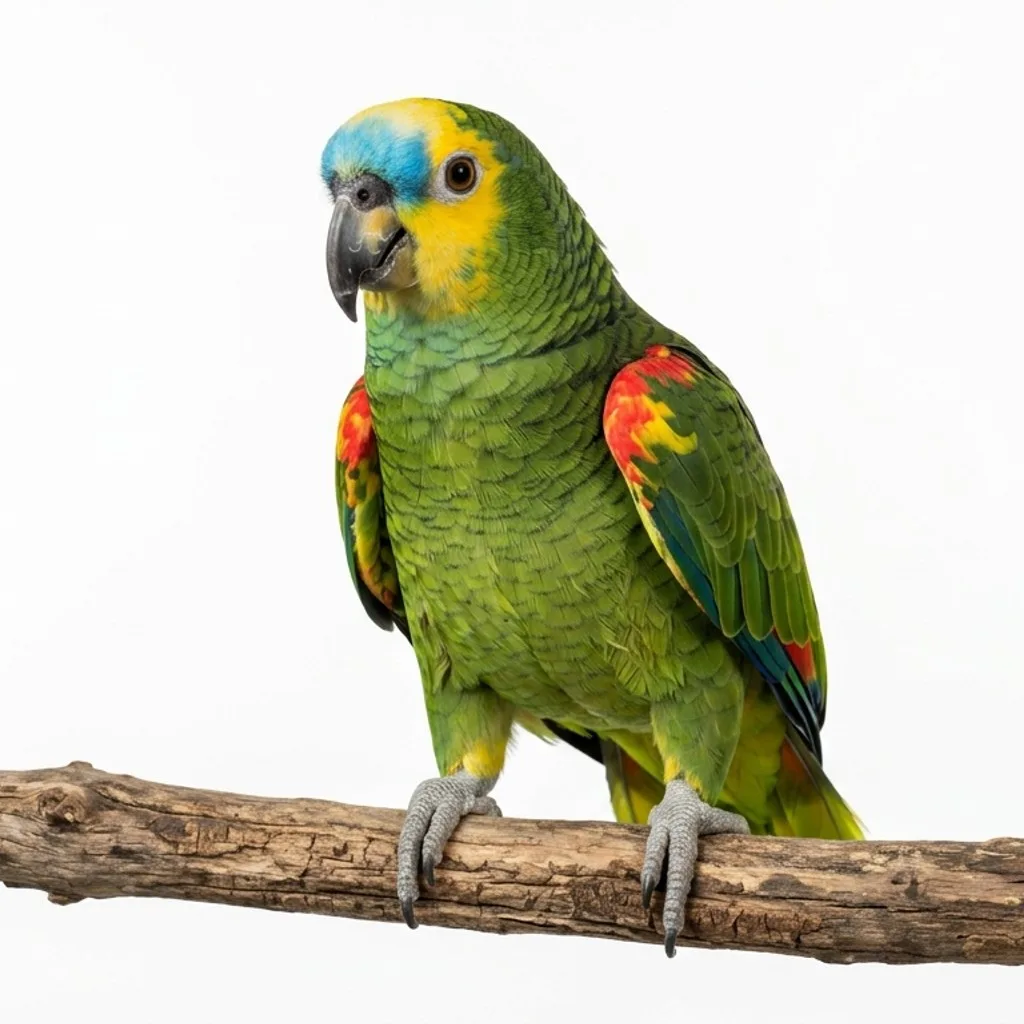
Blue-fronted Amazon Parrot
The Blue-fronted Amazon is a medium-sized green parrot from South America, marked by blue across the forehead and yellow on the crown and cheeks, and it suits experienced keepers rather than first-time bird owners. Outgoing, playful and often boisterous, it is an accomplished talker that can repeat words and phrases with real clarity. It is also genuinely loud, calling most at dawn and dusk, and adolescents commonly move through a bluffing stage that calls for patient, consistent handling. A lifespan of 40 to 60 years makes this a decades-long commitment. Daily care means fresh food and water, spot cleaning, and two to four hours of supervised time out of the cage, with rotating destructible toys and training sessions to head off the boredom that shows up as feather plucking or aggression. Best suited to a settled, experienced household with daily time and tolerance for noise.
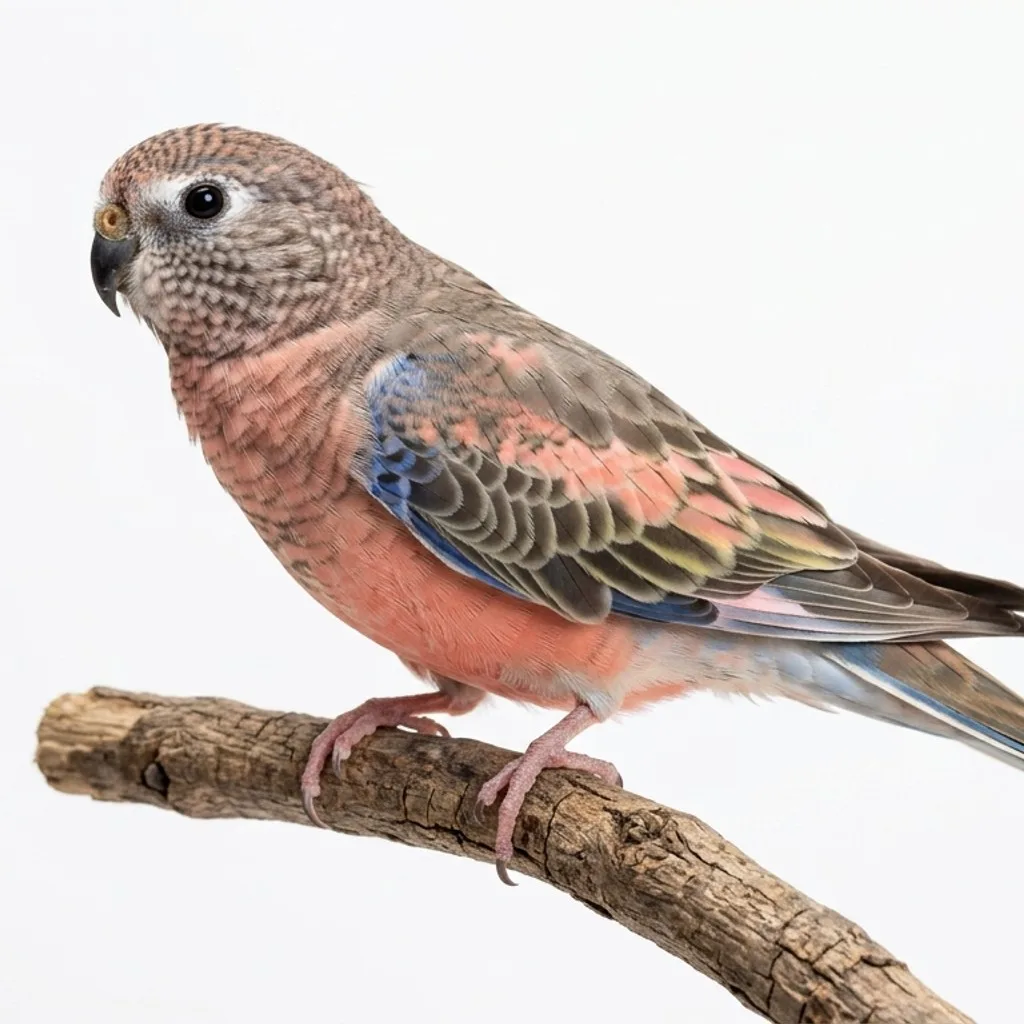
Bourke's Parakeet
Bourke's Parakeet is a small, softly coloured parrot from inland Australia, rosy pink below with a grey-brown back and blue in the wings, and it is one of the gentler options for a first-time bird owner. It is quiet by parakeet standards, offering melodic chirps rather than squawking, and it is crepuscular, so most of its activity falls around dawn and dusk while the day passes in dozing and gentle foraging. Bourkies are docile, rarely bite, and become tame with steady, unhurried handling, though they tend to enjoy company more than cuddling and are not mimics. They do best in pairs or small groups, with a roomy cage, varied perches, chewable toys and supervised flight in a bird-proofed room. A lifespan of 8 to 12 years and soft vocalisations make them workable in flats and quiet homes that want a calm, undemanding bird.
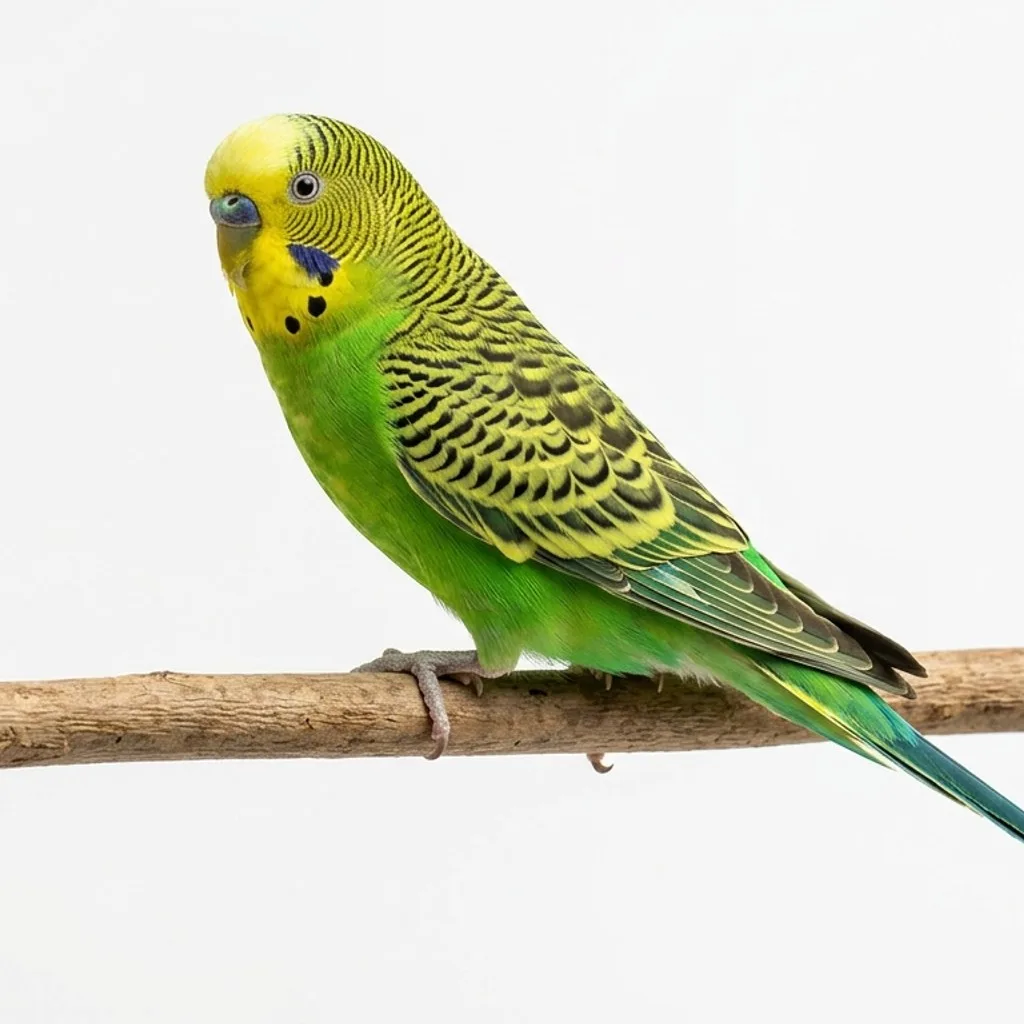
Budgerigar (Budgie)
The Budgerigar, or budgie, is a small long-tailed seed-eating parrot from Australia and one of the most widely kept companion birds in the world. It is lively, inquisitive and intensely social: budgies live in large flocks in the wild, so a single bird needs either a companion budgie or committed daily human interaction to stay settled. They are bright enough to learn to step up, perform simple tricks and mimic speech, males more readily than females. Wild birds are green and yellow with black scalloping on the wings, while selective breeding has produced blue, white, yellow, grey and pied colour mutations. Care is straightforward rather than trivial: fresh food and water twice daily, a pellet-based diet with seed as a treat, spot cleaning, and 30 to 60 minutes of supervised flight in a bird-safe room. Their small size suits apartments, though near-constant chirping makes them a poor match for a noise-sensitive household.
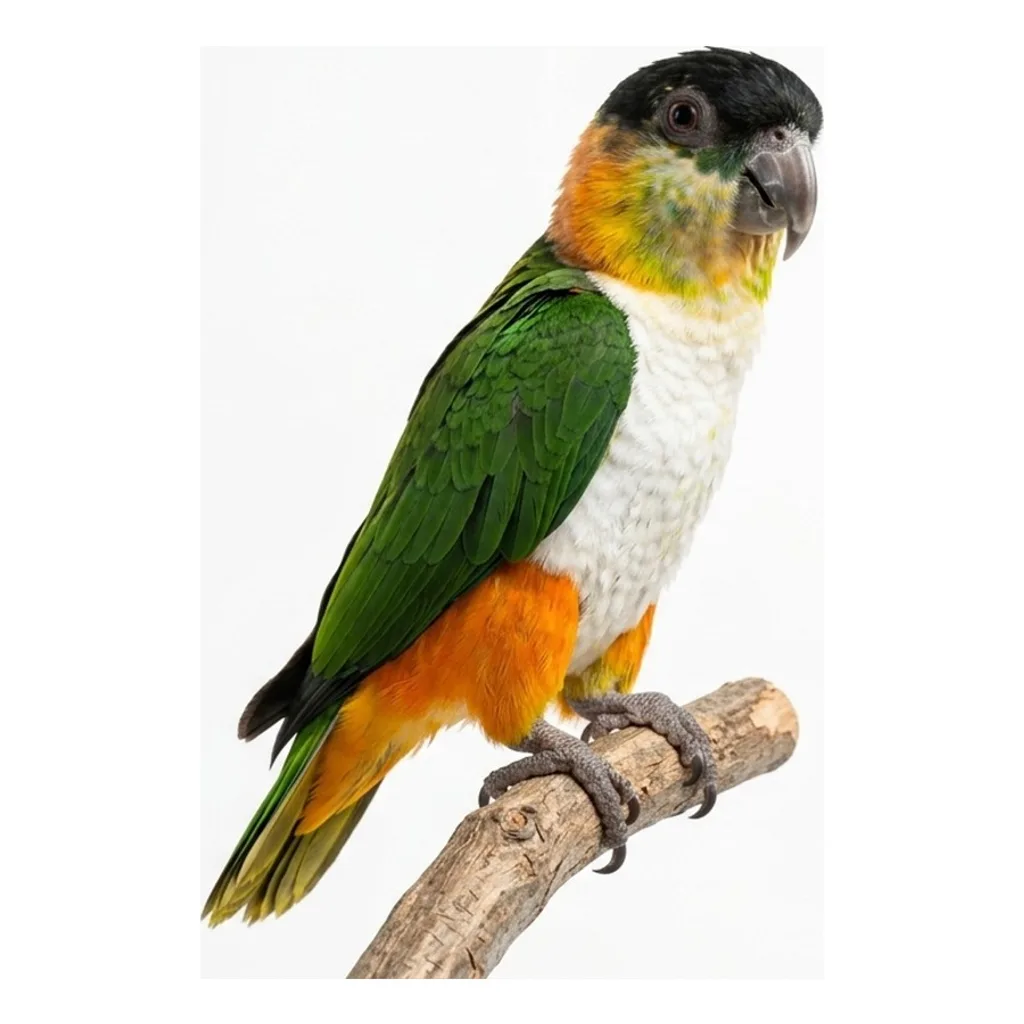
Caique
The Caique is a small, stocky South American parrot represented by two species, the Black-headed and the White-bellied, both bold, comical and relentlessly busy. Roughly 23 to 25 cm long and 150 to 170 grams, it carries a large personality in a compact frame and is better known for its hopping gait across flat surfaces than for talking, although it mimics sounds and chirps freely. Noise sits at a moderate level rather than a piercing one. A Caique needs at least two to four hours of supervised time out of the cage each day, the largest enclosure a home can fit, and a steady rotation of chewable and foraging toys, since a bored bird slides quickly into plucking or aggression. With a lifespan of 25 to 40 years, it fits an active, sociable household that is home often and ready for a decades-long companion.