Pet Breed Guide NZ
African Grey Parrot
The African Grey Parrot is legendary for its unmatched cognitive intelligence and talking ability. Due to their extreme sensitivity, long lifespan, and high care requirements, they require advanced owners.
Photo Gallery
NZ Ownership Snapshot
Verified NZ Status- Noise Level
- loud
- Social Needs
- groups
- Diet Type
- Seeds, pellets, vegetables, fruit, and species-appropriate enrichment foods
- UVB Required
- No
Legal in NZ as captive-bred birds from licensed NZ breeders. CITES Appendix I — this is the most protected CITES category. Importing from overseas requires MPI biosecurity approval + CITES permits. NZ-bred birds from licensed breeders are legal without import permits. Very limited NZ breeding population — expect to wait.
Breed Snapshot
- Size
- medium-large
- Lifespan
- 40-60 years
- Origin
- Central and West Africa / NZ captive bred
- Care Focus
- Exceptionally intelligent, sensitive, and observant; highly skilled mimic; prone to stress-related behaviours like feather plucking
- NZ Price
- NZD $3,000–$8,000+ (NZ supply very limited; expect waitlist)
- Annual Vet Cost
- NZD 300 - 800+ annually (includes routine check-ups, potential blood tests, and emergency care. Note: Exotic vet access in NZ is limited, particularly outside major cities like Auckland, Wellington, and Christchurch, which can increase costs for specialised care or travel.)
Personality Scores
NZ Lifestyle Fit
African Grey Parrots can adapt to various NZ home types, from spacious houses with dedicated bird rooms to larger apartments, provided they receive ample out-of-cage time and mental stimulation. However, their 'loud' noise level means they are not ideal for all apartment living situations, particularly those with close neighbours. Climate-wise, they need a stable indoor environment, protected from New Zealand's variable weather. While Auckland's humidity might be somewhat tolerable, they must be shielded from drafts and cold, especially in colder regions like the South Island. There are no specific regional restrictions beyond the national permit requirements. Sourcing an African Grey in New Zealand requires strict adherence to legal channels. Prospective owners must obtain their bird from MPI-approved, licensed NZ breeders or existing licensed keepers. This ensures the birds are legally imported or bred within the country, protecting both the species and the buyer from illegal trade. Always verify breeder licenses and permits before committing.
Verified NZ domestic pet-bird context: MPI recognises parrots/parakeets as pet birds in NZ. This supports local captive-keeping context only; live bird imports are not allowed, and owners must still check species-specific and regional pest rules.
Overview
The African Grey Parrot (Psittacus erithacus) is widely regarded as the most intelligent parrot species in the world, with cognitive abilities comparable to a five-year-old human child. Growing to about 33cm in length and weighing around 400g, they have distinctive grey plumage highlighted by a bright red tail. In New Zealand, the African Grey is highly prized but extremely rare due to strict CITES regulations and limited local breeding pairs, requiring a lifetime commitment from dedicated owners.
NZ ownership fit
Because of their high intelligence, African Greys are exceptionally sensitive and observant. They do not just mimic words; they can learn to use them in context. However, they are prone to boredom and stress, which often manifests as feather-plucking or self-mutilation. They are not cuddly birds and prefer intellectual engagement (like training, puzzle solving, and conversation) to physical handling. They require an experienced owner who can commit hours of daily interaction.
Care priorities
A high-quality pellet-based diet (around 70%) supplemented by fresh vegetables and fruits is crucial. African Greys are uniquely prone to hypocalcemia (low calcium levels), so calcium-rich vegetables and veterinary-approved calcium supplements are vital. UVB lighting is highly recommended to help them synthesise Vitamin D3 for calcium absorption. Kiwi owners must plan for the long term, as these birds routinely live for 40 to 60 years.
Fun Facts
Fact 1
African Greys are considered one of the most intelligent bird species, often compared to a 3-5 year old human child in cognitive ability.
Fact 2
They can learn hundreds of words and phrases, often using them in context, not just mimicking.
Fact 3
Their lifespan can exceed 60 years in captivity, making them a lifelong commitment.
Fact 4
African Greys are known for their 'powder down' feathers, which produce a fine dust that helps waterproof their other feathers.
Fact 5
They originate from the rainforests and savannas of West and Central Africa.
Related Breeds
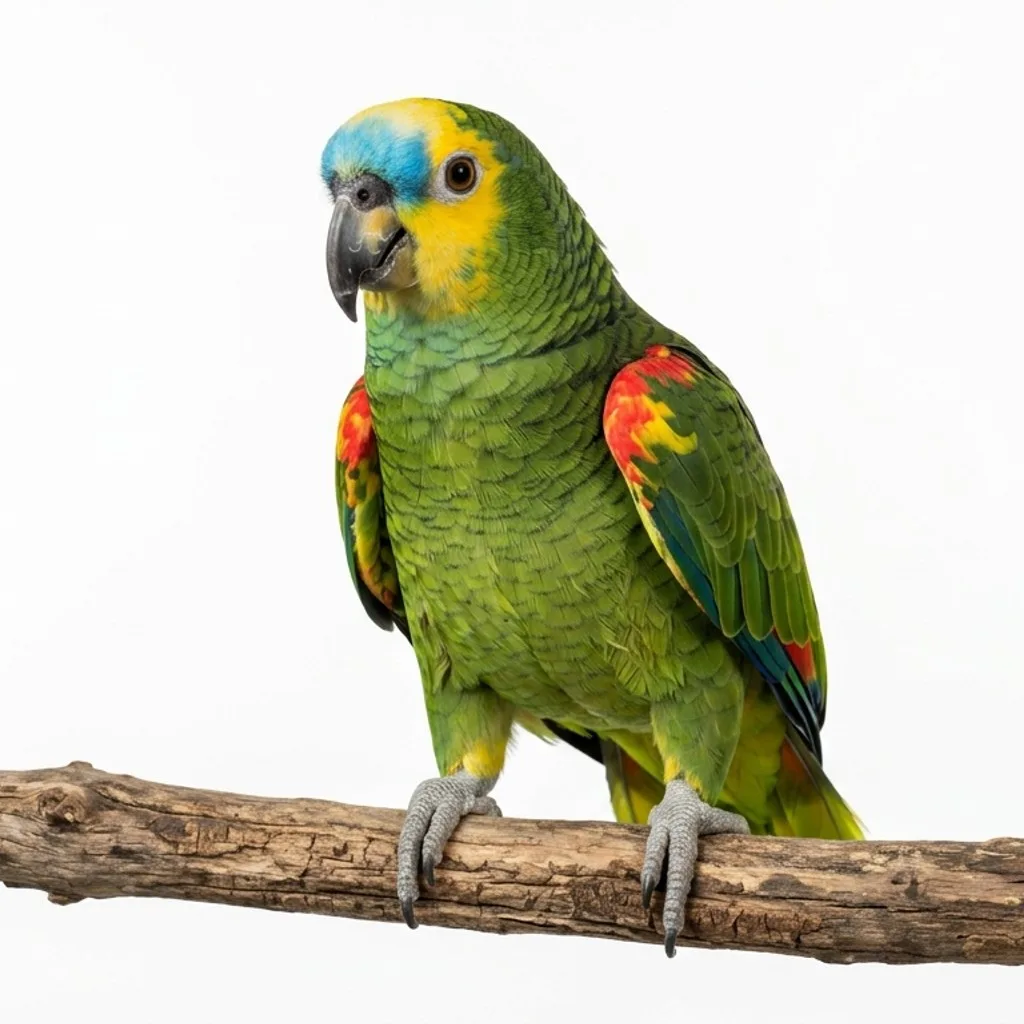
Blue-fronted Amazon Parrot
The Blue-fronted Amazon is a medium-sized green parrot from South America, marked by blue across the forehead and yellow on the crown and cheeks, and it suits experienced keepers rather than first-time bird owners. Outgoing, playful and often boisterous, it is an accomplished talker that can repeat words and phrases with real clarity. It is also genuinely loud, calling most at dawn and dusk, and adolescents commonly move through a bluffing stage that calls for patient, consistent handling. A lifespan of 40 to 60 years makes this a decades-long commitment. Daily care means fresh food and water, spot cleaning, and two to four hours of supervised time out of the cage, with rotating destructible toys and training sessions to head off the boredom that shows up as feather plucking or aggression. Best suited to a settled, experienced household with daily time and tolerance for noise.
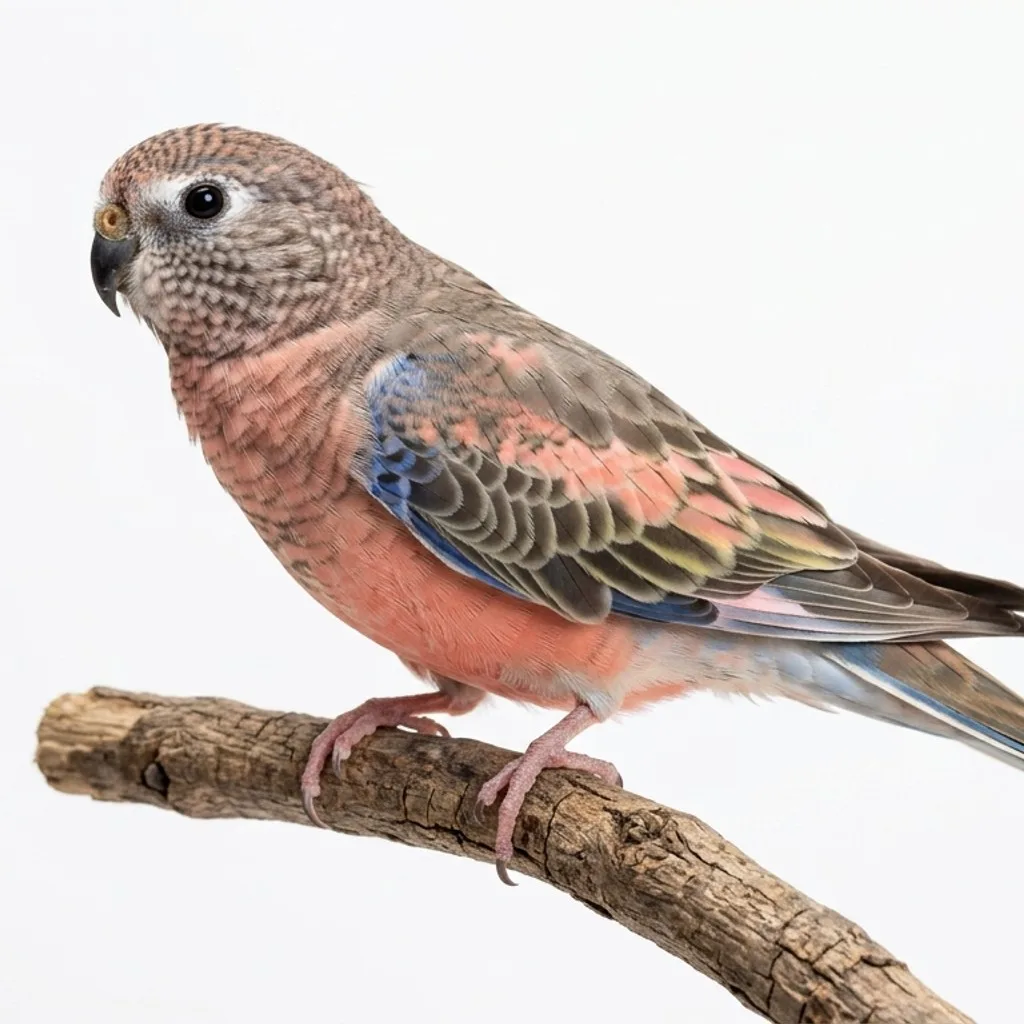
Bourke's Parakeet
Bourke's Parakeet is a small, softly coloured parrot from inland Australia, rosy pink below with a grey-brown back and blue in the wings, and it is one of the gentler options for a first-time bird owner. It is quiet by parakeet standards, offering melodic chirps rather than squawking, and it is crepuscular, so most of its activity falls around dawn and dusk while the day passes in dozing and gentle foraging. Bourkies are docile, rarely bite, and become tame with steady, unhurried handling, though they tend to enjoy company more than cuddling and are not mimics. They do best in pairs or small groups, with a roomy cage, varied perches, chewable toys and supervised flight in a bird-proofed room. A lifespan of 8 to 12 years and soft vocalisations make them workable in flats and quiet homes that want a calm, undemanding bird.
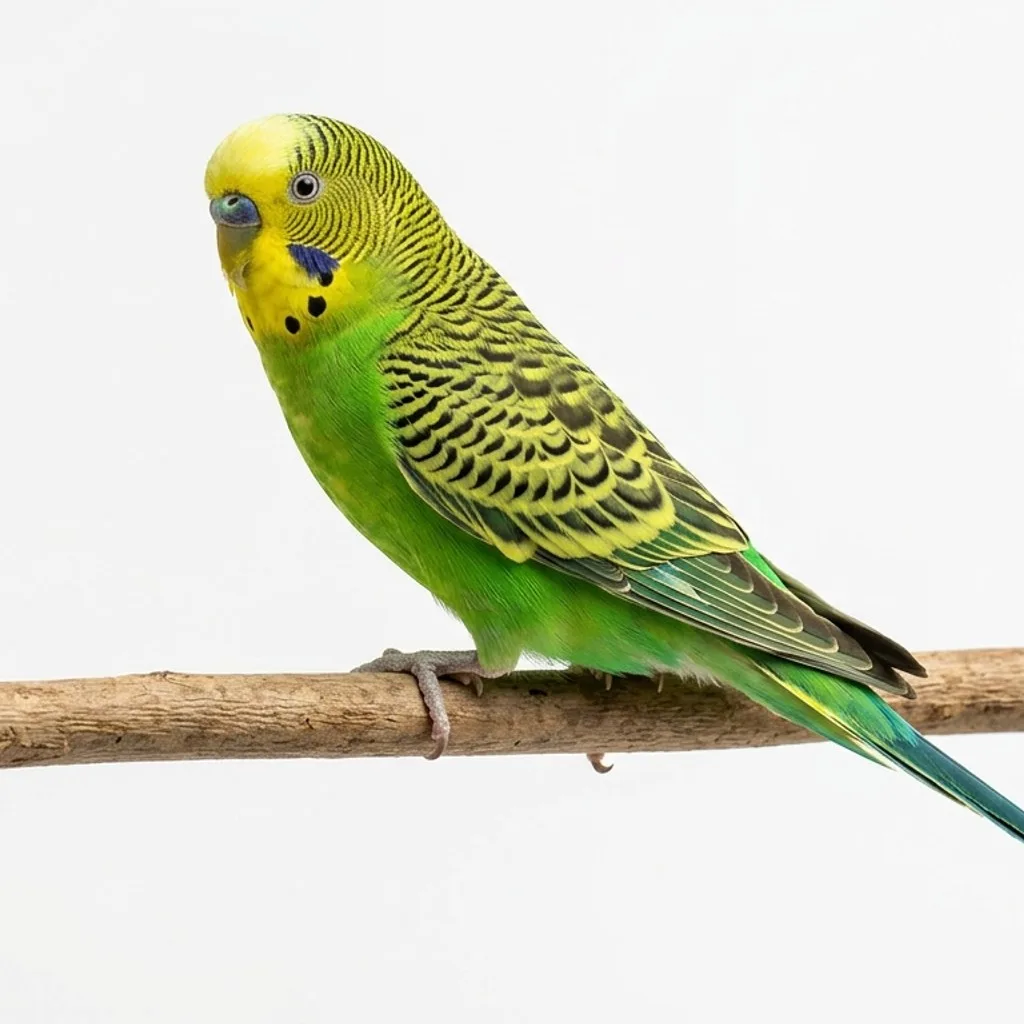
Budgerigar (Budgie)
The Budgerigar, or budgie, is a small long-tailed seed-eating parrot from Australia and one of the most widely kept companion birds in the world. It is lively, inquisitive and intensely social: budgies live in large flocks in the wild, so a single bird needs either a companion budgie or committed daily human interaction to stay settled. They are bright enough to learn to step up, perform simple tricks and mimic speech, males more readily than females. Wild birds are green and yellow with black scalloping on the wings, while selective breeding has produced blue, white, yellow, grey and pied colour mutations. Care is straightforward rather than trivial: fresh food and water twice daily, a pellet-based diet with seed as a treat, spot cleaning, and 30 to 60 minutes of supervised flight in a bird-safe room. Their small size suits apartments, though near-constant chirping makes them a poor match for a noise-sensitive household.
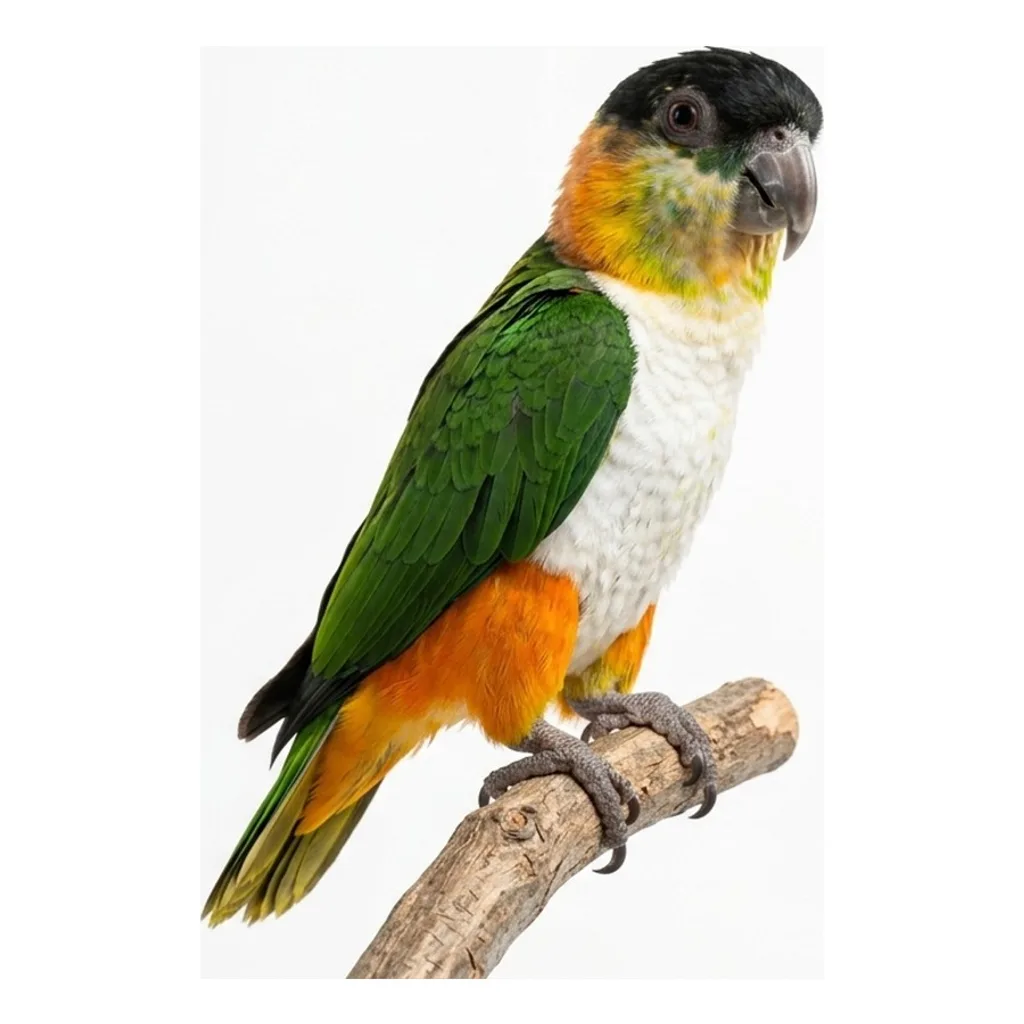
Caique
The Caique is a small, stocky South American parrot represented by two species, the Black-headed and the White-bellied, both bold, comical and relentlessly busy. Roughly 23 to 25 cm long and 150 to 170 grams, it carries a large personality in a compact frame and is better known for its hopping gait across flat surfaces than for talking, although it mimics sounds and chirps freely. Noise sits at a moderate level rather than a piercing one. A Caique needs at least two to four hours of supervised time out of the cage each day, the largest enclosure a home can fit, and a steady rotation of chewable and foraging toys, since a bored bird slides quickly into plucking or aggression. With a lifespan of 25 to 40 years, it fits an active, sociable household that is home often and ready for a decades-long companion.