Small Pet Hideout Types NZ: Tunnels, Houses, Platforms and Safe DIY Hides
Small pet hideout types NZ guide: choose tunnels, houses, platforms and safe DIY hides for rabbits, guinea pigs, rats and other small pets.
Small pet hideout types in NZ should make animals feel secure while still being safe, washable and roomy enough. For guinea pigs, rabbits, rats and similar small pets, hides are not decoration. They support normal hiding, resting, foraging and confidence. The best setup usually has more than one hide, with at least two exits where animals might be chased or startled.
Quick comparison
| Hideout type | Look for | Avoid |
|---|---|---|
| Wooden house | Untreated pet-safe wood, two exits, chew-safe edges | Treated timber, paint flakes, tight single doorway |
| Plastic hide | Easy washing, roomy opening, stable shape | Brittle plastic, poor ventilation, chewed sharp edges |
| Tunnel | Wide enough to turn, washable or replaceable | Tiny tubes that trap rabbits or large guinea pigs |
| Cardboard DIY hide | Plain cardboard, multiple doors, cheap replacement | Tape, staples, glossy coatings, inks they chew heavily |
| Platform hide | Low, stable, adds usable space | High drops, ramps too steep for the species |
Why hides matter
Prey animals need places to retreat. SPCA NZ's guinea pig care advice says hiding spots give guinea pigs protection and enrichment, and recommends different hides, tunnels and safe toys. Rabbit enrichment advice also highlights safe play pens and places to hide.
Without hiding options, small pets may freeze, squabble, sleep exposed or become harder to handle. With good hides, they can choose when to engage and when to feel safe.
Wooden houses
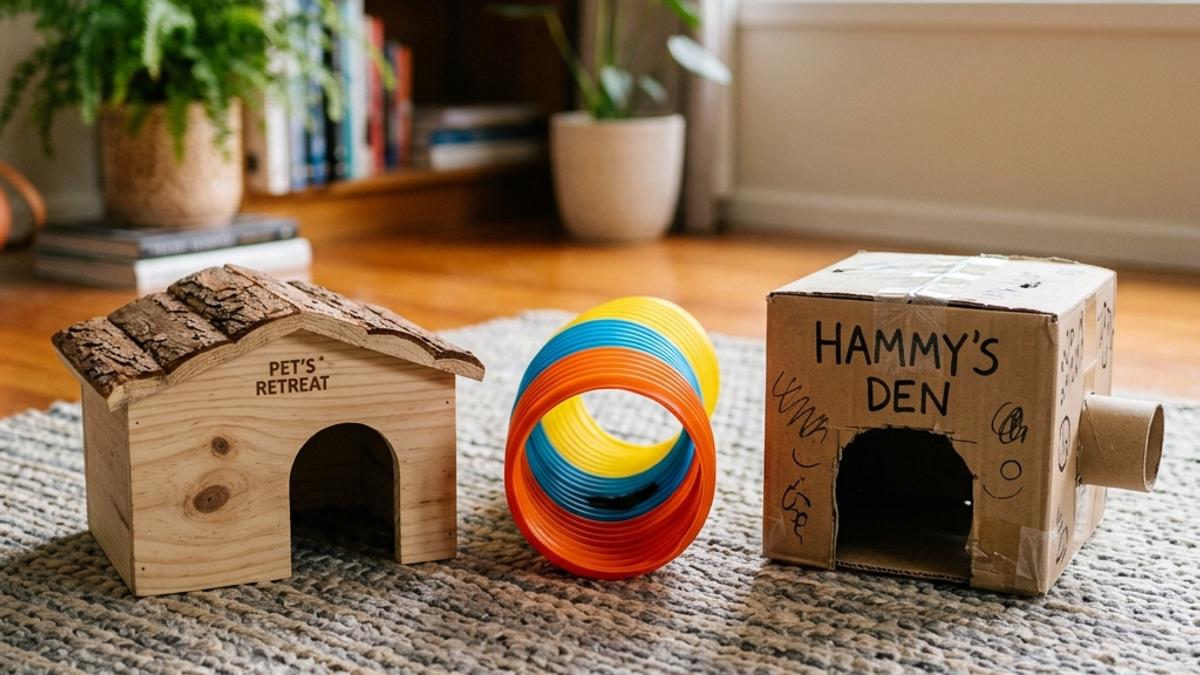
Wooden houses are good for chewing species if the wood is untreated and safe. Look for smooth edges, a roof you can lift for cleaning, and enough space for the animal to enter comfortably. In multi-pet enclosures, choose hides with two exits so one animal cannot trap another inside.
Avoid treated outdoor timber, mystery plywood, strong-smelling stains, painted surfaces that flake, and houses too small for adult size. Baby rabbits and guinea pigs grow; buy for the adult, not the tiny first-week photo.
Plastic hides
Plastic hides are easy to wipe and disinfect, which is useful in indoor NZ setups and rentals. They work well as litter-adjacent hides, travel cage shelters or quarantine setups. The downside is chewing. If edges become sharp, remove the hide.
Look for ventilation, a stable base and a shape that does not trap heat in summer. In Auckland humidity or warm rooms, airflow matters.
Tunnels and DIY hides
Tunnels add movement and play, especially for guinea pigs and rats. Choose diameters that match adult size and remove anything that collapses or traps the animal. For rabbits, many cat tunnels are a better size than tiny small-animal tubes.
Plain cardboard boxes and paper bags can be excellent cheap enrichment. Cut more than one doorway, remove tape and staples, and replace them when wet or chewed. This is especially useful for renters, because it keeps enrichment flexible without building permanent fixtures.
Platforms and hide-under furniture
Low platforms can double as a roofed hide and a lookout. Keep them low enough for the species, stable under movement, and easy to clean underneath. For older rabbits or guinea pigs, skip steep ramps and slippery surfaces.
Outdoor hutches and runs need shade, predator security and weather protection. SPCA summer advice reminds owners to keep rabbits and guinea pigs shaded and supplied with fresh water in hot weather. A hide is not enough if the whole run overheats.
What to look for
- At least one hide per animal, plus an extra where possible.
- Two exits in shared spaces to prevent trapping.
- Adult-sized openings and washable materials.
- Chew-safe surfaces and no sharp hardware.
- Placement in both rest and play zones.
What to avoid
- Tiny novelty houses that only fit baby animals.
- Single-exit hides in groups with chasing or bullying.
- Treated timber, toxic plants, staples, tape and loose strings.
- Outdoor hides that trap heat or get damp.
- Using a hide to make a too-small enclosure feel adequate.
Related buying guides
- Pet Product Buying Guides NZ
- Small Pet Hutch and Cage Guide NZ
- Small Animal Bedding Types NZ
- Rabbit vs Guinea Pig First Pet NZ
Shop category
Quick takeaways
- Hides are welfare gear, not decoration.
- Shared enclosures need enough hides and escape routes.
- Plain cardboard can be excellent when tape and staples are removed.
- Buy for adult size and chewing behaviour.
- Outdoor hides still need shade, airflow and predator-safe housing.
References
- RSPCA UK, Creating Hiding Places for Your Rabbit, checked 2026-08-08: https://www.rspca.org.uk/adviceandwelfare/pets/rabbits/behaviour/enrichment/hidingplaces
- SPCA NZ, Caring for guinea pigs, checked 2026-06-13: https://www.spca.nz/advice-and-welfare/article/caring-for-guinea-pigs
- SPCA NZ, Enrichment tips for rabbits, checked 2026-06-13: https://www.spca.nz/advice-and-welfare/article/enrichment-tips-for-rabbits
- SPCA NZ, Keeping pets safe in summer, checked 2026-06-13: https://www.spca.nz/advice-and-welfare/article/keeping-pets-safe-in-summer
Free PetMall tools
Related guides
petmall.co.nz
Shop at PetMall
The products below are practical support items for your pet. PetMall ships across New Zealand.