How to Teach Stay to a Dog: NZ Training Guide
How to teach stay to a dog using reward-based steps for distance, duration and everyday NZ home routines.
The quick answer: teach "stay" by building duration, distance and distraction separately. Start with one second, reward the dog while they are still in position, then release them clearly. A good stay is not made by repeatedly saying the cue; it is built by making stillness easy and worth it.
What stay should look like
A useful stay means your dog remains in a sit, down or stand until released. It helps with opening the front door, clipping on a lead, unloading the car, letting children pass, taking photos and keeping a dog out of the kitchen.
Use this as part of a wider reward-based plan with Dog Training and Behaviour NZ, Dog Recall Training NZ, How to Teach Leave It NZ and Puppy Socialisation NZ.
Step 1: build one second
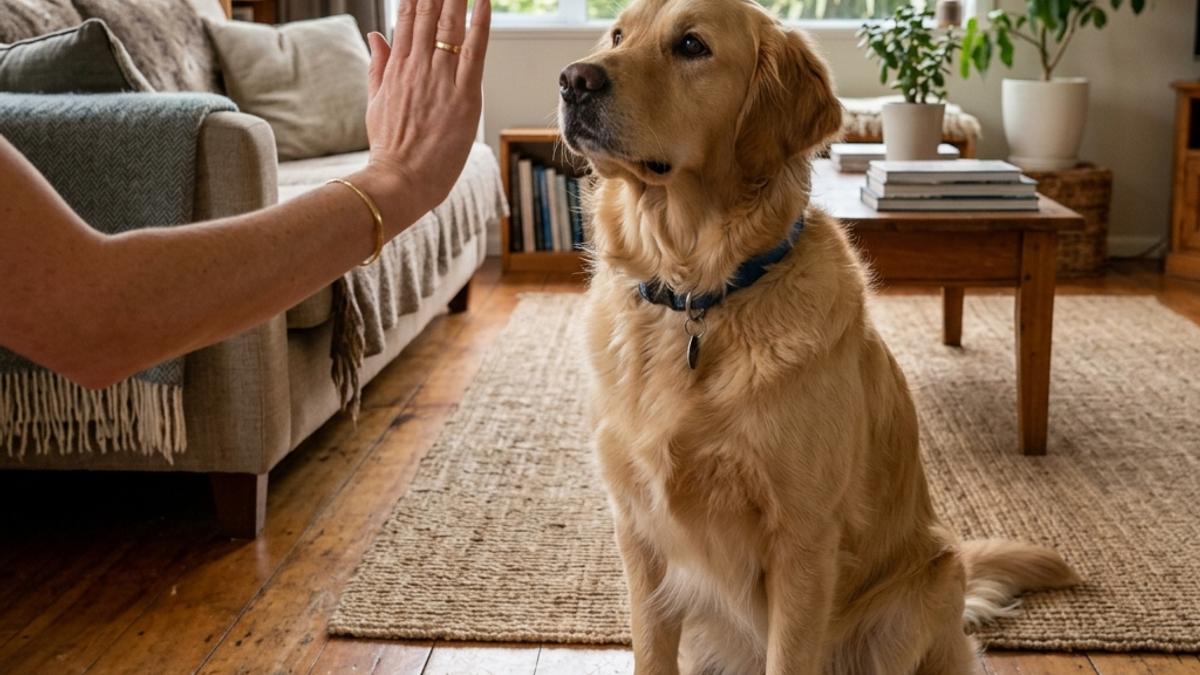
Ask for a sit or down. Say "stay" once, pause for one second, reward while your dog is still in position, then say a release word such as "free". Move together after the release so the word has meaning.
Repeat until your dog expects the reward for holding still. If they pop up, shorten the time and reward earlier.
Step 2: add duration before distance
Build from one second to two, three, five and ten. Vary the length so your dog does not count seconds and break at the same point. Reward calmly and keep your body language quiet.
Only after duration is reliable should you add a tiny step away. Step out, step back, reward, release. Do not call your dog out of every stay, or they may start anticipating movement.
Step 3: add real-life distractions
Practise with low-level distractions: a door handle moving, a lead lifted, a food bowl placed down, a visitor walking past. Keep the dog successful. If a distraction is too hard, make it smaller.
RSPCA dog training guidance and the AVSAB humane training position statement both support reward-based teaching, which is especially useful for stay because fear and pressure make many dogs fidgety.
When to get help
If your dog cannot settle, seems anxious, startles easily, guards doors or rushes people, get help from a qualified force-free trainer. Contact a NZ vet if restlessness is sudden or paired with pain, illness signs or night pacing.
Quick takeaways
- Build stay in three separate pieces: duration, distance and distraction.
- Reward the dog while they are still staying.
- Use a clear release word every time.
- Sudden restlessness or anxiety signs need a NZ vet or behaviour professional.
Related reading
References
- RSPCA, Training your dog, checked 2026-06-13: https://www.rspca.org.uk/adviceandwelfare/pets/dogs/training
- American Veterinary Society of Animal Behavior, Humane Dog Training Position Statement, checked 2026-06-13: https://avsab.org/wp-content/uploads/2021/08/AVSAB-Humane-Dog-Training-Position-Statement-2021.pdf
Important notice
*General dog training information for NZ owners. Sudden restlessness, pain signs, door guarding or escalating anxiety needs a NZ vet or qualified force-free professional.*
Free PetMall tools
Related guides
petmall.co.nz
Shop at PetMall
The products below are practical support items for your pet. PetMall ships across New Zealand.
- Dog FoodStart with food that matches your dog's life stage and activity level — and change brands slowly over 7–10 days.
- Dog TreatsTraining rewards and everyday treats — small, soft pieces work best for consistent reinforcement.
- Dog ToysA small rotation of chew, fetch, and puzzle toys usually works better than buying a large variety at once.
- Dog GroomingA gentle brush and the right shampoo make maintenance easier — especially for dogs that get muddy on walks.
- Leads & HarnessesComfort matters: padded contact points and adjustable fit help reduce rubbing on longer walks or tramping weekends.
- Flea & Worm TreatmentFor NZ conditions, look for protection that fits your routine (monthly vs longer-lasting) and your dog's weight range.