How to Teach Place to a Dog: NZ Mat Training Guide
How to teach place to a dog using mat training for visitors, kitchens, cafes, car trips and calm NZ home routines.
The quick answer: "place" teaches your dog to go to a mat or bed and settle there until released. It is one of the most useful everyday cues for NZ homes because it gives the dog a clear job when people arrive, dinner is cooking, children are moving around or everyone needs a calmer room.
Why place training helps
Place is not a punishment corner. It should feel like a safe, rewarding station. A good place cue can help with:
- visitors at the door
- kitchen safety
- cafe or picnic settling
- camping and bach trips
- young dogs learning to switch off
- dogs who hover around children with food
Build the rest of the training picture with Dog Training and Behaviour NZ, How to Teach Leave It NZ, Dog Recall Training NZ and How to Stop a Dog Barking NZ.
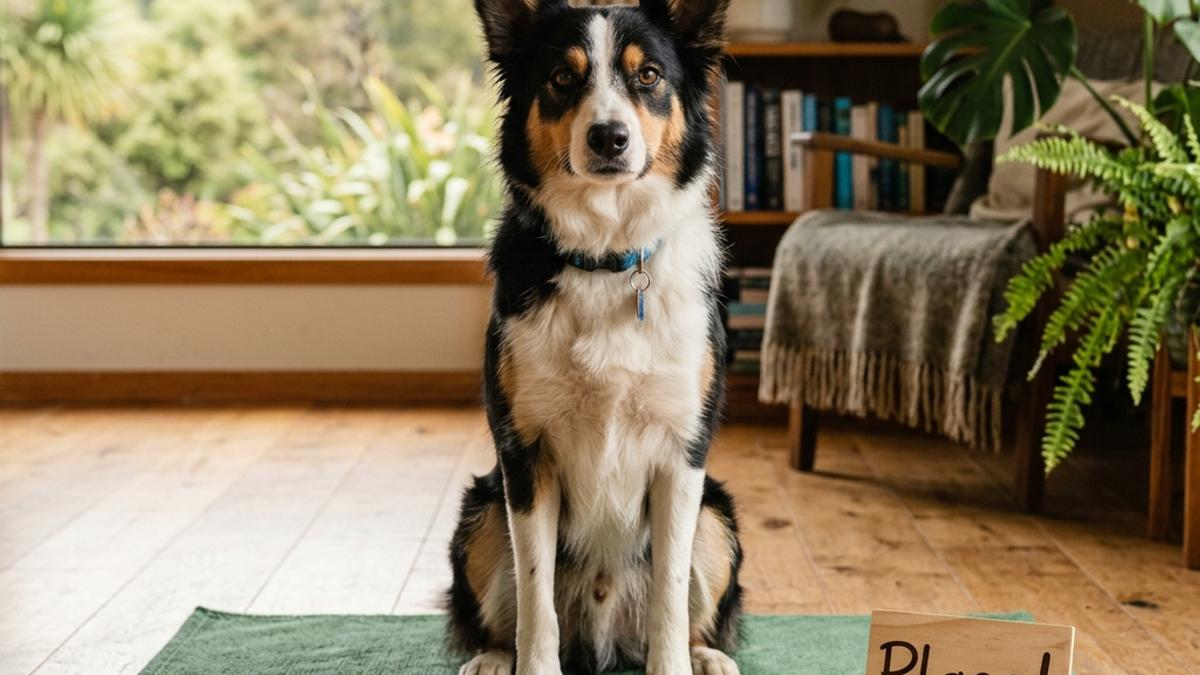
Step 1: make the mat valuable
Put the mat down and reward any interest: looking at it, stepping on it, standing on it, then lying on it. Toss the reward onto the mat so the mat predicts good things. When your dog is moving to it confidently, add the cue "place".
Keep early sessions short. End before the dog wanders off bored.
Step 2: add settling
Once the dog goes to the mat, wait for a sit or down, then reward. Build calm duration slowly. Reward on the mat, not after the dog gets up. Add a release word such as "free" so your dog knows when the job is finished.
If the dog pops up, make the next repetition easier. You are teaching a habit, not testing patience.
Step 3: use place in real life
Practise before visitors arrive, not during the biggest excitement of the week. Then add small distractions: you walking to the bench, a child passing, a knock sound, a lead being lifted. Reward often enough that the mat remains worthwhile.
RSPCA and AVSAB guidance supports reward-based training. Place training works best when the dog feels secure, not trapped or sent away in anger.
When to get help
If your dog guards the mat, growls at people nearby, cannot relax, or reacts strongly to visitors, talk to a qualified force-free trainer or veterinary behaviour professional. Sudden restlessness or behaviour change also needs a NZ vet check.
Quick takeaways
- Place means go to a mat or bed and settle until released.
- Build value for the mat before using it around visitors.
- Reward on the mat and use a clear release word.
- Guarding, fear or sudden behaviour change needs professional help.
Related reading
- Dog Training and Behaviour NZ
- How to Teach Leave It NZ
- Dog Recall Training NZ
- How to Stop a Dog Barking NZ
References
- RSPCA, Training your dog, checked 2026-06-13: https://www.rspca.org.uk/adviceandwelfare/pets/dogs/training
- American Veterinary Society of Animal Behavior, Humane Dog Training Position Statement, checked 2026-06-13: https://avsab.org/wp-content/uploads/2021/08/AVSAB-Humane-Dog-Training-Position-Statement-2021.pdf
Important notice
*General dog training information for NZ owners. Visitor aggression, guarding, panic, sudden restlessness or major behaviour change needs a NZ vet or qualified behaviour professional.*
Free PetMall tools
Related guides
petmall.co.nz
Shop at PetMall
The products below are practical support items for your pet. PetMall ships across New Zealand.
- Dog FoodStart with food that matches your dog's life stage and activity level — and change brands slowly over 7–10 days.
- Dog TreatsTraining rewards and everyday treats — small, soft pieces work best for consistent reinforcement.
- Dog ToysA small rotation of chew, fetch, and puzzle toys usually works better than buying a large variety at once.
- Dog GroomingA gentle brush and the right shampoo make maintenance easier — especially for dogs that get muddy on walks.
- Leads & HarnessesComfort matters: padded contact points and adjustable fit help reduce rubbing on longer walks or tramping weekends.
- Flea & Worm TreatmentFor NZ conditions, look for protection that fits your routine (monthly vs longer-lasting) and your dog's weight range.