Exotic Shorthair vs British Shorthair NZ: Round-Faced Cats Compared
Exotic Shorthair or British Shorthair for your NZ home? Both are calm, round-faced indoor cats — but their faces, grooming needs and health profiles differ significantly. Find out which suits you.
The Exotic Shorthair and the British Shorthair are both round-faced, plush-coated, calm indoor cats popular across New Zealand. They're often compared because they look somewhat similar at first glance — stocky build, large round eyes, dense coat. But their faces, health considerations, and personalities differ in ways that matter for NZ cat owners.
The core difference
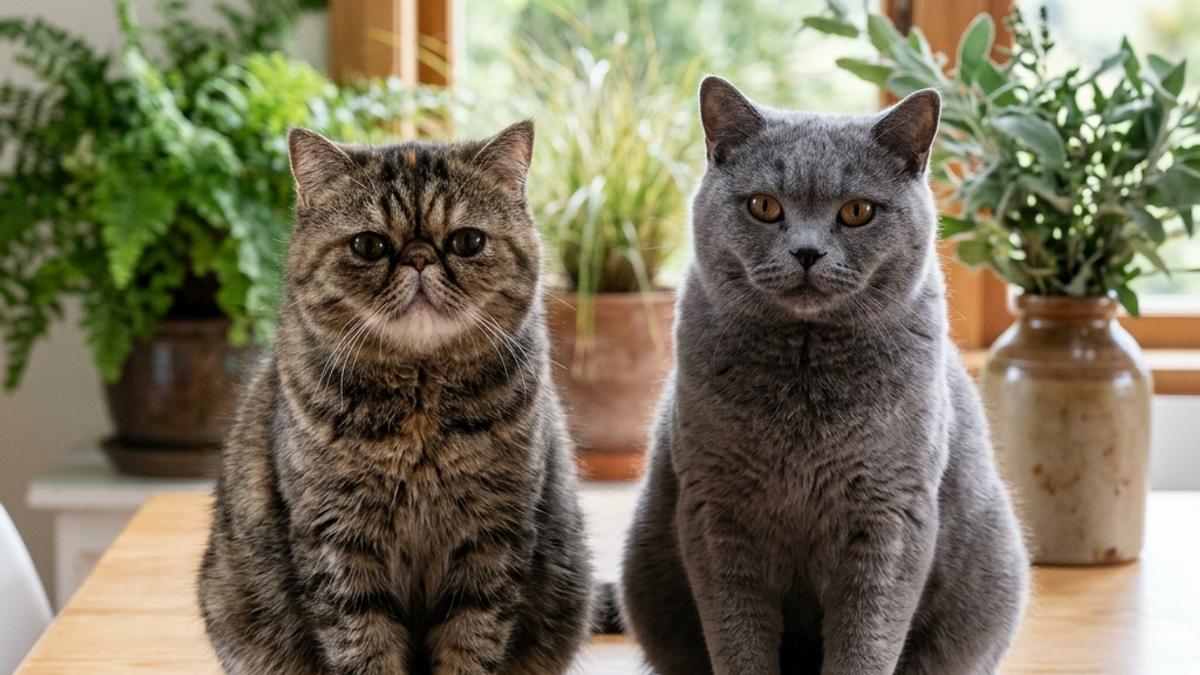
The Exotic Shorthair is essentially a short-haired Persian — same flat, "smushed" face, same gentle and clingy temperament, but without the demanding coat maintenance of the Persian. The British Shorthair has a rounder but not flat face, is more independent, and has a simpler coat that requires minimal upkeep. The Exotic's flat face brings health considerations not present in the British Shorthair.
Side-by-side overview
| Exotic Shorthair | British Shorthair | |
|---|---|---|
| Weight | 3–6 kg | 4–8 kg |
| Lifespan | 12–15 years | 12–17 years |
| NZ Price (breeder) | $1,200–$3,000 | Varies — verify with NZ breeders |
| NZ Price (adoption) | $150–$350 via SPCA | $150–$350 via SPCA (rare) |
| Energy level | ★★☆☆☆ | ★★☆☆☆ |
| Trainability | ★★★☆☆ | ★★★☆☆ |
| Grooming needs | ★★★☆☆ | ★☆☆☆☆ |
| Apartment suitability | ★★★★★ | ★★★★★ |
| Friendliness | ★★★★★ | ★★★★☆ |
| Good with kids | ★★★★★ | ★★★★☆ |
| Good with other pets | ★★★★☆ | ★★★☆☆ |
*Scores from PetMall breed profiles (1–5).*
The face difference: flat (brachycephalic) vs round
This is the most important distinction for prospective owners.
The Exotic Shorthair has a flat, brachycephalic (shortened skull) face — the same face type as the Persian. This is an extreme facial feature that causes real health problems in many individuals:
- Breathing difficulties: The shortened skull compresses the airways. Many Exotics snore, have audible breathing, and may struggle with exercise or heat.
- Tear duct overflow: The shortened skull distorts the tear duct path. Many Exotics have constant eye discharge that must be wiped daily.
- Dental crowding: Compressed jaw leads to crowded teeth and higher rates of dental disease.
- Brachycephalic Obstructive Airway Syndrome (BOAS) in severe cases requires surgical intervention.
The extent of these issues depends on the degree of flatness — cats bred to less extreme standards may have fewer problems. However, any Exotic Shorthair purchased in NZ should be assessed for breathing comfort, and buyers should avoid purchasing kittens from parents with clearly compromised breathing.
The British Shorthair has a round head, but it's not flat — the nose has some length (a gentle, broad nose, not a pushed-in one). As a result, British Shorthairs generally have better breathing, fewer eye discharge issues, and lower rates of BOAS-related problems. They do have some tendency to heart disease (hypertrophic cardiomyopathy, HCM) that breeders should test for.
Personality
Exotic Shorthair: Exceptionally affectionate, people-dependent, and gentle. Exotics love to be near their owners at all times — but unlike the Persian, they're curious and slightly more active, willing to play with toys and engage with their environment. They're described as the "easy Persian" — all the warmth, none of the coat work. They're the highest-scoring breed in our profiles for friendliness (★★★★★), and their consistent gentleness makes them excellent with children.
British Shorthair: Calm, dignified, and affectionate — but more on their own terms than the Exotic. British Shorthairs are loyal companions who prefer to be near you rather than on you. They're generally content sitting alongside rather than on laps, making them a good choice for people who want a cat that's present without being clingy. They're patient and reliable with children and low-key with visitors.
Grooming: a real advantage for the British Shorthair
The grooming difference here is significant.
British Shorthair: Its dense, plush coat requires only weekly brushing — one of the lowest grooming demands of any medium-sized cat. During seasonal shedding, increase to 2–3 times weekly. No professional grooming required. This is one of the genuine practical advantages of the BSH for busy NZ households.
Exotic Shorthair: Despite being called "shorthaired," the Exotic's dense double coat is more demanding than the British Shorthair's. The coat sheds more than expected and needs brushing 2–3 times a week. More importantly, the daily eye discharge cleaning is a non-negotiable commitment. Failing to wipe the area under the eyes daily leads to tear staining, skin irritation, and potential infection. In NZ's humidity, this must be taken seriously.
Indoor-only living
Both breeds are recommended as indoor-only in NZ. Their calm, trusting temperament makes them poorly equipped for outdoor risks. Both adapt well to apartment life and make excellent indoor companions. See our indoor vs outdoor cat NZ guide for more context.
Health considerations
Both breeds score ★★☆☆☆ in health profiles, but the nature of the health risks differs:
- Exotic Shorthair: Brachycephalic airway issues, eye discharge and associated skin infections, dental crowding, polycystic kidney disease (PKD — ask for DNA test results). Lifespan slightly shorter (12–15 years) vs BSH.
- British Shorthair: Hypertrophic cardiomyopathy (HCM) — ask for cardiac screening of parent cats. Lifespan up to 17 years with good care.
Always ask breeders for health test documentation. See our NZ vet costs guide for realistic ongoing cost expectations.
Who each breed suits in NZ
Exotic Shorthair suits you if:
- You love the Persian look but not the Persian's coat maintenance demands
- You want the most affectionate, warmly bonded indoor cat available
- You can commit to daily eye cleaning and are aware of breathing health considerations
- You purchase from a breeder who prioritises open nostrils and good airway function
British Shorthair suits you if:
- You want a low-maintenance, easy-grooming indoor cat
- You prefer a calm, dignified companion that doesn't demand constant attention
- You want a longer-lived breed (to 17 years) with simpler health management
- You want an independent but loyal family cat
Both suit you if:
- You want a calm, apartment-friendly NZ indoor cat
- You have children or other pets and want a breed known for patience
- You want a breed that doesn't require intensive grooming
For more cat options, see our best first cat breeds NZ guide and use the Find a Breed tool.
Quick takeaways
- Exotic Shorthair: flat face (brachycephalic), daily eye cleaning required, warmer and more clingy personality
- British Shorthair: round but not flat face, minimal grooming, more independent, longer-lived
- Exotic's flat face brings real health implications — buy only from health-aware breeders
- Both excel as calm, indoor apartment cats for NZ households
- British Shorthair is the lower-maintenance choice overall
See also
- Exotic Shorthair breed profile
- British Shorthair breed profile
- British Shorthair vs Domestic Shorthair NZ
- Ragdoll vs British Shorthair NZ
- Indoor vs outdoor cat NZ
- Find a Breed
---
Sources
- https://gccfcats.org/breeds/exotic-shorthair/
- https://gccfcats.org/breeds/british-shorthair/
- https://www.merckvetmanual.com/urinary-system/congenital-and-inherited-anomalies-of-the-urinary-system/renal-anomalies-in-animals
- https://www.mpi.govt.nz/bring-send-to-nz/pets-travelling-to-nz/bringing-cats-and-dogs-to-nz/
Free PetMall tools
Related guides
petmall.co.nz
Shop at PetMall
The products below are practical support items for your pet. PetMall ships across New Zealand.
- Cat FoodStart with food that matches your cat's life stage — change brands slowly over 7–10 days to avoid digestive upset.
- Cat LitterClumping or crystal, most cats prefer an unscented litter and a clean tray — one tray per cat plus one spare is the NZ rule of thumb.
- Cat TreatsGreat for bonding and training — keep treats under 10% of daily calories to protect your cat's waistline.
- Cat ToysA small rotation of toys (feather wand, puzzle feeder, and comfort toy) usually works better than buying many at once.
- Cat GroomingRegular brushing cuts hairballs and shedding — essential for long-haired breeds like Ragdolls and British Longhairs.
- Flea & Worm TreatmentFor NZ conditions, choose protection that fits your cat's weight and lifestyle (indoor vs outdoor) and keep it regular.