Chameleons in NZ: Legal Rules & 7 Setup Checks
Chameleon NZ guide: learn the legal rules, why care is demanding, and what enclosure, lighting, diet, and vet planning involve before you buy.
Can You Keep a Chameleon in NZ?
For most New Zealanders, the direct answer is generally no, not for ordinary private pet ownership. New Zealand has some of the strictest biosecurity and environmental protection laws in the world. Chameleons are not native species and are classified as "new organisms." This means their import and keeping are tightly controlled. While you might see chameleons in approved zoos or research facilities, this doesn't translate to them being available for general purchase as pets. Always assume a chameleon in NZ is not legal for private keeping unless you have thoroughly verified its specific legal status.
NZ Legal Framework for Chameleons (MPI / EPA / Council)
The legal landscape for keeping exotic animals like chameleons in New Zealand is complex and governed by several authorities.
Firstly, the Environmental Protection Authority (EPA) is responsible for approving "new organisms" for release or import into New Zealand under the Hazardous Substances and New Organisms (HSNO) Act. Chameleons, being non-native, fall into this category. For a chameleon species to be legally kept by the public, it would need specific EPA approval, which is a rigorous process focused on environmental impact and biosecurity risks. Currently, there are no chameleon species approved for general private ownership in NZ. You can find more information on new organisms via the EPA new organisms guidance.
Secondly, the Ministry for Primary Industries (MPI) manages biosecurity and import health standards. Even if the EPA were to approve a species, MPI would then set strict import health standards that must be met for any animal to enter the country. These standards are incredibly stringent and often designed for specific, contained purposes like zoos or scientific research, not for individual pet owners. MPI's focus is preventing the introduction of pests and diseases that could harm New Zealand's unique ecosystem and agricultural sector. Refer to MPI import health standards for details on their processes.
Finally, local councils can also have bylaws regarding animal keeping. While less likely to be the primary barrier for chameleons given the national restrictions, it's another layer of regulation to consider for any exotic pet.
It's crucial to understand that approved pathways for institutions are vastly different from ordinary private pet ownership. For more on the broader context of exotic pets in New Zealand, you can read our guide on exotic pets NZ banned/restricted. The default assumption should be that chameleons are not legal for private keeping in NZ.
Why Chameleons Are Demanding Pets Even Where Legal
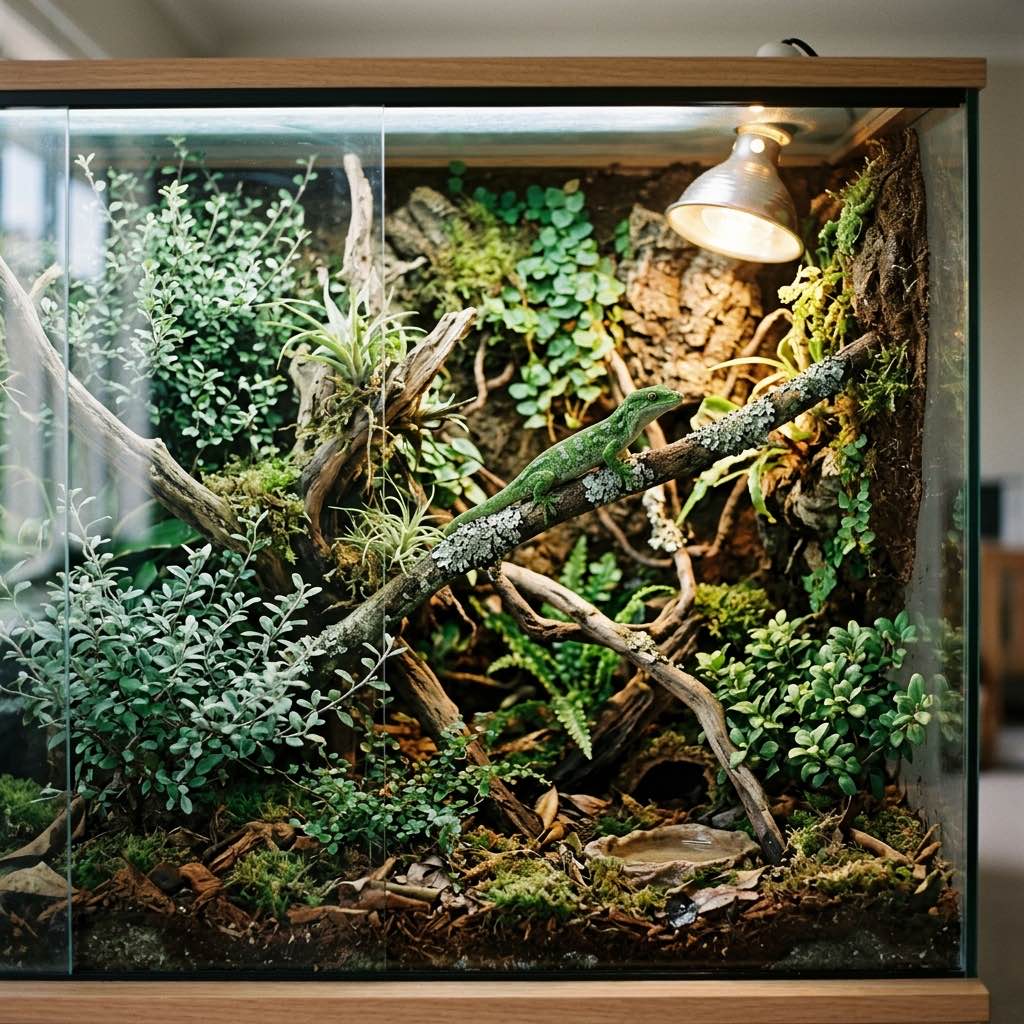
Even in countries where keeping chameleons is legal, they are considered advanced pets due to their highly specialised care requirements. They are not suitable for beginners and demand a significant commitment of time, knowledge, and resources.
One of the primary challenges is their extreme sensitivity to environmental conditions. Chameleons require precise temperature and humidity gradients, often needing a warm basking spot, a cooler ambient temperature, and specific humidity levels that fluctuate throughout the day. Incorrect conditions can quickly lead to stress, illness, and death. Unlike some hardier reptiles such as a leopard gecko, chameleons do not tolerate deviations well.
Their dietary needs are also complex. Chameleons are insectivores, meaning they only eat live insects. These insects must be "gut-loaded" with nutritious food before being offered and dusted with calcium and multivitamin supplements on a strict schedule. This requires consistent access to a variety of high-quality feeder insects, which can be an ongoing expense and effort.
Hydration is another critical aspect. Chameleons typically don't drink from standing water. Instead, they need water droplets from misting or a drip system, mimicking dew or rain. This often means multiple misting sessions daily or an automated system.
Furthermore, chameleons are highly susceptible to stress. They need a quiet, stable environment away from household commotion, and they generally do not tolerate handling well. They are observational pets, best admired from a distance. Finding a specialist reptile veterinarian in New Zealand can also be challenging and expensive, making routine check-ups or emergency care a significant hurdle. Their lifespan, typically 5-10 years, means this demanding care is a long-term commitment.
Realistic Setup Requirements: Enclosure, Lighting, Diet
Should you ever find yourself in a situation where keeping a chameleon in NZ is legally possible (which, as discussed, is highly unlikely for private individuals), understanding their demanding setup is crucial. The investment in time, money, and effort is substantial.
Enclosure: Chameleons require large, tall enclosures to accommodate their arboreal (tree-dwelling) nature. A screen or mesh enclosure is almost always preferred over glass tanks, as it provides essential ventilation to prevent respiratory infections. For an adult Veiled or Panther chameleon, a minimum size of 60cm x 60cm x 120cm (length x width x height) is recommended, with larger being better. The enclosure should be furnished with numerous climbing branches of varying diameters, allowing your chameleon to move and thermoregulate. Live, non-toxic plants like Ficus benjamina, Pothos, or Umbrella Plants are excellent for providing cover, climbing opportunities, and helping maintain humidity. Avoid loose substrates like bark or soil, as they can harbour bacteria and be accidentally ingested. Paper towels or a bare bottom are safer options.
Lighting: This is perhaps the most critical and complex aspect of chameleon care. You'll need three distinct types of lighting:
- UVB Lighting: Essential for calcium metabolism and preventing metabolic bone disease. A high-quality linear T5 HO (High Output) UVB bulb, typically 5-10% UVB output, is necessary. This bulb should cover about two-thirds of the enclosure length and be placed at an appropriate distance from the basking spot, usually 20-30cm, depending on the bulb's strength and the mesh type. Replace UVB bulbs every 6-12 months, as their UVB output diminishes over time even if they still glow.
- Heat Lighting: A basking spot is vital for thermoregulation. This is typically provided by an incandescent bulb or a ceramic heat emitter, placed in a dome fixture above the screen top. The basking spot temperature should be around 28-32°C, with an ambient temperature gradient down to 22-26°C in cooler areas of the enclosure. A thermostat is crucial to prevent overheating.
- Daylight/Full Spectrum LED: While not strictly for heat or UVB, a full spectrum LED light can enhance plant growth, provide a natural light cycle, and improve the chameleon's colouration and overall well-being.
All lighting should be on a 12-hour on/12-hour off cycle, controlled by timers.
Diet: Chameleons are insectivores and require a varied diet of live, gut-loaded insects. Common feeder insects include crickets, locusts, and, where legal and available, dubia roaches. Mealworms and superworms can be offered sparingly as treats due to their higher fat content. "Gut-loading" is paramount: feed the feeder insects a nutritious diet (e.g., fresh vegetables, commercial gut-load formulas) for at least 24 hours before offering them to your chameleon. Supplements are also essential:
- Calcium with D3: Dust insects with this supplement a few times a week. Vitamin D3 is necessary for calcium absorption, facilitated by UVB light.
- Multivitamin: Dust insects with a reptile-specific multivitamin once every fortnight.
Juvenile chameleons typically eat daily, while adults can be fed every other day. Always remove uneaten insects to prevent them from stressing your chameleon.
Monitoring and Hydration: Digital thermometers and hygrometers are essential for monitoring temperature and humidity levels within the enclosure. Chameleons need high humidity (60-80%) at certain times, often achieved through manual misting 2-3 times a day or an automated misting/drip system. They drink water droplets, not from a bowl.
Cost Estimates (NZD): The initial setup costs for a chameleon are significant:
- Enclosure: $300 - $800+ for a suitable size and quality.
- Lighting (UVB, Heat, Fixtures, Timers): $300 - $600+ for quality components.
- Decor (Branches, Live Plants): $100 - $300+.
- Misting/Drip System: $100 - $400+ for a reliable unit.
- Thermometers/Hygrometers: $50 - $100.
- Ongoing Costs: Feeder insects and supplements can easily be $50 - $100 per month. Veterinary consultations for exotic pets can start from $150, with treatments adding much more.
Should You Get a Chameleon? Decision Checklist
Before even considering a chameleon, especially given the legal hurdles in NZ, ask yourself these critical questions:
- Legal Status: Have you unequivocally verified that the specific chameleon species you are considering is legal for private ownership in New Zealand? This is the absolute first and most important step. Without this, all other considerations are moot.
- Commitment: Are you prepared for a 5-10 year commitment? Chameleons have a decent lifespan, and their care needs do not diminish over time.
- Time Investment: Can you dedicate daily time to misting, feeding, cleaning, and meticulously monitoring temperature and humidity levels? Chameleons are not low-maintenance pets.
- Knowledge Base: Have you thoroughly researched their highly specific needs regarding temperature, humidity, UVB, diet, and stress factors? A superficial understanding is not enough.
- Space Requirements: Do you have adequate space in a quiet, stable area of your home for a large, tall enclosure? Remember, they are easily stressed by commotion.
- Financial Budget: Can you comfortably afford the significant initial setup costs, which can easily exceed $1000-$2000, plus ongoing expenses for food, supplements, electricity, and potentially costly specialist veterinary care?
- Veterinary Access: Is there a qualified reptile veterinarian accessible in your area? This is a crucial consideration for any exotic pet in New Zealand, as specialist vets can be few and far between.
- Alternative Pets: Have you explored other, more commonly kept and legally available reptiles that might offer a similar unique pet experience with less demanding legal and husbandry requirements? For example, a bearded dragon or a leopard gecko care NZ guide can show you options that are much easier to keep.
If you cannot confidently answer yes to all these questions, especially the legal one, a chameleon is not the right pet for you.
Setting Up: What You'll Need
Assuming, for a moment, that you have somehow legally acquired a chameleon in NZ, here's a checklist of essential items for their setup:
- Tall, Screen Enclosure: Minimum 60x60x120cm for an adult, providing ample ventilation.
- UVB Lighting System: T5 HO linear fixture with a 5-10% UVB bulb, appropriate for the enclosure size.
- Heat Lamp Fixture & Bulb: For creating a basking spot with the correct temperature.
- Digital Thermometer/Hygrometer: To accurately monitor temperature and humidity gradients.
- Branches & Vines: A variety of sturdy, non-toxic climbing structures.
- Live, Non-Toxic Plants: Such as Ficus benjamina or Pothos, for cover and humidity.
- Misting System or Drip System: To provide essential hydration.
- Nutritional Supplements: Calcium with D3 and a reptile multivitamin.
- Feeder Insects: A reliable, ongoing source of gut-loaded crickets, locusts, etc.
- Timers: For all lighting to maintain a consistent 12-hour day/night cycle.
Final Thoughts
Keeping a chameleon in NZ is a significant undertaking, primarily due to the complex legal landscape and the species' demanding care requirements. Thorough research, understanding the law, and preparing for a substantial commitment are essential before considering one of these unique reptiles as a pet. For most New Zealanders, the legal barriers alone make private chameleon ownership an impossibility.
---
Reference sources
- MPI, Bringing pets to NZ other than cats and dogs, checked 2026-06-04: https://www.mpi.govt.nz/bring-send-to-nz/pets-travelling-to-nz/bringing-pets-to-nz-other-than-cats-and-dogs/
- MPI, Stopping pets becoming pests, checked 2026-06-04: https://www.mpi.govt.nz/biosecurity/biosecurity-and-your-pets/
- DOC, New Zealand lizards, checked 2026-06-04: https://www.doc.govt.nz/nature/native-animals/reptiles-and-frogs/lizards/
- DOC, Holding lizards in captivity, checked 2026-06-04: https://www.doc.govt.nz/get-involved/apply-for-permits/interacting-with-wildlife/holding-lizards-in-captivity/
- New Zealand Legislation, Biosecurity Act 1993, checked 2026-06-04: https://www.legislation.govt.nz/act/public/1993/95/en/latest/
- New Zealand Legislation, Wildlife Act 1953, checked 2026-06-04: https://www.legislation.govt.nz/act/public/1953/0031/latest/DLM277093.html
Related guides
petmall.co.nz
Shop at PetMall
The products below are practical support items for your pet. PetMall ships across New Zealand.
- Food & FeedingMatch diet to species — feeders, supplements, and the right calcium/D3 dusting keep NZ reptiles healthy.
- Heating & LightingUVB and a proper heat gradient are the foundation of reptile health — get this right before anything else.
- Reptile SuppliesSubstrate, hides, and enclosure gear — stable conditions are the foundation of reptile health in NZ.