Pet Breed Guide NZ
Crested Gecko
Can you get a crested gecko in New Zealand? Not as far as we can find. Crested geckos are absent from the New Zealand Herpetological Society's list of exotic reptiles kept here, reptiles cannot be imported as pets, and we could find no NZ breeder or retailer offering them. Treat any local "crested gecko for sale" listing with extreme caution. If you want a lizard that is kept in NZ, look at leopard geckos, bearded dragons or blue-tongued skinks instead.
Photo Gallery
NZ Ownership Snapshot
Prohibited in NZNot as far as we can find. Crested geckos are absent from the New Zealand Herpetological Society's list of exotics commonly held here; the society says it supports reptiles and amphibians that may be legally kept. NZ Customs says you can't bring in snakes and other reptiles (except for zoos), and MPI's pet import rules say the same. Under section 2A of the HSNO Act 1996 a species not present in New Zealand immediately before 29 July 1998 is a new organism, and the EPA's 2026 list of animals present in New Zealand does not name the crested gecko (the EPA says the list is not complete). Crested geckos are not on HSNO Schedule 2, which, for reptiles, covers snakes and venomous species. We could find no NZ breeder or retailer offering them. Checked 6 November 2026.
Breed Snapshot
- Size
- small
- Lifespan
- Lifespan guidance is covered in the profile summary.
- Origin
- New Caledonia
- Care Focus
- Fetching details...
- NZ Price
- Not available in New Zealand as far as we can find: we could find no NZ breeder or retailer offering them, and reptiles cannot be imported as pets.
NZ Lifestyle Fit
Not as far as we can find. Crested geckos are absent from the New Zealand Herpetological Society's list of exotics commonly held here; the society says it supports reptiles and amphibians that may be legally kept. NZ Customs says you can't bring in snakes and other reptiles (except for zoos), and MPI's pet import rules say the same. Under section 2A of the HSNO Act 1996 a species not present in New Zealand immediately before 29 July 1998 is a new organism, and the EPA's 2026 list of animals present in New Zealand does not name the crested gecko (the EPA says the list is not complete). Crested geckos are not on HSNO Schedule 2, which, for reptiles, covers snakes and venomous species. We could find no NZ breeder or retailer offering them. Checked 6 November 2026.
About the Crested Gecko
Can you get a crested gecko in New Zealand? Not as far as we can find. Crested geckos are absent from the New Zealand Herpetological Society's list of exotic reptiles kept here, reptiles cannot be imported as pets, and we could find no NZ breeder or retailer offering them. This page explains the species and the NZ legal position; it is not a care guide. For the wider picture, see our NZ reptile legality guide.
The crested gecko (Correlophus ciliatus, formerly Rhacodactylus ciliatus) is a gecko from New Caledonia in the family Diplodactylidae. It is also called the eyelash gecko: the name comes from the Latin cilium, eyelash, after the scales above the eye and along the back. The Reptile Database records that it was thought possibly extinct in 1993 and was rediscovered on the Île des Pins in the 1990s. Since then it has become one of the most popular lizard pets in the world, bred in at least the tens of thousands, while remaining rare in the wild.
What They Look Like
The Reptile Database describes the genus as large-bodied geckos, up to 135 mm from snout to vent, with a tail about 80 to 92 percent of that length. A pair of crests of enlarged triangular scales runs from behind the eyes onto the back, and every toe has expanded, undivided pads underneath. Colours range through brown, olive, yellow, red and orange, with or without contrasting markings. Crested geckos lay eggs.
Life in New Zealand
Crested geckos are absent from the New Zealand Herpetological Society's list of exotics commonly held here; the society says it supports reptiles and amphibians that may be legally kept. NZ Customs says you can't bring in snakes and other reptiles (except for zoos), and MPI's pet import rules say the same. Under the HSNO Act 1996, a species that was not present in New Zealand immediately before 29 July 1998 is a new organism, and the EPA's 2026 list of animals present in New Zealand does not name the crested gecko (the EPA says the list is not complete). We could find no NZ breeder or retailer offering them. Treat any local "crested gecko for sale" listing with extreme caution: an advert is not evidence that the animal is here legally.
What to Consider Instead
Three lizards are on the NZHS list and on the EPA's list of animals present in New Zealand: the leopard gecko, bearded dragons and the blue-tongued skink. NZHS says leopard geckos live 6 to 10 years and can reach 20 in captivity, gives 10 to 20 years for bearded dragons, and 10 to 15 years in captivity for blue-tongued skinks. Regional rules apply to some of them: Auckland Council says you must not breed, distribute, release or sell blue-tongued skinks or eastern bearded dragons in its region. Read our NZ reptile legality guide before choosing.
Sources
- The Reptile Database. Correlophus ciliatus, checked 2026-11-06: https://reptile-database.reptarium.cz/species?genus=Correlophus&species=ciliatus
- New Zealand Herpetological Society. Exotic pets, checked 2026-11-06: https://www.reptiles.org.nz/herpetofauna/exotic-pets
- NZ Customs Service. Bringing pets and animals into New Zealand, checked 2026-11-06: https://www.customs.govt.nz/travel-to-and-from-new-zealand/move-to-new-zealand-permanently/import-pets-and-animals
- Ministry for Primary Industries. Bringing pets to NZ (other than cats and dogs): https://www.mpi.govt.nz/bring-send-to-nz/pets-travelling-to-nz/bringing-pets-to-nz-other-than-cats-and-dogs
- New Zealand Legislation. Hazardous Substances and New Organisms Act 1996, section 2A, checked 2026-11-06: https://www.legislation.govt.nz/act/public/1996/0030/latest/DLM382982.html
- New Zealand Legislation. Hazardous Substances and New Organisms Act 1996, Schedule 2 and section 25(2), checked 2026-11-06: https://www.legislation.govt.nz/act/public/1996/0030/latest/DLM386556.html
- Environmental Protection Authority. Animals present in New Zealand (as of 1 April 2026), checked 2026-11-06: https://www.epa.govt.nz/assets/Uploads/Documents/New-Organisms/Lists/List-of-animals-2026.pdf
- Auckland Council. Blue-tongued skink, checked 2026-11-04: https://www.tiakitamakimakaurau.nz/protect-and-restore-our-environment/pests-in-auckland/pest-search/tilsci/
- Auckland Council. Coastal/eastern bearded dragon, checked 2026-11-04: https://www.tiakitamakimakaurau.nz/protect-and-restore-our-environment/pests-in-auckland/pest-search/ampbar/
Fun Facts
Fact 1
The crested gecko was thought possibly extinct in 1993 and was rediscovered on New Caledonia's Île des Pins in the 1990s (The Reptile Database).
Fact 2
Its scientific name comes from the Latin cilium, meaning eyelash, after the scales above its eyes and along its back.
Fact 3
It is one of the most popular lizard pets in the world, bred in at least the tens of thousands, yet it remains rare in the wild.
Related Breeds & Species
PetMall visual placeholder
Chinese Fire-bellied Newt
A small, cool-water aquatic newt from China. Notable for being smaller and more fully aquatic than the Japanese species. Requires low-flow sponge filters, cool temperatures, and zero handling due to skin toxins.
PetMall visual placeholder
Japanese Fire-bellied Newt
A small, cool-water semi-aquatic newt from Japan. Famous for its bright orange belly and warning coloration. Requires a low-flow paludarium, cool temperatures, and zero handling due to mild skin toxins.
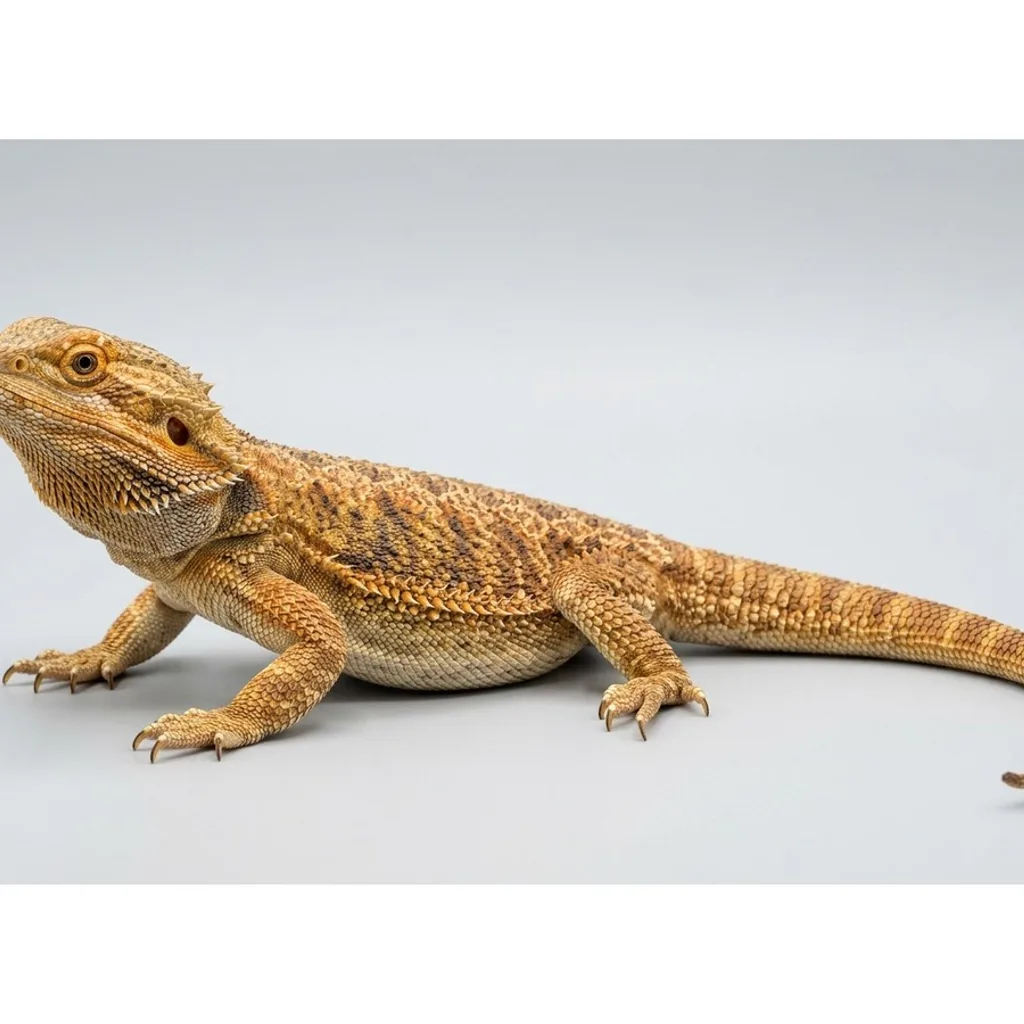
Bearded Dragon
Bearded dragons are one of the small number of non-native lizards legally kept in New Zealand. They are daytime-active and genuinely handleable, but they are also the most equipment-hungry of the common pet lizards: an adult needs roughly a 120x60x60cm vivarium, a 38-42°C basking spot and full-spectrum UVB. Skimp on the UVB and metabolic bone disease is the usual outcome. Typical lifespan is 10-15 years.
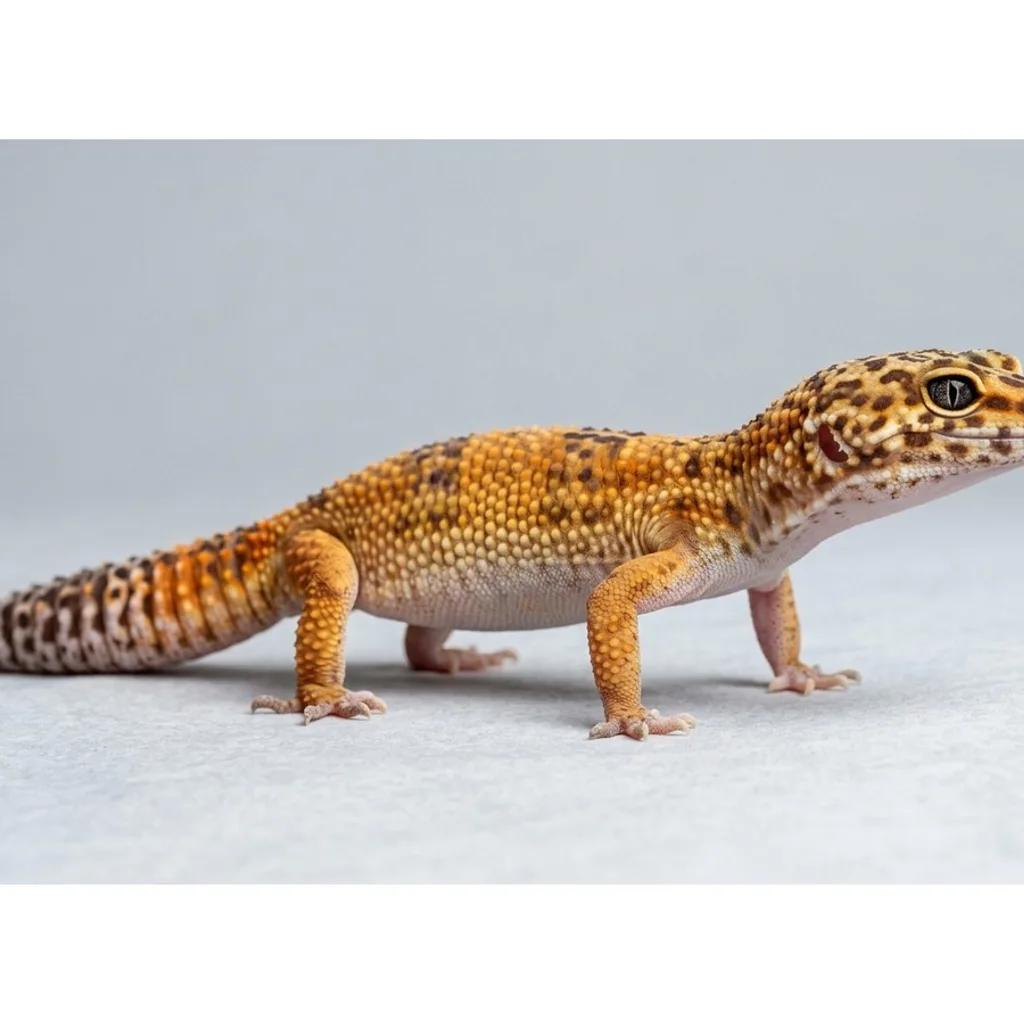
Leopard Gecko
Leopard geckos are legal to keep in New Zealand and among the exotic lizards commonly held here. They live on the ground, are most active at dusk and dawn, and eat live insects about every 2-3 days as adults. The New Zealand Herpetological Society gives a life span of 6-10 years that can reach 20 years in captivity, so plan for a long commitment.
PetMall visual placeholder
Eastern Long-necked Turtle (Snakeneck Turtle)
An active, freshwater carnivorous turtle native to Australia. Notable for its snake-like long neck. Requires large aquatic tanks, heavy filtration, a dry basking dock, and specialized handling.
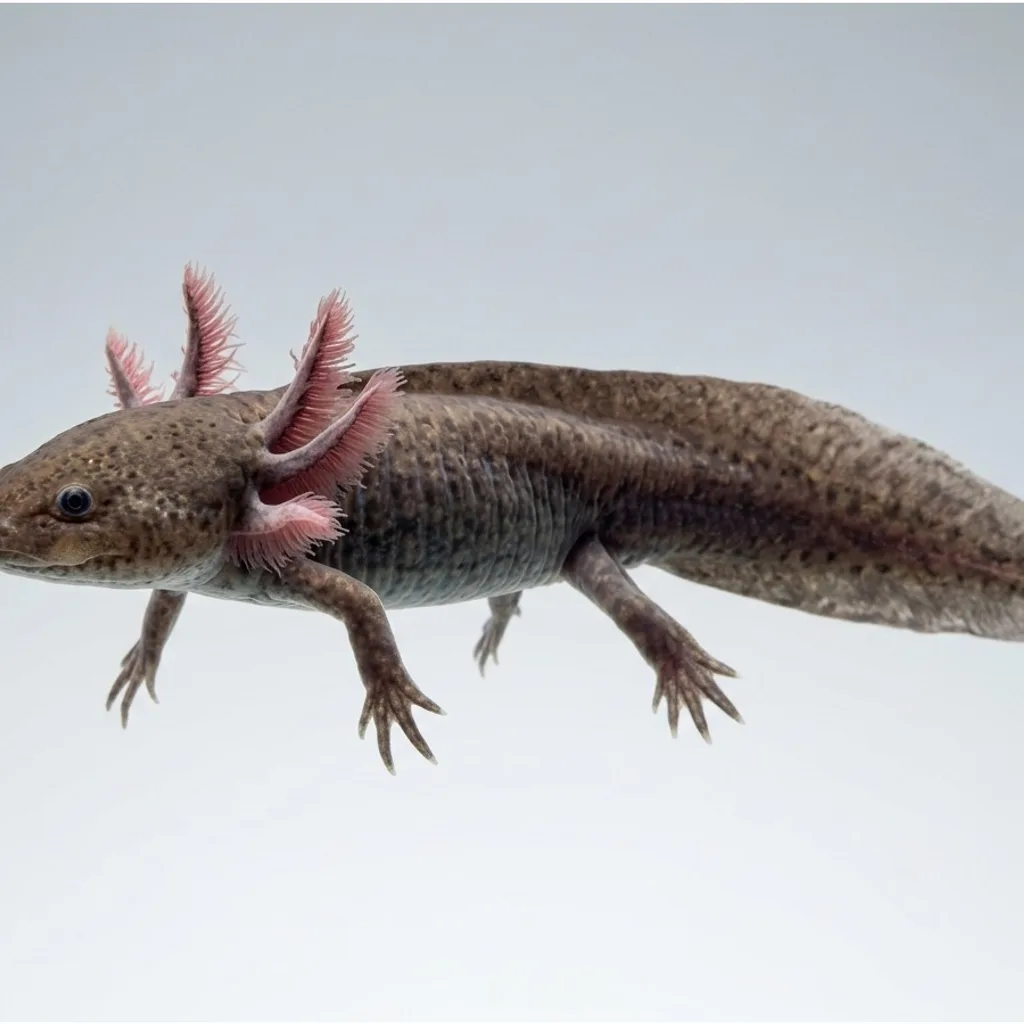
Axolotl (Mexican Walking Fish)
Axolotls are neotenic, fully aquatic salamanders native to Mexico. Famous for their branch-like external gills and smiling expressions, they are popular, low-maintenance aquarium pets in NZ.