Bengal vs Abyssinian NZ: Which Athletic, Active Cat Breed Is Right for You?
Bengal or Abyssinian? Both are energetic, intelligent NZ cats that need engagement. Compare appearance, temperament, noise level and suitability for NZ apartments and homes.
If you want a cat that actually does things — climbs, explores, plays and actively engages with its environment — you're looking at one of two standout options in New Zealand: the Bengal or the Abyssinian. Both are highly active, intelligent and visually striking. They are also both genuinely high-maintenance in terms of stimulation requirements, and neither is suitable for owners who want a quiet lap cat.
Quick comparison
| Bengal | Abyssinian | |
|---|---|---|
| Build | Medium-large, muscular | Medium, lithe and athletic |
| Coat | Short, dense, wild-pattern spots/rosettes | Short, ticked tabby coat, warm ruddy/cinnamon/blue |
| Energy level | Very high | Very high |
| Talkativeness | Moderate — chirps and chatters | Moderate — soft and musical |
| Independence | Moderate | Moderate — curious but self-directed |
| Good with kids? | Yes, with supervision | Yes, with active children |
| NZ price estimate | $1,500–$3,000+ | $1,200–$2,500 |
| Grooming | Very low | Very low |
Full profiles: Bengal · Abyssinian
Appearance
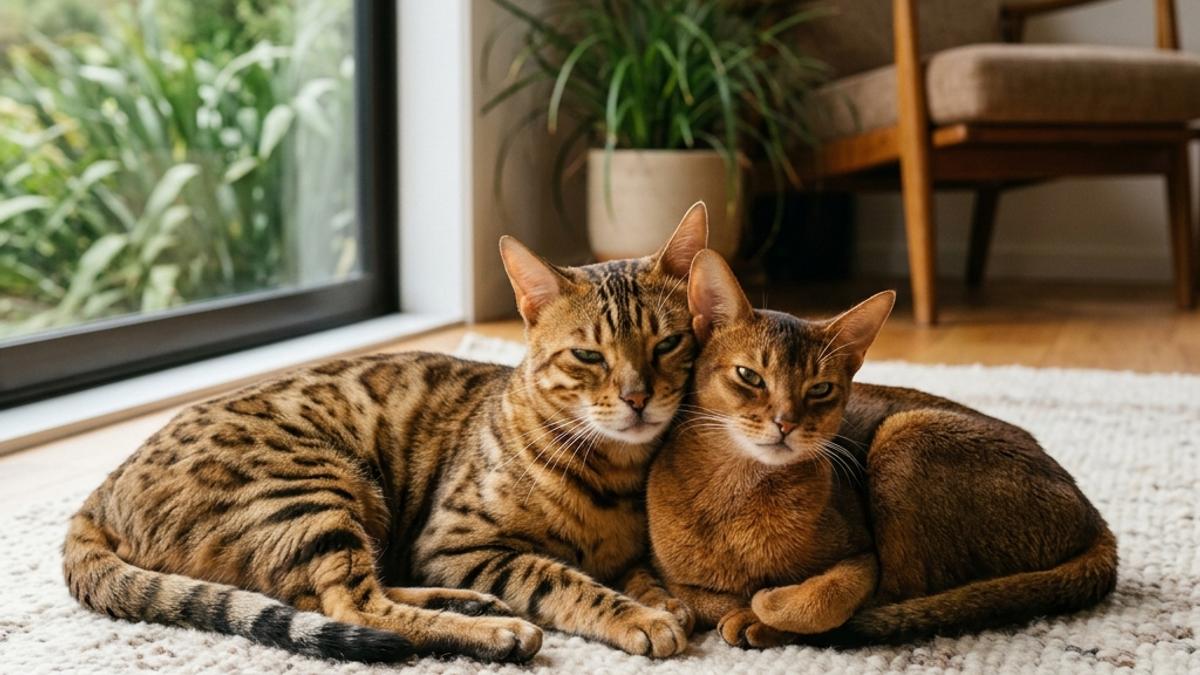
The Bengal's wild, spotted or rosette-patterned coat is its most distinctive feature — it genuinely resembles a small wild cat, which is no coincidence (Bengals were developed from crosses with Asian Leopard Cats). The coat is short, dense and unusually soft. Bengals also come in snow (pale) and charcoal varieties, but the spotted/rosetted brown tabby is the classic.
The Abyssinian has one of the most ancient coat patterns in domestic cats: a warm ticked tabby where each hair has multiple colour bands, creating a shimmering, almost iridescent appearance. The ruddy (warm brown-orange) is the most common, with blue, fawn and cinnamon variants also available. The Abyssinian has an elegant, alert look — large ears, almond eyes, and an almost perpetually curious expression.
Both are considered beautiful breeds in different ways. The Bengal looks exotic and wild; the Abyssinian looks ancient and refined.
Temperament: similar energy, different expression
Bengal: Bengals are highly active, confident and tactile. They enjoy running water (many actively seek out dripping taps), will fetch toys reliably, climb to high places, and investigate every area of the house. They can be demanding and will make noise or bat at things to get attention when under-stimulated. Bengals are affectionate on their own terms — they'll engage when they want to, and move on when they've had enough. Well-socialised Bengals are fine with children; poorly socialised or under-stimulated Bengals can become destructive.
Abyssinian: Abyssinians are perpetually curious and in motion. They're described as the breed most like a cat in perpetual "kitten mode" — always investigating, always in the middle of what you're doing, always checking what's behind that door. They're less about direct demanding interaction than Bengals — they prefer to be *involved* rather than *held*. Abyssinians are more independent in choosing when they want affection and when they'd rather be exploring.
For NZ families with active children: both work well. Children who want to play will be appreciated by both breeds. Children who want a cuddly cat to carry around may find both breeds frustrating.
Exercise and stimulation needs
Both breeds need significant daily enrichment — this is not a "put out some toys and they'll entertain themselves" situation.
Bengal: interactive play sessions of at least 20–30 minutes twice daily, rotating toys, puzzle feeders, cat trees and ideally another active cat companion. A bored Bengal will find entertainment in ways you don't appreciate — turning on taps, opening doors, emptying shelves.
Abyssinian: similarly high enrichment need, with more emphasis on vertical space (cat trees, wall shelves) and exploration opportunities. An Abyssinian left in a small apartment with no enrichment will become neurotic.
For NZ apartment owners: both breeds can thrive in apartments *if* the stimulation level is genuinely high. This means significant daily interactive play, a tall cat tree or wall-mounted shelf system, and ideally a companion cat. Both breeds also enjoy supervised leash walks — more Bengals than Abyssinians take to this readily, but both can be trained with patience.
Grooming
Both breeds have very short, low-maintenance coats. A weekly wipe-down with a rubber grooming mitt is all that's needed. Neither is a heavy shedder. This is one of the significant advantages of both breeds for NZ owners.
Health considerations
*General information only — consult a registered NZ vet for your cat's specific health care.*
Bengals can carry progressive retinal atrophy (PRA-b — a late-onset blindness gene). DNA testing is available and responsible NZ Bengal breeders screen for it. Some Bengals also carry a genetic form of hypertrophic cardiomyopathy (HCM). Average lifespan is 12–16 years.
Abyssinians are prone to progressive retinal atrophy (rdAC — a different recessive allele also DNA-testable), renal amyloidosis (kidney disease — a hereditary condition in some lines) and hypertrophic cardiomyopathy. Ask NZ Abyssinian breeders for DNA and HCM screening results. Average lifespan is 12–15 years.
Cost in NZ
Bengals from reputable NZ breeders — particularly from F4+ (four generations removed from wild cat) which is the standard for pet sales — typically run $1,500–$3,000+, with higher-generation show-quality rosetted cats at the top of the range.
Abyssinians from health-tested NZ breeders are generally $1,200–$2,500. Both breeds are relatively specialist and not available from casual backyard breeders reliably — the demand for quality kittens often exceeds supply.
Which breed suits you?
Choose a Bengal if:
- You want a visually striking wild-patterned cat with high physical energy
- You appreciate confident, tactile engagement on the cat's terms
- You can manage the Bengal's manipulative intelligence (opening things, water fascination) with good enrichment
- You're prepared to pay more and wait for a kitten from a health-tested breeder
Choose an Abyssinian if:
- You want perpetual kitten energy in a refined, elegant-looking package
- You prefer a cat that's curious and involved rather than directly demanding
- You love watching a cat investigate and interact with its environment
- You want a highly athletic cat with slightly gentler interactive energy than a Bengal
For either breed: get two. Both breeds do dramatically better with a feline companion who can match their energy. A single Bengal or Abyssinian in a working household will struggle with boredom. See our best cats for seniors NZ guide for contrast — if what you actually want is a calmer, more lap-oriented companion, both Bengal and Abyssinian are the wrong choice.
Quick takeaways
- Both are highly active, intelligent and visually striking — unsuitable for owners wanting a quiet, low-engagement cat
- Bengals are more physically demanding and direct; Abyssinians are more curious and exploratory
- Both have minimal grooming needs and 12–16 year lifespans
- Both need significant daily enrichment, vertical space and ideally a companion cat
- DNA health screening from breeders is essential for both (PRA, HCM)
- Bengals price higher; both are specialist breeds with waitlists from quality NZ breeders
Related reading
- Bengal cat breed profile NZ
- Abyssinian cat breed profile NZ
- Best Cat Breeds for First-Time Owners NZ
- Cat Scratching Post Types NZ
- Best Cats for Seniors NZ
- Cat hub — breeds and guides
---
References
- The Governing Council of the Cat Fancy (GCCF), Abyssinian Breed Profile: https://www.gccfcats.org/getting-a-cat/choosing/cat-breeds/abyssinian/
- The Governing Council of the Cat Fancy (GCCF), Bengal Breed Profile: https://www.gccfcats.org/getting-a-cat/choosing/cat-breeds/bengal/
- Merck Veterinary Manual, Hypertrophic Cardiomyopathy in Cats: https://www.merckvetmanual.com/circulatory-system/cardiomyopathy-in-dogs-and-cats/hypertrophic-cardiomyopathy-in-dogs-and-cats
- VCA Hospitals — Bengal cat breed profile, checked 2026-07-08: https://vcahospitals.com/know-your-pet/cat-breeds/bengal
---
*This guide provides general breed-comparison information for NZ cat owners. Health information is general only — consult a registered NZ vet for your cat's specific health care.*
Free PetMall tools
Related guides
petmall.co.nz
Shop at PetMall
The products below are practical support items for your pet. PetMall ships across New Zealand.
- Cat FoodStart with food that matches your cat's life stage — change brands slowly over 7–10 days to avoid digestive upset.
- Cat LitterClumping or crystal, most cats prefer an unscented litter and a clean tray — one tray per cat plus one spare is the NZ rule of thumb.
- Cat TreatsGreat for bonding and training — keep treats under 10% of daily calories to protect your cat's waistline.
- Cat ToysA small rotation of toys (feather wand, puzzle feeder, and comfort toy) usually works better than buying many at once.
- Cat GroomingRegular brushing cuts hairballs and shedding — essential for long-haired breeds like Ragdolls and British Longhairs.
- Flea & Worm TreatmentFor NZ conditions, choose protection that fits your cat's weight and lifestyle (indoor vs outdoor) and keep it regular.