Pet Breed Guide NZ
Java Sparrow (Java Finch)
The Java Sparrow, also known as the Java Finch, is a beautiful, peaceful, and social finch. Best kept in pairs or aviaries, they are active, low-maintenance, and display striking colour varieties.
Photo Gallery
NZ Ownership Snapshot
Verified NZ Status- Noise Level
- moderate
- Social Needs
- groups
- Diet Type
- Seeds, pellets, vegetables, fruit, and species-appropriate enrichment foods
- UVB Required
- No
Legal to keep in NZ as captive-bred birds. Note: Java Sparrows established a feral population in parts of NZ; wild birds are protected. Only purchase from licensed NZ aviary breeders.
Breed Snapshot
- Size
- small
- Lifespan
- 7-10 years
- Origin
- Indonesia (Java, Bali) / NZ established
- Care Focus
- Social, active, gentle; best kept in pairs or small colonies; not handleable but very active and entertaining
- NZ Price
- NZD $40–$100 per bird; often sold in pairs
- Annual Vet Cost
- NZD $100 - $250 annually for routine check-ups and potential minor issues
Personality Scores
NZ Lifestyle Fit
Java Sparrows can thrive in various New Zealand home environments, provided their specific needs for space and companionship are met. For apartment dwellers, a large indoor cage is essential, allowing for daily supervised out-of-cage time in a bird-safe room. Homes with a section or a bach might consider a spacious outdoor aviary, which allows these social birds to flourish in a more natural setting. Given their Indonesian origins, climate considerations are crucial. In humid Auckland, outdoor aviaries need excellent ventilation to prevent mould, while in colder South Island regions, robust shelter and heating are vital during winter months to protect them from frost and low temperatures. There are no specific regional prohibitions on Java Sparrows in NZ, but owners must always consult their local council bylaws, as rules can vary. Legally sourcing Java Sparrows in New Zealand is typically done through reputable bird breeders or specialist pet stores who adhere to MPI guidelines, ensuring the birds are healthy and legally obtained.
NZ legal status not yet verified against MPI, EPA, DOC and regional council records. Don't treat this page as confirmation that the species can legally be imported, bought, sold, bred or kept in New Zealand — check those official sources first.
Overview
The Java Sparrow (Lonchura oryzivora), also known as the Java Finch, is a small passerine bird native to Java and Bali. Famous for their neat, smooth plumage, thick rose-coloured beaks, and prominent white cheek patches, they are highly popular aviary birds in New Zealand. They are peace-loving, highly social finches that bring vibrant energy to any aviary.
NZ ownership fit
Java Sparrows are highly social and must never be kept alone; they should always be housed in pairs or small groups. They are active, peaceful, and get along well with other finch species like Zebra Finches and Gouldian Finches. While they cannot be hand-tamed easily, they are highly entertaining to watch as they groom each other, hop around, and sing their soft, clicking contact tunes.
Care priorities
A standard finch seed mix containing millet and canary seed forms their basic diet, alongside fresh greens, sprouted seeds, and cuttlebone for calcium. They need a spacious cage or flight aviary to exercise. Java Sparrows love water and need a clean birdbath daily. Because there is a wild, feral population established in parts of New Zealand, aviary security is critical to prevent escapes.
Fun Facts
Fact 1
Java Sparrows are native to Indonesia, specifically the islands of Java, Bali, and Bawean.
Fact 2
They are also known as "Rice Birds" because they are often found foraging in rice paddies in their natural habitat.
Fact 3
Despite their small size, Java Sparrows can live for 5-9 years with proper care, a relatively long lifespan for a finch.
Fact 4
They are highly social birds and thrive when kept in pairs or small flocks, constantly interacting with each other.
Fact 5
There are several colour mutations of Java Sparrows, including white, fawn, and silver, alongside the classic grey.
Related Breeds
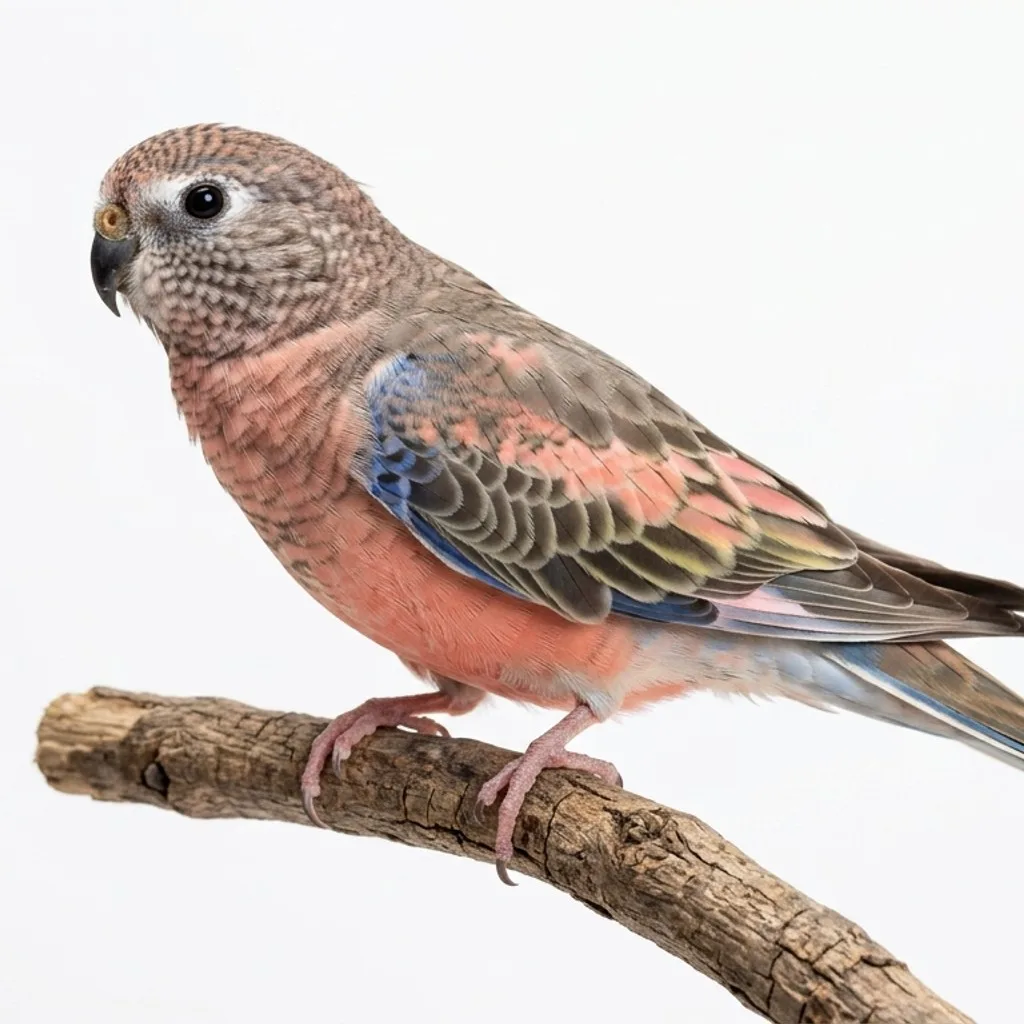
Bourke's Parakeet
Bourke's Parakeet is a small, softly coloured parrot from inland Australia, rosy pink below with a grey-brown back and blue in the wings, and it is one of the gentler options for a first-time bird owner. It is quiet by parakeet standards, offering melodic chirps rather than squawking, and it is crepuscular, so most of its activity falls around dawn and dusk while the day passes in dozing and gentle foraging. Bourkies are docile, rarely bite, and become tame with steady, unhurried handling, though they tend to enjoy company more than cuddling and are not mimics. They do best in pairs or small groups, with a roomy cage, varied perches, chewable toys and supervised flight in a bird-proofed room. A lifespan of 8 to 12 years and soft vocalisations make them workable in flats and quiet homes that want a calm, undemanding bird.
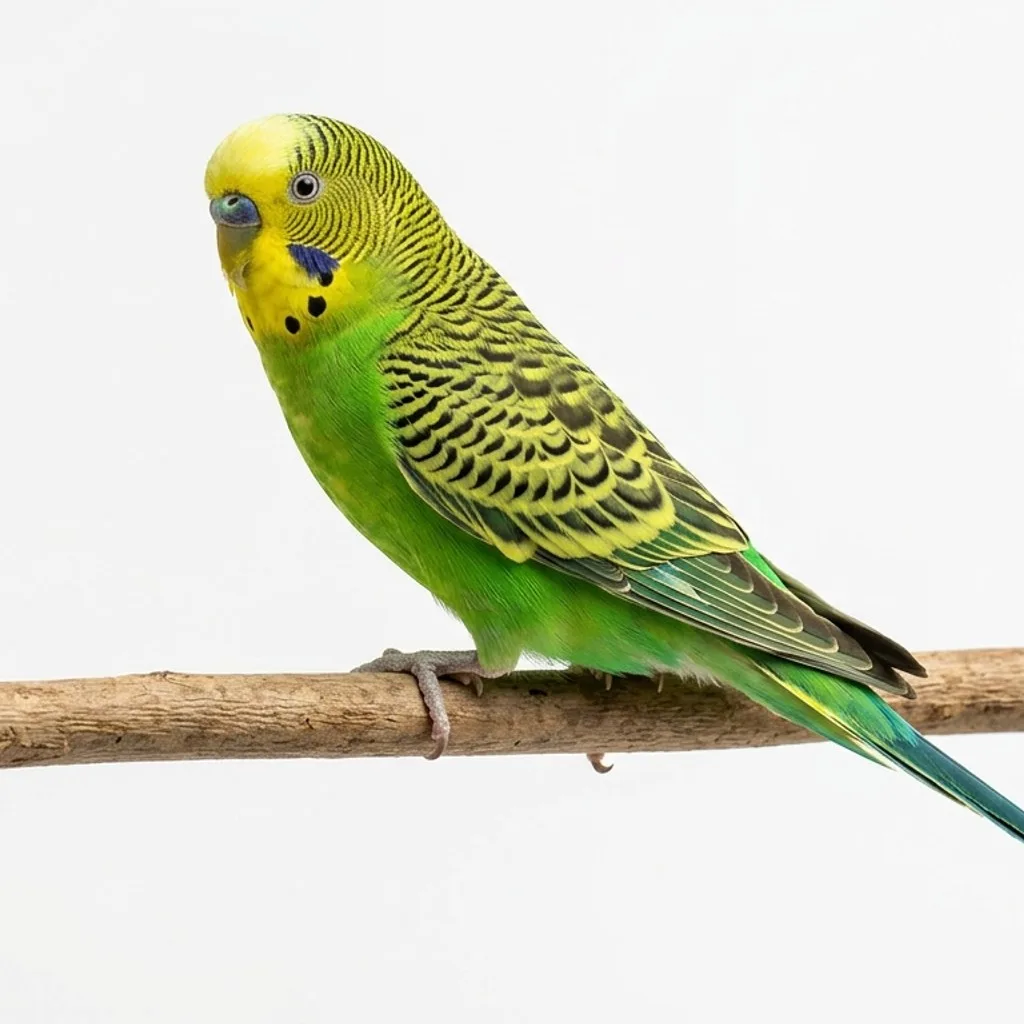
Budgerigar (Budgie)
The Budgerigar, or budgie, is a small long-tailed seed-eating parrot from Australia and one of the most widely kept companion birds in the world. It is lively, inquisitive and intensely social: budgies live in large flocks in the wild, so a single bird needs either a companion budgie or committed daily human interaction to stay settled. They are bright enough to learn to step up, perform simple tricks and mimic speech, males more readily than females. Wild birds are green and yellow with black scalloping on the wings, while selective breeding has produced blue, white, yellow, grey and pied colour mutations. Care is straightforward rather than trivial: fresh food and water twice daily, a pellet-based diet with seed as a treat, spot cleaning, and 30 to 60 minutes of supervised flight in a bird-safe room. Their small size suits apartments, though near-constant chirping makes them a poor match for a noise-sensitive household.
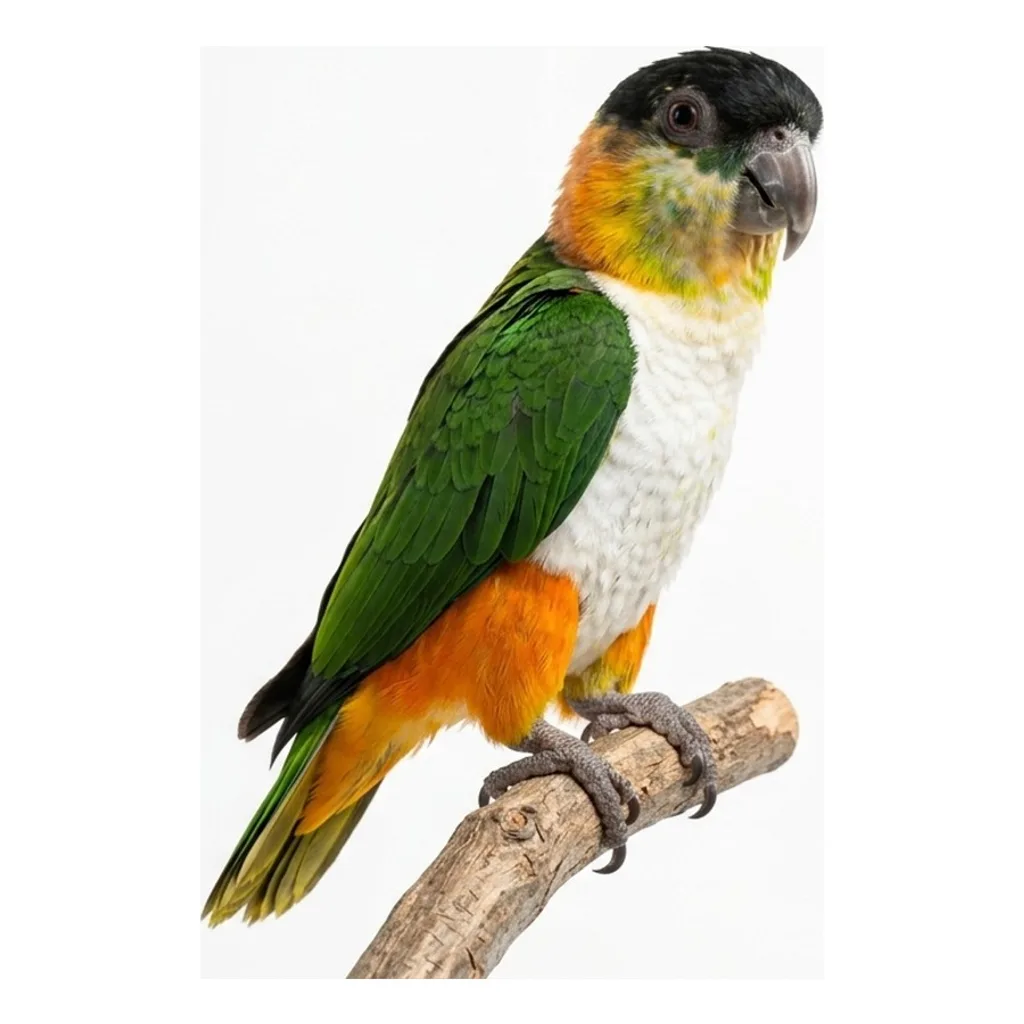
Caique
The Caique is a small, stocky South American parrot represented by two species, the Black-headed and the White-bellied, both bold, comical and relentlessly busy. Roughly 23 to 25 cm long and 150 to 170 grams, it carries a large personality in a compact frame and is better known for its hopping gait across flat surfaces than for talking, although it mimics sounds and chirps freely. Noise sits at a moderate level rather than a piercing one. A Caique needs at least two to four hours of supervised time out of the cage each day, the largest enclosure a home can fit, and a steady rotation of chewable and foraging toys, since a bored bird slides quickly into plucking or aggression. With a lifespan of 25 to 40 years, it fits an active, sociable household that is home often and ready for a decades-long companion.
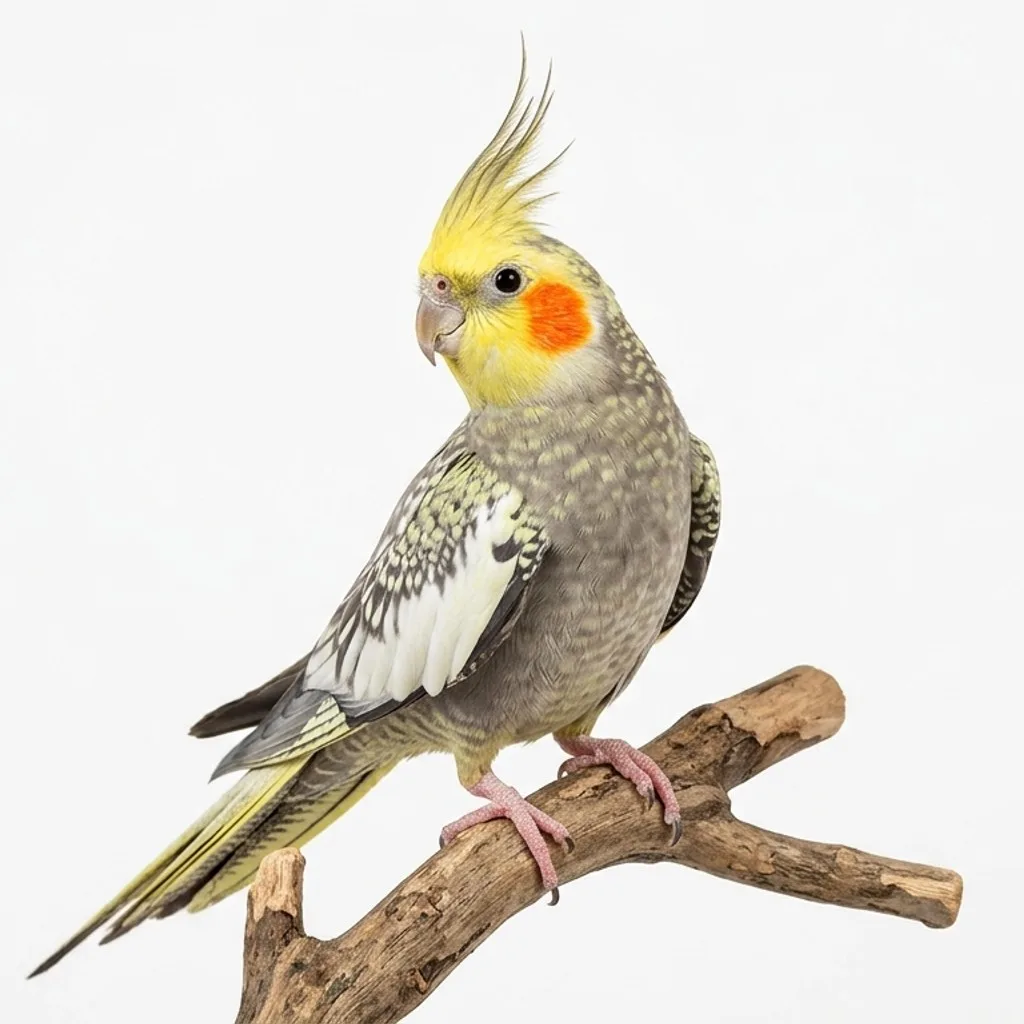
Cockatiel
The Cockatiel is a crested Australian parrot and a member of the cockatoo family, kept for its friendly manner, its moderate voice and its readiness to bond with the people around it. Its movable crest doubles as a mood signal, rising when the bird is excited and flattening when it relaxes. The familiar normal grey has a grey body, white wing patches and an orange cheek patch, with lutino, pearl, pied, cinnamon and white-faced mutations also common. Temperament is affectionate rather than boisterous: cockatiels often enjoy head scratches and shoulder perching, and males in particular pick up whistled tunes and simple mimicry. Noise is moderate and mostly whistling rather than harsh squawking. They need a spacious cage, a pellet-led diet with seed a small part of it, an hour or two of supervised flight daily, and company, since they cope badly when left alone for long stretches. A lifespan of 15 to 25 years makes them a long commitment for families and patient first-time bird owners.