Why Does My Cat Zoom at Night? NZ Guide
Why does your cat zoom at night? Learn normal cat activity rhythms, enrichment fixes, and when night restlessness needs a NZ vet.
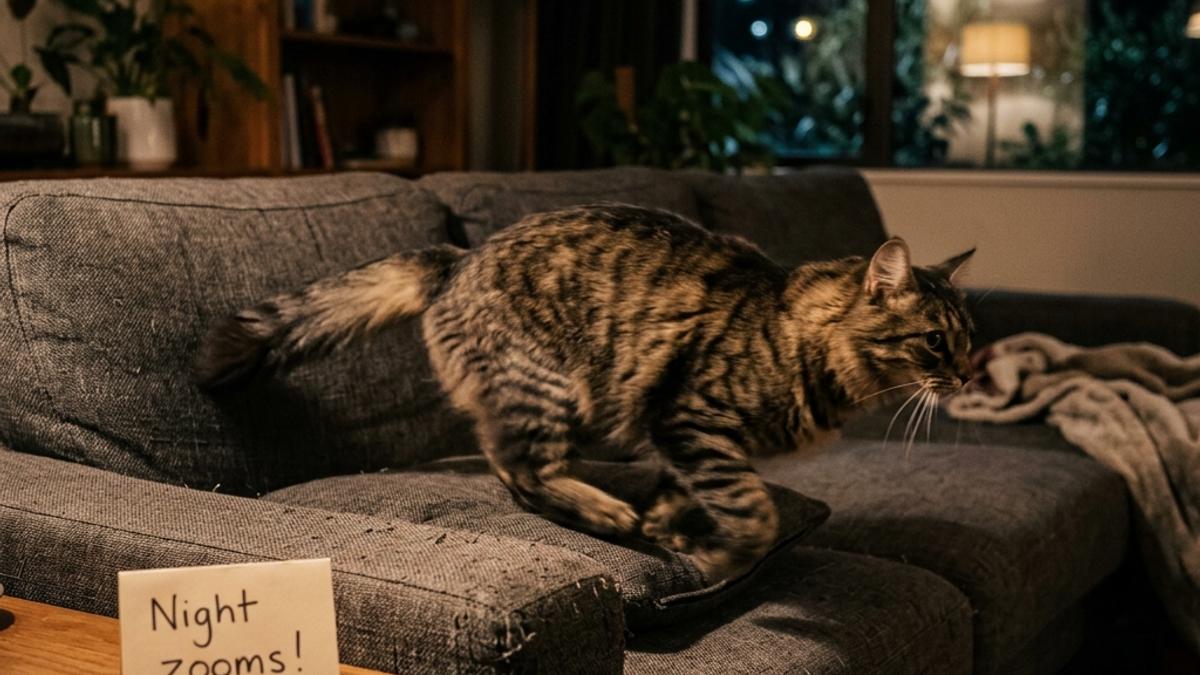
The quick answer: many cats zoom at night because they are crepuscular, under-stimulated during the day, or have learnt that midnight activity gets attention. Short bursts of running, pouncing and chirping can be normal. Sudden night restlessness, distress, appetite change or pain signs should be checked by a NZ vet.
Why night zoomies happen
Cats often become active around dawn and dusk. Indoor cats may also save energy all day, then unload it when the house is quiet. Common triggers include:
- too little active play before bedtime
- long daytime sleep with limited enrichment
- hunger or a strong feeding routine
- outdoor cats, insects or noises near windows
- younger cats practising chase and pounce behaviour
- humans accidentally rewarding the show with attention
For the wider routine, see Cat Care NZ Complete Guide, Indoor Cat Enrichment NZ, Cat Toys Guide NZ and Cat Scratching Posts Guide NZ.
Build a better evening routine
Give your cat a proper play session before the household winds down. International Cat Care advises play that lets cats express hunting behaviour, so use wand toys, chase games and short bursts rather than waving a toy in their face.
Try a routine of play, small meal, quiet grooming or settling, then lights down. Puzzle feeders can help cats who wake everyone for breakfast. Put noisy toys away overnight and leave quieter options available.
Do not reward the 3 am show
If your cat zooms and you get up, feed them or start talking, the routine can become very rewarding. Make the environment safe, ignore harmless attention-seeking, and reward calm daytime play instead.
If your cat is scratching furniture during night energy bursts, set up legal scratching outlets. Stop Cat Scratching Furniture NZ has the practical setup.
When to call a vet
Contact a NZ vet if night activity is sudden, frantic, paired with crying, hiding, litter tray changes, weight loss, appetite change, disorientation, pain signs or breathing changes. Older cats with new night waking especially need a health check.
Quick takeaways
- Night zoomies are often normal cat energy and timing.
- Use active evening play followed by food and a quiet routine.
- Avoid accidentally rewarding noisy wake-ups.
- Sudden night restlessness or distress needs a NZ vet.
Related reading
References
- International Cat Care, Playing with your cat, checked 2026-06-13: https://icatcare.org/advice/playing-with-your-cat/
- RSPCA, Understanding cat behaviour, checked 2026-06-13: https://www.rspca.org.uk/adviceandwelfare/pets/cats/behaviour
Important notice
*General cat behaviour information for NZ owners. Sudden night waking, distress, appetite change, litter tray change, pain signs or disorientation needs a NZ vet.*
Free PetMall tools
Related guides
petmall.co.nz
Shop at PetMall
The products below are practical support items for your pet. PetMall ships across New Zealand.
- Cat FoodStart with food that matches your cat's life stage — change brands slowly over 7–10 days to avoid digestive upset.
- Cat LitterClumping or crystal, most cats prefer an unscented litter and a clean tray — one tray per cat plus one spare is the NZ rule of thumb.
- Cat TreatsGreat for bonding and training — keep treats under 10% of daily calories to protect your cat's waistline.
- Cat ToysA small rotation of toys (feather wand, puzzle feeder, and comfort toy) usually works better than buying many at once.
- Cat GroomingRegular brushing cuts hairballs and shedding — essential for long-haired breeds like Ragdolls and British Longhairs.
- Flea & Worm TreatmentFor NZ conditions, choose protection that fits your cat's weight and lifestyle (indoor vs outdoor) and keep it regular.